


The tokenized gold market, also known as gold-backed cryptocurrency, has surpassed $5.6 billion, evolving from a niche experiment into a fully fledged asset class. At a time when inflation erodes the value of fiat currencies and Bitcoin's price volatility concerns both institutional and retail investors, tokenized real-world assets (RWAs) on the blockchain offer an alternative approach.
Investors can gain exposure to tokenized gold without the costly logistics, wide spreads, and geographical limitations. However, behind the appealing concept lie important considerations, including the quality of reserve audits, the jurisdiction of storage facilities, and compliance with LBMA (London Bullion Market Association) standards.
This article explains how gold-backed cryptocurrencies work and what actually backs a digital gold token. It also examines how they differ from traditional stablecoins. In addition, we explore whether such assets deserve investors' trust and why verifying reserves remains essential before investing in any gold-linked digital currency.
The article covers the following subjects:
Major Takeaways
- The tokenized gold market exceeded $5.6 billion in 2026.
- Two leading projects, Tether Gold (XAUt) and Paxos Gold (PAXG), account for more than 93% of the sector.
- Each XAUt and PAXG token is backed by one fine troy ounce (about 31.1 g) of physical gold stored in LBMA-certified vaults.
- Tether Gold is the market leader, with a capitalization of about $3.3 billion, representing roughly 60% of the gold-backed token market.
- Unlike physical gold, gold-backed tokens can be bought, sold, and transferred within minutes, 24/7. They can also be used in DeFi protocols to generate additional yield.
- When evaluating these assets, investors should consider reserve volumes, storage arrangements, audit reports, and market capitalization. The value of a gold-backed token depends not only on its price but also on the issuer's credibility, trading conditions, gold storage location, and verification procedures.
What Is a Gold-Backed Cryptocurrency: Definition & Technical Framework
A gold-backed cryptocurrency is a digital asset whose value is directly linked to physical gold. In practice, it functions as a digital certificate representing ownership of a specific amount of gold.
While this type of digital currency offers convenience and accessibility, it also requires trust in the issuer, auditor, and custodian. Investors should verify that the project maintains a true 1:1 backing ratio, meaning the amount of gold held in reserve matches the number of tokens in circulation.

In practical terms, tokenized gold serves as a bridge between the cryptocurrency and precious metals markets. While fiat currencies rely on trust in governments and central banks, gold-backed cryptocurrencies derive their value from physical gold, bullion reserves, and reserve reports.
As a result, these assets should be evaluated not only as cryptocurrencies but also as financial instruments. Compared with other digital currencies and stablecoins, gold-backed tokens stand out because they are tied to a tangible asset. However, they still require careful due diligence regarding reserves and backing mechanisms.
Key characteristics that distinguish this asset class include:
- 1:1 backing. Each gold-backed token represents a claim on a specific amount of physical gold, most commonly one troy ounce or one gram.
- Transparency. Issuers such as Paxos and Tether regularly publish audit reports confirming that the number of tokens issued matches the amount of gold held in reserve.
- Blockchain infrastructure. These tokens operate on major blockchain networks, including Ethereum, TRON, and BNB Chain, making them compatible with thousands of crypto wallets and DeFi applications.
- Divisibility. Unlike physical gold bars, which are usually traded as whole units, gold-backed tokens can be bought and sold in fractional amounts. Some projects, such as Kinesis Gold (KAU), denominate their tokens in grams of gold.
In essence, gold-linked tokens are a form of tokenized asset backed by a real-world underlying asset. As long as the issuer maintains sufficient reserves, the tokens represent a claim on a corresponding amount of physical gold. For this reason, investors should compare these assets not only by price but also by storage standards, issuer reliability, and reserve transparency.
Operational Mechanics and Infrastructure
How does it work in practice? The process can be described in three stages:
- Gold storage. The issuer stores gold in a certified vault that complies with LBMA (London Bullion Market Association) standards. For example, the gold-backed PAXG is held in Brink's vaults in London.
- Token issuance. For every token issued, or fraction thereof, the issuer allocates an equivalent amount of gold in storage. This process, known as minting, is typically carried out according to the rules of a specific token standard, for example, ERC-20.
- Blockchain circulation. Once issued, the token is transferred to the owner's crypto wallet. From that point, it can be used like any other crypto asset: held, transferred, or used as collateral. Some operations may require access through the issuer's platform or application.

If the holder decides to redeem the token for physical gold, the issuer burns the corresponding number of tokens and delivers the metal, provided the redemption requirements are met. Importantly, a token does not grant ownership of a specific gold bar with a unique serial number. Instead, it represents a claim against the issuer for a certain quantity of gold. This is similar to a bank deposit: what matters is the amount you can claim, not the specific banknotes.
It is important to understand that a gold-backed token is still tied to the gold market. Its price continues to follow the value of physical gold. The token simply represents ownership rights to gold on the blockchain.
As a result, blockchain technology does not eliminate the need for audits of gold bars and reserve verification. If problems arise during the purchase or redemption process, investors primarily depend on the issuer's procedures, not solely on smart contracts or blockchain infrastructure.
Traditional Cryptocurrency vs. Gold-Backed Cryptocurrency Comparison
The key difference between tokenized gold and cryptocurrencies such as Bitcoin and Ethereum lies in their source of value and relationship to the precious metals market.
Characteristic |
Traditional Cryptocurrency (BTC, ETH) | Gold-Backed Cryptocurrency (XAUt, PAXG) |
Source of value | Market supply and demand, trust in the network, and its utility. | The price of physical gold on the global market (XAU/USD). |
Backing | Usually none. The price is not linked to a physical asset. | Backed by physical gold held in the issuer's vault. |
Volatility | High. The price can fluctuate by tens of percent over a short period. | Low. Tracks the performance of the gold market, which is considered a safe-haven asset. |
Function | A means of speculation or transactions within a digital ecosystem. | A tool for capital preservation, inflation hedging, and gaining exposure to gold. |
Bitcoin is often called "digital gold" because of its limited supply and investment appeal. However, it remains a highly volatile asset. Tokenized gold, by contrast, is a digital representation of physical gold, an asset that has preserved value for thousands of years.

In this respect, gold-backed cryptocurrencies have more in common with gold ETFs and gold certificates than with memecoins. The difference is that gold ETFs operate within the traditional brokerage system, while gold-backed tokens exist in crypto wallets and DeFi ecosystems.
As a result, these digital assets offer convenient transfers and several practical advantages, competing not only with cryptocurrencies but also with certain traditional investment products.
While fiat currencies depend on trust in governments and central banks, gold-backed cryptocurrencies depend on the quality of their backing. Each token should be backed by a verified amount of physical gold held in reserve. This is particularly important for investors seeking to reduce portfolio volatility and improve capital stability.
Best Gold-Backed Cryptocurrencies
The tokenized gold market includes a wide range of projects, from major issuers with multi-billion-dollar market capitalizations to niche startups with less transparent reserve structures. I have analyzed more than 40 projects, focusing on key metrics based on data from issuers, auditors, and industry aggregators. For convenience, all gold-backed tokens are grouped into tiers.
The ranking includes not only popular tickers but also projects with transparent backing and clearly defined reserve mechanisms. The evaluation considers reserve volumes, audit quality, liquidity, jurisdiction, market capitalization, and redemption terms. The more transparent the link between a token and the underlying physical gold, the more reliable the digital gold asset appears.
Tier 1: Market Leaders
Tier 1 consists of projects that define the tokenized gold market. They account for the vast majority of the sector's market capitalization, liquidity, and trading volume. These gold-backed cryptocurrencies stand out for their transparent reserve structures, regular reporting, and broad availability on major exchanges.

Tether Gold (XAUt): Market Dominance Outside US Jurisdiction
Tether Gold (XAUt) is the largest gold-backed cryptocurrency in its segment. Each token is backed by physical gold, with reserves measured in troy ounces and linked directly to the underlying metal. For investors, XAUt offers a liquid way to gain exposure to gold without buying and storing physical bullion.
At the same time, Tether Gold remains a digital financial instrument, making reserve transparency, auditing, and issuer jurisdiction particularly important. From a regulatory perspective, the project is often compared with Pax Gold, usually to XAUt's disadvantage.
- Market capitalization: Approximately $3.3 billion (up 36% quarter-over-quarter).
- Reserves: 707,747 troy ounces of gold. Gold is stored in Switzerland.
- Blockchains: Ethereum, TRON, Avalanche.
- Audit: Quarterly attestations by BDO Italia. Tether has also initiated its first full audit by KPMG, an unprecedented step for the company.
- Regulation: The issuer, TG Commodities Limited, is registered in El Salvador and operates under the country's Digital Asset Issuance Law. Because XAUt is outside the US jurisdiction, it faces a lower risk of direct intervention by US regulators. However, the issuer is an offshore company, and its level of transparency and regulatory oversight is generally lower than that of more heavily regulated alternatives.
- Key feature: The undisputed market leader, with a market share of roughly 60%. For investors outside the United States, XAUt is the most liquid instrument in the tokenized gold sector.
Paxos Gold (PAXG)
Paxos Gold is generally regarded as a more regulated alternative to XAUt. Like XAUt, PAXG is backed by physical gold, with each token representing one fine troy ounce of gold. The corresponding gold reserves are verified through regular reports.
In this respect, PAXG demonstrates how gold-backed digital currencies can align more closely with traditional financial infrastructure. For investors, an important feature is that Paxos reserves are linked to specific allocated gold bars. The number of troy ounces reported must match the number of tokens in circulation.
- Market capitalization: Approximately $2.13 billion.
- Reserves: 184,251 troy ounces of gold.
- Blockchain: Ethereum.
- Audit: Monthly reports by KPMG LLP. In February 2025, the company replaced Withum as the project's auditor. Allocated gold bars held in storage are regularly verified.
- Regulation: Supervised by the New York State Department of Financial Services (NYDFS) and previously approved by the Office of the Comptroller of the Currency (OCC). One of the most heavily regulated crypto projects in the world.
- Key feature: A preferred choice among institutional investors. At the same time, the high level of regulatory oversight means that assets may be frozen if required by a court order.
Tier 2: Retail Alternatives
Second-tier projects have smaller market capitalizations but showcase a wider range of approaches to gold tokenization. Their distinguishing features include gold-denominated units, multi-chain support, a focus on the precious metals market, and compliance with Shariah principles.
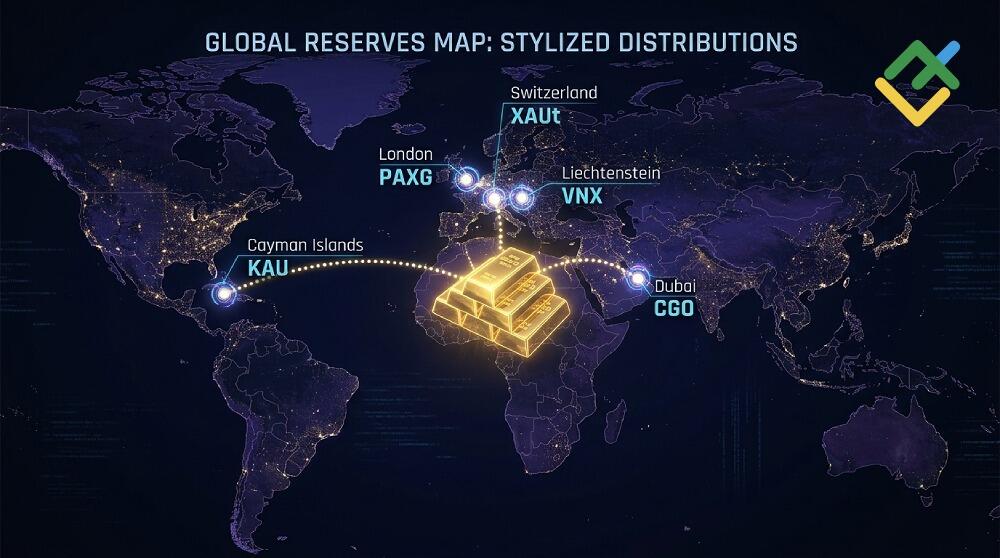
These projects offer additional opportunities for retail investors but generally lag behind market leaders in liquidity, reserve size, and brand recognition.
Kinesis Gold (KAU)
Within the Kinesis ecosystem, gold-backed tokens serve a broader purpose. Investors can not only hold the asset but also earn rewards linked to physical gold. As a result, KAU functions partly as a payment ecosystem while maintaining its link to physical gold.
- Denomination: 1 KAU = 1 gram of gold.
- Market capitalization: Approximately $176 million, according to CoinMarketCap. Other sources estimate the market capitalization at up to $297 million, likely due to differences in calculation methodology.
- Blockchain: Kinesis' proprietary network, based on a Stellar fork.
- Audit and storage: Gold is stored in audited and fully insured vaults across a global storage network.
- Regulation: Kinesis Cayman is registered as a Virtual Asset Service Provider (VASP) and is supervised by the Cayman Islands Monetary Authority (CIMA).
- Key feature: An ecosystem in which gold serves not only as an investment asset but also as a means of payment. Users have access to payment cards and reward programs for holding assets.
A key limitation is reduced compatibility with DeFi protocols due to the use of a proprietary blockchain.
VNX Gold (VNXAU)
VNX Gold targets investors who value both regulatory transparency and the ability to use assets across multiple blockchain ecosystems. Compared with market leaders, the project remains relatively niche but combines multi-chain accessibility with a regulated structure.
- Market capitalization: Approximately $7.4 million ($6.2 million on Ethereum and $1.2 million on Solana).
- Blockchains: Ethereum, Polygon, Solana, Tezos, and others.
- Audit: Regular independent audits.
- Regulation: VNX Commodities AG is registered with the Financial Market Authority of Liechtenstein (FMA) and operates under the Token and Trusted Technology Service Providers Act (TVTG). As a result, VNXAU is classified as a regulated digital asset.
- Key feature: A rare combination of government regulation and support for multiple blockchain networks. The asset is backed by gold stored in AAA-rated vaults. Despite its relatively small market capitalization, the project has continued to grow in recent years.
Comtech Gold (CGO): A Shariah-Compliant Gold Token
Comtech Gold stands out for its focus on Shariah compliance and reserve transparency. For investors seeking products that comply with Islamic finance principles, CGO is one of the most specialized products in the tokenized gold market.
- Denomination: 1 CGO = 1 gram of gold.
- Market capitalization: Approximately $5.85 million.
- Blockchain: XDC Network.
- Audit and transparency: The project ensures independent auditing and traceability of every gold bar backing the tokens.
- Regulation and compliance: The first tokenized gold project to receive full Shariah certification from Amanie Advisors in accordance with AAOIFI standards. Regulated in Dubai.
- Key feature: Primarily targeted at investors in the Gulf region and Southeast Asia. Outside these regions, it remains a niche asset with limited liquidity.
Tier 3: Higher Risk and Niche Projects
This category includes projects with a limited track record, unconventional structures, or restricted transparency. These assets typically carry higher risks related to liquidity, reserve quality, regulatory oversight, and reserve transparency.
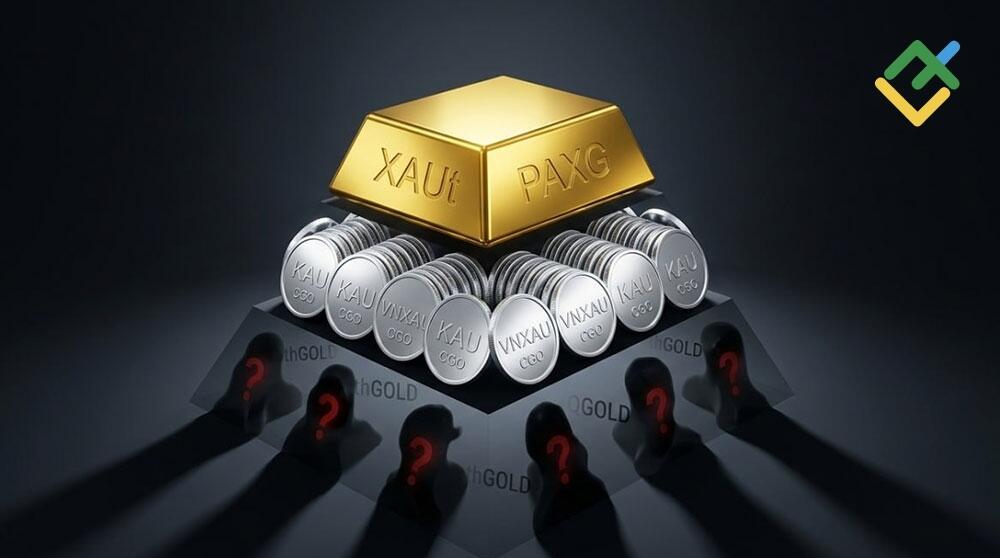
Investors should pay particular attention to backing mechanisms, issuer reputation, and the availability of audit reports, as the reliability of such projects is often more difficult to verify.
Matrixdock Gold (XAUM)
- Market capitalization: Approximately $66–71 million.
- Blockchains: BNB Chain, Ethereum, Sui.
- Storage: Gold is stored in vaults that comply with LBMA standards.
- Key feature: A product developed by Matrixport. Despite its relatively short audit history, the project has demonstrated rapid growth.
VeraOne (VRO)
- Denomination: 1 VRO = 1 gram of gold.
- Issuer: LinGOLD Ltd (United Kingdom).
- Market capitalization: Approximately $48 million.
- Key feature: Offers fiat currency redemption through Gibraltar-based infrastructure. A European product with moderate liquidity.
thGOLD (Theo)
- Market capitalization: Not disclosed.
- Key feature: Online sources previously reported a market capitalization of around $100 million. However, this figure referred to fundraising for the thUSD stablecoin rather than the gold-backed token itself. Claims that the token "sold out within 24 hours" have not been independently verified either. The project requires particularly thorough due diligence before any investment decision is made.
USDKG (Gold Dollar)
- Asset type: A hybrid stablecoin pegged to the US dollar and backed by physical gold reserves.
- Reserves: 376 kg of gold verified by Kreston Global.
- Regulation: Issued under the supervision of the Ministry of Finance of Kyrgyzstan. Listed on the licensed Hong Kong exchange OSL.
- Key feature: Not a traditional gold-backed cryptocurrency but a hybrid model combining a fiat currency peg with gold reserves.
Quorium Gold (QGOLD)
- Market capitalization: Not available.
- Key feature: Major platforms, including Bybit and Coinbase, report no market capitalization data due to insufficient information about the circulating supply. No public evidence could be found confirming that physical gold reserves are held in LBMA-compliant vaults. The project is marketed as a stablecoin linked to the value of one ounce of gold but remains a highly speculative asset.
Historically, the market has seen earlier forms of digital gold, including E-Gold. However, modern investors should focus less on the idea of a "gold-backed cryptocurrency" and more on reserve quality, the issuer's jurisdiction, and asset liquidity. For this reason, projects of this type are better viewed as part of the market's evolution than as proof of the reliability of modern tokenized gold solutions.
Key Considerations and Risks
Buying tokenized gold is not the same as purchasing a physical gold bar and storing it in a bank vault. In practice, investors do not own the metal itself or cash reserves. Instead, they hold a claim against the issuer.
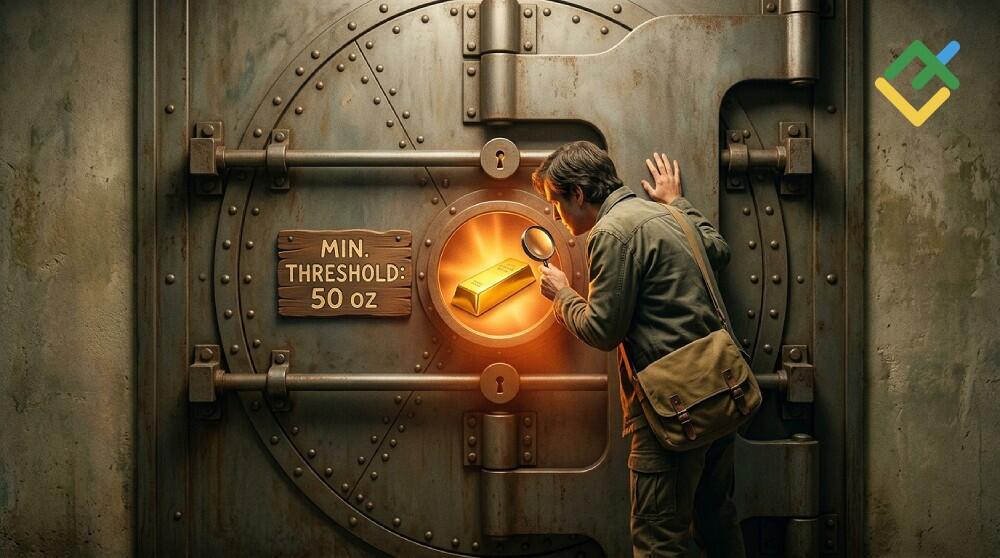
Any gold-backed cryptocurrency carries a number of specific risks:
- Counterparty risk. Rather than owning physical gold directly, investors hold a claim against a private company that issues the tokens and stores the gold. If the issuer becomes insolvent, investors could face losses, as token holders' claims may be treated as part of the general settlement process.
- Regulatory risk. Assets such as PAXG, which are subject to strict regulatory oversight, may be frozen at the request of regulators or other authorities. In such cases, a "digital gold bar" could become inaccessible regardless of where it is stored.
- Audit limitations. Most projects publish periodic reserve attestations that reflect reserve holdings at a specific point in time rather than providing continuous audit coverage. Notable exceptions include PAXG's monthly reports and XAUt's announced full audit by KPMG. For the rest of the reporting period, investors largely rely on information provided by the issuer.
- Technical risks. Smart contract vulnerabilities, cross-chain bridge exploits, or compromised issuer keys can result in token theft or loss of value. Additional risks may arise from the issuer's software and infrastructure providers, especially when transactions depend on proprietary services.
- Redemption restrictions. Redeeming tokens for physical gold is often difficult for retail investors. Minimum redemption requirements for XAUt and PAXG can amount to dozens or even hundreds of troy ounces, making physical redemption impractical for most token holders.
Conclusion
Tokenized gold is one of the most successful applications of blockchain technology in traditional finance. It addresses several key limitations of physical gold, including limited liquidity, high transaction costs, storage fees, and logistical challenges.
- The most popular and least regulated option is Tether Gold (XAUt). It is well-suited to investors who value high liquidity and minimal reliance on the US regulatory system.
- The most heavily regulated option is Paxos Gold (PAXG). This asset may appeal to investors willing to trade some privacy for greater regulatory oversight and transparency.
- For retail investors, Kinesis Gold (KAU), VNX Gold (VNXAU), and Comtech Gold (CGO) offer the convenience of a 1-gram gold denomination, along with additional features such as multi-chain support and Shariah compliance.
- Higher-risk projects, including thGOLD and QGOLD, have not yet provided sufficient information to allow an objective assessment of their reliability.
As with any investment, the quality of reserves, transparency of reporting, storage conditions, and the issuer's reputation remain critical factors. Blockchain technology makes gold more accessible, but it does not eliminate the risks associated with asset backing and custody.

The key takeaway is simple: buying gold-backed tokens involves a trade-off between the security of a physical asset and the convenience of a digital format.
For investors seeking accessibility, liquidity, and exposure to gold prices, these instruments can be a useful component of a diversified portfolio. By understanding counterparty, regulatory, and technical risks, investors can make better-informed decisions about using tokenized gold as a potential hedge against inflation.
The conclusion is straightforward: gold-backed cryptocurrencies can be useful investment tools, but they do not remove the need for due diligence. Any gold-backed cryptocurrency should be able to verify the link between its issued tokens, reserve holdings, and physical gold.
Gold-Backed Crypto FAQs
No, XRP is not backed by gold. It is the native token of the Ripple ecosystem, designed for fast cross-border payments. Its value depends on market demand, adoption, and network activity, not physical gold reserves.
No. USDC is not backed by gold. It is a stablecoin issued by Circle and pegged to the US dollar, backed by cash and cash equivalents. Gold is not part of its direct backing.
Gold-backed tokens include Tether Gold (XAUt), Paxos Gold (PAXG), Kinesis Gold (KAU), Comtech Gold (CGO), and others. Their value is tied to physical gold reserves held by the issuer.
Gold-backed stablecoins include Tether Gold (XAUt), Paxos Gold (PAXG), Kinesis Gold (KAU), and VNX Gold (VNXAU). Their reliability depends on reserve quality, storage conditions, transparency, and independent audits.
No. USDT is not directly backed by gold. It is a dollar-pegged stablecoin supported by Tether's reserve assets. Investors seeking gold exposure can use Tether Gold (XAUt), which is backed by physical gold.

The content of this article reflects the author’s opinion and does not necessarily reflect the official position of LiteFinance broker. The material published on this page is provided for informational purposes only and should not be considered as the provision of investment advice for the purposes of Directive 2014/65/EU.
According to copyright law, this article is considered intellectual property, which includes a prohibition on copying and distributing it without consent.