In the middle of the 1990s, the world got familiar with the Internet. In the 2000s, new startups in the Internet industry were appearing one by one. Those, who managed to invest in them at the right time, could earn from 50% of annual return and more. In this article, I analyzed the present industries that have just started to develop and double or triple your investments in 5-10 years. I also gave some examples of companies, belonging to each industry, and analyzed the quotes charts.
Review of the best investments for the horizon of 10 years
The article covers the following subjects:
- Review of the best investments for the horizon of 10 years
- 1. Internet platforms
- 2. Big Data
- 3. Investment in drinking water
- 4. Virtual and Augmented Reality
- 5. Pharmacology and Biotechnology
- 6. Alternative and nuclear energy
- 7. 3D printing and robotics
- 8. Blockchain technology and cryptocurrencies
- 9. Gold
- 10. Investment in your own self.
Investors, having invested their funds in the new economy, in such companies as Facebook or Amazon five years ago, have multiplied their investment by more than three times nowadays.
In September-October, 2013,Facebook stocks cost about 50 USD; today it is about 160 USD, and in the summer of 2018, the price was about 207 USD. 300% for 5 years it is 60% a year. I think, compared to other instruments, it is a quite good performance. The case with Amazon is even better: in the early autumn of 2013, the stocks could be bought for $310-$350; nowadays, they cost about 1950 each. About 90% a year! After all, the price chart is very illustrative.
According to analysts, these startups haven’t yet exhausted their potential. Constant updates, expansion into the Asian markets, developing new applications – all of this suggests that even now it is not too late to invest in these companies. Compared to the stock indices, where the return is up to 15% a year, technological platforms are a gold mine. If anyone tries to remember the example of the dotcom crash, I’ll remind that Amazon became one of the companies that survived it successfully.
But you shouldn’t bet on technological platforms alone (remember about risk diversification). There are still many dark horses, whose stocks can surge in 5-10 years: companies, funds, industries (perhaps, promising companies haven’t yet appeared, and it is the right time to invest in them at the start, like in the case with the Internet industry. You will learn from the article, where you can invest your money now, to earn a 500% annual return in 10 years.
1. Internet platforms
They should be mentioned first of all. If you look at the top most expensive world companies, you’ll see that more than half of them are Internet platforms and corporations, engaged in technological developments: Amazon, Facebook, Alphabet (Google), Samsung, Apple, Microsoft. Here, I should also mention Alibaba, the largest platform in the Asian region. Just the brand price includes about 25-30% of the cost of these companies.
The Internet appeared only in the 1990s; but just 10 years later there burst with popularity the social networks Facebook and LinkedIn, search engines, messengers, Internet shops. It took another 10 years and their creators entered the TOP-100 richest people in the world. The bygone age of Xerox and Kodak was replaced by a new era of computers and the Internet. In the next 10 years, these corporations will surely surprise us with something new and unique. And so, their securities will grow in price.
How to invest. The popularity of companies plays into the hands of investors. There are several options:
- Verify with a US broker or subsidiaries of European brokers. Work directly on US stock exchanges.
- Invest through ETFs that invest in technology companies.
- Trade CDFs on Over The Counter Forex stocks.
Each option has its own advantages and disadvantages, so the choice is individual.
2. Big Data
The problem of processing a large amount of information appeared relatively recently. According to IBS, in 2003, the society created 5 exabytes of information (1 EB = 1 billion GB); in 2008, this figure increased to 0.18 zettabytes (1 ZB = 1024 EB); in 2013 – 4.4. ZB. According to forecasts, this figure will have increased to 40-44 ZB by the end of 2020. The most interesting is that only 1.5% of this information has practical value. Question: how to process this amount and to find the needed data? The problem is solved by the Big Data technology.
The term Big Data was first used in 2008. Simply put, these are various methods, tools, approaches to processing a large array of data for various kinds of tasks that may not have a single structure. The Big Data category is a stream of information over 100 GB per day.
Let’s take a simple example: you come into a shop, where all goods are mixed with each other and do not lie in their places. Big Data helps you structure all products, find among them exactly what you need, and get all the information about the desired product (price, shelf life, etc.).
How to invest. In the future, the securities of highly specialized companies that will develop platforms and software for processing large information flows in high-tech industries will be appealing. Examples of such companies are Wipro, Infosys, Splunk, Qlik.
3. Investment in drinking water
The population of the planet is increasing, but the amount of freshwater is not growing. And if the food problem can somehow be solved by redistributing arable land and by means of genetic engineering, the issue of water desalination is still acute. According to the UN, by 2030, about 50% of the population will face the problem of drinking water. Of all the Earth’s existing water resources, only 3% are considered to be suitable for drinking, and 2% of them are glaciers.
- Interesting fact: the cult film “The Big Short” describes in detail the 2008 mortgage crisis, which seemed a priori impossible. At the end of the film, Christian Bale, who played the role of trader Michael Bury, turns off operations with derivatives and invests in water. It is remarkable that in reality, Michael Bury also exists. And he also recommends investing in water, however, in the water used for cooking.
Analysts believe that the problem will be also exacerbated by an increase in the consumption of agricultural products. About 70% of fresh water is used for irrigation and animal husbandry. So the growth of water consumption is inevitable.
The promise of the direction has already been estimated by investment banks. Goldman Sachs, JP Morgan Chase, Citigroup allocated investment in water in a separate direction. They buy land from lakes, canals, invest money in companies that develop equipment for filtering, desalination, disinfection of water, and in the development of underground aquifers.
How to invest. The turnover of market participants already exceeds more than 600 billion USD. It will not be easy for a private investor to invest because of the rather narrow industry specifics, which is still undervalued. But still, there are some ways:
- S&P Global Water Index. It can still be called undervalued. Over the past year, its value has not increased significantly. More precisely, there was a local peak in February 2018, after which there was a sharp drop. But over the past 5 years, in general, it is going up. In September 2013, its price was about $2780; 5 years later, it costs about $3860. So far, the instrument is used for speculation. But in 5-7 years, it can surge sharply.
- Investment in ETF. Examples: Pictet Water Fund (Switzerland) - running about 3.6 billion USD, iShares Global Water, etc.
- Investing in shares of particular companies. Example: AquaVenture Holdings LLC. The company entered the IPO in October 2016. After a sharp increase, there was the correction, and now the share cost can be called a weighted average. So far, the companies' securities can hardly be called popular, but they are still promising.
Although the direction is promising, it is facing some challenges. Brokers charge high commissions as there are not enough experts, able to assess the depth of the market and the securities quality of a certain company. However, this does not stop investors
4. Virtual and Augmented Reality
Virtual reality (VR technology) was defined in the late 1960s. This is a computer simulation of reality or the reproduction of a situation transmitted to a person through sight, hearing, smell, touch.
In the 2000s, technology began to be actively applied in entertainment: creating the imaginary reality of computer games, videos, 3D films, etc. Also, the technology began to be used in various kinds of simulators. For example, for training pilots.
Augmented Reality (AR) technology was offered only in 1990. It is based on the fact that the user is not offered a completely new virtual world, but a real one with an overlay of simulated computer layers.
The technology aims at making real life even more interesting and diverse.
Augmented reality is already utilized in mobile applications. For example, it the projections of the ball's trajectory in football, arrows indicating the distance from the goal to the ball, etc.
And probably the most popular example is the famous game PokemonGo.
Virtual and Augmented reality is applied in the following fields:
- Gaming industry;
- Science and medicine. For example, remote surgery. Both technologies have already been used to treat post-traumatic stress disorder;
- As a leisure activity. For example, travel modeling;
- Training. For example, modeling a situation in virtual reality, which requires an instant reaction in the real world.
The real popularity boom of both technologies was in 2015. On August 1, 2012, Oculus, a little-known company on the crowdfunding platform, offered to invest in the creation of a virtual reality helmet with the effect of total immersion. 3 years later, they began selling serial consumer helmet.
Today, corporations such as Facebook, HTC, Samsung, invest in the virtual and augmented reality industry. At the end of 2016, the GVRA association was created, uniting the largest corporations engaged in the development of innovative technologies.
How to invest. Track appearing of new companies in the field of VR and AR development, follow the news of large corporations that buy such young startups, invest in the giants of the Internet industry, which in 10 years can take this trend to a new level and launch the serial sale of virtual and augmented reality.
5. Pharmacology and Biotechnology
As long as there is a problem of incurable diseases in the world, as long as ample medications are not provided to everybody due to their high cost until there is equipment for diagnosing the human body and prevention until the vaccination problem is solved, this direction will be a priority.
Just remember the history, over time, diseases that were considered incurable, went into non-existence, along with effective medications and vaccinations. Companies that will be able to develop a cure for cancer or AIDS will be the gold mine for their investors. And this is only a matter of time.
Above, there is a 5-year chart of the biotechnological index, which, if not for the crash in late 2015, could have yielded more than 20% annual return. A similar chart is featured by another index iShares Nasdaq Biotechnology ETF.
The problem of such indices is in the balance of the companies included in them. If some company fails the tests, then it can become cheaper by more than half, pulling the whole index along. In this regard, it might be more appealing to invest in individual companies. The chart of NovoCure Inc. quotes is below.
Examples of other promising biotechnology companies that are the largest in their field: Amgen (USA), Allergan (USA), Novo Nordisk (Denmark), Teva (Israel). After the peak growth of 2014-2015, the shares of these companies are trading at resistance levels, and therefore they are more attractive for long-term investment.
And there is one more fact worth noting: a sharp increase in the capitalization of biotechnology companies was 2012-2013; and so, there is a possibility that the overall long-term uptrend is likely to continue.
This investment option can be called a venture one since the risks here are great and it is difficult to predict which securities will drop and which will yield more than 50% annual return. The price greatly depends on:
- the success in testing certain medicines, on their benefits to patients;
- compliance with the terms of drug development;
- the competition and the speed of generics' appearance.
Here, the notorious case with Theranos is worth remembering. The company, worth $9 billion, was developing and testing the equipment for blood tests.
The success of the company was so overwhelming that the investment flow was increasing by the day. In 2015, it turned out that the blood sampling technology was broken, the outside equipment was used, and the whole company was a bubble. The startup completely ceased to exist on August 31, 2018
How to invest. In the same way, as in the case with Internet platforms with one reservation: the analysis here must be performed much more carefully, and it will be difficult to recognize companies with potential prospects. Alternatively, use stock screening.
6. Alternative and nuclear energy
After Chernobyl and Fukushima-1, nuclear energy skeptics are pessimistic. Alternative energy (hydrogen, electricity, the energy of nature) is still in its infancy.
Electric vehicles are still unreasonably expensive and not always effective, and hydrogen fuel is not at all at issue. But oil reserves will be substantially reduced in just 15–20 years, and this issue will have to be returned again. Gas and coal is not a solution.
And then, society will return to the idea of a “peaceful atom” again. It is possible that by that time alternatives will be found and companies that have developed new technologies and launched mass production may significantly increase in price.
How to invest. Invest in companies engaged in such developments. But you must be careful. Remember the case with Westinghouse Electric (the U.S. subsidiary), went bankrupt in 2017.
7. 3D printing and robotics
From the point of view of automation of processes, humanity is moving forward in long strides, but it is still far from a real breakthrough. Artificial intelligence and robotics are just going through the initial stage of development and success is already there. The revolution in the field can occur in ten years already.
How to invest. Pay attention to the securities of the companies specialized in computer and software development. For example, ABB, Illumina, Medtronic, Kuka, Rethink.
8. Blockchain technology and cryptocurrencies
Just a few years ago, the cryptocurrency market capitalization was less than 10 billion USD, and Bitcoin cost a few dollars. Nowadays, the capitalization is about 200 billion, and BTC is a few thousand dollars. Skeptics have some concerns about the cryptocurrencies' future and they are justified. Regulators are not willing to accept cryptocurrencies and the confidentiality of the transactions is obviously not playing into their hands
But the situation is not that bad. The prospect of this field is not in the cryptocurrencies, rather it is the blockchain technology itself, in the data transfer method.
Citibank tried to create its own cryptocurrency for internal communication. There also some other corporations that have already taken advantage of this technology. A really promising platform is NEO, the platform for decentralized applications, where Chinese designers have implemented the model of “new economy”. It is designed to provide the business with the opportunity to adopt the new technology, and so, speed up information transfer, make it more secure and reduce the costs. A feature of the NEM platform is that assists regulators and their requirements.
How to invest. The advantage of cryptocurrencies over the stock or commodity market is that there are several completely different investment options with a relatively low initial deposit. However, there is a nuance: you’ll have to spend quite a time to find the least costly way (the most appropriate one for you).
Investment options:
- Mining. Mining profitability gradually decreases, but this investment option still remains relevant.
- Mining is the remuneration for performing computing operations, mandatory for confirming one’s participation in the system (the Proof-of-Work consensus algorithm). If the cryptocurrency platform is built on a different consensus algorithm, there is no mining. Investment in mining can range from 2000 -5000 USD and more if it is about ASIC technological equipment. Calculators will help to calculate the cost of mining. For example, it costs 5000-6000 USD on average to mine 1 BTC.
- Invest via wallets or exchanges. To do it, you need to open an account on the exchange, transfer money and buy cryptocurrency. You can hold it one the exchange wallet, but it may be hacked. You can transfer the money on a cold wallet, but then you can’t sell the cryptocurrency instantly in case of an emergency. Another drawback of crypto exchanges is that you can hardly earn on a price drop.
- Investment in ICO. On average, over 500 different cryptocurrency projects appear every year. Although the situation looks like dot-coms in the 2000s, remember that some projects went through the crisis without any problems. It is the same with cryptocurrencies: you can earn more than 100% just in a few weeks if choose the right project.
- Forex. The deposit of a few dollars is enough there, and you can make profits from short trades (a price drop). But there are swaps (a commission for keeping your position through the next day) and a limited choice of cryptocurrencies.
- Investment in securities of companies that will adopt blockchain.
9. Gold
All the investment options described above can be partly attributed to the venture ones (except for maybe Internet platforms, but they might also repeat the situations of dotcoms). So, for diversification, you can add a classical instrument of hedging against the risks, gold.
In spite of any troubles (fall of currency or stock markets, geopolitical conflicts, etc.), it will always be in demand. Being a financial asset, it is also in demand in industrial sectors. In spite of any troubles (fall of currency or stock markets, geopolitical conflicts, etc.), it will always be in demand. One could also recall platinum, copper, or titanium, but in the minds of people, gold is the standard of precious metal.
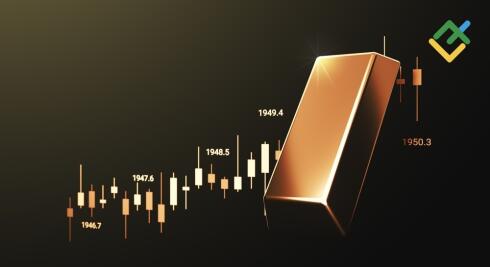
The chart of gold quotes for the past year looks like a roller-coaster. Sharp surges and drops result mainly from geopolitical factors: the US-China trade battles, domestic problems in the EU, and so on. But, in general, investors at a loss currently. A similar situation is with this 5-year chart. Only the gold price chart for the past 35 years provides a general view of why gold should be added to your investment portfolio.
How to invest. The are several ways:
- Buy a gold bar. Disadvantages: a large margin and the need for careful storage, but cash gold is the most reliable.
- Open a gold deposit in a bank. In this case, there is no need to worry about the safety of the metal, but there is almost no return.
- Buy gold collectible (investment) coins. There is a large margin, but you can earn on the increase in the coin value itself.
- Buy futures for gold. It requires knowledge of how the stock market operates and a large deposit.
- Trade CFD for gold. Here, you can operate with small amounts of money, and you can also earn on the metal price fall.
10. Investment in your own self.
Why not? Someone is investing in securities, gold, currency, or hides money under a pillow. But the most valuable asset is our brain. That is what analyzes and makes decisions. So, investing in yourself is one of the most promising fields, which in the future may yield the biggest return.
How to invest. Options:
- Studying at the European universities, MBA. Taking practical courses with the application of knowledge and job prospects in the best companies in the world.
- Participation in exhibitions, conferences, communication on the forums.
- Self-education
- Development of unique products and attracting investors (receiving grants, crowdfunding, and crowdinvesting).
The world is constantly changing. What is popular and demanded today, will lose its relevance tomorrow. A professional needs to be able to quickly adapt to market trends and requirements. And self-education, acquiring new knowledge and skills will help you do it. You can also invest in psychological education: increasing stress resistance, developing logic, patience, reaction.
Conclusion. I could add blockchain technologies (cryptocurrency is already a result), the emerging direction of cybersport and development of software, suggested for information protection and security to all these options, but the article is already long enough. I believe you’ve seen promising investments of the future, and so, you’ll find something interesting and profitable. If you have more ideas, please do share them in the comments!
P.S. Did you like my article? Share it in social networks: it will be the best "thank you" :)
Useful links:
- I recommend trying to trade with a reliable broker here. The system allows you to trade by yourself or copy successful traders from all across the globe.
- Use my promo code BLOG to get a 50% deposit bonus on the LiteFinance platform. Simply enter this code in the appropriate field when funding your trading account.
- Telegram chat for traders: https://t.me/litefinancebrokerchat. We are sharing the signals and trading experience.
- Telegram channel with high-quality analytics, Forex reviews, training articles, and other useful things for traders https://t.me/litefinance

The content of this article reflects the author’s opinion and does not necessarily reflect the official position of LiteFinance broker. The material published on this page is provided for informational purposes only and should not be considered as the provision of investment advice for the purposes of Directive 2014/65/EU.
According to copyright law, this article is considered intellectual property, which includes a prohibition on copying and distributing it without consent.