



Choosing the best crypto to buy now can be challenging given the vast selection of digital assets and high volatility. When evaluating a project's prospects, investors look beyond price movements to consider technological developments, protocol revenue, on-chain activity, and institutional demand. Meanwhile, the crypto market is constantly evolving, so thorough research is essential when deciding which cryptocurrencies are worth investing in.
This article explores the leading cryptocurrencies, examining their key features, growth potential, and associated risks. Our analysis draws on data from Glassnode, CryptoQuant, and DeFiLlama, alongside forecasts from industry experts. We'll look at which assets could be contenders for the best crypto to invest in now, which cryptocurrencies may suit different investment objectives, and what factors to consider before investing.
The article covers the following subjects:
Major Takeaways
According to 13F, institutional investors are increasing their crypto exposure to spot Bitcoin ETFs even as BTC prices decline. This suggests that major market participants maintain a long-term investment outlook on Bitcoin.
CryptoQuant's Bull/Bear Market Cycle Indicator helps identify different phases of Bitcoin's market cycle. A move into positive territory signals strengthening bullish sentiment, although it does not guarantee further price appreciation.
The DePIN sector is gaining traction, with infrastructure projects developing sustainable business models and generating real revenue. However, token volatility remains high. As a result, crypto investors are paying increasing attention to financial performance and revenue potential alongside technological innovation.
Through its IBIT fund, BlackRock controls a substantial share of the US spot Bitcoin ETF market. The concentration of assets among major asset managers and custodians, including Coinbase, also introduces additional infrastructure risks.
Zcash and Monero are attracting growing attention thanks to their privacy-focused transaction technologies. However, the outlook for privacy coins depends heavily on regulatory developments, exchange listings, and institutional demand.
Revenue generated by cryptocurrency projects, combined with analysts' forecasts, can help investors evaluate their growth potential. Nevertheless, even optimistic long-term price targets do not guarantee future returns.
TD Cowen, Standard Chartered, and Bernstein regularly publish price forecasts for Bitcoin (BTC) and Ethereum (ETH). Their projections account for market cycles, institutional demand, and broader macroeconomic conditions, and are revised as market conditions change.
Revenue trends across crypto protocols do not always correspond with activity in derivatives markets. Rising open interest alongside declining protocol revenues may signal increased speculative activity rather than stronger underlying demand.
According to RWA.xyz, the market for tokenized real-world assets (RWAs) is expanding, supported by growing asset supply and more holders. However, adoption pace will depend on regulatory clarity, market liquidity, and demand for tokenized financial instruments.
What Is the Best Crypto to Buy Right Now?
The best cryptocurrency to buy depends on your investment objectives, risk tolerance, and investment horizon. For relatively conservative investors with a long-term outlook, Bitcoin—the first cryptocurrency and the largest by market capitalization—is a solid pick. Its key advantages include well-established core infrastructure, the availability of spot ETFs, and a capped maximum supply. However, its circulating supply continues to grow gradually as new bitcoins are mined.
Identifying promising cryptocurrencies with significant growth potential is more challenging. The most promising crypto assets are not necessarily those with the largest market capitalizations. More important factors include demand for the underlying product, the sustainability of the business model, and user activity. For example, Aave has established a strong position in DeFi lending, Chainlink is developing infrastructure for tokenizing RWAs, and Hyperliquid generates revenue from crypto trading activity and uses part of its proceeds to buy back tokens. In the DePIN sector, rising project revenues do not always translate into higher cryptocurrency prices. This highlights an important feature of the cryptocurrency market: investors increasingly assess not only technological innovation and growth potential but also a project's underlying economics and ability to generate sustainable revenue.
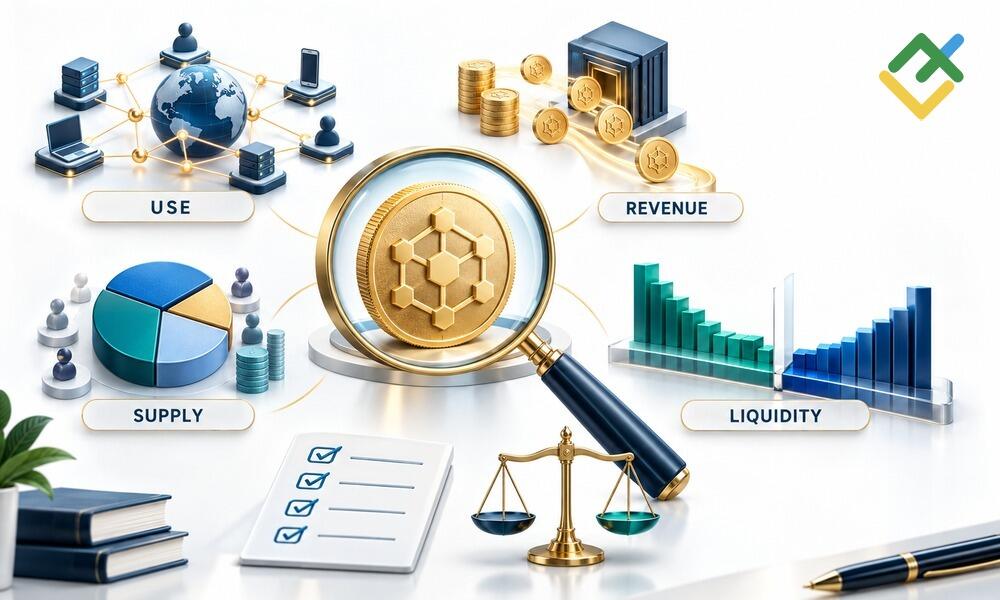
It is impossible to predict with certainty which cryptocurrency will appreciate. Even projects with strong fundamentals and promising growth prospects do not guarantee positive returns. When deciding which cryptocurrency to buy, investors should consider financial performance, institutional demand, and on-chain capital flows. Established cryptocurrencies with functioning products and proven business models deserve particular attention. By contrast, meme coins, whose value largely depends on community sentiment and speculative interest, generally carry higher risks.
Below is a list of the top 10 good crypto to buy considering based on these criteria. This selection is intended as a starting point for your own research, not a guarantee of future returns or investment performance.
But first, let's answer the question: What is market capitalization, and why is it important?
A cryptocurrency's market capitalization is calculated by multiplying its current price by the number of coins in circulation. This metric helps investors compare the relative size of different digital assets, but it does not indicate the amount of capital actually invested, market liquidity, or a project's fundamental value.
Circulating supply is another important factor. Bitcoin and Monero have relatively similar numbers of coins in circulation, yet their prices and market capitalizations differ significantly. These differences reflect variations in demand, liquidity, issuance mechanisms, and market expectations.
A large market cap does not shield a cryptocurrency from sharp price declines. Even the biggest digital assets can lose value due to capital outflows, mass liquidations, or deteriorating market sentiment. Market capitalization represents the market's current valuation of an asset, not the total amount of money invested in it.
Before deciding which cryptocurrency to buy, take your time to understand how to analyze the crypto market.
Top 10 Cryptocurrencies to Buy
This ranking is provided for informational purposes only and does not guarantee investment returns. The market data and indicators reflect conditions at the time of publication and may change. Therefore, when deciding which cryptocurrency to buy right now, investors should assess current market conditions and regularly reassess their investment strategies.
1. Bitcoin (BTC)
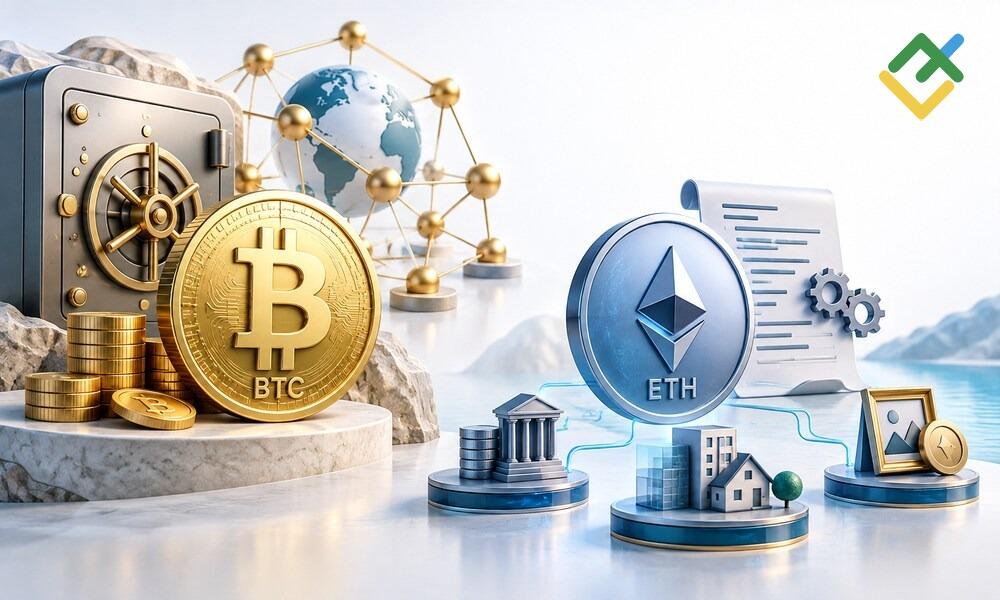
Bitcoin is one of the best cryptocurrencies for long-term investment due to its high liquidity, widespread acceptance, and well-developed institutional infrastructure. Spot Bitcoin ETFs make it easier for large investors to access the asset, and its limited supply supports its long-term appeal. However, the right choice depends on your investment goals, time horizon, and risk tolerance.
Market Cap: $1.31T
Price: $65,469.89
Circulating Supply: 20.11M BTC
Tokenomics
Bitcoin has a hard supply cap of 21 million BTC. New coins are introduced into circulation through mining, which relies on the Proof-of-Work consensus mechanism. Approximately every four years, a halving event cuts the block reward in half, gradually reducing the rate of new Bitcoin issuance.
Essential Facts
Bitcoin is often regarded as a best-performing crypto and an alternative store of value amid inflation and the depreciation of fiat currencies. Its main advantages include a limited supply, decentralization, and a well-established Bitcoin blockchain. The Bitcoin network benefits from strong computational security and high resistance to changes in its transaction history. However, BTC remains highly volatile, sensitive to monetary policy, market liquidity, and shifts in investor sentiment.
On-chain Signals
To assess the current market cycle, analysts rely on the MVRV Z-Score, moving averages, and ETF capital flows. Rising readings may signal strengthening demand, while ETF outflows and declining on-chain activity can point to a potential market downturn. However, no single indicator can reliably predict future price movements. Before deciding whether to buy Bitcoin, assess the risks and determine how much of a potential drawdown you can withstand.
2. Ethereum (ETH)
Ethereum serves as foundational infrastructure for decentralized finance (DeFi), smart contracts, and tokenizing real-world assets (RWAs). Its network supports a broad range of applications, including lending protocols, decentralized exchanges, and token issuance platforms. The continued expansion of the Ethereum ecosystem, coupled with growing institutional interest, underpins ETH's long-term investment potential.
Market Cap: $223.79B
Price: $1,832.14
Circulating Supply: 122.22M ETH
Tokenomics
Ethereum operates on a Proof-of-Stake consensus mechanism, under which validators receive rewards for helping secure the network. Its EIP-1559 upgrade introduced a fee-burning mechanism. During periods of high network activity, the amount of ETH burned can exceed newly issued supply, resulting in a net reduction in the total ETH supply.
Essential Facts
Ethereum's long-term prospects are closely linked to the growth of asset tokenization, DeFi, and Layer 2 solutions. The network remains a key component of the digital asset infrastructure, while spot Ethereum ETFs are making it more accessible to institutional investors. However, rising network activity does not necessarily translate into a proportional increase in ETH's price.
Risks
Competition from Solana and other blockchain networks, high transaction fees on Ethereum's mainnet, and the migration of activity to L2 solutions, which could reduce base-layer revenue.
3. XRP
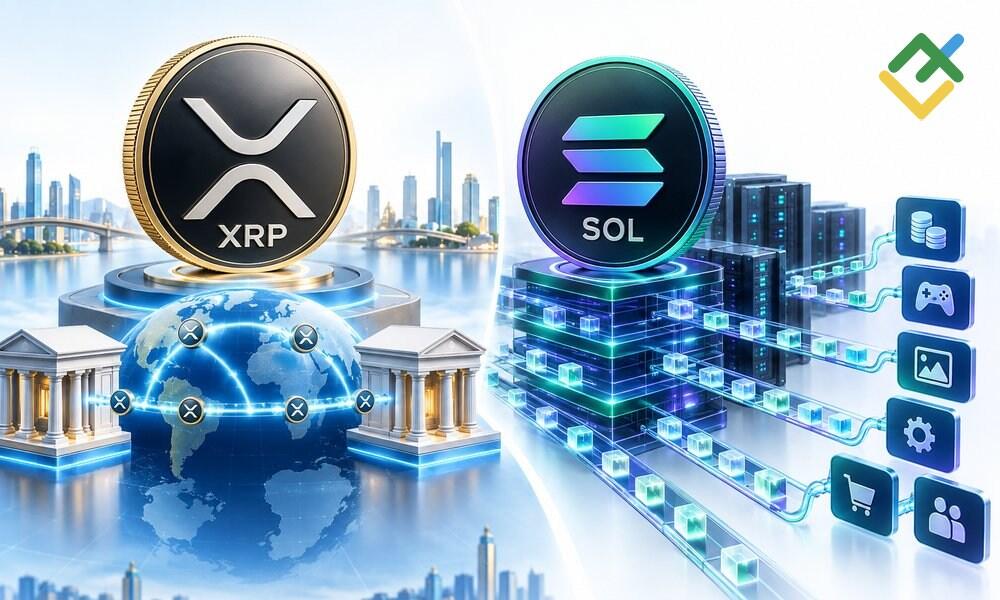
XRP is designed to facilitate fast, low-cost cross-border payments. The token is used in some of Ripple's payment solutions, while the XRP Ledger enables transactions without relying on traditional financial intermediaries. The resolution of Ripple's legal dispute with the SEC has reduced regulatory uncertainty in the US, while the launch of XRP-based investment products has broadened institutional investors' access to the asset.
Market Cap: $61.03B
Price: $0.962
Circulating Supply: 63.52B XRP
Tokenomics
XRP has a maximum supply of 100 billion tokens, all of which were created at the network's launch. Ripple holds a substantial portion of XRP in escrow and releases it gradually on a predetermined schedule. Any unused tokens can be returned to escrow, meaning that monthly unlocks do not automatically translate into an equivalent increase in the circulating supply or selling pressure.
Essential Facts
The XRP Ledger relies on its own consensus mechanism, enabling fast transaction processing and low fees. However, Ripple's substantial XRP holdings have raised questions about the ecosystem's decentralization. XRP's long-term prospects depend on broader adoption of Ripple's payment solutions, institutional demand, and the token's real-world utility.
Risks
Regulatory restrictions in certain jurisdictions, competition from stablecoins and traditional payment systems, and potential downward pressure on XRP's price as the amount of XRP in free circulation increases.
4. Solana (SOL)
Solana is a promising cryptocurrency known for its high transaction speeds and low fees. Its network supports a wide range of use cases, including decentralized applications, payment services, and DeFi protocols. Ongoing infrastructure upgrades, including the introduction of the new Alpenglow consensus mechanism, aim to shorten transaction confirmation times and further enhance the blockchain’s overall performance.
Market Cap: $42.53B
Price: $72.06
Circulating Supply: 591.68M SOL
Tokenomics
SOL is used to pay transaction fees, participate in staking, and help secure the network. The issuance of new tokens gradually declines, with the annual inflation rate falling by 15% each year until it reaches its long-term target of 1.5%. Meanwhile, a portion of transaction fees is burned, partially offsetting the growth in token supply.
Essential Facts
Solana has recovered from the crisis triggered by the collapse of FTX and strengthened its position in the DeFi, payments, and tokenization markets. High user activity and growing application revenues underscore the ecosystem's popularity. However, the revenues generated by individual protocols should not be confused with network revenue, nor do they automatically translate into an appreciation of SOL. Meanwhile, growing institutional interest in blockchain infrastructure provides an additional catalyst for the ecosystem’s expansion.
Risks
Technical disruptions, intense competition from Ethereum and other Layer 1 networks, reliance on activity in speculative market segments, and high volatility.
5. BNB
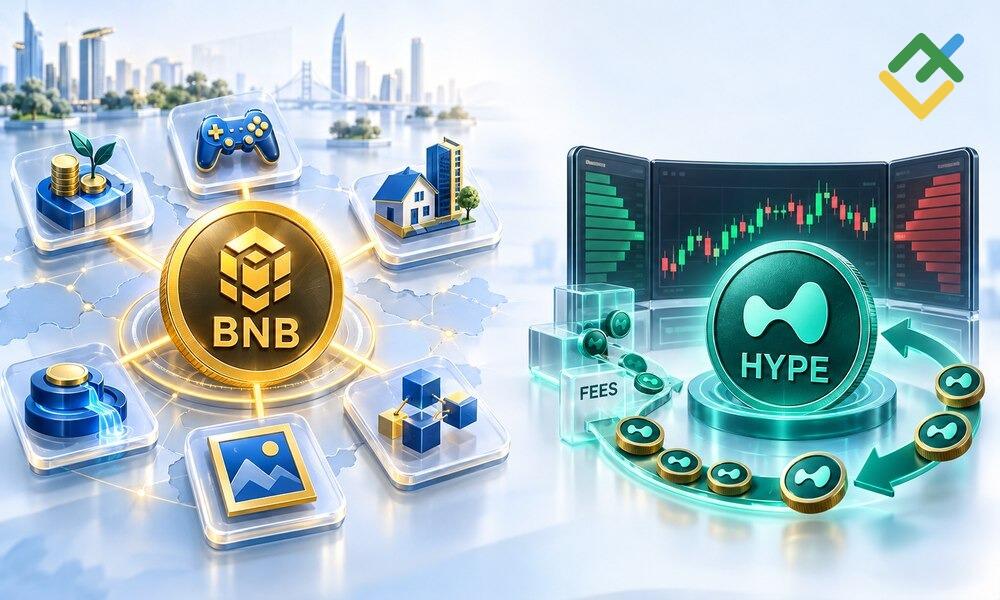
BNB could be the best cryptocurrency to invest in for those betting on the continued expansion of the Binance and BNB Chain ecosystems. The token is used to pay transaction fees, facilitate transfers, and interact with decentralized applications. Rising user activity, DeFi growth, and ongoing infrastructure development could buoy demand for BNB in the long term.
Market Cap: $78.07B
Price: $595.1000
Circulating Supply: 131.51M BNB
Tokenomics
The initial supply was 200 million BNB. The Auto-Burn mechanism provides for the regular burning of tokens until the total supply is reduced to 100 million BNB. In addition, a portion of transaction fees on the BNB Chain is destroyed, which gradually reduces the number of coins in circulation.
Essential Facts
BNB is not only an exchange token but also a key component of the BNB Chain infrastructure. The ecosystem brings together decentralized financial services, GameFi projects, and platforms for the tokenization of RWAs. BNB's prospects depend on the demand for these solutions, user activity, and competition with other blockchains. When evaluating GameFi projects, consider the sustainability of the economy and the genuine engagement of the audience.
Risks
Regulatory pressure on Binance, BNB's dependence on the exchange's reputation and business operations, the concentration of influence within the ecosystem, and competition from other Layer 1 networks. The Altcoin Season Index helps investors gauge how altcoins are performing relative to Bitcoin and assess whether the market is shifting toward an altcoin-led rally.
6. Hyperliquid (HYPE)
Hyperliquid is one of the largest decentralized platforms for perpetual futures trading. HYPE may be an attractive investment due to the protocol's revenue generation and token buyback mechanism. The platform offers deep liquidity and supports derivatives trading and swaps between digital assets. A significant portion of trading fees is allocated to a dedicated fund used to buy back HYPE tokens, creating an additional source of demand for the cryptocurrency.
Market Cap: $16.57B
Price: $69.840
Circulating Supply: 237.73M HYPE
Tokenomics
HYPE has a maximum supply of 1 billion tokens, allocated among ecosystem participants, the development team, and other designated groups. The Assistance Fund mechanism directs a portion of the platform's revenue toward purchasing HYPE on the open market. However, these repurchased tokens are not necessarily burned, meaning that buybacks do not automatically result in a reduction in the circulating or total supply.
Essential Facts
Hyperliquid stands out among crypto projects for its sustainable fee-based revenue model. However, its earnings remain dependent on trading activity, transaction volumes, and market volatility. A decline in revenue could reduce the scale of HYPE buybacks, weakening a key source of demand for the token. Meanwhile, token unlocks increase the available supply and could add to selling pressure.
Risks
Regulatory restrictions on decentralized derivatives platforms, competition from rival exchanges, declining trading activity and protocol revenue, and potential downward pressure on HYPE's price during periods of significant token unlocks.
7. Zcash (ZEC)
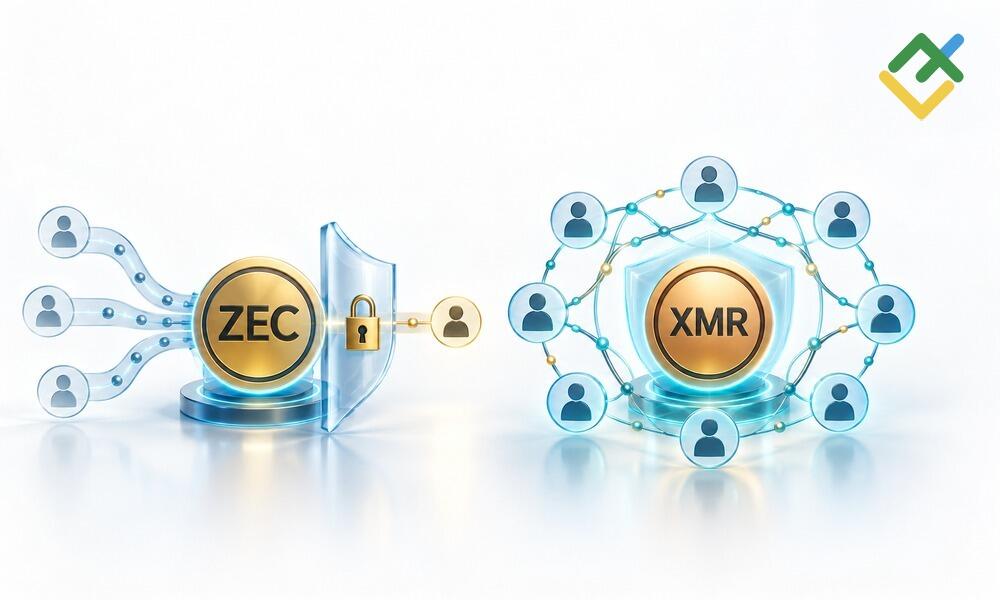
Zcash is a promising cryptocurrency in the privacy-focused segment of the market. It uses zero-knowledge proofs to verify transactions without disclosing sensitive details, such as the sender, recipient, or transaction amount. Growing demand for financial privacy and the development of confidential blockchain solutions could provide long-term support for ZEC.
Market Cap: $15.53B
Price: $913.76
Circulating Supply: 17.05M ZEC
Tokenomics
Zcash has a maximum supply of 21 million ZEC. The network operates on a Proof-of-Work consensus mechanism, with new coins entering circulation as rewards for miners. Approximately every four years, a halving event cuts the block reward in half, reducing the rate at which new ZEC is issued. This mechanism gradually slows supply growth and reinforces the cryptocurrency’s scarcity.
Essential Facts
Zcash allows for both transparent and private transactions. This gives users the ability to choose their own level of privacy. The project's prospects depend on demand for private payments, technological advances, and ZEC's availability on trading platforms. However, high mining profitability does not guarantee an increase in the coin's value.
Risks
Stricter regulation of privacy-focused cryptocurrencies, the potential delisting of ZEC from centralized exchanges, competition from Monero and other privacy-oriented payment solutions, and high volatility.
8. Monero (XMR)
Monero is one of the best-known cryptocurrencies specializing in transaction privacy. Launched in 2014, it has established a strong position in the privacy-focused digital asset market. Growing demand for financial confidentiality could support interest in XMR. However, reaching new record highs does not necessarily signal further upside or guarantee that the rally will continue.
Tokenomics
Monero has no fixed maximum supply. Once the main emission phase ends, the Tail Emission mechanism provides miners with a perpetual block reward of 0.6 XMR. This ensures a continuous incentive for miners to secure the network over the long term, while the relative inflation rate gradually declines as the total supply grows.
Essential Facts
Monero uses ring signatures, stealth addresses, and other cryptographic techniques to conceal information about transaction senders, recipients, and amounts. Unlike Zcash, Monero enables privacy by default, making all transactions confidential at the protocol level. However, regulatory pressures have led to XMR being delisted from several centralized exchanges, including Binance and OKX. This reduces the asset's accessibility to investors and could weigh on its market liquidity.
Risks
Exchange delistings, tighter regulation of privacy-focused cryptocurrencies, limited institutional demand, and reduced access to XMR trading on regulated platforms.
9. Chainlink (LINK)
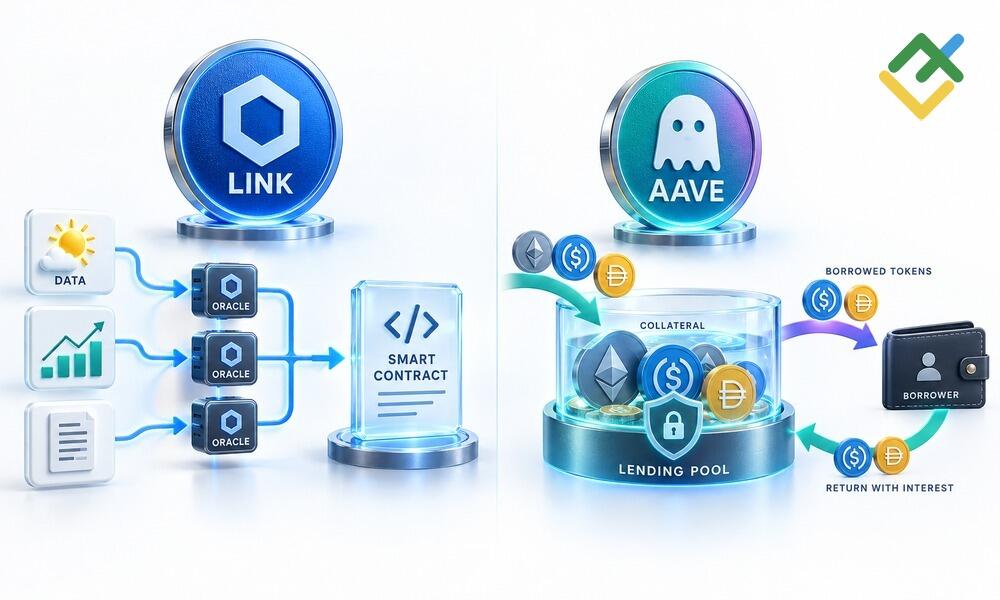
Chainlink is a promising cryptocurrency focused on smart contract infrastructure and tokenizing RWAs. Its technology enables secure and reliable data transfers between blockchains and external systems, allowing smart contracts to interact with real-world information. Growing adoption of tokenized assets and rising interest in blockchain technology among financial institutions could provide long-term support for demand for LINK.
Market Cap: $7.04B
Price: $9.19
Circulating Supply: 766.85M LINK
Tokenomics
LINK has a maximum supply of 1 billion tokens. The tokens are used to pay for network services, compensate oracle providers, and support the economic security of individual services through staking. A portion of the total supply remains in reserve and is gradually released into circulation, potentially influencing LINK's supply dynamics and market price.
Essential Facts
Chainlink is more than just an oracle network. It also provides interoperability infrastructure between different blockchains. Its Cross-Chain Interoperability Protocol (CCIP) enables the secure transfer of data and tokens across networks. Chainlink's technologies are being tested and adopted in initiatives involving major financial institutions, including SWIFT and UBS. However, the expansion of these partnerships does not necessarily translate into a proportional increase in LINK's market value.
Risks
Competition from alternative oracle providers, dependence on the pace of adoption of RWA tokenization and cross-chain technologies, growth in the circulating supply of LINK, and uncertainty over how strongly increased use of Chainlink’s services will translate into demand for its native token.
10. Aave (AAVE)
Aave is one of the largest DeFi protocols in the lending market. It allows users to supply crypto assets and earn interest, as well as borrow digital assets against collateral. Aave commands a significant market share, accounting for 61.5% of all active loans and 52.4% of the sector's total value locked (TVL). The protocol's financial performance further highlights its popularity, with revenue reaching $907 million in 2025 and a further $333 million generated in the first half of 2026. However, not all revenue is automatically transferred to the DAO Treasury. The allocation of funds is determined by the protocol's governance mechanisms.
Market Cap: $1.67B
Price: $108.42000
Circulating Supply: 15.44M AAVE
Tokenomics
AAVE has a maximum supply of 16 million tokens. It is used to participate in protocol governance and support its security mechanisms. The limited supply and ongoing buyback programs could provide additional support for demand. However, the platform's revenue is not distributed directly to all AAVE holders, meaning that protocol growth does not automatically translate into income for token owners.
Essential Facts
Aave offers a decentralized alternative to traditional lending, using smart contracts to operate 24/7 without relying on banking intermediaries. The protocol has demonstrated resilience during periods of extreme market volatility and significant liquidity outflows, although it remains exposed to technical vulnerabilities and broader market disruptions. Optimistic long-term forecasts, including price targets of $3,500 by 2030, point to expectations of substantial growth in DeFi lending. However, such projections remain speculative and do not guarantee future price appreciation.
Forecast
Market views on AAVE's long-term prospects vary considerably. Bullish scenarios point to growing demand driven by institutional adoption of DeFi and continued development of the protocol. More conservative outlooks factor in intensifying competition, regulatory uncertainty, and the risk of declining lending volumes.
Risks
Smart contract vulnerabilities, price oracle failures, improper collateral liquidations, and the architectural complexity of newer protocol versions. Changes to Aave's governance structure and the evolving regulatory framework for DeFi lending, including the implementation of MiCA requirements, add further uncertainty.
How We Ranked This TOP Crypto
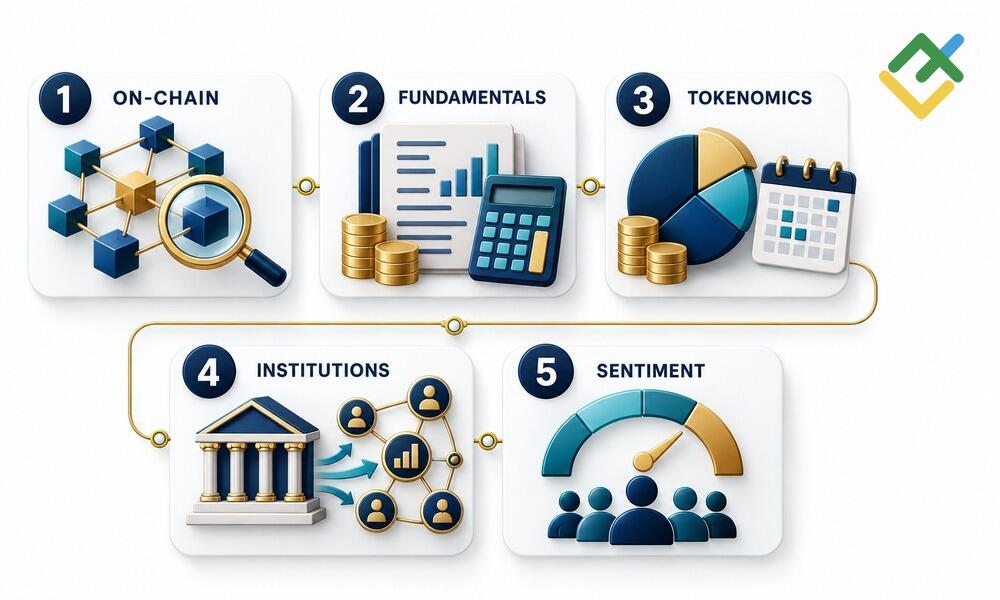
To compile this ranking, we considered five key criteria to evaluate the investment potential of cryptocurrencies, drawing on analytical tools and market data.
On-chain metrics (Glassnode, CryptoQuant, Artemis). We analyzed key indicators such as MVRV and SOPR, fund flows between wallets and exchanges, the number of active addresses, and changes in token supply. These metrics help assess network activity, investor behavior, and overall market conditions.
Fundamental analysis (Token Terminal, DeFiLlama). We examined protocol revenue, TVL, transaction fees, developer activity, and the sustainability of business models. For example, Aave generates revenue through its lending operations, allowing us to evaluate demand for its services using financial metrics.
Tokenomics. We assessed circulating supply, token unlock schedules, burning mechanisms, and inflation rates. Cryptocurrencies with high issuance rates or significant upcoming token unlocks received more conservative assessments due to the potential for increased selling pressure.
Institutional demand (13F reports, ETF data). We evaluated capital inflows and outflows, asset concentration, and custody-related risks. For altcoins, we also considered partnerships with financial institutions and the adoption of blockchain-based solutions.
Market trends and sentiment (Google Trends, LunarCrush, Fear and Greed Index). We tracked investor interest, the popularity of individual crypto sectors, and overall market sentiment. Particular attention was paid to distinguishing short-term speculative hype from sustainable demand for underlying technologies and products.
This approach helps identify promising assets based not only on market popularity but also on their underlying fundamentals. When deciding which cryptocurrencies to invest in, it is also worth exploring different crypto trading strategies to identify potential entry and exit points and manage investment risks effectively.
Risks You Need to Weigh First
Investing in digital assets involves significant risks. Even large, well-established cryptocurrency projects cannot guarantee capital preservation or positive returns. Before investing in cryptocurrencies, it is essential to consider the following factors:
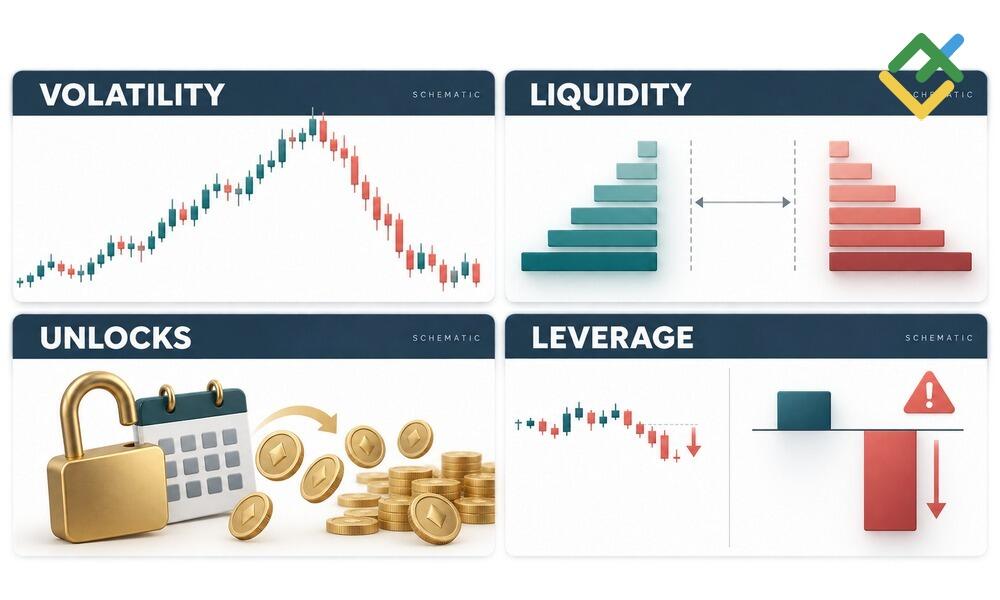
Volatility. Sharp price swings are an inherent feature of the cryptocurrency market. Bitcoin has repeatedly experienced drawdowns of more than 70–80%, while altcoins can suffer even steeper potential losses. Even institutional investors are not immune to these risks.
Concentration of assets in ETFs. A significant share of the assets held in spot Bitcoin ETFs is concentrated among major asset managers, including BlackRock and Fidelity. Reliance on a limited number of custodians also creates additional infrastructure and operational risks related to the safekeeping of digital assets.
Insufficient liquidity. Liquidity in the altcoin market is often considerably lower than in Bitcoin. Large transactions can trigger sharp price movements, particularly during periods of subdued trading activity. This can make it difficult to execute trades at the desired price.
Regulatory uncertainty. Changes in legislation across the US, Europe, and other jurisdictions can affect cryptocurrency availability. Privacy-focused cryptocurrencies, including Monero and Zcash, are particularly exposed, as both have faced delistings from several centralized exchanges.
Popularity without fundamental support. Growing interest in emerging sectors, including decentralized artificial intelligence (DeAI), does not necessarily translate into sustainable project revenue or long-term economic viability. High user activity and market enthusiasm alone are not sufficient to guarantee the fundamental value of a token.
Declining revenue at Hyperliquid. Hyperliquid's revenue depends heavily on trading volumes and market volatility. A slowdown in trading activity could reduce protocol revenue, leading to fewer HYPE buybacks and weakening a key source of demand for the token.
Technical risks associated with Aave V4. Aave V4's hub-and-spoke architecture relies on shared components across multiple markets. Vulnerabilities or errors in critical smart contracts could affect a substantial portion of the protocol, potentially resulting in significant financial losses.
Concentration of tokens among large holders. If the project team and early investors control a substantial share of the circulating supply, large-scale sales or scheduled token unlocks could trigger sharp price declines and increase market volatility.
Lack of diversification. Concentrating all investment capital in a single cryptocurrency exposes a portfolio to the risks associated with one asset. Diversifying across different sectors, including Layer 1 blockchains, DeFi, and RWA tokenization, can help spread risk, although it does not eliminate exposure to broader market downturns.
Leverage. Margin trading amplifies both potential gains and losses. During periods of heightened volatility, leveraged positions may be forcibly liquidated. Beginners are generally better off avoiding leverage until they have gained sufficient market experience. The desire to make money with cryptocurrency should not be based on the expectation of guaranteed returns.
This material is provided for informational purposes only and should not be considered investment advice. Before making any investment decisions, conduct your own research and carefully assess the associated risks.
Conclusion
When deciding which cryptocurrencies to invest in, consider your investment objectives, risk tolerance, and time horizon. Bitcoin and Ethereum can form the core of a diversified portfolio, supported by their relatively high liquidity and well-established infrastructure. Aave and Chainlink stand to benefit from the development of DeFi and the tokenization of RWAs, while Solana and BNB attract attention through the scale of their ecosystems and technological capabilities. The long-term prospects of Zcash and Monero are closely tied to demand for transaction privacy, XRP's to the expansion of cross-border payments, and Hyperliquid's to revenue generated by derivatives trading.
Diversification across different sectors can help spread risk, but it does not guarantee protection against a broader market downturn. The cryptocurrency market remains highly volatile, making it important to base investment decisions on fundamental indicators rather than short-term market trends. Crypto prices are influenced by numerous factors, including liquidity, regulatory developments, and investor demand. Long-term investors should be prepared for potentially substantial drawdowns. Finally, neither market capitalization nor historical returns guarantee future price appreciation. When selecting crypto assets, prioritize your investment strategy and conduct thorough analysis.
Top Crypto to Buy FAQs
Bitcoin and Ethereum are often considered for long-term investments due to their high liquidity and well-developed infrastructure. Bitcoin is characterized by a limited supply, while Ethereum supports DeFi and the tokenization of RWAs. However, both assets are subject to significant price volatility.
Aave (AAVE) and Chainlink (LINK) are hot crypto coins due to the growth of their ecosystems. However, short-term returns depend on market conditions, liquidity, and demand. Before buying, evaluate technical indicators, volatility, and potential risks.
Bitcoin and Ethereum are considered relatively stable due to their high liquidity, widespread adoption, and institutional demand. However, even the largest cryptocurrencies can experience significant price declines. There is no such thing as a completely safe digital asset.
It is impossible to predict a sharp rise in the value of a specific asset. The best altcoins to buy can be found among projects with in-demand products, a sustainable business model, and an active community. However, strong fundamentals do not guarantee a rise in price.
The content of this article reflects the author’s opinion and does not necessarily reflect the official position of LiteFinance broker. The material published on this page is provided for informational purposes only and should not be considered as the provision of investment advice for the purposes of Directive 2014/65/EU.
According to copyright law, this article is considered intellectual property, which includes a prohibition on copying and distributing it without consent.