At the beginning of the cryptocurrency era, things were simple. There was Bitcoin and Ethereum. The supply of coins was limited, and terms like network split and hard fork were used only by the creators of blockchain-based digital assets. However, in a couple of years, thousands of new coins appeared in the cryptocurrency market. Some tokens got a new program code and became alternative versions of themselves. This is exactly what happened to Ethereum and Ethereum Classic, which are two separate cryptocurrency platforms today.
This article will compare and contrast Ethereum and Ethereum Classic. You will find out which blockchain is the original Ethereum project and which was developed later. You will also see the differences between these two networks.
The article covers the following subjects:
- What is Ethereum?
- What is Ethereum Classic?
- What Is The DAO?
- What Are The Differences Between Ethereum and Ethereum Classic?
- What Makes Ethereum and Ethereum Classic Similar?
- Ethereum vs Ethereum Classic: Historical Price Action Reviewed
- Should I Buy Ethereum or Ethereum Classic?
- Conclusion
- Ethereum versus Ethereum Classic FAQs
What is Ethereum?
Ethereum, ETH, is the most popular altcoin. The Ethereum blockchain came about thanks to the efforts of Vitalik Buterin, who proposed to develop a programming language to create a new application on top of Bitcoin.

The Bitcoin community did not support his concept. However, this did not stop Buterin, who organized The Ethereum Foundation, an investment fund, to implement his idea. His crowdsourcing campaign was extremely successful, raising around $17 million in cryptocurrencies, more than enough to create the original open-source Ethereum blockchain.
The original Ethereum was launched on July 30, 2015. The new system quickly attracted the attention of crypto traders and decentralized autonomous organizations, all thanks to the ability to write a decentralized app (DApps) based on smart contracts. At that time, this was a breakthrough in the decentralized governance of crypto assets. Even today, the Ethereum ecosystem is considered the largest among alternatives to Bitcoin and one of the most technologically advanced.
Ethereum, due to its high market capitalization and network security, is often used to store decentralized finance. However, it was not always considered so secure; just remember the story of the DAO token.
The Ether token is sold on all major cryptocurrency exchanges and is in the wallet of perhaps every cryptocurrency trader. Compared to younger crypto projects, its exchange rate is stable and currently stands at $2 224.74.
What is Ethereum Classic?
Ethereum Classic or ETC is the original Ethereum, which was launched in July 2015 but received the Classic prefix as a result of the Ethereum main net hard fork in 2016. The reason for the split of the blockchain was the scandal due to the hacking of The DAO, as a result of which 4 million ETH were stolen. An unprecedented decision was made to cancel transactions related to the hacker attack to protect investors' funds. But it is impossible to do this in the blockchain; therefore, to return the money to investors, they carried out a hard fork, that is, they created a blockchain chain that originated before the incident.
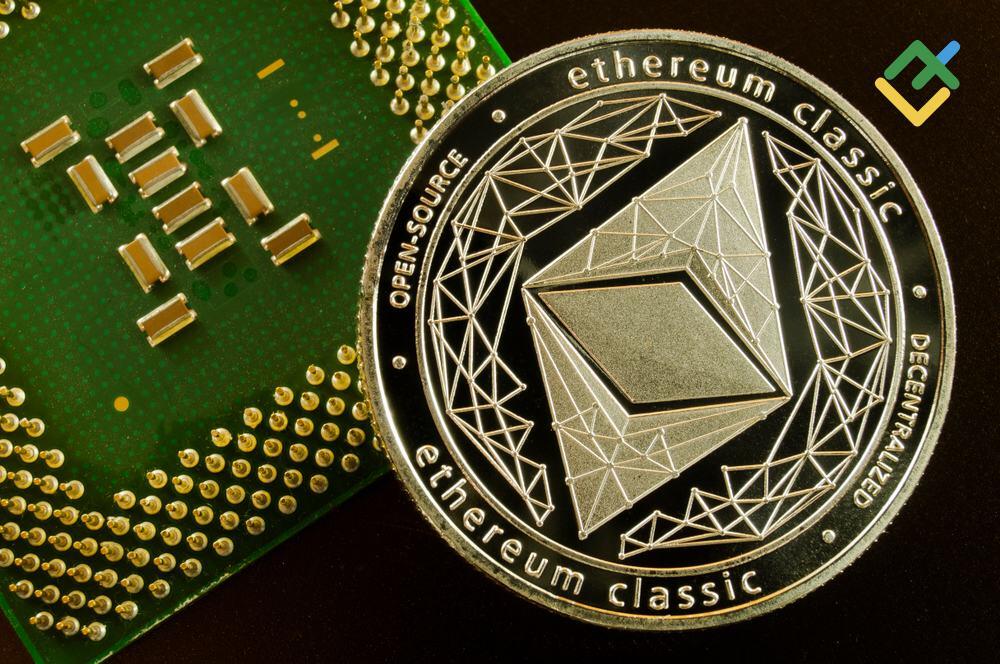
Naturally, such a radical change in the Ethereum ecosystem could not cause unequivocal support. Part of the team (led by Vitalik Buterin) that supported the fork decision switched to supporting the new blockchain branch and retained the Ethereum name. The classic version of Ethereum, which was supported by other developers, got the name Ethereum Classic.
Despite the fact that most of the founders of Ethereum, including Vitalik Buterin and Gavin Wood, have switched to a new decentralized blockchain, there are still many supporters of the original network in the community who consider the fork unacceptable.
Furthermore, the fans of the original version have achieved some success, despite the shortcomings of the Ethereum Classic network. Now, Ethereum Classic is one of the ten most popular cryptocurrencies.
Next, I will detail what DAO is and why it split the Ethereum community into two camps, and instead of a single cryptocurrency token, we now have two Ethereums.
What Is The DAO?
Shortly before the fork of the network, The DAO was considered one of the largest Ethereum funds, which was able to attract a large amount of decentralized finance. In fact, The DAO has become the first sign of the entire DeFi industry. At the time, it was the first stand-alone venture fund, and every second crypto trader sought to invest in it.

DAO is a smart contract with an attached consensus mechanism for making collegial decisions. If the token holder wants to have some influence on the development of the Decentralized Autonomous Organization, they need to invest a part of their Ethereums in the fund. In return, they receive DAO tokens, whose amount determines the degree of influence on processes within the ecosystem.
If the development team wants to raise funds for their project, they need the support of DAO members. In accordance with the consensus algorithm, a vote is held among the holders of DAO tokens. If a startup gains a certain number of votes, then it is allocated funding from the fund. Any Decentralized Autonomous Organization works according to this principle. In The DAO, for a positive decision on the allocation of funds, it is necessary to obtain the support of 20% of the votes.
The technology of smart contracts, the flexibility and transparency of the fund opened up interesting prospects. In 28 days, crypto traders and financial institutions managed to invest more than $150 million. At that time, about 14% of all Ethereum tokens were in circulation. And investors continued to buy DAO tokens in incredible volumes.
The DAO's Major Flaw
But the fund had a serious flaw in the smart contract algorithms, due to which hackers managed to hack The DAO.
When a new application passed the 20% threshold, but some holders were vehemently opposed to financing it, they were given the option to withdraw from the agreement. Thus, the holder received back the invested Ethereum, which they could freely spend after 28 days. The DAO tokens were returned to the balance of the fund. Also, the holder could open their own analogue of DAO with the support of like-minded people.
Hackers exploited a vulnerability in the split DAO function. They made a small contribution and then requested a refund using a recursive function. At the first iteration, the system returned Ethereum for tokens. However, before the transaction registration was confirmed, the exchange was restarted, and for the same DAO tokens, the hackers were able to get the digital currency again. Similarly, the exchange cycle can be restarted indefinitely, which could eventually lead to the collapse of the entire Ethereum blockchain.
The DAO Hack Resulting Into Ethereum Hard Fork
Repeating the returning procedure for the DAO hack, the hackers stole about $50 million. As soon as the news spread around the world, the market cap of Ethereum fell from $15 billion to $11 billion in just a couple of days. This was not surprising; a blockchain-based distributed cryptocurrency platform did not allow transactions to be canceled, and holders could have lost their funds
The developers, led by Vitalik Buterin, had 28 days before the hackers could use the stolen funds. After negotiations with the most significant people in the Ethereum community, it was decided to conduct a hard fork. This would allow them to cancel the transactions made by hackers and return the stolen money to the system participants.
However, part of the community did not support such a decision. The purists felt that tampering with the public ledger, i.e., the Ethereum ledger, violated the very principles of the blockchain. Therefore, the blockchain must remain unchanged, with the preservation of fraudulent transactions.
The dispute resulted in the decision to divide the system into two independent branches. Some of the participants continued to mine on the original blockchain. To emphasize the classical origin of their platform while maintaining the original concept of Ethereum, they decided to call the token Ethereum Classic. In the crypto market, it received the ETC ticker. The original name of Ethereum remained with the new branch, supported by Vitalik Buterin and most of the other founders.
What Are The Differences Between Ethereum and Ethereum Classic?
Ethereum and Ethereum Classic are similar in many ways. Both cryptocurrencies work with smart contracts, support DApp (decentralized application), and you can also use a cold or hot wallet to store them. However, there are many differences between them, which clearly indicate that these are separate ecosystems with different goals and development prospects. The table below shows the difference between Ethereum and Ethereum Classic in terms of the main parameters.
Parameters | Ethereum | Ethereum Classic |
Trading symbol | ETH | ETC |
Year of foundation | 2015 | 2016 |
General purpose and capabilities | DApp development and smart contract support | DApp development and smart contract support |
Maximum supply | There are no strict limits, but growth is limited to 4.5% per year | 230 million |
Mining standard | Proof of Stake | Proof of Work |
Network speed | 15-40 transactions per second | 12-19 transactions per second |
Mining Reward | Transaction fee | Transaction fee |
Average transaction cost | ~0.75 USD | ~0.008 USD |
Marketcap | ~230 billion USD | ~3 billion USD |
Community | ~3000 DAaps | ~50 DAaps |
Security | No successful “51%” hacker attacks. There are cases of network congestion. | Several successful “51%” hacker attacks |
Concepts and Creation
The concept of Ethereum was largely developed by its founder, Vitalik Buterin. In the past, the young programmer became really interested in the blockchain and the Bitcoin system. The latter, at that time, actually had no competitors.
Understanding the limitations of Bitcoin, Buterin decided to put the technology of smart contracts into the project of his own cryptocurrency. This key difference allowed the new blockchain to attract thousands of supporters around the world.
Smart contracts are digital agreements that can be written to execute a variety of transactions automatically. For example, buying or selling real estate with Ethereum auto payments or more complex scenarios, like decentralized asset exchanges, DeFi applications, etc.
Ethereum Classic has the same capabilities as Ethereum. The only difference is that the developers led by Buterin did not support this branch. Therefore, the ETC infrastructure is much weaker, and DEX, DApps, NFTs, and other web 3.0 services are underdeveloped here. Due to the lack of mainstream support, Ethereum Classic has suffered multiple 51% attacks. By the way, the new Ethereum never had such problems.
Transactions and Speed
Ethereum and Ethereum Classic have been averaging 12-15 operations per second until recently, with a performance limit of 19 operations per second. How long it takes to conduct an Ethereum transaction is determined by the commission, that is, the amount of payment for ETH gas. The more a system participant pays for gas, the faster the transaction is carried out.
However, after the release of the ETH 2.0 update in 2022, the transaction processing speed on the Ethereum network has increased. Also, ERC-20 tokens built on the basis of Ethereum require payment of a fee in ETH. Thus, the demand for the asset increases due to the increase in the number of different tokens created on the Ethereum platform.
Therefore, today we can say that Ethereum and Ethereum Classic differ in the number of transactions carried out and in the speed of their processing. Ethereum Classic has largely become a hostage to its own concept of immutability; in 2023, it lags behind more progressive platforms in technical terms.
Supply and Distribution
According to Coinmarketcap, about 120 million ETH was in circulation at the beginning of 2023. At the same time, the total supply of Ethereum is not limited, but the maximum annual issue is 4.5% of the total tokens number.

The current circulation of Ethereum Classic has about 140 million tokens. The maximum supply of ETC is limited to 210 million, and further emission is impossible when the limit is reached.
I should note that Ethereum and Ethereum Classic have a decentralized distribution of tokens. As of March 2023, the top 10 Ethereum wallets hold about 15% of total ETH and 25% of total ETC. Thus, Ethereum can be considered a more distributed token compared to Ethereum Classic.
Use Cases and Target Market
Since Ethereum Classic is an offshoot of Ethereum, it is easy to guess that both cryptocurrencies aim to perform the same tasks and have a similar target audience. Initially, ETC attracted those who disagreed with the fork of the original network. However, Ethereum Classic then attracted a lot of big investors.
Therefore, Vitalik Buterin's team often considers ETC as a direct competitor to Ethereum. However, experts disagree. Some analysts even believe that the Ethereum Classic project competes for the same market share and user base and seriously affects the Ethereum price.
Others believe that there is no serious real competition between the two projects. DeFi and NFT (non-fungible token) applications are poorly developed in the ETC ecosystem, and existing projects are not original and are often a copy of those that work on the Ethereum blockchain. Another argument in support of this opinion is market capitalization. Ethereum is the number one altcoin, second only to Bitcoin. Ethereum Classic, at the time of writing, only ranks 26th in the overall ranking of blockchain project capitalization.
What Makes Ethereum and Ethereum Classic Similar?
Despite many differences, the number of which is growing yearly, both systems still have much in common:
- Decentralization. The original Ethereum was developed as a decentralized platform. Accordingly, Ethereum Classic and Ethereum retain this feature. Both systems operate on various independent nodes to ensure stable operation.
- Smart contracts were also embedded in the original token. Ethereum Classic inherited the ability to work with smart contracts, and the very existence of ETC is aimed at preserving the original concept of Ether.
- Confidentiality. Ethereum inherited the privacy of transactions from the original network. And in Ethereum Classic, the features of transactions have not changed (they still cannot be canceled). For participants in both systems, only the transaction keys are open, while the username and other personal data remain private. At the same time, both networks do not support the Zero-knowledge protocol; therefore, transactions can be tracked all the way, from the sender to the final recipient.
Ethereum vs Ethereum Classic: Historical Price Action Reviewed
Since Bitcoin has not lost its dominant position in the market, all cryptocurrencies, including ETH and ETC, follow its price action. This dependence simplifies the prediction of the value of crypto assets. Let's pay attention to several important historical moments to show it clearly.
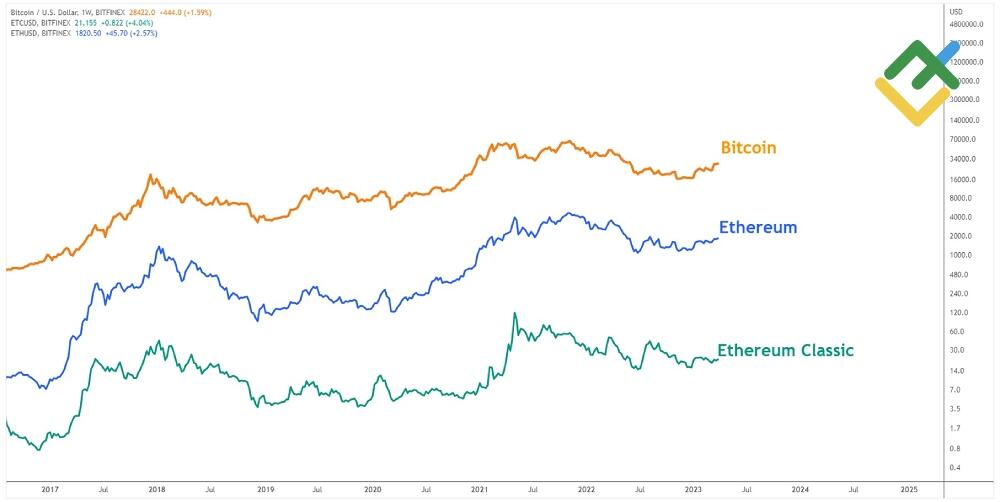
The above chart displays the six-year trend of prices of Bitcoin, Ethereum, and Ethereum Classic.
Asset movements are highly correlated with each other; however, upon closer examination, it is noticeable that Ethereum Classic behaves more volatility.
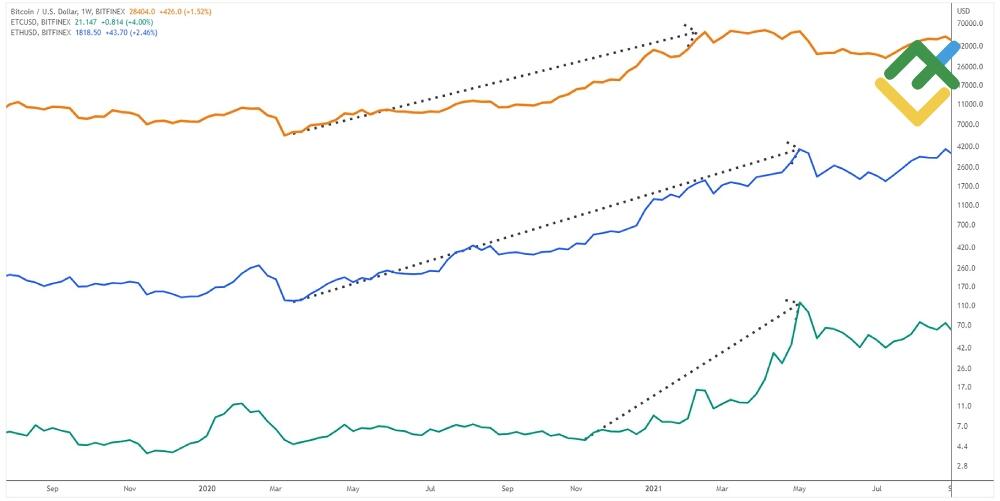
The process of price development in 2020-2021 is indicative. The chart above shows that the Bitcoin price has been rising throughout 2020 but reached its high in February 2021. Ethereum has a stronger trend; the high was reached in May 2021. At the same time, Ethereum Classic seemed to be in trading flat for almost the entire year, and only at the end of 2020 began to catch up with BTC and ETH.
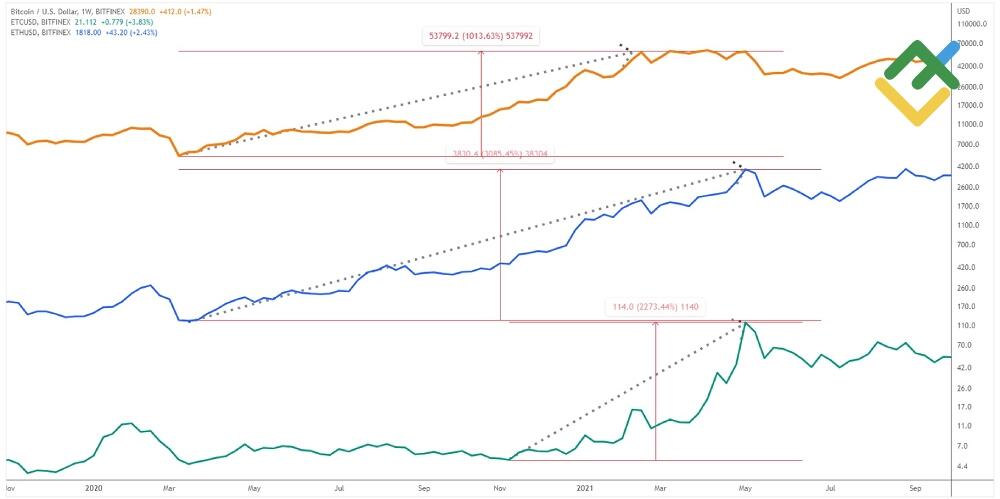
The growth trends also differ. Bitcoin increased 10 times during the bullish trend. The price of Ethereum Classic increased by 22 times, and Ethereum by more than 30 times.
At the same time, ETH and ETC reached highs on the same day, despite Ethereum Classic growing twice as fast. Thus, despite the correlation between assets. In the short term, price movements can be very different, which provides a good opportunity for profit.
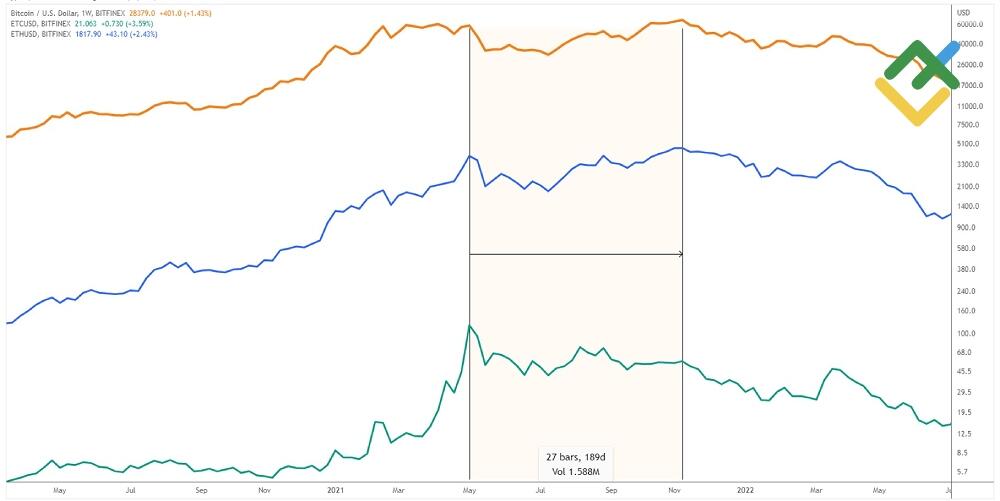
In the above chart, you can see the confirmation of this assumption. Bitcoin and Ethereum continued the uptrends and even broke through all-time highs in November 2021. Ethereum Classic failed to continue rising. This kind of divergence can also be seen as a bearish signal. If the price of an asset fails to repeat the movement after the benchmark (in this example, it is Bitcoin), there must be internal factors that have a decisive influence on the asset value. In this case, it is clear that the buying power of Ethereum Classic is not enough to update the highs, or vice versa; the sellers are stronger than in the ETH or BTC markets.
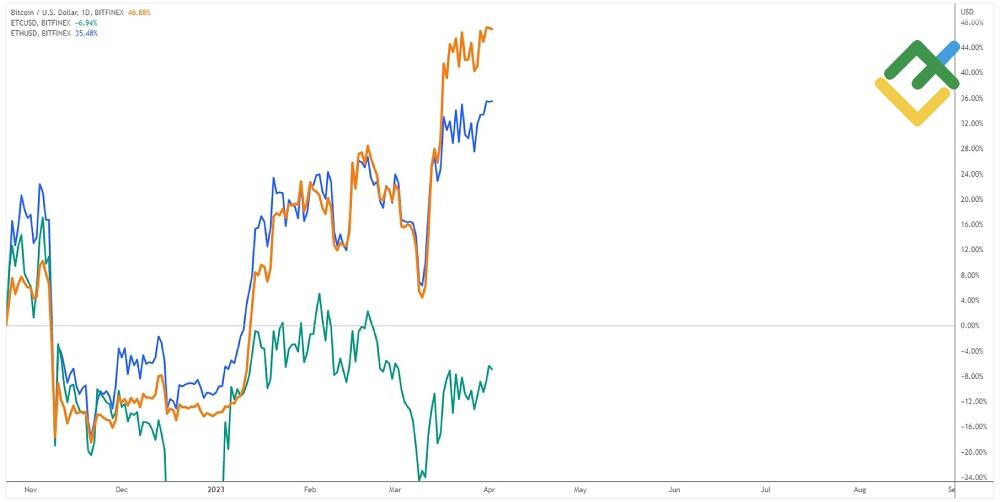
In the current market situation, it is clear that after the launch of Ethereum 2.0, Ethereum looks more promising compared to Ethereum Classic and only slightly behind Bitcoin.
Should I Buy Ethereum or Ethereum Classic?
To make an informed investment decision, you should observe all the features of ETH and ETC:
- Scalability and stability. The strength of Ethereum is in its community, which actively promotes the expansion of cryptocurrency scalability. The transition to Ethereum 2.0 has become a new era in the development of the project, increasing the speed of transaction processing. Moreover, due to the transition to POS consensus, demand from buyers has also increased.
- The Ethereum Classic is developing much slower. The last significant update to the ETC blockchain was in 2020. ETC performance is limited to 19 transactions per second, which is extremely low in 2023. These factors negatively affect demand, press down the value, and cast doubt on the project's successful development in the future.
- Ethereum is extremely popular. But ETC is doing much worse in this regard. Despite the public support of individual large investors, the coin cannot be called widely known in the cryptocurrency community.
- Market capitalization. Ethereum is second only to Bitcoin in terms of market capitalization. Investors see great potential in the project, so the ETH is in the wallet of almost every crypto trader. The low popularity of the classic version affected the capitalization of ETC. In 2023, the coin takes only 26th place in the overall ranking based on market cap.
Given all of the above factors and the current position of Ethereum Classic in the market, it can be suggested that Ethereum is a more stable and progressive asset and a more reliable investment than Classic. However, if we take into account that the prices of ETH and ETC differ by almost 100 times, then in terms of investment returns, the chances of ETC growing 100 times are much higher than those of ETH.
Furthermore, many miners switch from the Ethereum blockchain to Ethereum Classic after introducing the Proof-of-Stake (PoS) consensus in the Ethereum network. The native token, Ethereum Classic, has retained the original proof-of-work (PoW) protocol. This can increase the popularity of the Ethereum Classic and support project development. Therefore, the answer to the question “What should an investor choose?” rather depends on the goals, investment horizon, and acceptable risk. In any case, I recommend not putting all your eggs in one basket and diversifying your investment portfolio as much as possible.
Conclusion
The difference between Ethereum and Ethereum Classic is really big. Originating as a hard fork of Ethereum, the classic version inherited its strengths and weaknesses. Since the ETC community is more conservative and unwilling to make major changes to it, the chances of any significant improvements to Ethereum Classic in the future are slim. At the same time, progress does not stand still. New generation DApp platforms are emerging, such as Solana or Aptos. Due to the slow development, Ethereum Classic is lagging behind the latter version, Ethereum.
Ethereum is, in many ways, a much better option for long-term investors. Many factors indicate that the popularity of Ethereum Classic, as well as its capitalization and value, will gradually decline. However, no one knows how Classic might surprise the cryptocurrency community in the future. One thing is for sure, Ethereum Classic will always have support due to its rich history, commitment to its principles, time-tested smart contract technology, low price of the token, and the transactions themselves.
Ethereum versus Ethereum Classic FAQs
Ethereum Classic has kept almost all the features of the original Ethereum ecosystem as it was in 2016 before the DAO hack. The original Ethereum itself survived the blockchain split and is currently a separate branch of the blockchain. The Ethereum system continues to evolve. In 2022, the network switched from PoW to PoS consensus. Ethereum is also distinguished by a higher price, transaction costs, and blockchain speed. Furthermore, Ethereum is supported by a powerful community and developed infrastructure.
After the network fork, Ethereum retained the original ETH market ticker. And Ethereum Classic got a new one, ETC. In the crypto community, it is also called Classic.
Ethereum Classic is hardly a good long-term investment. Ethereum is actively developing; its blockchain remains competitive among other more modern systems. The main goal of the Ethereum Classic community is to preserve the original chain, which becomes out-of-date every year. The long-term prospects for Ethereum Classic are rather vague.
At first, there was a strong ETH/ETC correlation. However, there have been more and more differences between these two systems over time. It means that there are more factors that affect the cost of tokens. Now it is no longer possible to say that Ethereum Classic price always follows the Ethereum chart.
Ethereum Classic appeared due to the disagreement of certain representatives of the Ethereum community to conduct a hard fork (as Vitalik Buterin wanted). They did not want to make any changes to the blockchain network. Therefore, Ethereum Classic is a project of crypto-idealists who strive to preserve the original concept of Ethereum of the 2016 model, despite the shortcomings of the system.
Currently, Ethereum Classic is rather stable in the market and has some prospects for growth. However, the concept of an “unchangeable” Ethereum becomes less and less relevant each year. Therefore, Ethereum Classic is losing its popularity and value.
In theory, the growth of Ethereum Classic price is not limited. With good capitalization and high demand for coins, prices can skyrocket. However, in practice, the ETC will hardly surge in price sharply.
The Ethereum Classic price in 5 years largely depends on the state of the cryptocurrency market in general. However, the shortcomings of the ETC system are already forcing many investors to refuse investments. This trend will only worsen over time. The market demand for ETC is expected to fall over time, as does the value of the asset.
The major problem of Ethereum Classic is its low level of security compared to the ETH. The ETC does not have such support from the developer community as the ETH, which helps Ethereum conquer the growing market of crypto applications. Both of these factors have a negative impact on demand and the ETC rate.
There are still quite many crypto investors who support the conservative concept of Ethereum Classic. Therefore, in the medium term, the crypto community will continue to use this type of Ethereum actively.
Ethereum Classic, like other altcoins, is highly dependent on the state of the cryptocurrency market in general. None of the major systems showed growth in a falling market. Another reason for the coin depreciation is the obvious shortcomings of the Ethereum Classic system, which repels investors.
When choosing between ETC and ETH, you need to determine your targets and investment horizon. For short to medium-term investments, Ethereum Classic is a good option and, in some cases, even outperforms more advanced ETH, for example, in terms of growth rates. However, for long-term investments, the rapidly developing Ethereum is considered a more promising asset.
As of today, 16.05.2026, one Ethereum token is $2 224.74.
Ethereum Classic was developed by Vitalik Buterin. However, after the hard fork, the creator did not support the original blockchain branch, and its development is being carried out by developers who did not agree with the hard fork. Among those who support the Ethereum Classic blockchain, it is customary to single out four teams, ETC Dev Team, Ethereum Commonwealth, IOHK Grothendiek, and EthCore.
At the moment, there are about 140 million ETC in circulation. In December 2017, members of the Ethereum Classic ecosystem voted to limit the maximum supply to 210.7 million tokens. After reaching this threshold, the system will move to a deflationary economic model.

The content of this article reflects the author’s opinion and does not necessarily reflect the official position of LiteFinance broker. The material published on this page is provided for informational purposes only and should not be considered as the provision of investment advice for the purposes of Directive 2014/65/EU.
According to copyright law, this article is considered intellectual property, which includes a prohibition on copying and distributing it without consent.