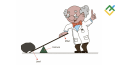
What is leverage and what are the advantages of margin trading?

A few years ago I got an interesting and well-paid job that required a lot of travelling, so having a car would have been a real advantage. I got my driver licence when I was a student, hoping to buy a car soon. But this opportunity wouldn’t come up.  However, my new job demanded that I have a car. So I applied for a bank loan, and my new car served as a credit security. Of course, there was a risk of losing my expensive purchase as the bank could take the car back in case of a late payment. But I’m quite a responsible person so I paid off my credit ahead of schedule.

What is leverage and what is a margin needed for?

LiteFinance:

I’m sure most of you have already dealt with bank loans and know what I’m talking about. But do you know you can do the same when trading in shares or currencies in the Forex market?  You can borrow funds from a broker for trading, using a certain margin as a security. For example, a deposit of $3000 will allow you to conduct trades the volume of which exceeds your own deposit by 100-500 times. Quite a good chance to earn more, right?


This mechanism of trade volume increase is called “leverage” and the trading method is called “margin trading”. The amount by which your own deposit will be increased depends on a leverage value. So, you don’t have to wait until you get a necessary sum to start working in Forex and making appreciable profits. Instead, you can borrow funds from a broker. Just the way I did to buy my first car. By the way, risks associated with margin trading are much different from mortgage crediting or car crediting risks. With leverage, you don’t risk anything, except your own money available in the account when opening a trade - the so called margin. A broker will close loss-making trades automatically and won’t let you go into the red.

LiteFinance:

For example, you made a deposit of $5000 and you wish to increase the amount of your potential profits which depends, as we know, on the cost of 1 point and the volume of a trade. So, you can choose a leverage of 1:100 and open trades worth up to $500 000. However, you shall remember money management rules, which allow you to deal with the borrowed funds wisely and get the most of profit from using leverage.


The size of leverage varies from broker to broker and also depends on an account type and a trading tool. The ways of its designation are the following:

For example, to buy shares worth $10,000, you need to have a margin of $2,000 in your account. Then,

●     1:5 is “your own funds/volume to buy” ratio;

●     1:4 is “your own funds/borrowed funds” ratio;

●     20% is the percentage of your own funds in the volume of a trading position or several positions.

How to measure a margin?

Margin trading means that a broker provides you a credit secured with your own deposit called “margin”.  As long as you have leverage-backed positions, the margin is frozen.

Let’s have an example. Imagine I’ve bought some shares for $10,000 and my security margin amounts to $2,000.  The difference between the volume of the trade and the volume of my own funds is lent to me by my broker. So, now I own shares worth $10,000, but not fully: they are used as a guarantee to a broker (recall the example of a car purchase or taking a mortgage).

So, if the price of my shares goes up, all is fine. I can sell them at any moment and get a profit. I need to mention that this profit will be much higher than a profit I would get with a deposit of $2000 without using leverage. The brokerage company earns its fee and gets its credit back. 

If the price of my shares starts falling, if I don’t close my loss-making position by myself, my broker will do it as soon as the threshold of margin requirements is approached (when the general cost of my shares has dropped to $8,000). The broker won’t lose anything, and I will lose my hard-earned money. Thus, leverage is a kind of multiplier. Its use multiplies both eventual risks and profits. To use it wisely, you need to know money management rules and to be able to analyse a current market situation and estimate a probability of a price reversal.  

How do I take a credit with a broker?

Trading in shares or currencies exceeding the volume of one’s own money at Forex is quite easy. Unlike bank crediting, margin trading doesn’t involve any bureaucratic red tape like collecting references or signing credit documents. Most broker companies specify margin trading conditions in a standard brokerage service offer that has to be accepted and signed by all new clients.

At the same time, you even won’t have to calculate margin or leverage values by yourself.  All necessary calculations are carried out automatically in the trading platform.


Do I always need to use leverage?

Personally, I always use margin crediting opportunities when opening trades. I always follow the rules for skilful money management, calculate an amount that I can risk safely and, according to my account statistics, I have much more profitable trades than loss-making ones. So, leverage only works in my best interests. You can always choose the most convenient and profitable work method, both with and without using leverage when opening positions.


P.S. Did you like my article? Share it in social networks: it will be the best "thank you" :)

Useful links:

  • I recommend trying to trade with a reliable broker here. The system allows you to trade by yourself or copy successful traders from all across the globe.
  • Use my promo code BLOG to get a 50% deposit bonus on the LiteFinance platform. Simply enter this code in the appropriate field when funding your trading account.
  • Telegram chat for traders: https://t.me/litefinancebrokerchat. We are sharing the signals and trading experience.
  • Telegram channel with high-quality analytics, Forex reviews, training articles, and other useful things for traders https://t.me/litefinance
How to trade using a broker’s funds?

The content of this article reflects the author’s opinion and does not necessarily reflect the official position of LiteFinance broker. The material published on this page is provided for informational purposes only and should not be considered as the provision of investment advice for the purposes of Directive 2014/65/EU.
According to copyright law, this article is considered intellectual property, which includes a prohibition on copying and distributing it without consent.

Rate this article:
{{value}} ( {{count}} {{title}} )
Start Trading
Follow us on social media
Live Chat
Leave feedback
Live Chat