We will study the causes of the most common mistakes, made by traders who are just beginning Forex trading
Hello, everybody!
This time, we are going to speak about the causes of typical beginners’ mistakes, as well as about how to cut down the way, many lengthen due to the lack of information.
There is a lot of information on the Internet about “typical mistakes beginner traders make”, which, as a rule, is written by people who know little about trading. You are likely to read about simple things in these articles, for example:
- it is bad to trade without stop orders,
- it is bad to trade against the trend
- it bad to know nothing about Forex trading
Why do I think that the authors of such articles usually know little about trading? Read on below.
1. Causes of traders’ mistakes
The matter is that, at first, any (!) trader is ruled by his/her psychic – different emotions, the wish to “game the market”, unwillingness to admit they are wrong, the desire to make a “cool” trade, gaining 100,000 points and show off their greatness; it is hardly a complete list of things that affect traders. According to anatomy, these thing are produced by the so-called “reptile brain”, and these factors result from the instincts (!), which have been accumulated and filtered for hundreds thousands years of evolution. However, logic, discipline, and other signs of common sense are in the part of human brain that is much younger than the “reptile brain”.
Now, remember, what happens to you at the moment when something sudden/ scary/unexpected happens. For example, you are going across the pedestrian crossing, absorbed by your thoughts, and suddenly, a car stops in front of you with breakers squeal. What will happen? You will jump back! By reflex! And now, only be honest, do you think, your reaction will change if you decide, leaving your home, “Well, today I’m not going to jump back of cars in any way”? Of course, it won’t! You will leap back before you remember it. It is because humans are controlled by their instincts at moments of danger or stress.:)
Traders’ mistakes result from the so-called “reptile brain”, responsible for the instincts (!) that have been accumulated and filtered for hundreds thousands years of evolution.
Logic, discipline, and other signs of common sense are in the part of human brain that is much younger than the “reptile brain”
Taking into account that beginners are always in stressful situations, their brain is busy all the time, trying to predict the price move, so, they constantly fail. That is why, discipline, following the rules, monitoring possible “trading mistakes”, any common sense at all is out of question. The computer screen is faced by an “animal” that doesn’t know any rules.

An attempt to control your instincts by your brain can be compared to the situation, when an enormous, tall man asks his short, skinny friend to stop him from getting into a fight. It is not about the insufficient control by the brain that has learned some information and wants to apply it. Because, the common sense is COMPLETELY switched off and replaced by the instincts, that is what evolution dictates:)
Next, let’s study in details the “traders’ mistakes”, I have described.
2. I’m going to read, understand everything and avoid any mistakes...
2.1. Stop-Loss is...
Stop-loss is, in fact, the admittance that the price didn’t move in the direction, it had been expected to. You can write about as much as you like about how useful stop-loss orders are, and how dangerous is trading without them, but, as I have already written before, all these reasonable arguments are “switched off” at the moment of trading.
“Yes, I didn't guess the price direction and was punished by a loss”, that is how traders think at first about a stop-loss that worked out. They think a stop-loss to be a punishment for being wrong. Based on this, traders start to believe that their objective is to learn to forecast the market, stop being punished by the market, and, finally, take revenge against the “evil market” for being humiliated, as the market constantly proves traders to be stupid, being unable to predict the market direction accurately.

Nobody is to blame here, that is how we gain experience during our life: if it is hot and painful, we pull our hand away; if we are scolded, we’d better stop and not repeat the same again, and so on. So, next, there are, as a rule, two possible ways:
1) First (less popular) approach is that traders just realize, they are not competent enough in the subject and start practicing on a demo-account, read books on trading, and test different trading strategies, developing their own one, step by step.
2) Second (more popular) way suggests from the very beginning (or later) that there is no need for stop-loss. Without a stop-loss traders “don’t have to” admit the loss and are spared of the feeling of their stupidity. The trust in trading without stop-loss grows stronger due to the fact that the price may quite often reverse in the needed direction after the stop-loss has worked out. Traders continue like this until they prove in practice that this way to trade leads to a disaster like huge losses, or, a few lost deposits.
And what is the reason? It is because stop-loss is ORIGINALLY misunderstood, and people without rich experience in trading CANNOT explain the essence of trading.
And the essence of trading is like this: stop-loss is traders’ COSTS of being SOMETIMES right. Simply put, the sequence is: find a clear situation, when the price 5 out 10 times (not in 10 out of 10!) goes up by 50 points, without falling down by more than 25 points. If we have 5 profitable trades of 50 points each, and 5 loss-making trades of 25 points each, then, after simple calculations we have the following:
5*50=250 points of profit
5*25=125 points of loss
250-125 = 125 points (total result)
So, stop-loss is just a FEE of 125 points for the ability to GAIN 250! That is, a fee of 5 small losing trades for the opportunity to enter 5 big profitable ones. That’s it! It is just costs of doing business, no more, no less! It is like buying something for 125 and selling it for 250. It is reasonable, isn’t it? Nobody thinks, “Where should I buy something for 0 to sell it for 250 later?”. And nobody is willing to risk ALL their money for a POSSIBILITY to find a product for $0, do they? But for some reason, people are ready to risk their deposit for an opportunity to “out-sit” the lossless, unwilling to right away admit that they have been wrong. However, if don’t set stop-loss, you may lose your TOTAL DEPOSIT at once.
So, stop-loss is just a FEE of 125 points for the ability to GAIN 250! That is, a fee of 5 small losing trades for the opportunity to enter 5 big profitable ones. That’s it! It is just costs of doing business, no more, no less! It is like buying something for 125 and selling it for 250. It is reasonable, isn’t it? Nobody thinks, “Where should I buy something for 0 to sell it for 250 later?”. And nobody is willing to risk ALL their money for a POSSIBILITY to find a product for $0, do they? But for some reason, people are ready to risk their deposit for an opportunity to “out-sit” the lossless, unwilling to right away admit that they have been wrong. However, if don’t set stop-loss, you may lose your TOTAL DEPOSIT at once.
Stop-loss is just an admittance that the price didn’t go where it had been expected to. When it works out, it makes just costs of entering profitable trades later.
For the same analogy to business, a sequence of triggered stop-loss orders at the beginning can be compared to a “draft”, when beginner businessmen don’t yet know, where they can buy products at cheaper prices, what products are of best quality, when it is better not to make any deals. That is why their investments aren’t YET paying off.
If you understand the most important, stop-loss orders are the COSTS of an opportunity to gain, not the proof of your stupidity, you can progress significantly faster and treat their working out without getting stressed from the very beginning.
2.2. Trading in the trend: the essence
As for «trading in the trend» everything is not so clear as well. THat matter is that when the trend direction is already clear, the trend is more likely to change its direction than to continue it.

Without proper understanding of the market and following the rule “always trade in the trend”, a trader is likely to miss most of profits. They, who have never traded, don’t know that one should trade not “in the trend direction”, but in the direction, where the profits potential is bigger. And these two moments don’t always coincide.
One should trade not “in the trend direction”, but in the direction, where the profits potential is bigger.
2.3. Lack of necessary knowledge
As for the lack of necessary knowledge I would also oppose, perhaps, not so strongly. I have read a few dozens of books on trading. Most of them contained the information, impossible to be applied in practice. I won’t say anything about topical forums, to be polite. I don’t need to know about the market a lot (though, I don’t deny that this knowledge is useful).
To understand the current situation, just two things are enough:
- to understand, why the price is moving in one direction or another (demand/supply law),
- to know the types of orders and understand, how they relate to each other.
That’s all. Why so few? Because your chart indicates the consequences of exactly these things – buys and sell of all traders in the world, forming the current demand and supply.

The rest of information on trading, especially, magic wonder-patterns, super-indicators from “Wall Street great traders” that suddenly became freely accessible (oh, gods, let’s immediately start using them until it is not late), as well as the knowledge about the trades of “large players” and the “crowd”, being constantly ripped off, poor thing, all that just drives you farther from the essence.
It is only necessary to understand that the price results from demand/supply ratio. And the price curve is the result of buying and selling by all traders in the world.
In this article I wouldn’t like to focus on the possible mistakes, you can make at the initial step of you trading career. I would like to draw your attention to the CAUSES that result in these mistakes. Perhaps, the understanding of them will somehow help you cut your way short and accept the necessity of making all the mistakes to gain your own experience.
3. Why am I so...like that?
3.1. First
Well, the first reason for traders’ illogical behaviour is the desire to know where the price will go. This desire results from the belief that the further market behaviour is somehow predictable. This belief results in the following ways:
- out-waiting the loss (“the price is about reversing right now”),
- setting stop-loss beyond the right level (“well, I have known that the stop order will work out, and then the price will go in the direction, I expected”),
- belief in “trading Grail” and much more.

Thinking themselves to be inexperienced, many traders reasonably understand that “if I can't do something due to the lack of experience, then somebody more experienced can”.Based on this, beginner traders may start reading books, visiting forums, or even buying magic indicators and advisors that promise 999% of steady income per month. They hope to find that approach, which will guarantee them to predict the market. However, let’s try to find out logically, what, in fact, is needed to predict the market.
As we know, the price results from two forces – demand and supply. Both forces are formed in the same way – from the orders of market participants: some traders want to buy at the current price and form the “demand force”, other traders want to sell and form the “supply force”. “But traders have different reasons for buying and selling”, you will say and will be right. However, the price is influenced not by the REASONS for the decisions, but by the DECISIONS THEMSELVES. If a fund buys the euro at the price of 1.20000 because of the expectations of long-term growth, and an American trader buys the euro at the same price, then there is no difference, in terms of the influence on the price. They both place buy orders, because they need to buy now. The same is with selling.
The price is influenced not by the REASONS for the decisions, but by the DECISIONS THEMSELVES
Therefore, Forex price at any moment shows people’s need for this or that currency. If the price is rising, then MANY PEOPLE need the currency, for unknown reasons: whether it is good prospects of the country’s economy, or there is little currency left, because everybody suddenly decided to import equipment from this country. The reasons can be different, but the fact is single – it is bought more than sold.
So, let’s sum up:
1) The price results from buying and selling by all market participants in the world;
2) Buying and selling result from the decisions, whose causes we don’t know for sure.
Correct me if I’m wrong, but these two moments suggest that to understand, where the price will move, we need to interview ALL market participants in the world SIMULTANEOUSLY. And we need to do that before the traders will actually open their orders. Here, I almost forgot, we also have to make them promise not to change their minds =)
After reading all the above, you are likely to feel some dislike, and your mind will want to give up on this information and tell you that “it is just excuses”, and “you will surely succeed”. But try, if you can, to study the factors I described once again. Try to find contradictions there. And if you by any chance succeed, I will admit that I was wrong, and you will safely continue searching for the tool, predicting the market.
3.2. Second
The second reason for traders’ illogical behaviour is the wish to achieve something by means of trading. Traders may wish to make profits sooner, or to give up their wage jobs or something else. And this wish is a kind of “nagging” inside them, pushing them like “Hurry up! Why are you waiting?”. As a result, traders start looking for some simple ways to achieve their goals as soon as possible. Usually, they start trading at the time of the news releases, buy the above mentioned wonder-indicators, entering a lot of trades. At the same time, the market seems to be a traders’ “opponent” that “prevents” them from achieving the desired targets– as traders want to gain when making deals, but the market doesn’t always provide it.
At first, the market seems to be a traders’ “opponent” that “prevents” them from achieving the desired targets– as traders want to gain when making deals, but the market doesn’t always provide it.
There is nothing bad in pursuing the desires mentioned. However, when these desires are very strong, they are likely to prevent from conscious trading. Try to pay your attention to the fact that in other jobs, people earn a lot only provided they have spent a lot of time and effort practicing in their profession. There are no jobs, where people would have found the secret to success and started making a lot of money right away. Always and everywhere people become professionals only having spent a lot of time on practice and having made numerous mistakes, having studied other people’s mistakes, having gone all the way, when others abandoned it. Of course, I’m not saying that it is impossible to win A LOT and AT ONCE. If you aim at winning quickly, you can risk and try without a lot of practice and experience. But if your global target is driving a steady income from trading, you’d better do the right things from the beginning.
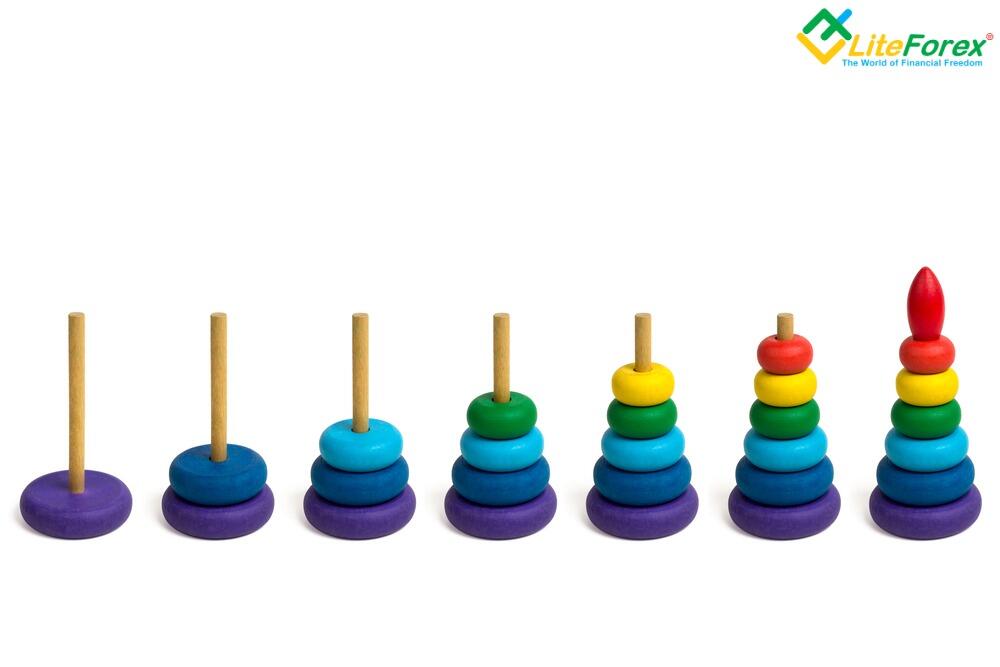
I can recommend starting small – set yourself small goals and praise yourself for small victories, step by step, achieving bigger goals. Give yourself time to master this profession, and remember, mistakes are not your fault, they are just a natural part of this way.
Set yourself small goals and praise yourself for small victories, step by step, achieving bigger goals. Give yourself time to master this profession, and remember, mistakes are not your fault, they are just a natural part of this way.
3.3. Third
The third reason for traders illogical behaviour is the feeling “I don’t know enough”. Based on this, there is someone else who knows more, how to trade better, where it is better to buy/sell, what strategy to apply, and so on. Basically, it may well be true, however, there is so much “spam” in the information on trading that one can spend the whole life, testing every strategy or recommendation, trying to find the best.
In this respect, I recommend you studying the basics on your own I was surprised, very few traders really understand, why the price rises, what type of orders can be in Forex, how they relate to each other and influence the price move. Of course, without understanding the basics, one can easily catch the bait of magic strategies. However, if you understand that the price is not a kind of line of something vague, but the result of supply and demand for an asset, you will automatically “filter off” the approaches, unrelated to supply and demand.
If you understand that the price is not a kind of a line of something vague, but the result of supply and demand for an asset, you will automatically “filter off” various nonobjective approaches.
4. “Too complicated” recommendations that will be “ignored” by 98%
Now, here is the most important. If the common sense doesn’t control the instincts in critical market situations, then, what the solution is, what for I have written all of this? The solution is, as usual, in practice. It is not about just practicing, but practicing the right things.
It means, from the very beginning, it is necessary to make up a plan of gaining the experience. That is, to see trading not as a game or a lottery, but as a profession that should be mastered step by step.

Most people, who have read this article, are unlikely to follow this advice, as it may seem strange/unnecessary/ stupid or impossible to be applied in practice, and that is well understandable. However, for those, who are strongly willing to study trading to become disciplined traders finally, I will give my recommendations:
1) The first necessary thing is to read about trading, get the initial concept: what it is like, how one makes profits there, and what profits are made from. It is good to read “at first hand”. The interview of different traders, numerous on the Internet, will quite do. Such a selection will enable you not to get confused in this vast amount of articles, containing questionable recommendations.
2) Second, when you already understand what trading is, you need to start practicing. It is best to practice only on a demo-account. Trading is automatic following your trading system, that is, you need to develop a skill of a strictly systematic entering a trade. It is simply stupid to pay money for developing an automatic skill. So, at this step, you should search the Internet for any trading strategies with clear rules of setting stop-loss and take-profit. You may also evaluate the strategies across these parameters:
- strategy logic (what it is based on) – like/dislike,
- rules of entering/exiting – clear/ not clear
- is it convenient/not convenient to enter trades based on the strategy
Starting from the top, you will gradually select only the strategies, clear and convenient for you. With some imagination, you will find some common points in the selected strategies. These similarities will reflect your personal trading features and indicate the strategy type, suitable for you.
3) Third, practice and nothing else. You select the strategies, interesting for you, and based on each, systematically (following the rules of each of them) open 100 positions for each strategy. Next, you again evaluate the strategies across “loss/profit” parameter. Give up loss-making strategies and open 100 positions more.
You can open test positions on a demo-account, using the history, or find a special “trading simulator”. It is only important for you to eliminate originally wrong approaches, or those, you don’t like, from the very beginning without wasting time on them.
4) By this time, you should have 1-4 strategies that you like and that are efficient, and here, your own creative work begins. If all the strategies showed negative performance, go back to step 1 and continue searching.
You are likely to “subconsciously” have marked some common patterns by that time, and you are likely to have some ideas of improving the strategies performance. You just need to continue testing the methods and practicing, according to the same plan that you used before.
5) By the fifth step, you should already have the basis of your own trading strategy, which you have tried, tested and enriched by your own ideas. If it shows a steady good performance (“about zero” is also a positive result), it makes sense to start trading on a real account. Understand? Only when you have a system, the skill of systematic trading (the the habit of following the rules), only then you start trading on a real account.
Thus, we eliminate bad influence of emotions and various reflexes/instincts by getting used to doing habitual things, which you have practiced over 500 times until they have become automatic. But you shouldn’t have any illusions, psychological factor will still exist, so, you’d better start with small deposits and small victories.
Following these tips, you will eliminate bad influence of emotions and various reflexes/instincts by getting used to doing habitual things, which you have practiced over 500 times until they have become automatic.
If you do right right things from the beginning, following the above plan (there is no secret information, just a progress way from a beginner to a professional), then your trading progress will be the fastest and the most efficient.
Remember, stability will come after you gain mastership, and gaining mastership means no haste in any profession.
I wish you all to find yourselves in trading and fulfil your dreams!
P.S. Did you like my article? Share it in social networks: it will be the best "thank you" :)
Useful links:
- I recommend trying to trade with a reliable broker here. The system allows you to trade by yourself or copy successful traders from all across the globe.
- Use my promo code BLOG to get a 50% deposit bonus on the LiteFinance platform. Simply enter this code in the appropriate field when funding your trading account.
- Telegram chat for traders: https://t.me/litefinancebrokerchat. We are sharing the signals and trading experience.
- Telegram channel with high-quality analytics, Forex reviews, training articles, and other useful things for traders https://t.me/litefinance

The content of this article reflects the author’s opinion and does not necessarily reflect the official position of LiteFinance broker. The material published on this page is provided for informational purposes only and should not be considered as the provision of investment advice for the purposes of Directive 2014/65/EU.
According to copyright law, this article is considered intellectual property, which includes a prohibition on copying and distributing it without consent.