These Forex trading tips can help traders protect their capital and improve their chances of long-term success. While Forex trading attracts millions of participants, it is far more complex than it appears on social media. Many beginners treat the market like gambling, which often leads to losses.
One of the most important Forex tips is to follow a disciplined trading system rather than relying on intuition. For those wondering how to trade Forex successfully, the answer lies in strategy, risk management, and adapting to changing market conditions. These Forex trading tips for beginners provide a foundation for navigating a market dominated by major banks and institutional investors.
The article covers the following subjects:
Major Takeaways
The Forex market operates 24/5. The highest liquidity and volatility occur at the overlap between the US and European trading sessions.
The most common causes of trading losses are the absence of a clear strategy, excessive use of leverage, and failure to use stop-loss orders.
A successful trading strategy should include holding periods, technical and fundamental analysis, well-defined risk management rules, and a trading journal.
Professional traders typically risk no more than 1% of their total capital on any single trade.
Position sizes should be adjusted according to trading account size—increasing as capital grows and decreasing during drawdowns.
A demo account provides a risk-free environment to test a trading platform, evaluate a broker, and refine a strategy before going live.
Why Most Beginner Traders Lose Money
The statistics are sobering: most traders are losing money rapidly during the early stages of their trading journey. While anyone can place a buy or sell order, only a small percentage consistently achieve profitability. The primary reason is unrealistic expectations—many enter the Forex market seeking quick profits and treat price charts as a form of gambling rather than a professional trading environment.
Another common mistake is misusing leverage. Many beginners open oversized positions without understanding margin trading, exposing themselves to rapid losses and margin calls. In addition, market conditions constantly evolve—strategies that perform well in trending markets may become ineffective in flat markets.

Forex Trading Tips for Beginners
As one of the largest financial markets, Forex attracts millions of people with its opportunities. However, behind the attractive facade lies a highly competitive environment: most beginners lose their funds within the first few months, if not days. The main reasons for failure are a lack of basic knowledge, exaggerated expectations, and inadequate risk management.
Currency trading is not a game of chance, but a demanding profession that requires a systematic approach, a level head, and reliable tools. To ensure your start does not end in quick disappointment, we have compiled key recommendations and Forex trading advice that will help you trade successfully.
Tip 1. Learn How Forex Market Works
Before trading Forex, it is essential to understand how the market operates. Unlike stock exchanges, Forex is a decentralized network where banks, brokers, and financial institutions exchange currencies through electronic trading systems. Learn the basics of bid and ask prices, spreads, and swap fees charged for holding positions overnight. Understanding these concepts is crucial, as hidden trading costs can significantly impact your results.
Tip 2. Choose Regulated and Transparent Trading Platform
A trading platform is your gateway to the market, making broker selection a critical step. Choose a regulated broker with reliable, fast execution, free of artificial delays or critical slippage. It should also have transparent fees and clear swap calculations to avoid unnecessary trading costs. Check the broker's licenses, test deposit and withdrawal processes, and evaluate the platform's functionality. Since MetaTrader is the industry standard, it is worth testing before committing real funds. Ultimately, the safety of your capital depends on the broker's credibility and compliance with local laws.

Tip 3. Open Demo Account Before You Start Trading Live
Avoid trading with real money from the start. One of the most common Forex recommendations is to begin with a demo account. A demo account replicates real market conditions and live price movements while using virtual funds, allowing you to gain trading experience, learn Forex tips and tricks, and test strategies without risking capital.
You can use a demo account to see how the trading platform works, how trades are placed, and how different types of orders function. You should switch to live trading only after you have consistently made frequent profits on your demo account for at least a couple of months. However, given the mindset of a beginner, it is likely that they will only start exploring the demo account after suffering their first losses.

Tip 4. Define Your Risk Tolerance and Realistic Goals
Risk tolerance is a crucial part of trading, reflecting how much you are willing to risk. Everyone has their own psychological threshold, and trading in financial markets is always highly stressful. Your risk tolerance determines how much you are willing to lose without panicking or losing sleep. If you are not comfortable with drawdowns, high-volatility strategies that require rapid decision-making may not be suitable for you, as they carry too much risk.
Set realistic expectations and aim for a stable profit of 3–5% per month rather than extraordinary gains. Focusing on steady growth helps reduce emotional pressure and avoid costly mistakes. Calculate your deposit size based on your desired income. If you want to earn $1,000 a month, you will need a deposit of at least $20,000. Many market participants use an amount equivalent to one or two weeks' income as their starting capital. In general, base your capital requirements on your income goals, but remember that achieving meaningful results takes time, discipline, and experience.
How to Trade Forex Successfully
Moving from theory to consistent results in Forex requires a mindset shift. Profitable trading is not about finding a perfect indicator or predicting the future—it is about developing a proven system, testing and refining it, and applying it with discipline over time.
Market chaos cannot be overcome by intuition alone; it requires a structured, mathematical approach and strict adherence to a defined methodology. Consistent results come from applying the core principles of systematic trading—discipline, a clear understanding of price charts, and awareness of market phases.
Tip 5. Build Clear Trading Plan and Trade Only When Signals Appear
Every successful trader acts like a cool-headed sniper, not a machine gunner. You need a clear trading plan that specifies exact entry and exit points, conditions for canceling a trade, and position size. Every Forex position you take must be based on the rules of your strategy, not on a sudden sense of impending profit. If the trade setup does not match your plan, you should stay out of the market. Discipline in following the algorithm is more important than a single successful trade.
Tip 6. Pick One Trading Style and Master It
Avoid trying to learn and apply all trading methods at once. Strategies differ mainly in holding periods, and beginners are best suited to swing trading and position trading. These approaches involve holding trades from several days to weeks, allowing you to capture market moves without spending hours monitoring price charts.
If you have a lot of free time, day trading might be right for you, as all positions are opened and closed within the same day. As a rule, day traders make numerous trades throughout the day, and this short-term strategy is not for everyone. Choose one approach based on how much time you can devote to trading.
Tip 7. Combine Technical and Fundamental Analysis
Contrasting technical and fundamental analysis is unnecessary, as the best results come from combining both. Technical analysis helps identify chart patterns, trading volume, key levels, trends, and appropriate stop-loss and take-profit points. Fundamental analysis focuses on central bank policy, economic conditions, inflation, and employment data. Always consult the economic calendar before opening positions, as major news releases can increase volatility and trigger stop-losses due to market noise. In such periods, it is often safer to close positions and wait for the market to stabilize.

Tip 8. Keep Charts Simple and Read Price Movement First
Many beginners overload their charts with too many indicators, leading to conflicting signals. Instead, focus on reading price action and understanding how support and resistance levels form and how the market price behaves around them.
Technical tools are useful for quickly assessing market conditions, but only when you understand their purpose. The RSI helps identify overbought and oversold conditions, moving averages filter trends, and the ADX measures trend strength. A clean chart supports clearer decision-making, so start by learning to recognize momentum, corrections, trends, and trading ranges.
Tip 9. Trade Right Market Sessions and Right Currency Pairs
The foreign exchange market operates 24 hours a day, but trading activity is uneven. There are three main trading sessions: Asian, European, and American. If you trade European currency pairs, such as the euro and the pound sterling, your trading activity should be mainly focused on the European and American sessions.
For beginners, the EUR/USD or GBP/USD currency pairs are perfect. They offer maximum liquidity, minimal spreads, and relatively predictable exchange rates, unlike exotic cross-currency pairs, where fees can eat up all your profits. During illiquid trading hours, such as on Monday before the Asian session opens, significant price gaps can appear in complex instruments. If your order falls into such a gap, it may be executed at an unfavorable price, and your losses will significantly exceed your profits.

Risk Management
Even the most profitable trading strategy is useless if you do not know how to manage your losses. In the financial markets, you cannot control price movements, but you can manage your losses. It is the ability to limit risk that distinguishes a professional from an amateur. Capital preservation is the top priority in trading.
Tip 10. Apply 1% Rule and Smart Position Sizing
Professional risk management is what separates systematic trading from gambling. The 1% rule is widely regarded as a standard: never risk more than 1% of total account equity on a single trade. Position size is then calculated accordingly. This rule ensures that even 10 consecutive losses would reduce the retail investor account by only about 10%, helping preserve capital through losing streaks.
The best traders know that unfavorable conditions can persist, and losses resulting from shifts in market conditions can be quite substantial. If you have suffered a string of losses, you should reduce your position size rather than increase it in an attempt to recoup your losses. Remember that it is virtually impossible to recover losses exceeding 50% of your capital. At first, it is a good idea to open a position equal to 0.5% of your capital or even less. Only when your capital begins to grow should you gradually increase your position to 1%. The rule is simple: when you incur losses, reduce your position; when you make a profit, increase it to 1%.

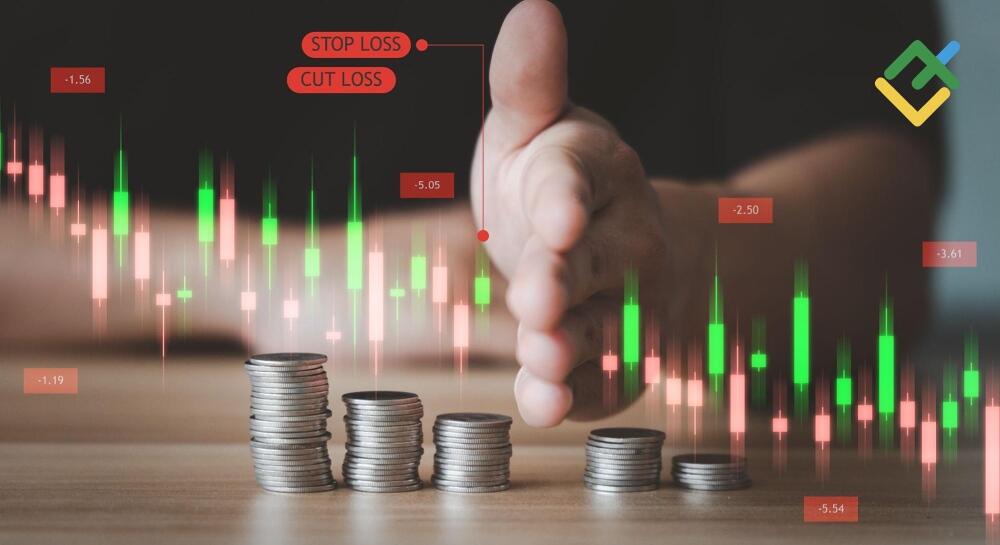
Tip 11. Always Use Stop-Loss and Take-Profit Orders
Trading without protective orders is like driving a car without brakes. Every time you open a trade, you should keep in mind that prices can go against your position and immediately set stop-loss and take-profit orders. Market conditions can change at any moment due to unforeseen events, and if you do not have a stop-loss in place, you risk seeing your account wiped out in a matter of seconds. The risk-to-reward ratio should be at least 1:1.5 or 1:2. In this case, even if half of your predictions are incorrect, your winning trades will offset past losses.
Divide your profit into two parts. Set the first take-profit order at a distance equal to the distance from the entry point to your stop-loss. Close half of the profitable trade as soon as the price moves that distance. Immediately move the protective order to a break-even point at the entry level, accounting for commission costs. This way, you will safeguard yourself against a trend reversal and lock in part of the profit. Set the second take-profit at a distance of two stop-losses.
The key question is where to place a stop-loss. A common approach is to use key price levels, such as Williams' fractals based on five bars, combined with volatility measures like the ATR indicator. Typically, many traders place stops at two to three ATRs, or just beyond a fractal level with an additional 0.2 ATR buffer to account for market noise.
Tip 12. Use Leverage and Margin Conservatively
Leverage and margin can amplify potential profits, but they also increase risk. Leverage does not improve your probability of success—it only magnifies outcomes. Experienced traders use borrowed funds cautiously and keep margin usage low, maintaining a safety buffer to withstand unexpected market fluctuations.
Trading Psychology
Emotional control is paramount. Fear, greed, and self-doubt can lead to impulsive decisions and rule-breaking. Professional resilience stems from viewing losses as a controlled cost of doing business. Maintaining discipline and composure requires approaching trading through clear rules and a structured, mathematical framework.
Tip 13. Backtest Your Trading Strategy
Without testing, a trading system is unreliable. Before applying it in the market, clear rules must be defined and strictly followed—if a system cannot be clearly specified, it effectively does not exist.
Successful traders continuously test and refine their strategies. Modern AI tools now make it possible to backtest systems on historical data without advanced technical expertise, helping generate and evaluate trading ideas more efficiently.
A trading system should demonstrate profitability on historical data, as past performance is a key validation step—though it does not guarantee future results. AI can support the development, testing, and refinement of trading rules as part of a disciplined approach.
Tip 14. Eliminate Revenge Trading, Overtrading, and FOMO
Trading psychology is a critical factor in long-term success. Greed, fear, and FOMO have caused more account blowouts than any market crisis. Emotional trading often leads to revenge trading—after losses, traders try to recover quickly by increasing lot sizes and abandoning their system.
If emotions like anger, frustration, or euphoria arise, it is better to step away from the platform. The market will remain available, but capital and discipline are harder to restore. Fewer trades with a clear mindset lead to more consistent results.
Tip 15. Treat Trading as Process, Not Lottery
Successful Forex traders treat trading as either a business or a sport. There is no easy money. Losses are part of the process, much like a business's operating costs. The focus should not be on individual trades, but on the long-term performance of a trading system. Consistent results come from systematic thinking, disciplined rule-following, and resilience during drawdowns.

Conclusion
Forex trading is a marathon, not a sprint. Success depends on a robust trading system, strict discipline, continuous learning, and sound money management. There is no "magic button" or perfect indicator that can consistently predict the market.
Focus on risk control, improving your market analysis, and never risking money that could affect your standard of living. Consistent results come from disciplined execution, controlled risk, and a long-term systematic approach to the market.
Forex Trading Tips FAQs
Study theory from books and online resources, master technical and fundamental analysis, and develop your trading strategy. Also, learn how to apply AI methods and practice your new skills on a demo account before switching to live trading.
Many modern brokers require a minimum deposit of $10. However, to comply with risk management rules and calculate lot sizes appropriately, it is recommended to start trading with a comfortable amount ranging from $100 to $500.
This is a popular rule of thumb in trading. According to this rule, a beginner should select 5 major currency pairs to trade, thoroughly master and apply 3 specific trading strategies, and focus on trading during a single chosen trading session.
Currency trading remains profitable for those who maintain strict discipline, employ profitable trading strategies, and manage risk. It is also important to adapt your trading approach quickly to changing conditions in the global markets.

The content of this article reflects the author’s opinion and does not necessarily reflect the official position of LiteFinance broker. The material published on this page is provided for informational purposes only and should not be considered as the provision of investment advice for the purposes of Directive 2014/65/EU.
According to copyright law, this article is considered intellectual property, which includes a prohibition on copying and distributing it without consent.