Why do we need stop losses and take profits? And do we need protective orders at all?
The article deals with the wish to move a take profit closer and push a stop loss farther. It also reveals the way to stop doing it easily.
The article covers the following subjects:
Hello!
Let me guess, you are not a newbie in forex trading. You may have tried a number of forex trading strategies, that “don’t suit you”. Besides, you may feel that you put a stop loss and a take profit “somehow wrong” or “somewhere at a wrong place”.
If you have been trading for over a year, you are likely to have read about stop losses and take profits in books about trading and watched topical videos, as well as about calculating the stop loss and take profit levels . In this case, you are probably grinning now, expecting another tedious article about “stops above the high/below the low, take profit order is at a distance, not less than 2/1 of the stop level...” But still, you might hope that this article could “surprise” you, with something “fresh, not so trite” and maybe a kind of more reasonable...
I must confess, I understand all those feelings. And so, I hope I won’t disappoint you.
Well, let’s get down to business.
Stop Loss and Take Profit. Why are they so irritating?
Most books and articles on trading describe a stop loss and prevents from losing money, along with a trailing stop, as a limit order that “limits your losses”. And everybody is reading this and nodding in approval that “yes-yes, to limit losses, it is good, I agree, I understand everything, this sounds reasonable...” But in practice, nobody limits the losses. Because there is no point, as you can expect until “the price reverses”. Besides, “I’m not a coward, I’m not afraid of a tiny loss, I am rather brave and can hold on a greater loss”. Or “What if I limit and the price will immediately reverse…?” Am I right? :)
So, everything is against setting a stop loss order.
Take profit is presented as something nobody knows what. “Taking profits or Profit target”. Why do you need to specify the price at which the position is to be closed if the profit can be higher and you expect receiving a large volume of return? It is usually recommended to “set a take profit in initial stages at 2/1 or 3/1 compared to the stop loss value”. And again “yes-yes, it is not bad for a beginning, I agree, I will put a take profit at this distance, and I will see next...” And few admit to themselves that it is not clear why the proportion is like that. Why should it be exactly so? A trader reads these recommendations, next, the price fails to reach this level, and he/she asks “but why should the take profit set at such a distance? Maybe I'm doing something wrong, so, the price does not reach the take profit?” Or, on the contrary, the take profit was hit, but the price continued flying “in the needed direction”, and the trader regrets, “I shouldn’t have limited the profit, I should have been holding the trade higher, I did know...”
As a result. “I’d rather wait for” + “why is the take profit at this level”= bye-bye, my risk management, even if you trade the right position size.
Sooner or later, the trader will anyway stop following these SOMEONE ELSE’S unclear rules.

“But, what is the solution then?” The solution is in the right understanding of trading in general and stop loss and take profit in particular.
The matter is that the messages of “limiting the loss” and “fixing the profit” are originally wrong, so, the trader’s reaction is also wrong.
Why do we need a stop loss and a take profit?
“Oh, I do know what they are for...” You don’t know. In fact, few forex traders understand the real purpose of stop loss and take profit.
The difficulty is that at the initial stage, the trader does not understand the essence of trading. It seems to us that we need to somehow learn to understand where the price will go. As soon as this thought arises, we see the market as an enemy.
A trader believes that the market SHOWS where it is GOING to move, and then, it deceives and moves in the opposite direction. As a result, a trader has a wish “not to be deceived”.
If your purpose is not to let the market fool you, you will see a stop loss hit as the market’s victory over you. And when the price reverses next, then the trader feels as if he/she was taking part in fooling himself :) The same is with a take profit. If it is hit and the price is moving on, it is seen as the hint that the trader is stupid and cowardly. A kind of “got scared to hold on longer”. It is also seen as your defeat to the market that “didn’t let you earn more”.
And now, let us imagine that we no longer try to decipher “market’s signals” about where it is going to move. I mean we now look at the chart and think, “Although I see trends/flats/patterns here, I still do not know where the price will go, and I do not care”. In fact, we can’t know this (the reasons are described in detail in my other articles, I won’t repeat myself). So, with this approach, we stop thinking that the market must behave in a particular way (“if highs are getting higher, the price MUST go up). We do not think anymore that, if the price chart draws a particular pattern, it MUST go somewhere. Otherwise, it will hurt us, not meeting OUR expectations.
So, we accept not 1, but 2 scenarios:
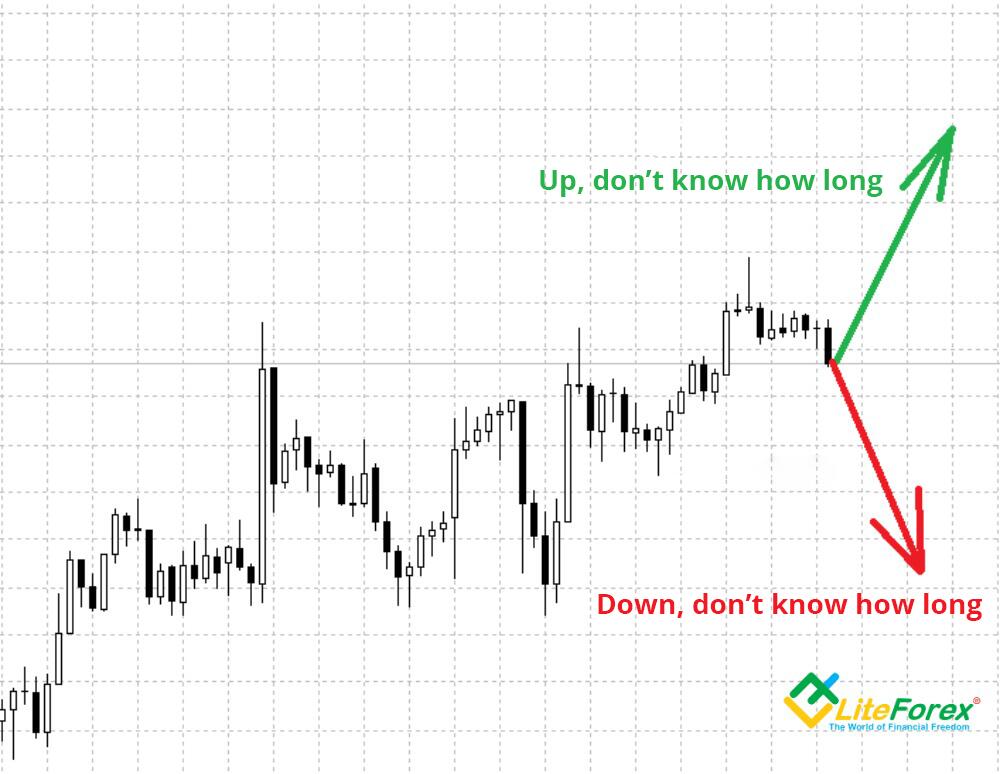
Scary? :) It is scary, I agree. But what does this have to do with stop losses and take profits? And how can you make profits then?
Let us move to positive news. Despite the impossibility of guessing where the price will go, each trader can look at the chart and see that there is not much of a “variety of forms”.
The price chart draws roughly the same thing for decades
I mean various “price chart formations” or, as they are also referred to, chart patterns. The price always reverses similarly, with the same patterns. And it continues moving after the stop also in a similar manner. The same formations/patterns occur each day/week/month/year.
Let’s sum up:
- We do not know where and how long the price will go in a moment/minute/hour/day and so on.
- But we see with our own eyes that the price has been drawing the SAME patterns since the markets originated.
Therefore, the essence of trading becomes obvious:
We just need to find a pattern (some chart formation), that CONSTANTLY REPEATS and bet on its completion.
Think about it. Patterns don’t STOP appearing on the chart over about a hundred years. They have been appearing there for a hundred years without changing, with no regard to wars, financial shocks, bull markets, and other global things. And they continue appearing today, the SAME PATTERNS. Over the same hundred of years, the price has remained unpredictable at any moment. It doesn’t matter whether you trade stocks, commodities or currency pairs.
But the “problem” is surely that:
Until a pattern completes, it cannot be said in advance whether it will complete or not.
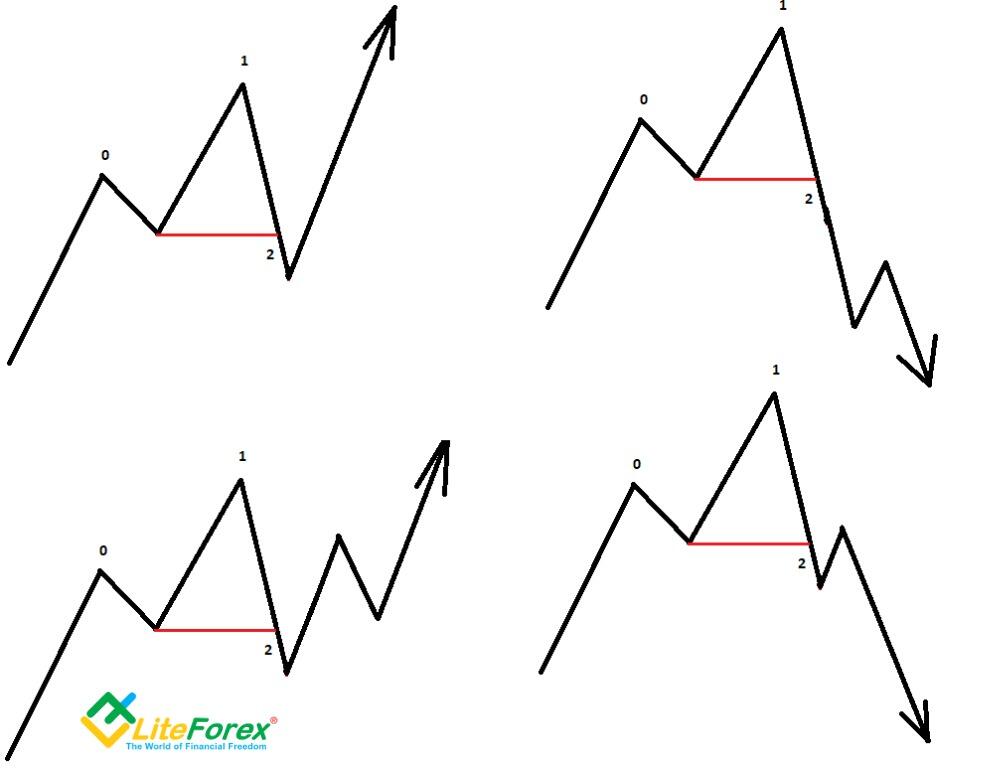
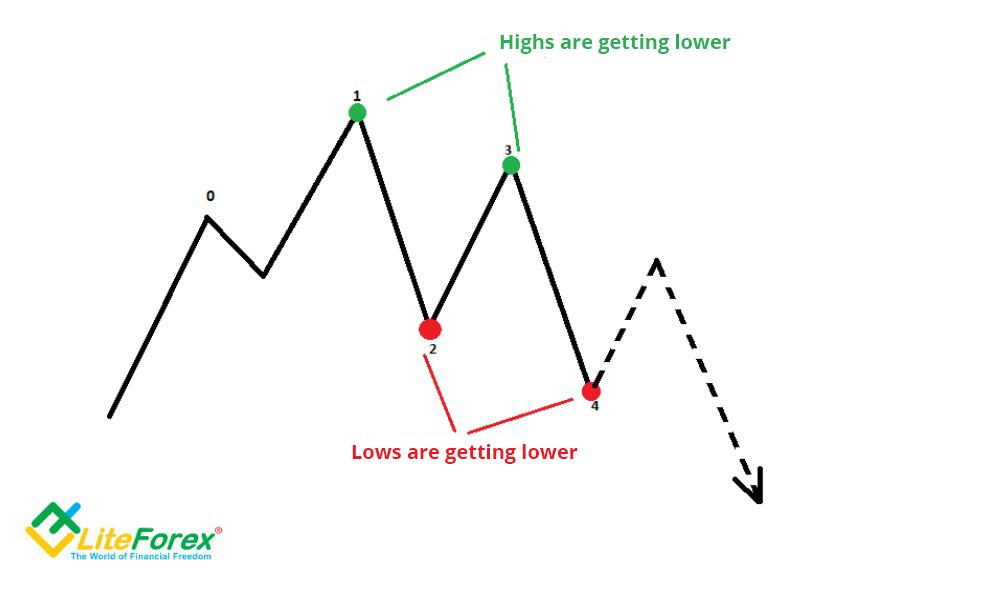
I will explain this on the example of a reversal pattern (frankly speaking, I don’t know how it is called), that has always appeared and will appear on the price chart. Just because there is not a wide variety of reversal patterns.
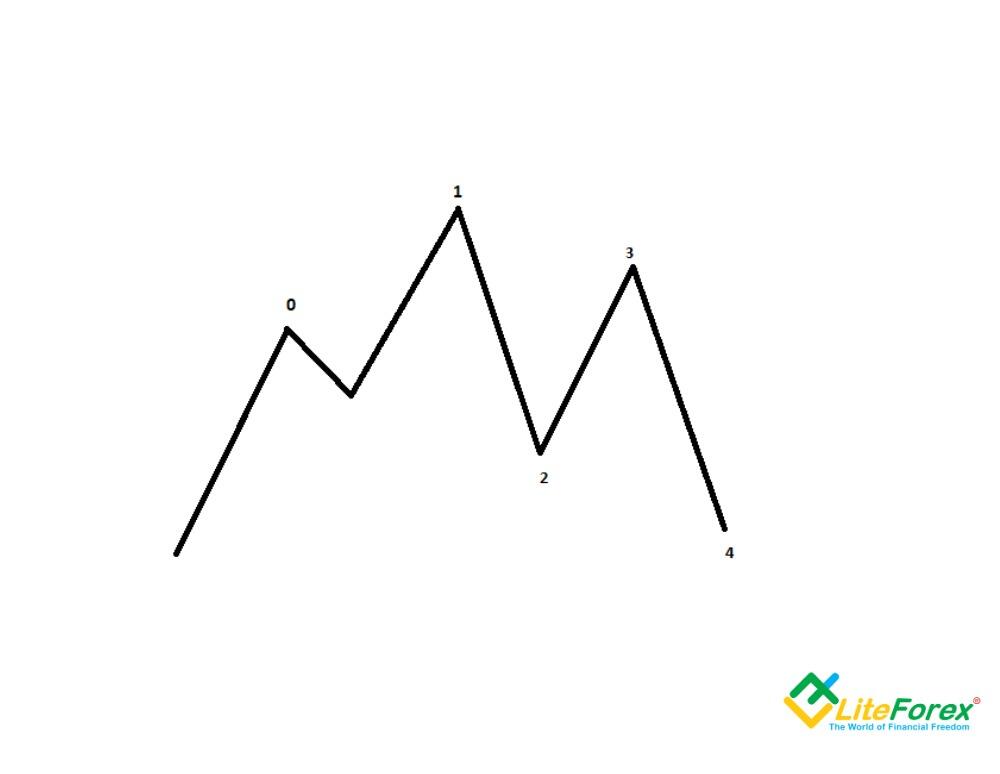
What do we see here?
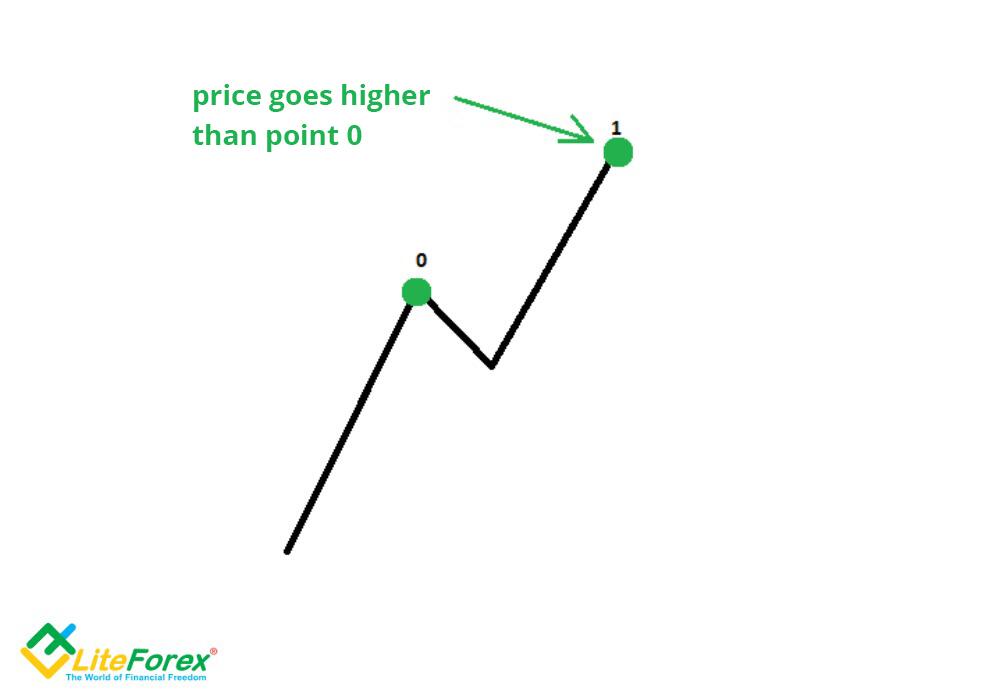
Point 1 marks a higher high than at point 0. The trend is upward.
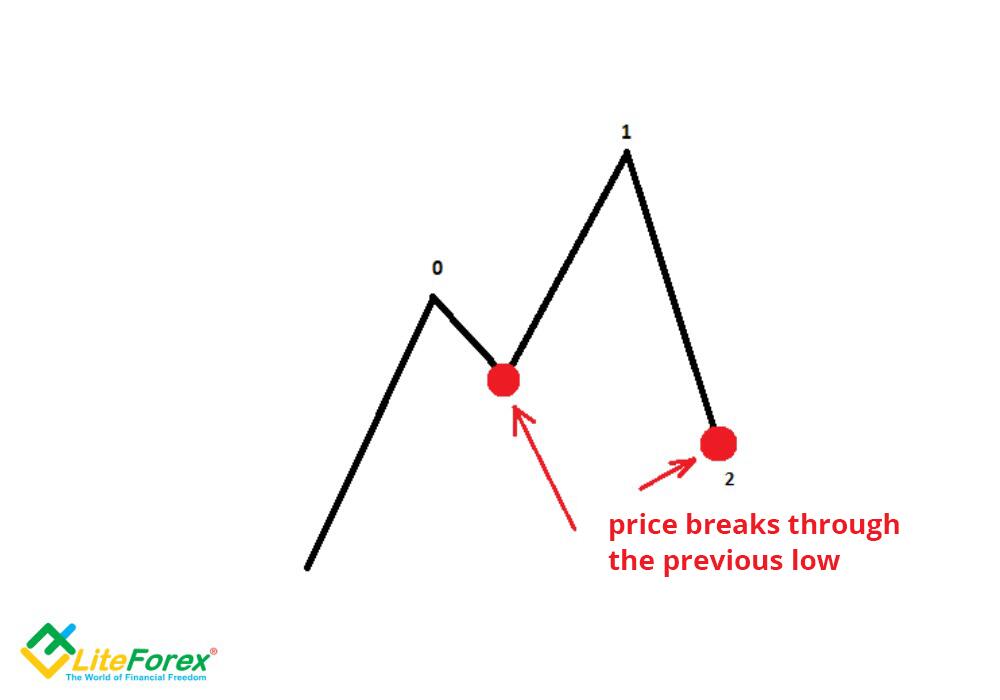
At point 2, the trend may (!) reverse
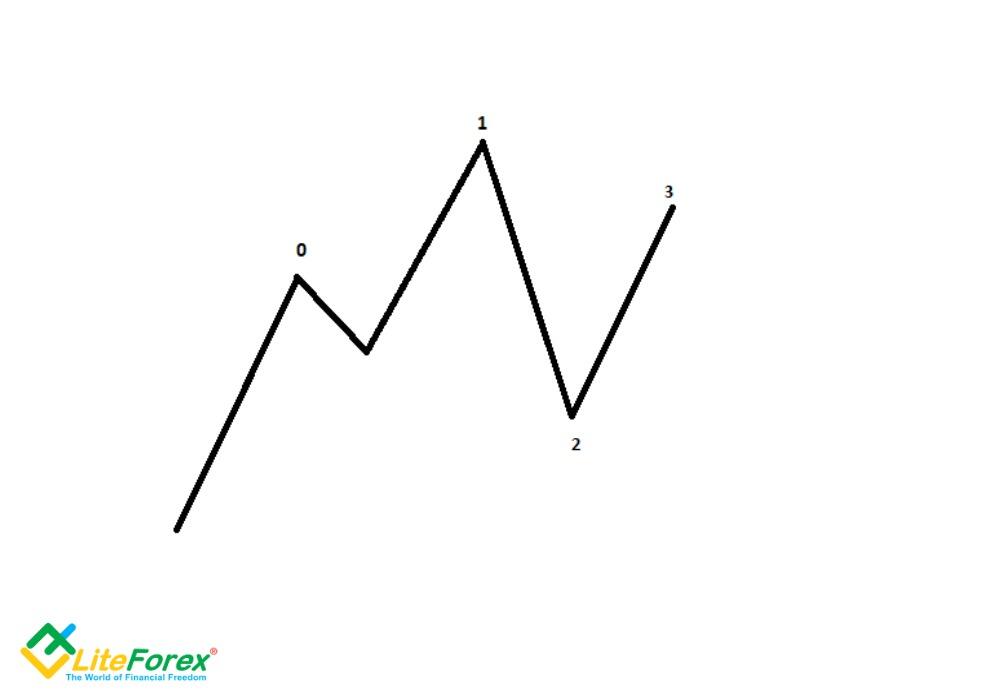
At point 3 price rolls up
Point 4 marks a confirming signal of the downtrend. And there, the pattern completes.
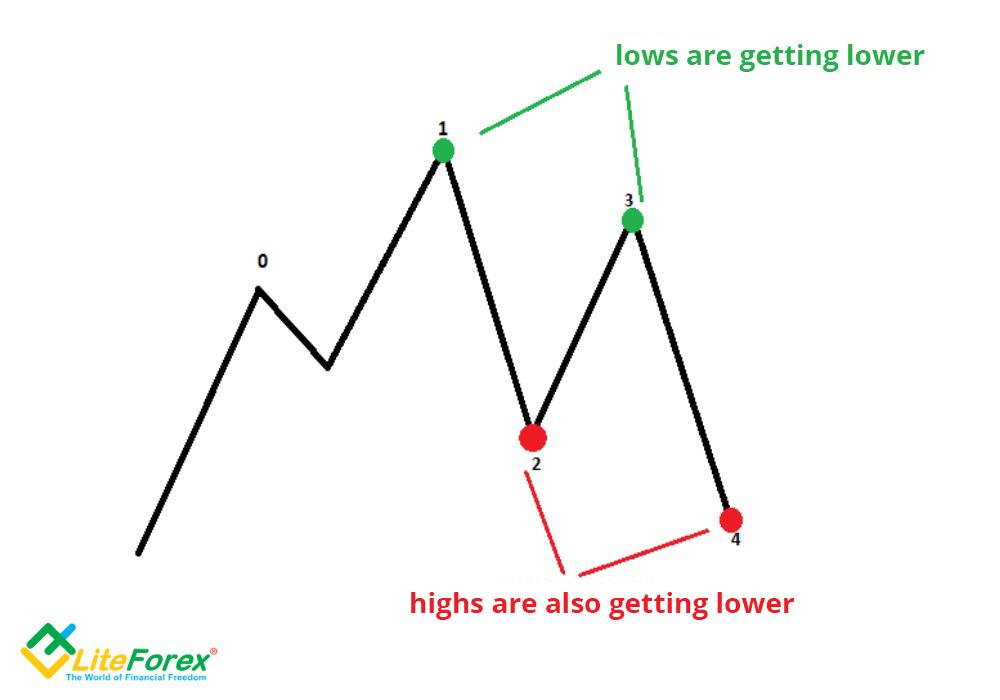
This pattern is seen a million times on any chart:
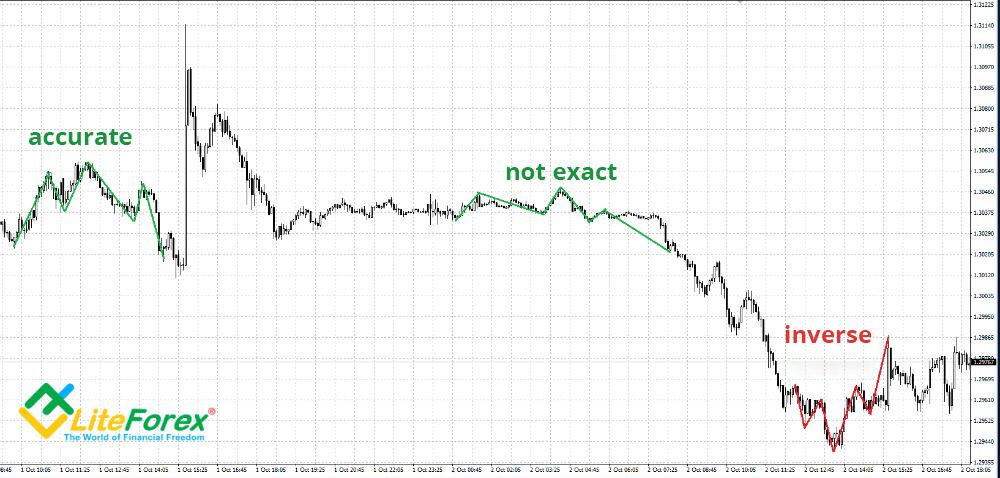
Nice! And now, there also can be:
Here is a “real-life” example
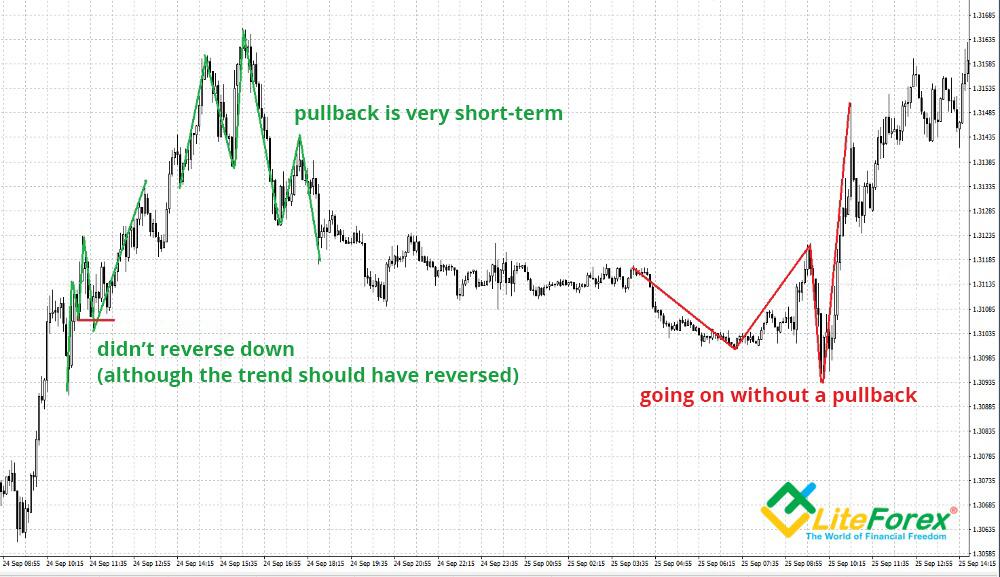
When a newbie sees such a situation, he/she thinks that he/she “again failed to discover a good pattern”. Because the trader thinks he/she will be able to find the pattern that will have a single, “positive” scenario. It is natural. A part of the way, so to say. Assume that the traders have realized that any pattern will either complete in “the right way”, or “the wrong way”.
In this case, when the chart STARTS drawing something that LOOKS LIKE OUR PATTERN, we just bet on that it will complete, ASSUMING that the pattern may not complete “in the right way”
For example:
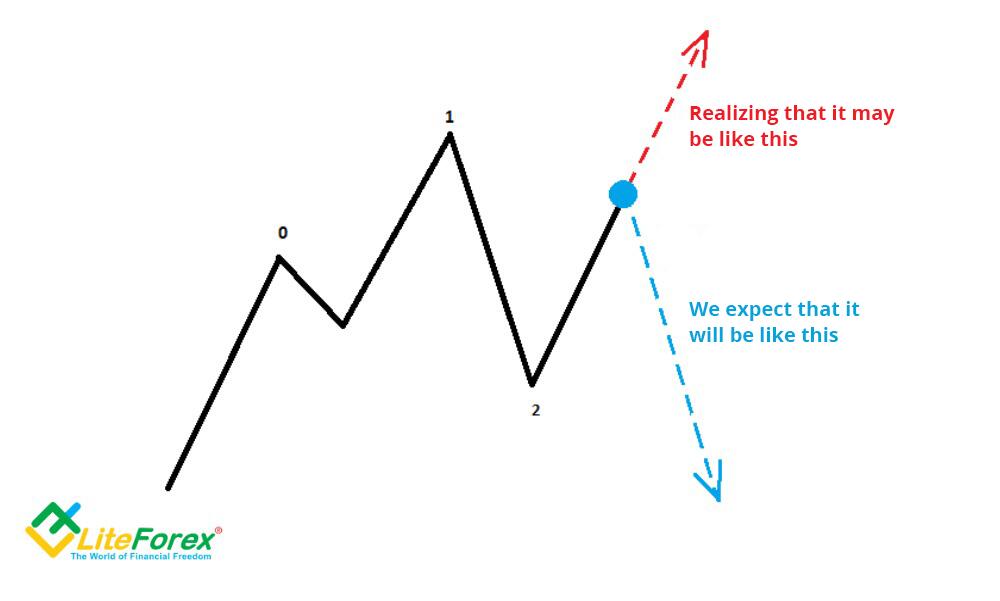
In this case, the approach is completely different from the “guessing”, we know that the market can do anything and we accept it. It just can’t go “in the unexpected direction”, because it either will form a pattern or won’t. As a result, we know in advance what to be ready for, and so, the market can neither surprise nor confuse us.
«What if I still enter when the pattern has already completed?”, will your desire to cheat the system ask:
As it seems that, after the pattern completed the “trend reversed and the price will go dow...” Oops, we have decided that we can’t predict the future, haven’t we?
So, after the pattern completes, there will still be the same uncertainty, the price will either go on, or it will go in the opposite direction.
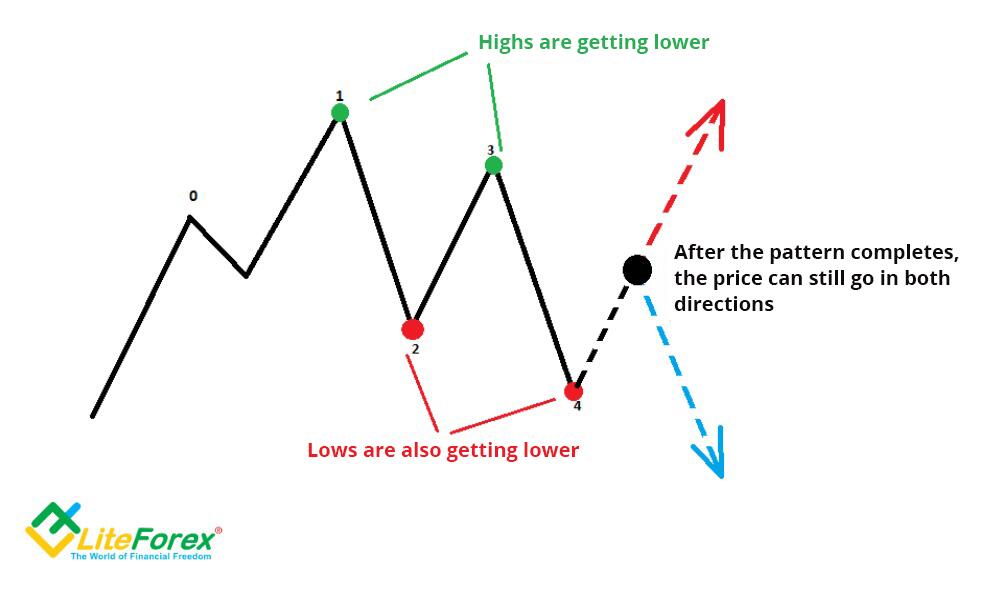
To cut it short, we have an eternal pattern, which (I want to again repeat this) either will complete or not. And you can’t know in advance at any moment of the pattern development, so you should consider both scenarios. Also in advance, of course :)
If at any moment, there can be either positive or negative scenario, one should enter a trade so that:
- make enough profit in a positive scenario
- avoid big loss in a negative scenario
With this approach, you will close positions with a small loss when the “expected” scenario fails to work out. And you will make a sufficient profit when the expected scenario works out.
But, hold on...
3. The essence of a stop loss and a take profit
As you have understood, that is what a stop loss and a take profit allow to do :)
For you not to be irritated when employing protective orders, you need to realize that any trade ALWAYS can yield any result
The only certainty the market may provide is the price chart formations/ patterns repeating from year to year + the fact that it cannot be said at any given time whether a pattern will complete or not.
Based on this, the trader is simply reinsured for both cases. If the pattern completes, the take profit will work out at the price level where the pattern finishes, and the trader makes a profit. If the pattern fails to complete a stop loss works out at the point “where the pattern is canceled”, and the traders lose very little.
Details are a little later.
“But the price may go further after the pattern completes”… “It may still reverse when the stop loss is hit and I can avoid the loss”. It stands to reason. Nonetheless, you must remember that in these cases we still have 2 (!) possible scenarios to work out. Having reached the take profit level, the price may either go further or reverse, and the trader will lose the profit in the latter case. And after the stop loss is triggered, it may either reverse or go further, and then, the trader’s loss will be much greater.
So, to sum all the above up, I can say that:
A stop-loss, first of all, indicates the FACT that the expected scenario hasn’t worked out.
A take profit, first of all, indicates the FACT that the expected scenario has worked out.
And both these facts are realized always at the exact points of the chart, rather than the “the loss is already too big” or “the profit has already been enough”.
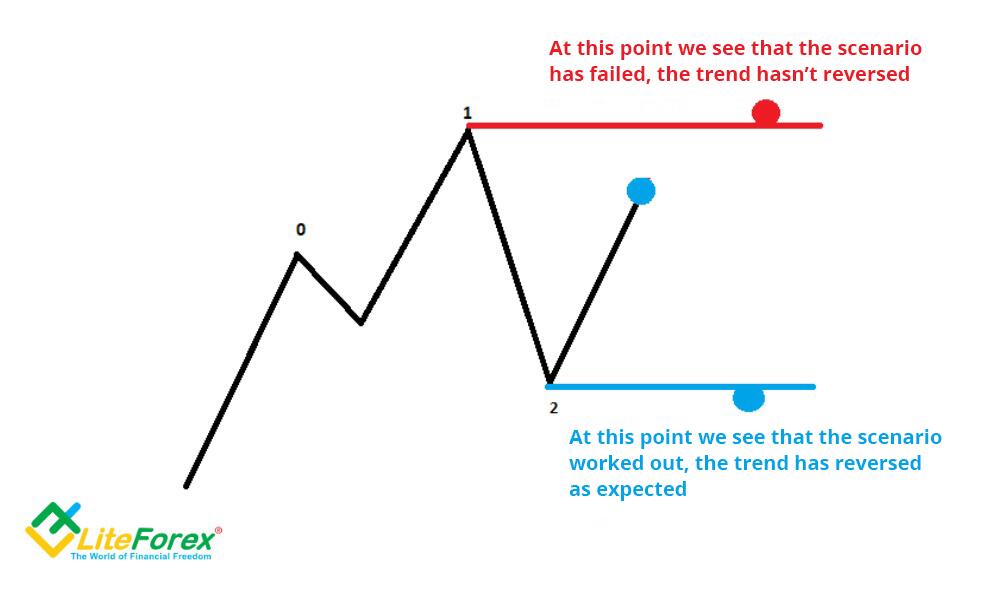
Once again: at any entry point in any scenario, no one knows in advance whether the expected scenario will work out or fail. However, at an entry point, we can define:
- At what point the price will confirm that the scenario has worked out;
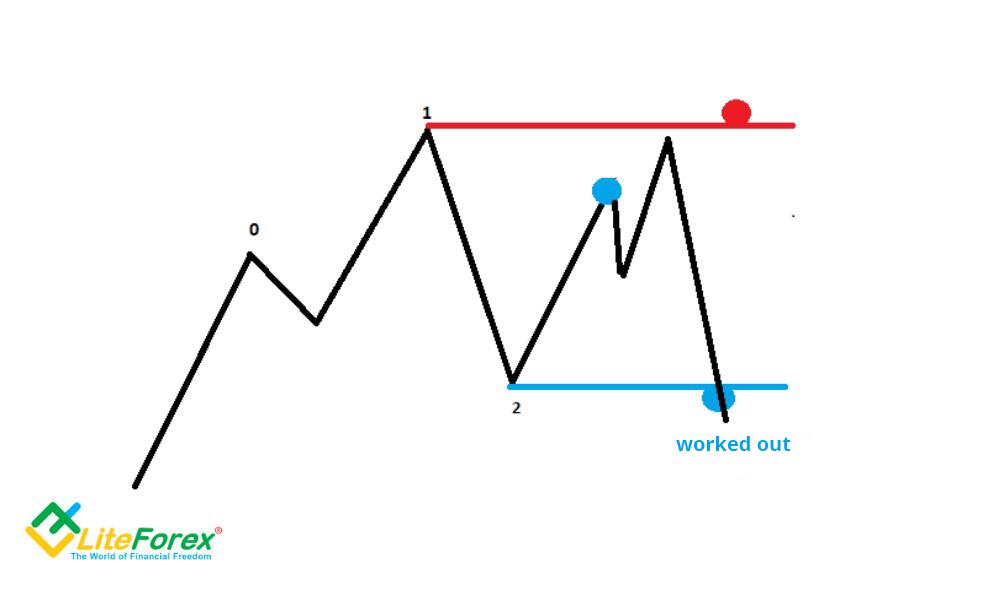
- At what point the price will confirm that the scenario “failed”.
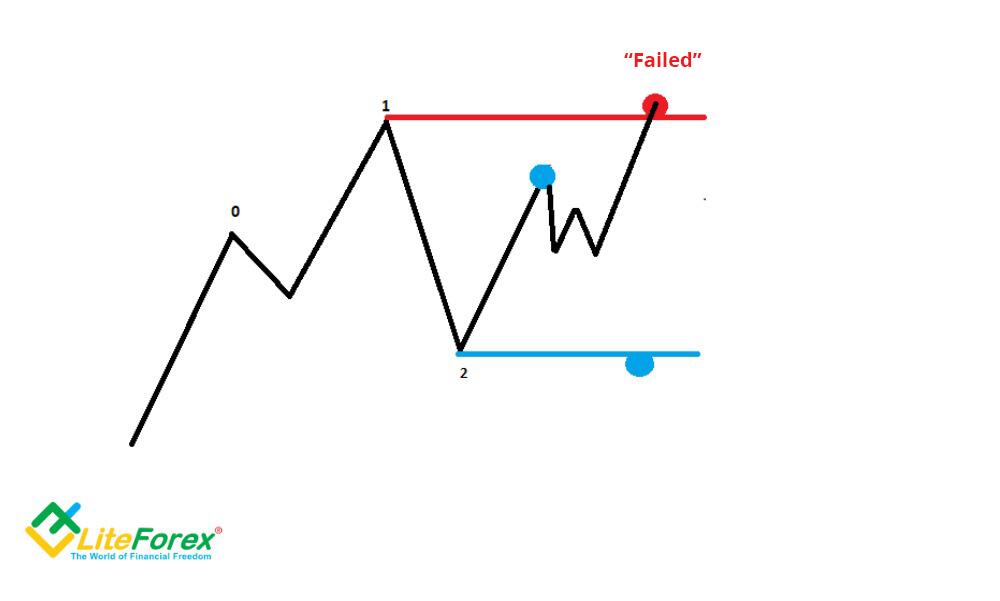
Roughly speaking, the initial goal is to find a repeating price pattern and determine for yourself at what point it “hasn’t occurred” and at what point it “has occurred”. Thereby you recognize that at the time of entry you cannot (alas!) define in advance where the price will go, you can only prepare for the 2 possible options.
When you take this step, you see that a stop loss and a take profit bring more clarity into your trading. Clarity is good, especially concerning such an uncertain thing as the price chart :-)
When we trade not in the “guessing manner”, but according to a scenario defined (ideally, a hundred of times tested for profitability) in advance, then it is just impossible to trade it without a stop loss and a take profit. That is because the trader needs to somehow determine the fact that if the scenario “has worked out” or “has failed”.
When you come to trading scenarios, you won’t any longer have questions like “what if it reverses”. The approach of trading scenarios itself suggests that you give up trying to predict the future price movement. You have only either “the pattern completed” or “the pattern didn’t complete”. Besides you know in advance at what point it will be confirmed that it “worked out” and at what point “it failed”.
“Trading scenarios” eliminates stops at an exact number of points. You are likely to have read in the rules of some strategy that “when you open position, a stop loss is no more/less than 10/25/45/999 points”. However, it is also unclear why the exact number of this is like this. So, when you stick to the approach of scenarios, you put a stop loss based on the current situation, as well as a take profit. As a result, you do not depend on the changing volatility, irrespective of whether you trade in the short term or long term.
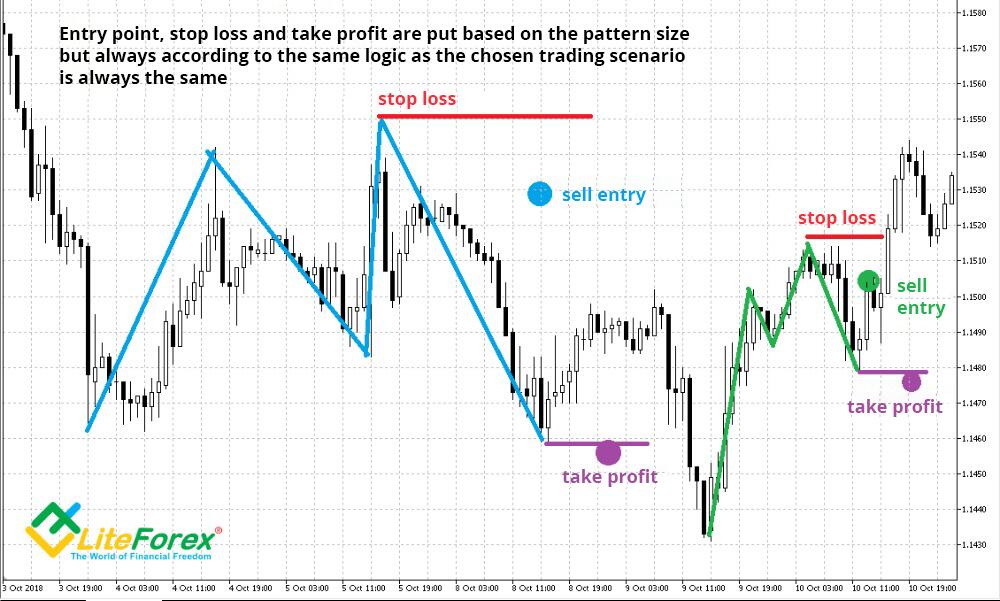
Summing it all up.
Instead of a conclusion, I want to note that without sufficient “emotional experience and maturity” a trader will fail to make himself/herself stick to the system “scenario” approach. Until you give up the hope to “find the trading grail that will enable you to predict the prices”, you will see the “scenarios” approach as something poor, incomplete and a kind of “loser’s” trading strategy for unintelligent individual traders who have failed to see “the core of trading”:) However, when you, not just in words, but REALLY are exhausted by the efforts to find that special way to predict prices, you may remember this article. That is when it should produce the effect it was designed for :)
P.S. Did you like my article? Share it in social networks: it will be the best "thank you" :)
Useful links:
- I recommend trying to trade with a reliable broker here. The system allows you to trade by yourself or copy successful traders from all across the globe.
- Use my promo code BLOG to get a 50% deposit bonus on the LiteFinance platform. Simply enter this code in the appropriate field when funding your trading account.
- Telegram chat for traders: https://t.me/litefinancebrokerchat. We are sharing the signals and trading experience.
- Telegram channel with high-quality analytics, Forex reviews, training articles, and other useful things for traders https://t.me/litefinance

The content of this article reflects the author’s opinion and does not necessarily reflect the official position of LiteFinance broker. The material published on this page is provided for informational purposes only and should not be considered as the provision of investment advice for the purposes of Directive 2014/65/EU.
According to copyright law, this article is considered intellectual property, which includes a prohibition on copying and distributing it without consent.