



Wealth is no longer exclusively associated with middle age. Every year, new names appear on the Forbes billionaire list, including the richest people under 30. While achieving billionaire status once typically required decades of work, today's youngest billionaires may still be in college when they reach this milestone.
Advances in technology have made it possible to launch and scale businesses at an unprecedented pace. Developed infrastructure, access to global markets, and digital services have significantly reduced the time needed to build substantial wealth. However, not all young billionaires have made their fortunes independently, as many have inherited their wealth.
In this article, we'll explore who ranks among the world's richest people under 30, how Forbes compiles its rankings, and which sources of wealth have contributed to their fortunes. We’ll examine the latest figures, identify the youngest billionaire on the list, and find out who currently holds the title of the youngest self-made billionaire in the world.
The article covers the following subjects:
Major Takeaways
According to Forbes, the world's three youngest billionaires include Amélie Voigt Trejes (20), with an estimated fortune of $1.1 billion, who inherited a stake in Brazilian engineering company WEG; Johannes von Baumbach (20), whose wealth is estimated at $6.6 billion and derives from his family’s ownership of German pharmaceutical company Boehringer Ingelheim; and Clemente Del Vecchio (21), with a fortune of at least $6.8 billion, who inherited a stake in EssilorLuxottica, the eyewear manufacturer behind the Ray-Ban brand. Johannes von Baumbach is reportedly three weeks older than Amélie.
Among young entrepreneurs who have built their fortunes independently, the three 22-year-old co-founders of AI startup Mercor stand out. Surya Midha, with an estimated net worth of $2.2 billion, is recognized by Forbes as the youngest self-made billionaire in history, surpassing Mark Zuckerberg's record. Brendan Foody, also worth an estimated $2.2 billion, is a few months older than Midha, while Adarsh Hiremath, the third co-founder, has a similarly estimated fortune. Mercor connects businesses with specialized talent and provides data and expertise for training AI models used by leading artificial intelligence research labs.
Who Is the Youngest Billionaire in the World?
Who is the youngest billionaire in the world? The answer depends on the criteria used to compile the ranking. When heirs to family fortunes are included, the youngest billionaires are typically around 20 years old and have inherited stakes in major companies. However, the ranking may look different when considering only those who have built their fortunes independently.
According to Forbes, the youngest billionaire in the world is 20-year-old Amélie Voigt Trejes, whose estimated net worth is $1.1 billion. Her fortune comes primarily from an inherited stake in WEG, a Brazilian engineering and manufacturing company.

The young billionaires on the list come from various countries, including Brazil, the US, and Germany. Nearly all of the top spots on the list are held by heirs to large fortunes and founders of fast-growing technology companies. The net worth of many of the list’s members is estimated based on the value of their equity stakes, so the amount depends on the market valuation of their businesses.
The 10 Youngest Billionaires and How They Got Rich
This top 10 ranking is based on publicly available data on the world's wealthiest individuals. It features both heirs to substantial family fortunes and entrepreneurs who have built successful businesses from the ground up. Let's explore their stories, ages, countries of origin, and the primary sources of their wealth.
1. Amelie Voigt Trejes — Brazil
Amélie Voigt Trejes (20) is a Brazilian heiress whose family wealth comes from the electrical equipment industry. She already holds a stake in the family business, although the older generation remains involved in its management. The world's youngest female billionaire keeps a low public profile, and little is known about her education.

Source: www.sistemampa.com
Her net worth is estimated at $1.1 billion, although little information is publicly available about her personal activities. Almost all of her wealth is linked to WEG and the industrial equipment manufacturing sector. While this gives her a stake in a major industrial enterprise, it also creates significant exposure to a single company's performance. WEG specializes in manufacturing electric motors, generators, and industrial automation systems.
2. Johannes von Baumbach — Germany
Johannes von Baumbach is an heir to the family that owns Boehringer Ingelheim, one of the world’s largest privately held pharmaceutical companies. His inherited stake made him a billionaire at a young age and earned him a place on the Forbes list. His story highlights the role of family ownership in preserving wealth across generations.

Johannes leads a private life and does not take part in the company’s daily operations. Boehringer Ingelheim is managed by professional executives, while his uncle, Hubertus von Baumbach, chairs the shareholders’ committee. His net worth is estimated at $6.6 billion, most of which comes from his stake in the family business.
3. Clemente Del Vecchio — Italy
Clemente Del Vecchio is an Italian heir whose wealth comes primarily from a 12.5% stake in Delfin, the family holding company behind major brands such as Ray-Ban and Oakley. He inherited his fortune rather than building it through his own business ventures. At 21, he remains one of the youngest billionaires on the Forbes list and one of Italy’s wealthiest heirs.

Source: www.thestatesman.com
Clemente is not involved in EssilorLuxottica's day-to-day operations. His role is limited to holding a stake in Delfin, the family holding company that controls a significant share of the group’s assets. The business was established long before his birth, and he inherited his stake as part of the family fortune. His net worth is estimated at $6.8 billion.
4. Lívia Voigt de Assis — Brazil
Lívia Voigt de Assis (21) is a Brazilian heiress with a stake in WEG, a manufacturer of electrical equipment. Her wealth comes from an inheritance from the family of company co-founder Werner Ricardo Voigt. She appears on international billionaire lists due to the value of her shares but is not involved in WEG's daily operations, which are overseen by the board of directors and professional management.

Source: medium.com
When she first appeared on the billionaires' list, Lívia was studying psychology at university. Little information is publicly available about her personal life. Her net worth is estimated at $1.4 billion, with almost all her wealth tied to the industrial electrical equipment sector. This concentration makes her fortune dependent on WEG's financial performance and share price.
5. Kim Jung-youn — South Korea
Kim Jung-youn (22) is an heir to South Korea's video game and digital entertainment industry. Her father, Kim Jung-ju, founded Nexon in 1994. Following his death in 2022, she inherited part of the family fortune. At 18, she was recognized as the world's youngest female billionaire. Her wealth comes entirely from inheritance rather than her own business ventures.
Her main assets are linked to NXC, the family holding company and a major shareholder in Nexon. She is not involved in daily operations, which are handled by professional managers. Nexon's publicly traded shares provide a market-based reference for valuing her family stake. Her net worth is estimated at $1.7 billion.

Source: www.sheinvests.io
Kim Jung-youn maintains a private lifestyle and rarely appears in the media. Her story reflects the transfer of wealth in Asia's technology sector to a new generation of heirs.
6. Surya Midha — United States
Surya Midha grew up in a family of engineers and developed an early interest in technology. He co-founded Mercor, a startup that uses AI for recruitment and prepares data for AI model training. The company reached a valuation of $10 billion, making Midha a billionaire through his own business ventures. He enrolled at Georgetown University but dropped out to focus on Mercor. For those asking who is the youngest wealthiest person to build a fortune independently, Midha is a notable example. According to Forbes, at 22, he became the world's youngest self-made billionaire, surpassing Mark Zuckerberg's record. His story also helps answer the question how old is the youngest billionaire: the age depends on whether inherited fortunes or self-made wealth are considered.

Source: www.forbes.com
Mercor initially focused on automating recruitment, including resume screening and AI-powered interviews. The company later shifted its focus to recruiting specialists to help train AI models. Its software tools support expert selection and project management for AI research labs. Midha's net worth is estimated at $2.2 billion. Most of his wealth comes from an approximately 22% stake in Mercor, making his fortune closely tied to the company's valuation. As one of the youngest self-made billionaires, he stands out among the growing number of millionaires under 30 who have built their wealth through technology and entrepreneurship.
7. Brendan Foody — United States
Brendan Foody is an American entrepreneur and co-founder of the AI platform Mercor. He attended Georgetown University but dropped out to focus on building his startup. Foody made his fortune by developing AI-powered recruitment tools and services for preparing data used to train neural networks. According to Forbes, he became one of the youngest self-made billionaires at age 22, surpassing Mark Zuckerberg’s record. Investors have valued Mercor at $10 billion.

Source: www.forbes.com
Brendan serves as CEO of Mercor and is actively involved in its development. The company has raised hundreds of millions of dollars in venture capital. Foody has described his commitment to the startup as all-consuming, dedicating nearly all his time to the business. His net worth is estimated at $2.2 billion, with most of his wealth tied to an approximately 22% stake in Mercor. Because the company is privately held, the value of his assets depends on private investors' valuation.
8. Adarsh Hiremath — United States
Adarsh Hiremath (22) is an American entrepreneur from an immigrant family and co-founder and CTO of Mercor. He built his estimated $2.2 billion fortune through his work developing the company's AI platform, which automates recruitment and prepares data for training neural networks.

Source: www.forbes.com
Investors have valued Mercor at $10 billion. The company works with leading AI labs and recruits specialists from various industries to help train neural networks. Hiremath put his studies at Harvard University on hold to focus on the business. Most of his estimated $2.2 billion fortune is tied to his stake in Mercor. As the company remains privately held, his net worth depends heavily on its valuation by private investors.
9. Kevin David Lehmann — Germany
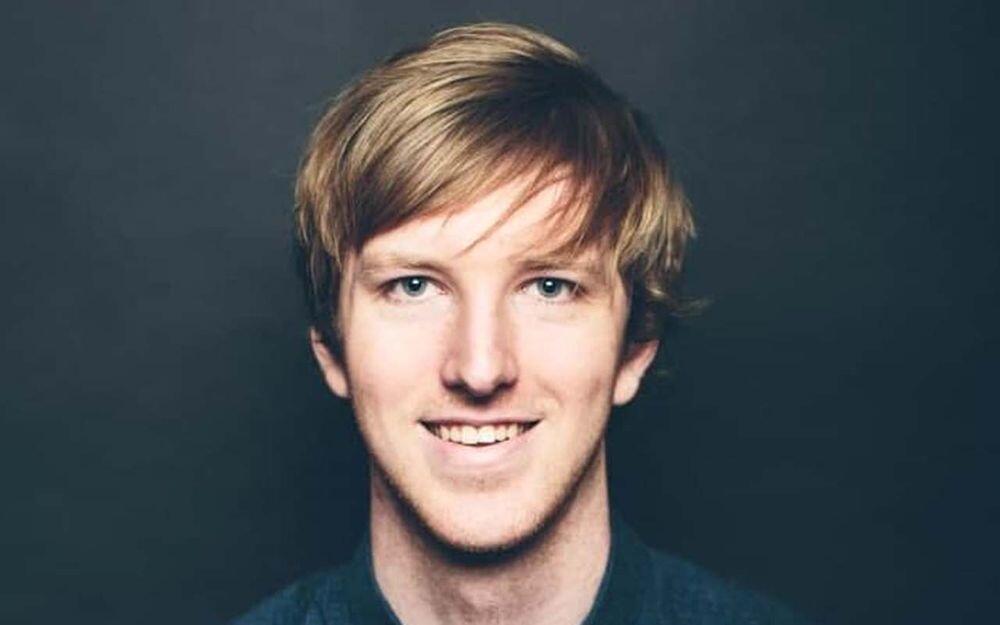
Kevin David Lehmann is one of Germany's youngest billionaires, having inherited his wealth from the retail sector. At 14, he received a 50% stake in the dm-drogerie markt chain from his father, Günter Lehmann. He does not take part in the company's daily operations, which are handled by professional managers and family representatives.
Source: fostylen.com
Kevin maintains a private lifestyle and rarely appears in the media. Little is publicly known about him beyond his family's business interests. His net worth is estimated at $4.9 billion, most of which comes from his stake in the privately held dm-drogerie markt chain. His story illustrates how family wealth in Germany can pass between generations without heirs taking an active role in business management.
10. Felipe and Pedro Voigt Trejes — Brazil
Felipe and Pedro Voigt Trejes are twin brothers and heirs to the Brazilian industrial group WEG, which manufactures electrical equipment and machinery. At 23, both rank among the world’s youngest billionaires, according to Forbes. They hold shares in the family business but do not occupy executive positions. Their younger sister, Amélie, is also a billionaire and is recognized as one of the world's youngest female billionaires.
Each brother's net worth is estimated at $1.1 billion, with most of their wealth tied to WEG shares. Their fortunes therefore depend on the company's market value and financial performance. While WEG publishes financial information as a publicly traded company, little is known about the brothers' personal lives. Their main financial exposure is the concentration of wealth in a single business.
Youngest Self-Made Billionaires: The AI Generation
The world's youngest self-made billionaires are increasingly emerging from the artificial intelligence sector. A promising AI startup can reach a multibillion-dollar valuation within just a few years, allowing its founders to achieve billionaire status before turning 25. Cloud computing, APIs, and digital services enable small teams to develop products and reach global markets without investing in expensive infrastructure.
Alexandr Wang was among the early examples of this trend. His fortune is tied to Scale AI, a company specializing in data preparation for training AI models. More recently, Mercor co-founders Brendan Foody, Surya Midha, and Adarsh Hiremath joined the ranks of young tech billionaires. They put their studies at prestigious universities on hold to focus on building their startup. Americans account for a significant share of entrepreneurs who have become billionaires through their own ventures before turning 30, although similar technology companies are emerging in Europe and Asia. Mark Zuckerberg was once a rare example of a young tech billionaire, but this path has become increasingly common. Nevertheless, inherited wealth still accounts for most of the fortunes held by the millionaires under 30 featured in global wealth rankings.

Entrepreneurship in the technology sector is becoming less dependent on age. However, most of the wealth held by young self-made billionaires consists of stakes in private companies rather than liquid assets. This creates a high concentration of capital and makes their fortunes dependent on valuations in fast-growing industries. If their companies lose value, their net worth can decline sharply. Millionaires under 30 are far more common than billionaires. So, how old is the youngest billionaire in the AI sector? According to this ranking, the answer is 22. At the same time, advances in technology and access to global markets have significantly shortened the time required to build a billion-dollar fortune.
Conclusion
The title of the world's youngest billionaire can change over time as net worths are updated, rankings are revised, and individuals grow older. Young billionaires are no longer a rarity, and their stories inspire new generations of entrepreneurs. However, most of the world's richest people are still over 30. For young founders, access to capital, technology, and global markets often matters more than their country of origin.
The youngest millionaire and the youngest billionaire represent very different levels of wealth. In both cases, fortunes can come from personal business ventures or inheritance. The Forbes rankings include individuals from both categories. Although millionaires under 30 are far more common than billionaires of the same age, the number of young entrepreneurs building substantial fortunes continues to grow. The youngest self-made billionaires demonstrate how technology and entrepreneurship can help founders achieve billionaire status at an early age.
The key takeaway is that modern technology has accelerated wealth creation and made it easier to launch businesses with relatively limited resources. Today, a promising idea, access to funding, and the right technology can open the door to major business success even before a founder graduates from university.
Youngest Billionaire FAQs
According to Forbes' 2026 ranking, 20-year-old Brazilian Amélie Voigt Trejes became the world's youngest female billionaire. She inherited a stake in WEG, a leading manufacturer of electrical equipment. Before her, the title was held by her relative, Lívia Voigt de Assis.
According to the Forbes list, there are 35 billionaires under the age of 30 worldwide. Of these, 23 inherited their wealth, while 12 built their fortunes on their own, primarily in the technology sector.
No, Mark Zuckerberg became a billionaire at 23, but his record has since been broken. The founders of AI startup Mercor—Surya Midha, Brendan Foody, and Adarsh Hiremath—became billionaires at just 22.

The content of this article reflects the author’s opinion and does not necessarily reflect the official position of LiteFinance broker. The material published on this page is provided for informational purposes only and should not be considered as the provision of investment advice for the purposes of Directive 2014/65/EU.
According to copyright law, this article is considered intellectual property, which includes a prohibition on copying and distributing it without consent.