What are pyramid schemes and what kinds of it can be? Features of fraudulent schemes. The greatest schemes in history. Can you really make money on a pyramid scheme?
A pyramid scheme is a fraud. This is the most common opinion, also in the world of finance. I can partially agree with it, as most of the fraudulent schemes disguised as investment projects and business startups are ordinary scams. But there are also schemes designed to make money, they even became a separate investment industry (HYIP). Read on this overview and you will learn about pyramid schemes, how to identify a fraudulent scheme and how to make money on pyramid schemes or multi-level marketing campaigns.
What are pyramid schemes and what features do they have?
What is a pyramid scheme? An obvious answer is a financial scheme where an old client recruits members and receives a reward. But it is not as obvious as it seems. Remarkably, many people think that a pyramid scheme is a common investment fraud and do not know about HYIP-industry, where one can make real money. Yes, it is difficult.
The word "pyramid" has become a household word; people use it for venture projects, bubbles, any project offering high returns to your investment, etc. People simply don’t understand how the project/startup’s income is generated and how such a scheme works, therefore they call the “pyramid” everything that lies beyond their understanding. And while some foolishly give money to scammers, others, for fear, don’t invest their funds anywhere and do not let them work, while others squeeze profits from high-risk projects, making money on different types of business, including pyramids.
- Do you think it is possible to make money in a casino, lottery, bookmaking operations or poker? Yes, it is! Likewise, it is possible to make money taking part in pyramid schemes if you have enough knowledge, experience, and speed of thought. Often, people participating in such projects are led not by a desire to earn money, but by excitement and emotions. And is it bad here if it helps you raise your self-esteem and relax?
You will learn from this overview:
The characteristics and types of pyramid schemes.
Differences between the financial pyramid and a fraud or a high-risk (venture) project.
The most famous historical examples of financial pyramids.
How to distinguish a pyramid scheme from a fraud.
The ways to make money on a pyramid scheme, a Ponzi scheme (HYIP).
Important! I am not going to urge you to invest in various kinds of financial pyramids, and pyramid schemes are illegal in some countries. I am aiming at explaining what it is, how it works and why you shouldn’t be afraid of what seems incomprehensible. The review is for informational purposes only; the investor must be able to distinguish fraud from pyramids and high-risk (venture) projects, as well as be able to assess the risks and prospects of income.
It is only your decision whether it is worth risking your money!
Everything you wanted to know about Ponzi schemes, Pyramids and other schemes of making money
A pyramid scheme is defined as a system of providing income to its existing members by constantly attracting funds from new members. Pyramids can be registered in the form of companies or individual projects
Types of financial pyramids according to structure:
- Ponzi Scheme. A common pyramid scheme, where a small number of people on the top of the pyramid make huge profits. The profits are paid to old participants from the contributions of new ones. The very first participants manage to recoup, including the amount of basic investment in the event of a pyramid collapse. Investor income is a fixed percentage of the amount of his/her investment, formed from the contributions of the new investors.
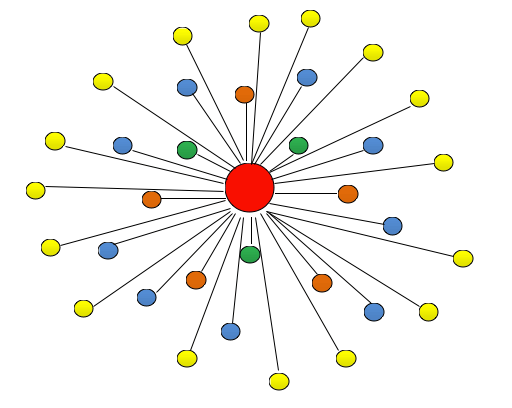
- Multi-level marketing (MLM). It is a multi-level pyramid scheme. There is the founder who attracts 10 investors, for example. Usually, such a company should sell products or services. Those 10 investors, in their turn, attract another 10 investors each, for which they receive 5% of the amount of investment (the amount is conditional). The higher is the investor in the hierarchy, i.e. closer to the founder, the greater is the commission fee he/she receives. Here, the main income of the investor is the commission for attracting new participants, rather than for selling products. In some countries, governments try to legitimate multi level marketing.

Types of pyramids according to work principle:
- Pyramid scheme that is not a scam. Organizers admit that this is a pyramid scheme, which is not a fraud. A kind of such scheme is HYIP. It is one of the few ways to make money on the pyramid schemes legally and estimating risk.
- Investment companies. They are fraudulent, as they deliberately mislead the investor. They offer to invest in some unique idea/product, convincingly promise the result and can even outline the business plan in general terms. However, the business idea and the steps for its implementation will not bear scrutiny, and the organizers themselves disappear over time. An example is the OneCoin cryptocurrency start-up. Such a cryptocurrency does not exist, but there is a negative comment from the British regulator FSA.
- Credit organization. Fraud with the slogan: “Invest now $ 100 and you can get a loan of $1000 a lower rate!”. It is an attempt to disguise as a credit union.
- Other organizational forms of pyramid schemes.
Making money on financial pyramids refers to a separate investment category, like making money on the stock exchange, bank deposits, forex, or investments in antiques. The distinguishing feature is in the level of risk. One of the studies showed that only every 4th person, with an average level of knowledge in the field of economics, finance, with an average skill of working with search engines and logical thinking, was able to recognize the signs of the pyramid without confusing them with other types of projects. Beginners mustn’t enter this investment area!
Pyramid schemes are often confused with other concepts:
- Bubble. A bubble is a market where the assets are overvalued by many times. This substantial deviation of the asset price from its intrinsic value. People sometimes that cryptocurrencies are a pyramid scheme, meaning that investors invest in unreal, intangible digital coins, which are nothing. This is the wrong interpretation. Cryptocurrency is an asset, whose price is determined by production costs (energy for mining, platform development costs). The asset’s quotes result from the supply/demand ratio, while a financial pyramid doesn’t have an asset, so, it doesn’t have the price.
- Crowdfunding and crowdlending. This is a platform that unites people’s finances to achieve some goal. Crowdfunding is a platform where some people come to borrow money, others - to lend it at interest. The risks are borne by the investors themselves. Alas, some of the projects on crowdfunding platforms are pyramids with signs of fraud.
- Venture projects. Venture investment is investing in high-risk, most often new projects/startups. They differ from the pyramid schemes in that they have a specific idea, a plan for its implementation, as well as the real actions of the project organizers (in contrast to the pyramids, where the idea is called a "legend"). If it is successful, venture projects can yield super-profits, but the probability of success is small.
- HYIPs. High Yield Investment Program (HYIP). In the theory of finances, this term means a kind of pyramid scheme, which is a fraudulent project, with a promise to pay an investor a high-interest return. This is not exactly so. HYIP is a real pyramid scheme, but investors realize what they are investing in and what the risks are. So, HYIPs can’t be called scams, according to the logic. This is proved by the HYIP industry, which has its classification, monitoring, channels to get in touch with monitoring websites. I will describe them in detail later.
The most infamous Ponzi Schemes
1. Ponzi Scheme. It is a common fraud named after Charles Ponzi, who became notorious for using the technique. He was originally involved in arbitrage reselling goods in different countries making money on the differences in prices. In 1919, he got an idea to make money on trust. He offered investors 50% of return in 90 days. Investors were not curious about the source of income, so the company worked for about a year. The problems began when one of the investors filed an insignificant lawsuit against Ponzi, but according to it, the court had the right to freeze the company's accounts and conduct their audit. Then a shortage was discovered.

2. Bernard Madoff’s Ponzi scheme
The most infamous Ponzi scheme in recent history, and the single largest fraud of investors in the United States, was executed by Bernard Madoff. For almost 20 years, according to various estimates, his fund managed from $50 billion to $65 billion with an annual yield of about 12% and almost no risk. At least that was how it all seemed until the moment of its collapse.
The secret of the Madoff Investment Securities was based on a few facts:

The secret of the Madoff Investment Securities was based on a few facts:
- The profits were steadily paid. A guaranteed return of 12% was not such a high investment return to arouse suspicion. But still, the interest rate was higher than the average market return.
- Well-designed legend. Investors, including large banks, hedge funds, private investors from around the world, were sure that success was related to owning insider information. And the fact that there was hardly any did not alert anyone. Reputation. Fund investors were people and corporations with such a status that no one doubted Madoff's reliability.
During the 2008 crisis, some of the investors decided to withdraw their funds. It turned he couldn’t pay. Investor losses amounted to more than $ 20 billion, although Madoff himself called twice as large amounts (about $50 billion). The investigation showed that for the last at least 13 years Madoff had not conducted any transactions on the exchange, providing submitting fake checks. Madoff was sentenced to 150 years in prison.
Remarkably, auditor for unknown reasons didn’t see the characteristics of a Ponzi scheme. After Enron’s bankruptcy (Arthur Andersen, one of the auditors of the Big Five accounting firms, ceased to exist), Madoff’s Ponzi scheme is another vivid example that even audit reports and investors’ status does not guarantee that you will return your investments.
3. Ant Farm Scam by Wang Fengyou. It was quite an unusual pyramid scheme that can be called a prototype for HYIP due to a convincing legend. And only the fact that people believed in this legend refers to the category of pyramids. In 1999, a Chinese businessman Wang Fengyou opened a firm to make health products whose main ingredients were ants. Wang Fengyou offered anyone who wishes to become an investor for just $ 1,500. For the money investors received a box with special ants, which had to be fed and grown in the special box within 90 days. After this time the company’s representatives came, paid the price giving an income of about 30-32% per annum, and took the insects, recycling them into medicines. At least that was what the company informed its investors. Over 14 months, the Ant Farm was so popular that it was even nominated state award ‘100 best businessmen in China.’ When the company’s turnover amounted to approximately two billion dollars, Wang’s ant scheme collapsed, and he was arrested and sentenced to death.
4. МММ. The MMM project was established in 1989 by Sergei Mavrodi, it is a combination of a Ponzi scheme and HYIP. In 1994, the project turned into a common Ponzi scheme. The company started an aggressive TV ad campaign, stimulating people to invest in the company’s securities as “the last hope”. Those who were the very first and who quickly withdrew money in the first months earned. The rest, according to various estimates, 10 million - 15 million people, lost all their money.

After the first MMM episode, the time of HYIPs started: the MMM-2011, the MMM-2012, the cryptocurrency HYIP Global Republic of Bitcoin and so on. Remarkably that all these projects were actively promoted in different countries: China, Thailand, Nigeria, Peru, Ghana. There was even an attempt to promote the Mavro cryptocurrency (which has nothing to do with tokens). All they disappeared, having existed for about a couple of years. And one could call these projects Ponzi schemes, but for the fact that the websites of some of them had a sincere warning about the risks. But who reads these warnings?
- A question for reflection. Can the pension system of individual countries be called a Ponzi scheme? Tax payments to the pension fund of the working-age population go to pension payments to those who have already retired by now. That is, payments to one occur at the expense of the income of others (pyramid?). In the event of a drop in the birth rate, there may come a time when there will be so many pensioners in the country that deductions will not be able to cover current expenses. The problem is now being solved by raising the retirement age or by third-party financing. But such a situation is possible, do you agree?
Louis Pearlman founded a Ponzi scheme that consisted of non-existent companies (he was accused in 2006), which resulted in a loss of about $ 300 million. This was one of t the largest and longest-running Ponzi schemes in history, leaving more than $300 million in debts. He is famous for being the manager and the producer of such successful 1990s boy bands such as Backstreet Boys and NSYNC
How to recognize a Ponzi scheme?
It is good when the organizers honestly inform that the project is a kind of MLM. What if they don’t? Then, mind the following recommendations.
Features of a Ponzi scheme (How to know a Ponzi scheme from a venture project):
- High investment returns guaranteed with no risk. The investment return is guaranteed in bank deposits. In any investment, nobody can guarantee a yield, especially a return of more than 100% per annum. If the investment income is higher than the income generated by the project product (if it exists at all), this is a Ponzi scheme.
- Lack of detail information. There is no information about organizers, address, registration data. There is no offer/contract, no clear legal terms or conditions, no exact information on what the company is engaged with. There are only promises and no evidence that there is a real product.
- Great marketing component, including affiliate and bonus programs. A Ponzi scheme is created to attract investors. It offers different bonuses, like gift cards, for example. Therefore, the focus is on the attractive banners and options encouraging to invest, like “Bring your friend and you will get 5% additional return”, or “Invest now and you will get 5% bonus”. Hard-sell advertising instead of an exact business plan is a characteristic of a Ponzi scheme.
- Obvious flaws of the project website. Fake comments with pictures of non-existent people taken from the web, broken links, inconsistency between the information in different tabs, one-page website, etc.
- Lack of information on liability before the investor. It is an additional, but not the primary feature. Still, the risks are borne by the investor, and anything can be written in the offer. But, if nothing at all has been specified about the risks, you should be alert
- Organization of investment process. Ponzi schemes do not focus on the process of money transfer. There is no verification procedure, the no security/password protection system is provided (for example, confirmation of data via social networks is offered). If so, the project is likely to be a Ponzi scheme.
And, of course, check the comments about the project before you decide whether to invest in a startup or not. Pay attention to the alternation of positive and negative comments, to the exact information specified in the comments, use plagiarism checkers. The comments are often fake.
Forex is the global financial market, and there are also scammers. All the above recommendations are relevant to analyze the reliability of forex brokers. However, as experience has proved, either the regulator’s license or these recommendations do not often prevent a mistake (for example, MMCIS, Panteon Finance). Here, I can recommend you to regularly monitor the actions of the project organizers and to withdraw your money at first doubt.
How to make profits taking part in pyramid schemes?
There remains only one type of pyramid schemes that can be promising in terms of profits. They are HYIPs. This term refers to a pyramid by nature, where participants provide an income to earlier investors. Investing in HYIPs is like gambling, the most important is to get away on time. There are no regulators, all transactions are performed only on the Internet and via confidential wallets. That is why, in case of a failure or your error, you will lose your money forever. But the excitement is worth all this, so this industry is steady.
Types of HYIPs:
1. According to the yield level:
- Low-interest (Conservative) HYIPs (up to 10% per month)
- Mid-interest HYIPs (10%-50%)
- High- interest HYIPs or Fast HYIPs.
The higher the interest return, the sooner the project will go bankrupt. Long-term survivors exist 1-2 years or longer, a fast-living project is scamming in a few days. The matter is in the involvement (awareness and excitement) of potential investors.
2. According to organization structure:
- HYIPs with a legend (idea). Such HYIPs are often confused with venture projects.
- HYIPs without a legend. There is no point in creating an idea, all the participants, in theory, understand what they are taking part in.
- Economic games. An entry fee is required here, an investor receives money for completing the levels. The legend is not needed here.
3. By the period of existence: short-, medium- and long-term HYIPs.
The guides to the HYIP industry are HYIP-monitoring websites, the platforms accumulating HYIPs. They are interested in the commission paid for promotion. So, if you see the project’s status “Paying”, do not trust it.
If you can’t stop the process, you should head it. If you do not want to be an investor, you may become an organizer. To do this, you need:
- Make up an idea (legend). Here, it is more important to invent ways to attract investors (bonuses, affiliate programs, and so on).
- Create a website. There are free website builders with ready-made designs. You also can order to design a website. The more attractive is the website, the more investors it will attract. The picture and the design create a positive impression. The best-known website selling HYIP manager scripts is https://www.goldcoders.com.
- Buy a script. This the base the website will operate on. You can buy a template and develop it, or you can order an individual project.
- Settle down technical issues: domain, hosting. Buy API (software solutions for the website, payment services).
- Carry out a marketing campaign. First of all, you should place your project on top monitoring websites.

The investment without marketing costs will be at least $2,000-$3,000. By the way, here is the article about HYIPs, even if it is not new, it is still rather informative. Do you wonder how to identify a soon scam of HYIP? Ask a question in the comments, and I will surely write an overview on this topic!
If you are interested in the HYIP industry, if you want to learn how to distinguish between real investment projects and scams (fraudulent projects), get a step-by-step guide to profitable investments, write in the comments. If this topic is interesting to you, I will write a detailed overview.
I want to again stress that the industry of HYIPs and pyramids is a high-risk investment. If you still want to try yourself, I’d like to offer you a few tips:
- Participate only in the project that honestly warns about the pyramid scheme and potential risks. If there are any doubts, or signs of a scam, do not risk.
- Invest in restarts of HYIPs. This is at least a slight evidence that organizers aim at long-term operating.
- Psychologically accept a potential loss of money in advance.
- Select the pyramids, MLM projects or HYIPs only from “official sources”, platforms, monitoring websites designed for these purposes.
- Invest only at the early stages of the HYIP life-span (at the moment when HYIP has been just created).
- Withdraw money as soon as possible. At first, invest a small amount of money and try to withdraw it to make sure that it is possible.
What can you do if you are a victim of pyramid scheme fraud?
Unfortunately, all you can do is to accept the fact that you won’t get back the lost money. There’s the chargeback procedure or sending a complaint to the government agency or another regulator in the case with Forex brokers or credit card issuers there attempts to legitimate MLM. But they're no regulatory acts for pyramid schemes. You should realize what kind of scheme you invest in, and you are responsible for your decision. Any attempts to solve this through the court or any other legal establishment is just a waste of time. And time is money! If you’ve made an error, value your time. Instead “search for justice”, look for new ways to make money!
Conclusion. You shouldn’t be afraid of HYIPs or other pyramid schemes! Any HYIP is a project. A potential investor should thoroughly analyze its background and prospects. You are responsible for your money and should estimate the risk level. If you have any doubts or lack of knowledge, if you are not prepared for losing your money, don’t even try to participate in such schemes! If you are excited, interested in exploring a new investment industry, good at looking for information, then you can try to take your chance! Go ahead, and the LiteFinance company is willing to provide any assistance at any moment!
P.S. Did you like my article? Share it in social networks: it will be the best "thank you" :)
Useful links:
- I recommend trying to trade with a reliable broker here. The system allows you to trade by yourself or copy successful traders from all across the globe.
- Use my promo code BLOG to get a 50% deposit bonus on the LiteFinance platform. Simply enter this code in the appropriate field when funding your trading account.
- Telegram chat for traders: https://t.me/litefinancebrokerchat. We are sharing the signals and trading experience.
- Telegram channel with high-quality analytics, Forex reviews, training articles, and other useful things for traders https://t.me/litefinance
The content of this article reflects the author’s opinion and does not necessarily reflect the official position of LiteFinance broker. The material published on this page is provided for informational purposes only and should not be considered as the provision of investment advice for the purposes of Directive 2014/65/EU.
According to copyright law, this article is considered intellectual property, which includes a prohibition on copying and distributing it without consent.