The UK government and the Bank of England appear to have made the right decisions, as reflected in February's GDP growth figures. However, the outbreak of conflict in the Middle East in March changed the landscape entirely. How did GBP/USD quotes respond, and what lies ahead? Let's explore these questions and outline a trading plan.
The article covers the following subjects:
Major Takeaways
- The conflict in the Middle East is likely to weigh on the UK economy.
- UK GDP accelerated to 0.5% in February.
- The Bank of England is in no rush to raise interest rates.
- The GBP/USD pair can be bought on a pullback from 1.35 and 1.347.
Weekly Fundamental Forecast for Pound Sterling
A currency tends to strengthen when its economy shows robust performance or when it sheds its "underdog" status. In the case of the British pound, both factors occurred simultaneously. As a result, the UK currency recovered to pre-war levels faster than most other European currencies. However, as recently as early April, investors had largely abandoned expectations of an uptrend in GBP/USD quotes.
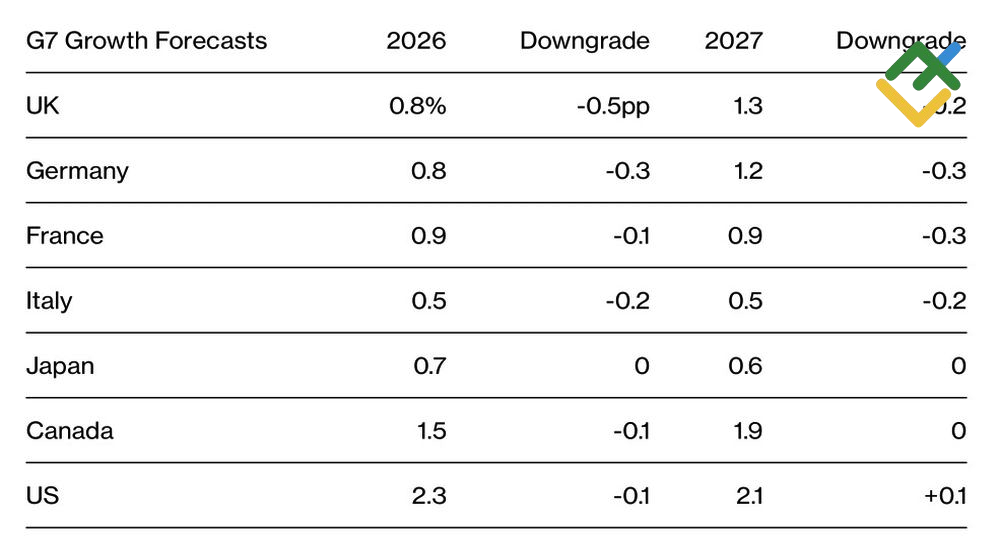
According to the IMF, the UK economy is the most vulnerable among the G7 countries due to the conflict in the Middle East. Rising energy prices could cost the UK 0.5 percentage points of GDP in 2026 and another 0.2 percentage points in 2027. Germany looks slightly better off, with losses of 0.6 percentage points over two years.
IMF Forecasts for G7 Countries
Source: Bloomberg.
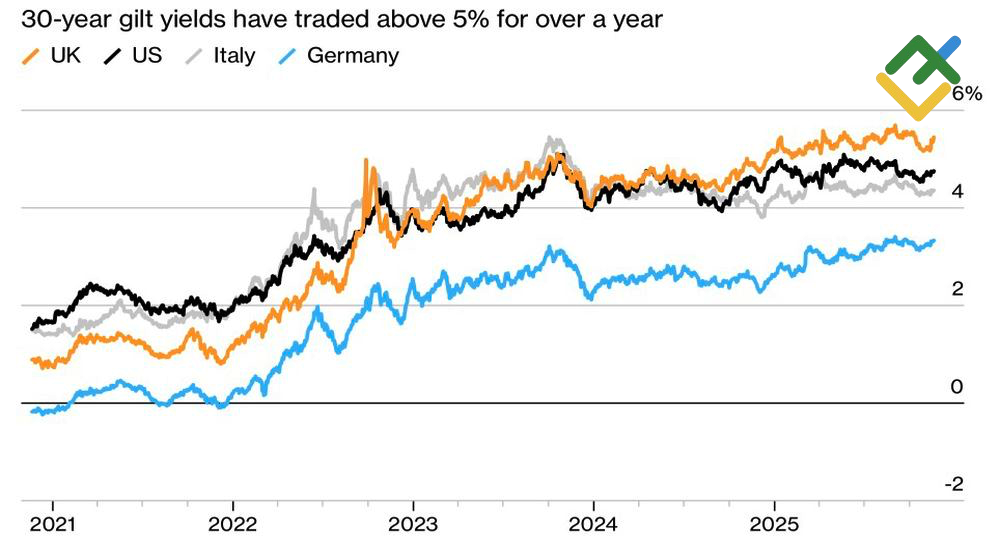
Such pessimistic assessments prompted investors to sell UK government bonds at a faster pace than their European counterparts, pushing gilt yields above those of their peers. This was expected to support the pound as soon as signs of de-escalation in the Middle East emerged, and that is precisely what occurred. The improved appeal of British assets supported capital repatriation, allowing the pound to recover.
Bond Yields in Europe
Source: Bloomberg.
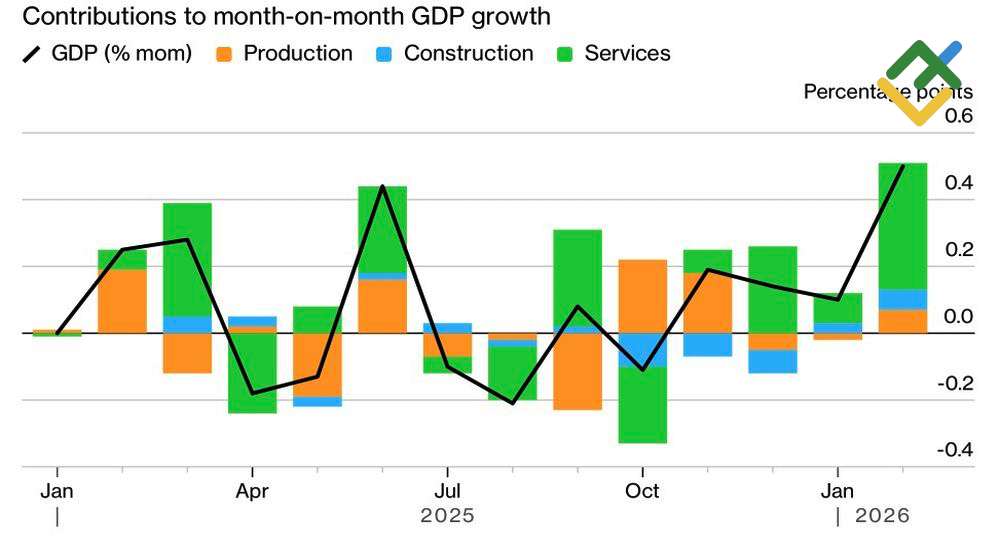
Strong UK GDP data further fuelled the GBP/USD rally. In February, the economy grew by an impressive 0.5%. Apparently, before the war in Iran, the government and the Bank of England were on the right track. Rachel Reeves' budget is working, and so is the BoE's monetary policy. However, it is now necessary to take into account the impact of geopolitical factors on inflation and economic growth.
Contributions to UK GDP Growth
Source: Bloomberg.
Rising oil and natural gas prices could push UK consumer inflation close to 5% by the end of 2026, forcing the Bank of England toward tighter monetary policy. However, the IMF argues for a looser stance, citing slowing GDP growth.
The BoE has indeed found itself in a difficult position. Even before the armed conflict in the Middle East, the MPC was divided. Now, finding common ground will be incredibly difficult. While Megan Greene views money market expectations of two repo rate hikes in 2026 as reasonable, Andrew Bailey has emphasized that the central bank will not rush its decisions. Such rhetoric from the BoE Governor reduces the likelihood of monetary easing at the end of April.
Weekly Trading Plan for GBP/USD
The conflict in the Middle East has indeed come to an end, but the final step toward a lasting peace agreement remains the most challenging. With oil prices still elevated, the GBP/USD rally appears overly rapid, suggesting that a correction may be looming. That said, a pullback toward the 1.35 and 1.347 support levels could present attractive buying opportunities.
This forecast is based on the analysis of fundamental factors, including official statements from financial institutions and regulators, various geopolitical and economic developments, and statistical data. Historical market data are also considered.
The content of this article reflects the author’s opinion and does not necessarily reflect the official position of LiteFinance broker. The material published on this page is provided for informational purposes only and should not be considered as the provision of investment advice for the purposes of Directive 2014/65/EU.
According to copyright law, this article is considered intellectual property, which includes a prohibition on copying and distributing it without consent.