I am glad to welcome you again, dear readers. Let's talk about special trading words understood only by the elect. But let's talk about it a little from the other side, with which, I am sure, not everyone is familiar. You can find a million forex trading dictionaries, all sorts of collections of jargon of the forex market. I decided to look at it from the other side and make our trading life a bit more fun. Let's learn about the origins of forex slang, where there are a lot of interesting stories. While such notions as “bulls” and “bears” or “short” and “long” are familiar even to a novice trader, we will not speak about these well-known slang words, although we will also touch on this topic in passing. Today we will talk about the Forex trading terminology jargon that history has created.
The article covers the following subjects:
Let's go!
How did the first trading slang emerge
In the already distant 1998, the Institute of Terminology conducted a rather unusual study. Employees were instructed to conduct research of stock trading terms to find out the reasons for the appearance of jargon on the exchange. According to the research, statistics was published, which asserted that out of a little less than 1000 units of stock slang, which can be heard being used by bank employees to various trading forums, only a little more than 10 slang words have a solid foundation with history. The rest arose either as a result of shortening longer terms, or they are simply linked to as a part of an associative array.
A vivid example of such an associative binding is probably the most popular slang words, “bulls” and “bears”, as related to those who buy or sell. We all know that bulls are buyers, and bears are sellers. But what about a small group of Forex slang words that have big stories behind them? Let's take a look at them.
In general, the use of exchange slang within a narrow circle of professionals, the so-called “stockbrokers”, began with the appearance of the exchanges. It is believed that the very first stock trading slang term was the name “bourse”. French spelling and modern sense of "exchange for merchants" is first recorded in 1845, from the name of the Paris stock exchange. The term originated because in 13th century Bruges the sign of a purse (or perhaps three purses), hung on the front of the house of Van der Beurse where merchants met and which was, essentially, the first stock exchange.
It is interesting how London Stock Exchange (LSE) made its way from a small coffee house (called “Jonathan's Coffee-House”) to what is now one of the largest stock exchanges in the world. The coffee house was the scene of a number of important events in the history of share trading, including the South Sea Bubble and the panic of 1745. It was destroyed by fire in 1748, but rebuilt later. In 1761 more than one hundred and fifty brokers formed a club to trade stocks. The club built its own building in 1773 which was dubbed the New Jonathan's, but was later renamed the Stock Exchange.

The Buttonwood Agreement was made in 1792 between 24 stockbrokers and merchants on Wall Street, 68 in New York City in an effort to create a stock exchange. According to legend, it occurred under a buttonwood tree and marked the beginnings of (well, not the first, but certainly the most powerful) New York Stock & Exchange Board. Hence the slang name of the NYSE - “Wall Street.”
Forex Slang
I want to tell you about slang names of the most popular currencies in Forex. Each one has its own history. So let's dive into trading slang definition and its meaning.
Why a dollar is called a “Buck”
We all know the famous jargonism “Buck.” We know that it “translates” as a U.S. dollar. The slang word sits so well in our mind that a person who hardly knows what is a central bank is sure to know it.
Where did this name for a dollar come from? There are several versions of the origin of the famous word. Let’s see the two most common and choose the one that appeals more to us.
“Bucks” as buckskins
One of the earliest references of using the term was in 1748, 44 years before the first dollar was minted, where there is a reference that a cask of whisky traded to the Indians would cost “5 bucks”, referring to deerskins. In yet another reference from 1748, there is a note in a journal of a traveler which says that someone had been “robbed of the value of 300 Bucks” (and that you couldn’t afford to lose). At this time, a buckskin was a common medium of exchange. There is also evidence that a “buck” didn’t mean just one skin, but could mean multiple skins, depending on their quality. For example, winter deer skins were considered superior to summer skins, because of the fur being thicker. The buckskins were commonly traded and exchanged for, and when the U.S. government started to mint dollars and people started to use them more often, the “good ol’” buckskins still were in people’s minds, and so the dollars got called “bucks.”
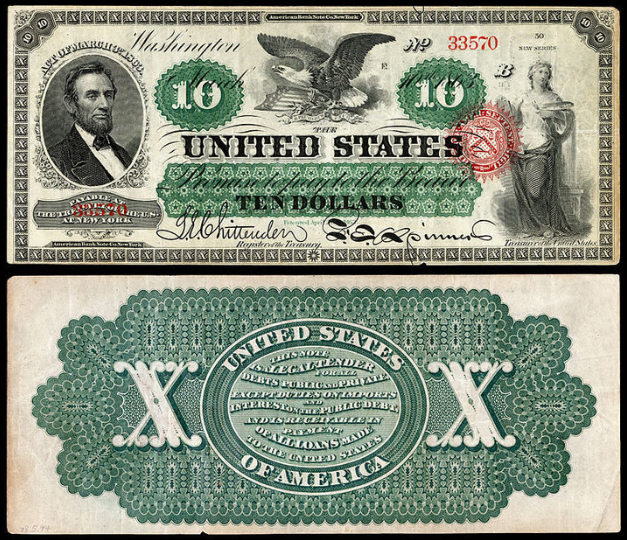
There is another version of it, according to which the buck got its name from a sawbuck, a structure for holding and sawing wood, that is very similar to the Roman numeral X. The numeral was present on a 10-dollar bill of the Civil War period.
GBP/USD pair or “the Cable”
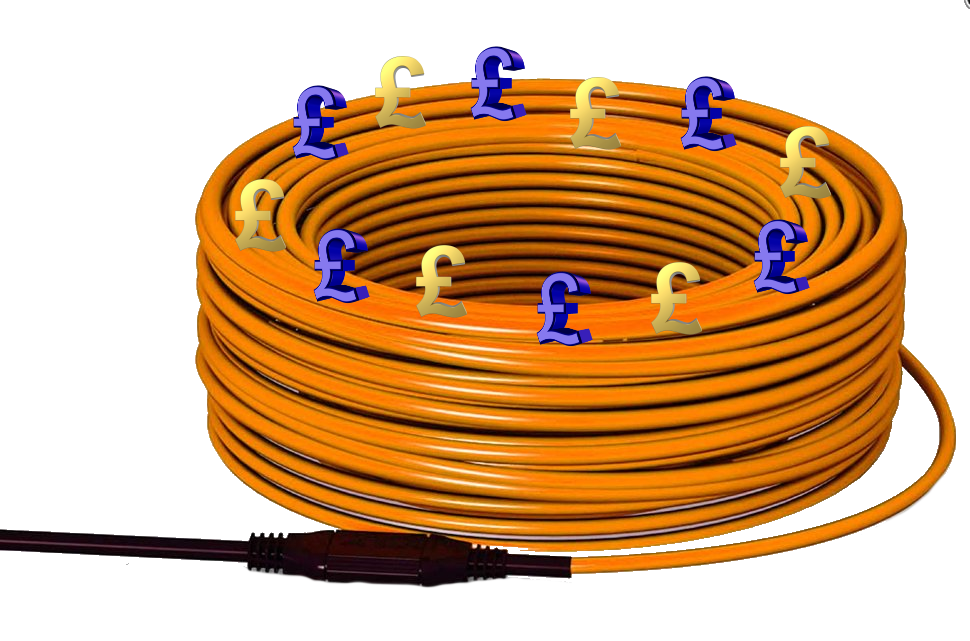
Trading the GBP/USD currency pair is commonly called “trading the cable.” The term dates its origins to the middle of the 19th century, when the exchange rate between the U.S. dollar and the British Pound began to be transmitted by a cable running across the ocean between the two countries. The GBP/USD currency pair has been referred to as the cable ever since.
“Kiwi”
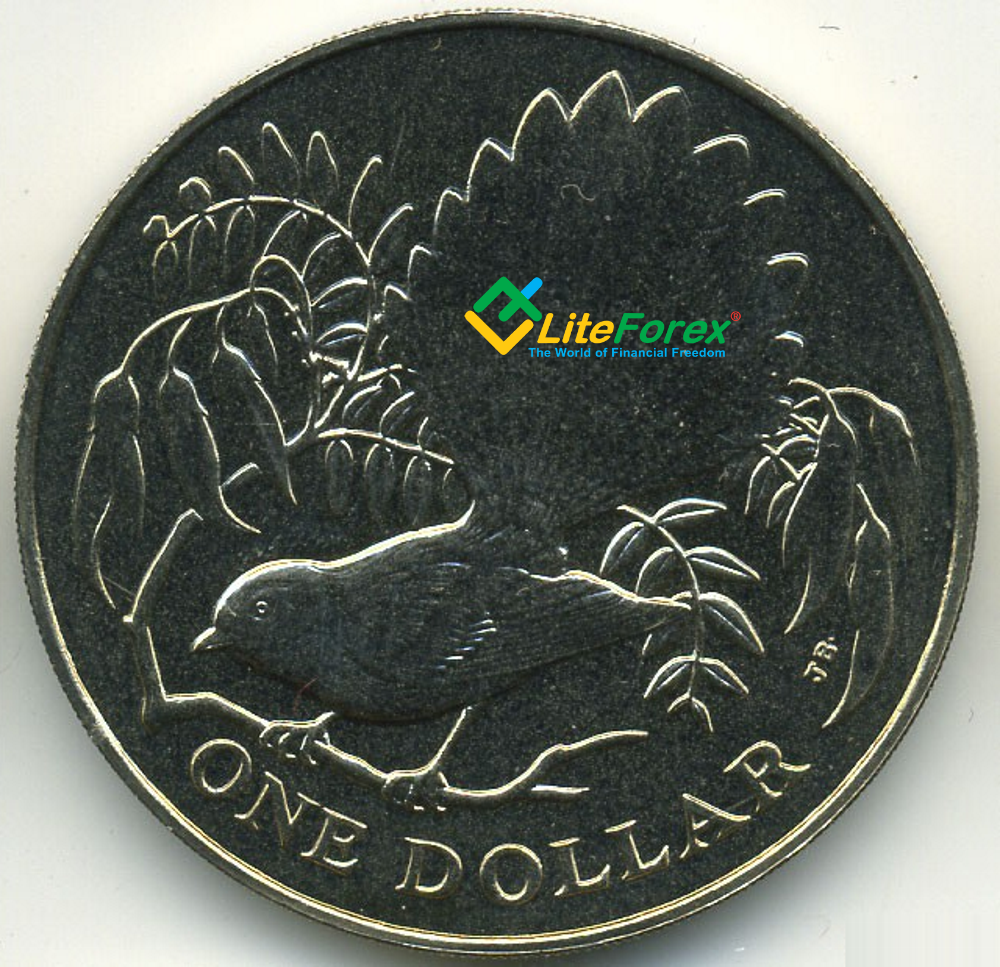
There is another currency that forex brokers and traders have a slang term for. It is a New Zealand dollar, or “kiwi.” It derives its name from the national symbol of the country - a small flightless bird called kiwi. The bird has been depicted on the country’s one dollar coin since 1990. Actually, the forex market went a bit further and now “kiwi” represents not only the New Zealand dollar, but also the NZD/USD currency pair.
Contemporary forex slang
Here we will talk about forex slang that one can often hear in the contemporary market.
Blue chip

We hear the term “blue chip” almost every day now. However, not everyone knows that it is a slang term. One often hears the term used in the news in phrases such as “the blue chips are falling” and in many other similar expressions. The phrase actually means that the quotes of the shares of large corporations are falling at the stock exchange. Yes, a blue-chip is a widely-recognized and financially well-established company. The shares of companies like Coca-Cola, Disney, Wal-Mart, IBM are all blue chips. The name came from the game of poker and originally described the most valuable chips.
Dead cat bounce

The first known reference of the term dates back to Dec. 7, 1985. Chris Sherwell in Singapore and Wong Sulong in Kuala Lumpur reported in The Financial Times that investment analysts "said the rise was partly technical and cautioned against concluding that the recent falls in the market were at an end. 'This is what we call a dead cat bounce ,' one broker said flatly." The term is used broadly to refer to a temporary recovery while still in the downtrend.
Some more forex slang terms
Catch a falling knife | This is a way to describe the dangers of investing. When a stock’s price is going down, buyers could be in too early and face still more declines coming. |
| Frothy | In Wall Street talk, “frothy” is another way of saying prices are unsustainably high, comparing them to a mass of bubbles. |
| Rush for the exits | This phrase describes people panicking and selling their stocks at the beginning of a market decline, fearing margin call or thinking it to be a trend reversal. |
| Don’t fight the Fed | This bit of advice (suitable for all investors) endorses accepting Federal Reserve policy and act in accordance with its changes, rather than resisting (and likely losing money). |
| Buy the rumor, sell the news | This saying is more relevant to day traders than long-term investors. There are occasionally short-term trading opportunities with rumors — be it economic reports, elections or other occasions. |
| Wall of worry | There’s a lot to worry about, but everything will be all right. This phrase suggests investors can overcome bad news to lift stock prices again. |
| Hunting elephants | Most famously said by Warren Buffett, this means that you're looking for big deals. Here's how he put it after announcing that he would acquire Heinz with private equity firm 3G. "I'm ready for another elephant. Please, if you see any walking by, just call me," he told CNBC. "We're prepared. Our elephant gun has been reloaded, and my trigger finger is itchy." |
| F-You money | The money it would take for you to leave your job and never work again. |
| Beast | GBP/JPY. Called the beast because of its historic volatility, it is also known as dragon, geppy, gopher and widowmaker. |
| Loonie | A Canadian dollar (CAD). So called because Canadian dollar coins have an image of a loon bird on them. The name is also sometimes used to refer to the USD/CAD pair. |
| Old lady | The Bank of England (BoE). The BoE is sometimes called 'the old lady of Threadneedle Street', where it has been based since 1734. |
| Texas tea | Another name for oil, one that points at its abundance in Texas. |
| Hedgistan | The area located between Manhattan and Westport, CT, the “hedge fund capital of the world.” |
| Unicorn | A start-up company that has received a valuation of $1 billion or more. It is due to the fact that successful startups, like unicorns, are exceptionally rare. |
| Ninja | A name for USD/JPY. |
| Nut | A nut is the total cost of commissions on your trades. |
| Babysitting | This means that you are holding a losing open position for a long time, hoping the price will increase enough so you can get out of the trade with an even balance. |
P.S. Did you like my article? Share it in social networks: it will be the best "thank you" :)
Useful links:
- I recommend trying to trade with a reliable broker here. The system allows you to trade by yourself or copy successful traders from all across the globe.
- Use my promo code BLOG to get a 50% deposit bonus on the LiteFinance platform. Simply enter this code in the appropriate field when funding your trading account.
- Telegram chat for traders: https://t.me/litefinancebrokerchat. We are sharing the signals and trading experience.
- Telegram channel with high-quality analytics, Forex reviews, training articles, and other useful things for traders https://t.me/litefinance

The content of this article reflects the author’s opinion and does not necessarily reflect the official position of LiteFinance broker. The material published on this page is provided for informational purposes only and should not be considered as the provision of investment advice for the purposes of Directive 2014/65/EU.
According to copyright law, this article is considered intellectual property, which includes a prohibition on copying and distributing it without consent.