Basic technique to take smart trading decisions in Forex
We will discuss how to enter a trade correctly, how to set a stop loss and a take profit correctly, and how to correctly fix the profit
The article deals with the basics of the market relationships that everybody forgot long ago. I will explain the features of market structure, the logic of buying/selling with large volumes, and how you can make money on it. All that you need for an objective analysis is explained in this article.
Do you like the title? =)
Now, let’s get down to business. This article describes a fairly simple approach to making trading decisions. I will describe only the principle, but on its basis, you may define everything: entry rules, the rules for setting stop loss, the rules for fixing your profit and all the rest. For example, where you can put a short entry, and where, you should put a long one.
Well, first, you need to make your chart look like this, as if you were trading without indicators, so that it will be easier to understand the things described.
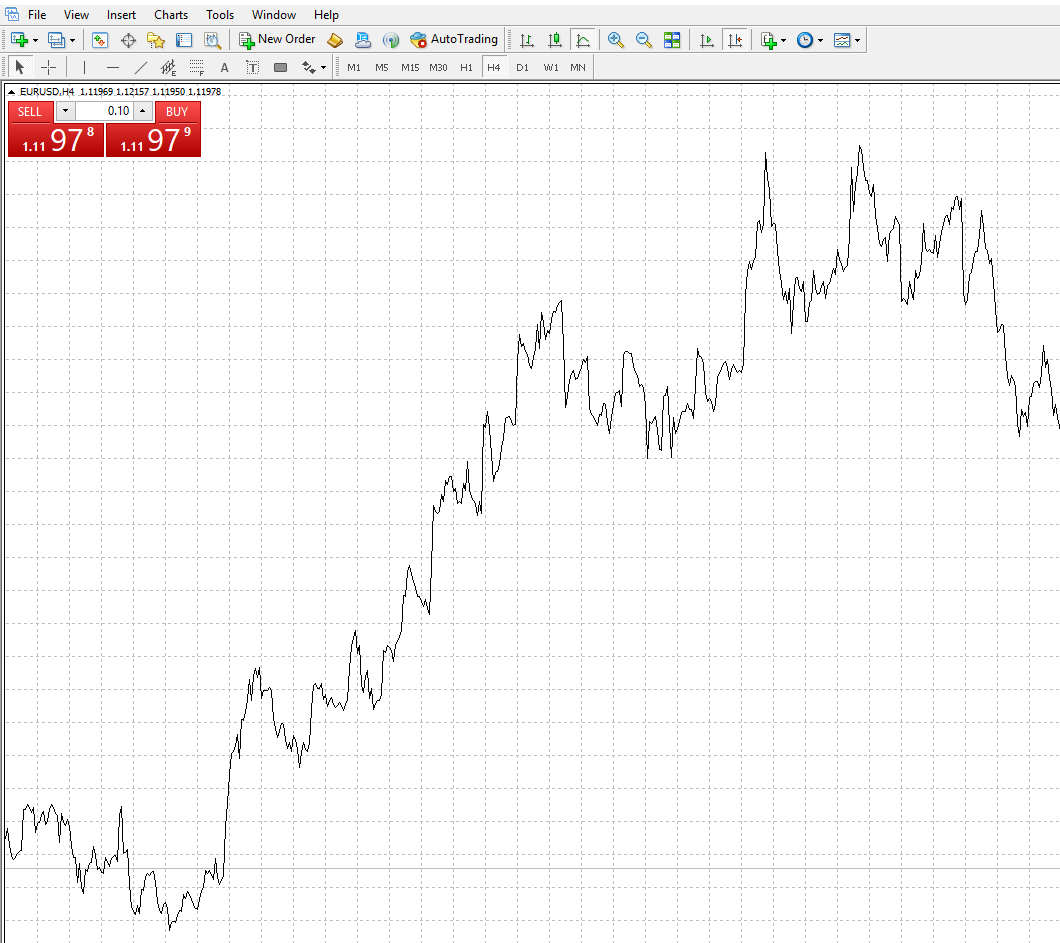
A short reference to the structure if price movements: there are only two types of trading orders: market and limit.
Limit orders are set at the price, specified in advance, If I put an order to sell (or buy) $1 million at the price of 1.1200, it is a limit order.
Market orders are set at the price that is offered by the market right now. If I am willing to sell (or buy) $1 million RIGHT NOW (rather than at a particular price in future), it is a market order.
Basically, market orders a kind of “push’ the price, and limit orders a kind of constrain the price. That is, market orders are drivers and limit orders are constraints. Therefore, if the driving power (the volume of market orders) exceeds the constraining power (the volume of limit orders), the price will be moving. If the volume of constraining power outweighs the driving power, the price will stop, something like hitting a wall.
Example. If the volume of market buy orders, put by Forex traders, exceeds the volume of limit sell orders, the price will be rising. If the volume of market buy orders is less than the volume of limit sell orders, the price will stop rising.
What is the best trading strategy that you have used? Is trend trading or counter-trend trading more profitable?
For those who try to answer or want to study the market structure and pricing in forex in more detail, I suggest reading this article
There is a more specific example. If I want to sell 1 billion at the price of 1.3000, and I am not in a hurry, I will just put an order and wait. If at the first approach of the price, I million is bought, and the price rolls back down, then I will continue to wait for the price to come up again.
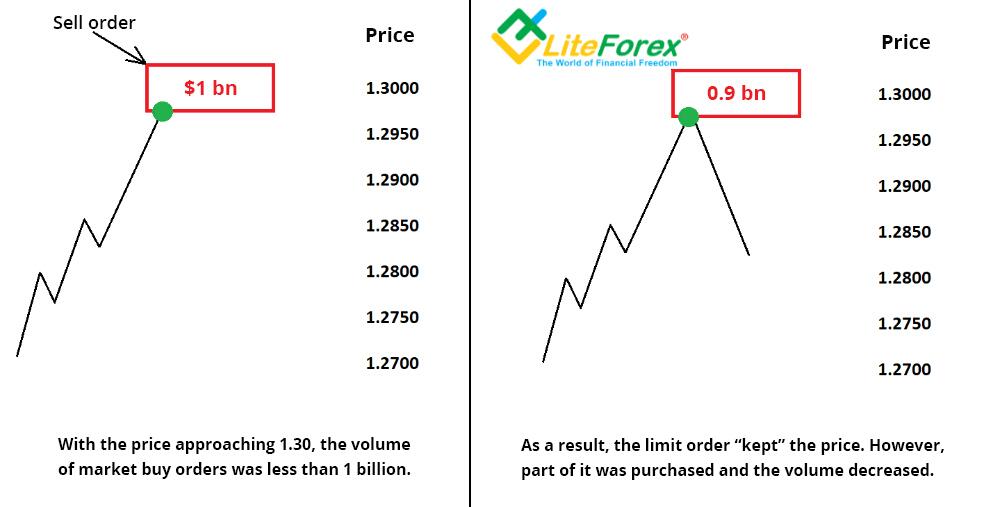
Note, when the price again reaches the needed level and the volume of the sell order is still enough, the price may ROLL BACK AGAIN! From the same level.
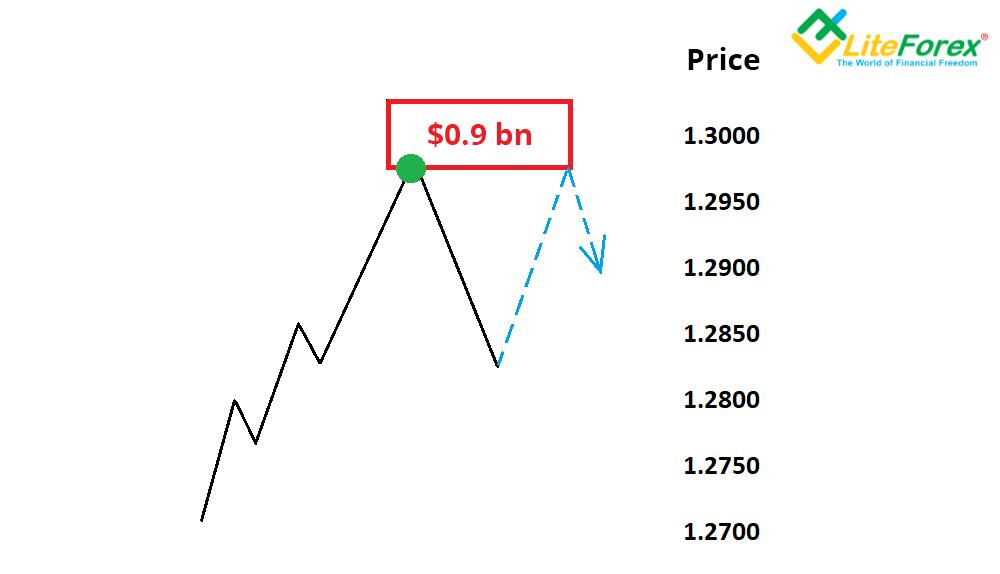
Do you see what I am driving at?
Now, let us have a look at the chart. The price chart of any currency pair. What will you see there and what has always been and will always be there? Rise-fall-rise-fall….But now, you know more about the REASONS for this rise and fall. You also know more about the reasons for the price reversals. So, what, taking into account all the above, does any point of the price reversal mean?
It means that there was EARLIER a sufficient volume of limit orders to stop the market orders, after which the trend reversed. In each case. And this means that, like in the example with a billion, in each point of the reversal, there POTENTIALLY still CAN BE not fully executed limit orders of a considerable volume. And this may become the reason of the SECOND price pullback from the SAME LEVEL
Some charts, illustrating the general principle.
EURUSD, H1
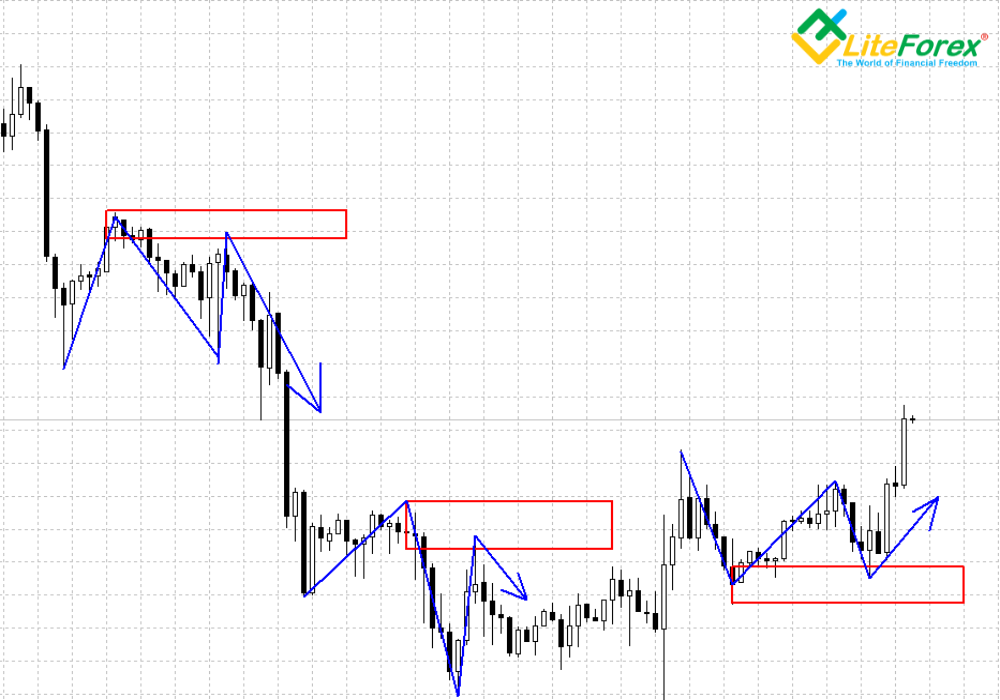
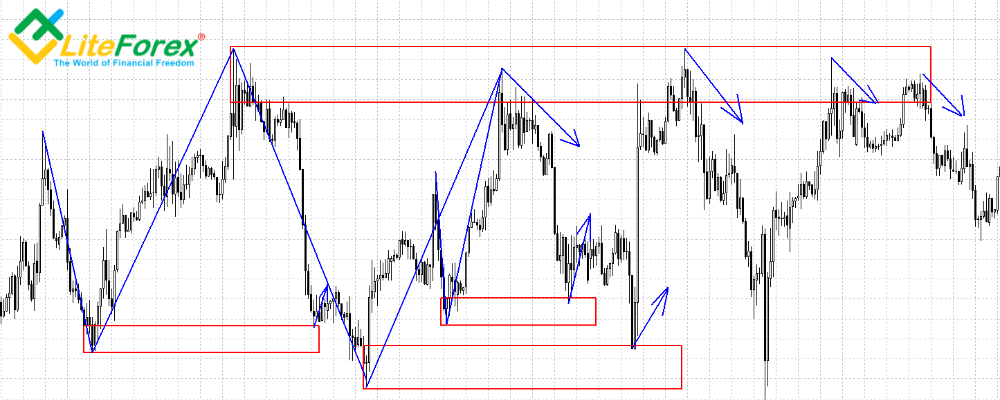
Does it look cool? Of course, no. What does this fortune-telling do? There may be limit orders, or there may not be any of them. For example, there was a reversal in 2000, and so, what? Can there be anybody having positions open? After all, they may have been buying not a billion, but 100,000, it is just because nobody wanted to move the price further, so it reversed…
You are right. You are right because we can’t know for sure. However, the value of this approach, the value of this knowledge is in another thing:
- First, the assumption “there is either an order or not” is true. Unlike something like “this is obviously wave 3” or “if the neck is broken through, then the price will go down”. Just think it over once again, the price can reverse only provided that the “constraining power” has outweighed the “driving power”. Next, if I put 1 billion for sale and sold only 100,000 with the first approach of the price, will I remove the rest 900,000? If I do, then why did I out 1 billion for sale? Another matter that the order of 1 billion can be executed at one time. So, when the price approaches that level for the second time, there will be no constraint...
- Second, the approach is based on the actual information about the market price. And a profitable trading strategy can’t be developed if it is not based on the actual, objective information. In the market, there are actually limit and market orders. And they interact only in one way, described above. Even “market-makers”, even the “big traders” and other scary things that worry newbies, even they use either market or limit orders. And even those guys can only influence the total demand or supply at a particular moment, doesn’t matter if its day trading or a long term trading style.
- Third, this approach is eternal and universal. It will suit a day trader, a short term speculator and a long term investor. It will work for someone, who sells a stock in the stock market and for someone, who is trading currencies. The price can’t stop rising or falling while the market exists. It also can’t stop reversing.
There is the screenshot of the USDCAD price chart for the 2003-2004, timeframe is D1:
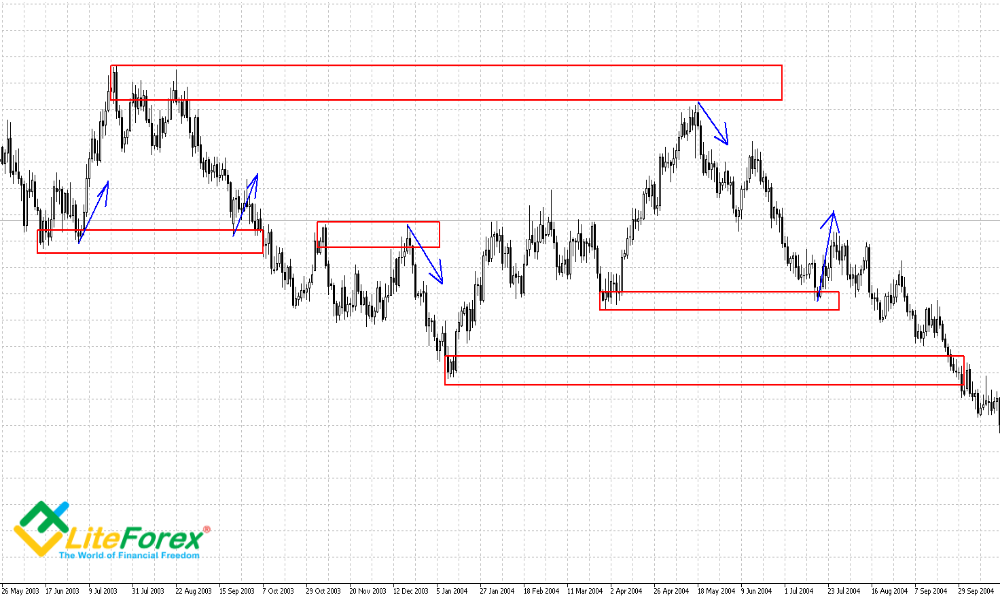
Well, let us sum up. Roughly put, each point of the price reversal occurred because the volume of limit orders exceeded the volume of the opposite market orders at an ask or bid price.
Someone may skeptically note, “So, what? The price will either rise or fall any moment at any place, yes? Yes, but not exactly in fact :)
Here, I again, for the hundredth time, want to remind you the essence of trading. You shouldn’t try to identify advance where the price will go next, rather, you should just admit that you can’t know in advance. When you realize that, you will just be prepared for two scenarios: the price will either go in the needed direction (and then, take profit will work out), or it will go in the opposite direction (and then, stop loss order will work out).
But for substantial, conscious trading, you also need to understand why you enter a trade at a particular level and why you set a take profit order and stop orders at certain points.
The matter is that when you enter at a random level, you don’t know where to set your stop loss or what are your investing objectives. You don’t know where there is the level, which should be reached by the price for you to understand that the “expected scenario has failed”. That is because you don’t have any expected scenario with such an approach; you are just trading and trying to find any clues in the chart of where the price will be trending move, or if the trend will reverse and so on.
If you enter at the pivot point, the level to set a stop loss is obvious. It is put round the same pivot point. Why? It is because, if the price goes further than the reversal point, it becomes clear that there is no such a volume of limit orders that used to constrain the price earlier. It were there, it would stop the price again and it would roll back again.
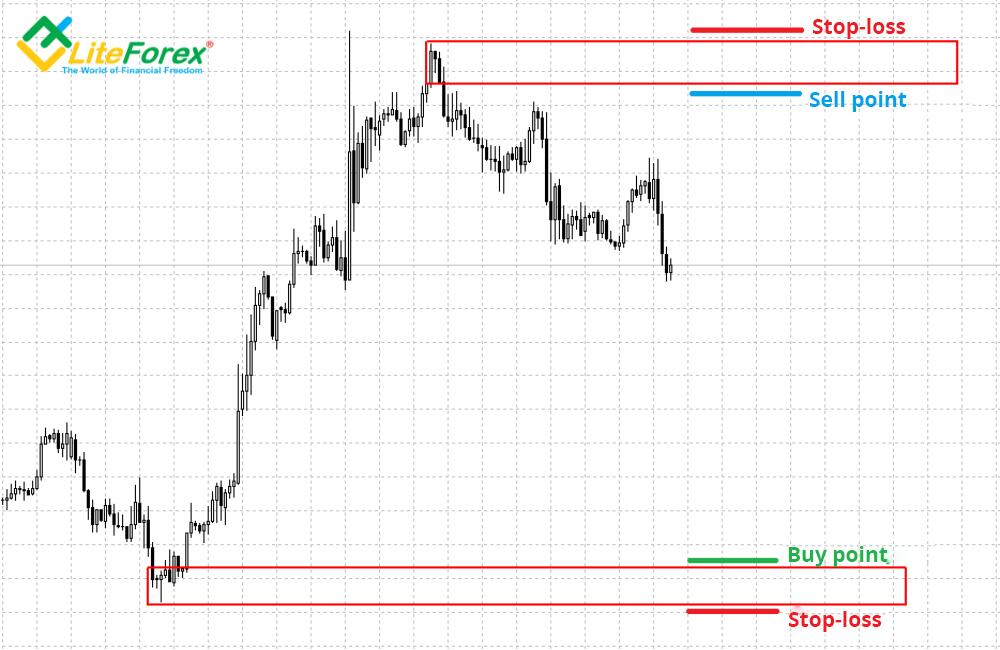
Where should a take profit be put? Some of you may have already guessed that the principle is similar to that of the entry. If you assume that there are some trades open at the points of the price reversal (that is why you put an entry there, expecting a pullback), so, it reasonable to assume that at the points of the opposite reversals, there are also some orders put.
So, if you put a buy entry at the level, where the trend reversed upwards, so a take profit is put below the levels where the price had reversed downwards earlier.
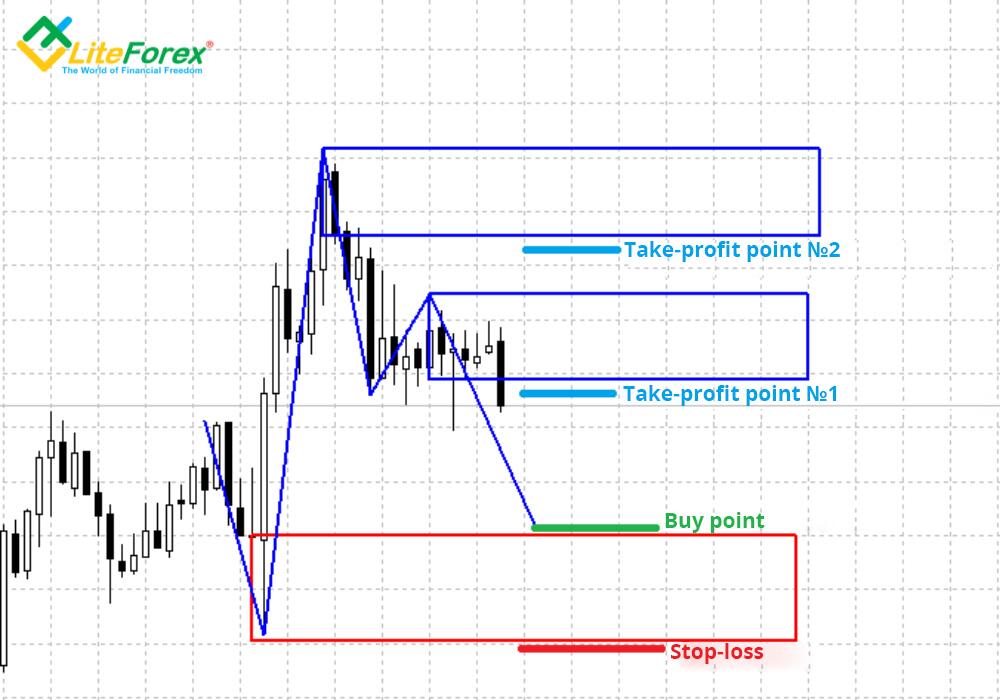
Awareness of this approach and practice will lead you to conscious trading, based on actual, real, objective information. That is, you will have an advantage over most experts on the forums discussing the theories of forecasting for the further price movements.
The market situation. Where will the trend go, has the flat ended and should you buy or sell?
Try to forget about all those concepts of trend and flat, trending move, trend lines or price action trading. Now, look at the chart. What do you see there? It is a very interesting question. You may try to share any screenshot of the chart on the trader forum. I assure you that there will be no consensus about the trend and the flat.
However, let's put the question differently: what will EVERYONE unanimously see on this screen? Price reversals, my friends. No one can deny that there was a price reversal at a particular level.
Let us take the very first screenshot of the chart in this article:
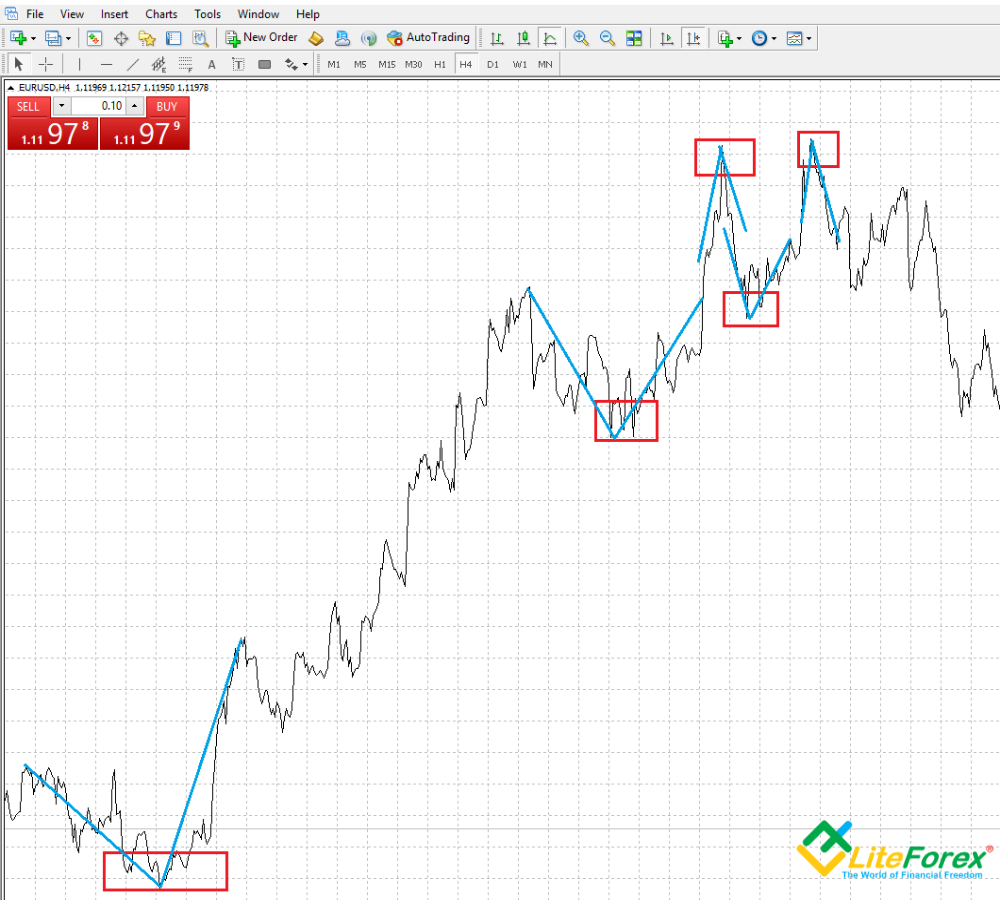
Who can argue that there were price reversals at the indicated points? No one, because this is objective information that is obvious for EVERYBODY.
Well, if you forget about trend/flat as well as about your desire to define “where the market is going now”, you will get an extremely simple view of what is going on. You will see the levels from which the price may rebound at the second approach. With clear levels to set a stop loss and a take profit.
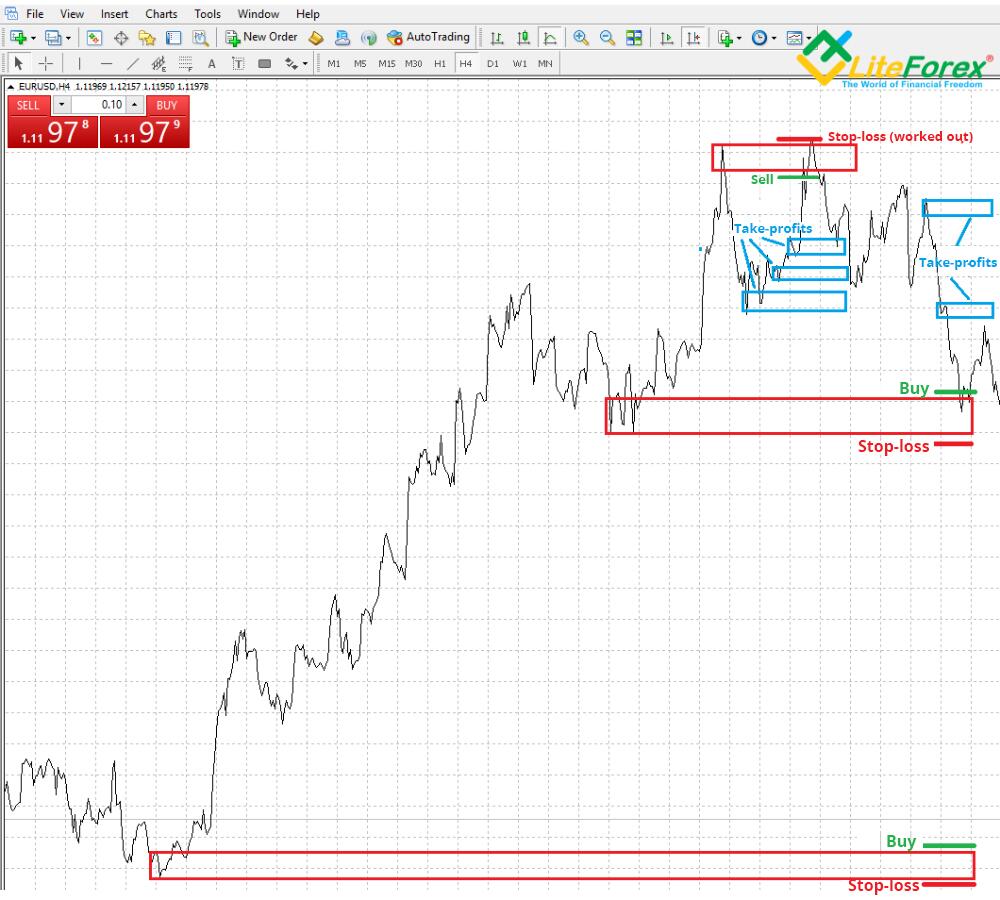
Now, let me unveil typical ideas that come up when you gradually realize this approach:
- but the price may no more approach those levels (and you want to trade)
- what if I wait until the price approaches those levels but it won’t roll back?
- I may miss the entire movement while I will be waiting for the price to reach those levels
- If I am waiting for a pullback, then I will enter counter the trend!
In general, thinking over the first three points, you are likely to realize that they indicated a passionate will to predict the price movement. And, of course, the will to get on the last car of the train (i.e. trend), in order not to miss the profit. If you are persistent, this desire will gradually disappear as well as the concerns and doubts.
I’d like to explain the fourth point, about trading “counter trend”. If you see only a board displaying the current prices that are constantly changing, you won’t be able to figure out what the trend / flat is now. You will simply see changing prices, prices and that's it. As a result, the concept of trend itself is imaginary — it is only a graphic visualization of how market and limit orders interacted with each other.
But traders usually see the price chart as a kind of “living being” that even try to give a “clue” about where it is going to move. In addition to this delusion, there is another one - the trader begins to think that he/she is “has understood”, in which direction the price is going to move. The irony is that this supposed “understanding” is absolutely subjective - a hundred of traders will have a hundred of opinions about the trend direction.
If you go back to the example with the table and the prices displayed on it, the same hundred traders physically CAN'T have different opinions about what prices they see on the board. Because this information is actual and objective.
I got distracted. If a trader has “identified” the trend, he/she “expects” that the price will be going in that direction further. The objectiveness is lost already at this step. That is because this trader is based on own expectations, not on the real market that is nothing more than the interaction between market and limit orders, whose derivative is the price displayed on the board.
Next. If you forget about the concepts of trend and flat at all, then it comes that, when the price approaches the level where there is “a big volume of limit orders”, only the volume of the opposite market orders will matter. It will be either not enough (and the price will rebound) or it will be enough to break through all those limit order (and then the stop loss will work out). Even if a hundred traders define the trend as “downward”, but, at the price of 1.1200, there will be a buyer limit order of huge volume, then the price just won’t break it through, that’s it. And that buyer seems to haven’t known that the trend is downward, and it should have continued :)
The more objective is the source of information, based on which you build your trading system, the better. The less objective is the information (for example, a trading strategy is based on the assumption that there is a “big trader” who moves the price somewhere and harvests they stop losses of small traders), the more traders deceive themselves and the more they will need a CONFIRMATION of their theory from the market. And when there is no such evidence in the market, the traders will become angry at the market. I think it is clear to everyone what trading results it will eventually yield.
Another important point. I want to encourage all of you as traders to use critical thinking about what you are learning and what / who you believe. On the Internet, there is a huge amount of useless information, false theories about “how the forex market really works”. And All these theories lead traders away from the simple fact that these traders STRONGLY do not want to notice: you can earn money on trading ONLY provided that you are a professional in this business, and not because you know any secret about future price movements. Do you want to make money on Forex?
If you do, you will have to work hard, practice a lot, develop your own (at first bad and loss-making trading systems), trade with those systems (at first, your trading will also be bad and you won’t observe your own rules). As a result of all the above, you will GRADUALLY gain experience, give up inefficient trading methods, and start to make profits. The longer you will delay this painful, full of own mistakes, process, the more time you will waste. I myself, by the way, is no exception, and, like most traders, waited until the last minute.
P.S. Did you like my article? Share it in social networks: it will be the best "thank you" :)
Useful links:
- I recommend trying to trade with a reliable broker here. The system allows you to trade by yourself or copy successful traders from all across the globe.
- Use my promo code BLOG to get a 50% deposit bonus on the LiteFinance platform. Simply enter this code in the appropriate field when funding your trading account.
- Telegram chat for traders: https://t.me/litefinancebrokerchat. We are sharing the signals and trading experience.
- Telegram channel with high-quality analytics, Forex reviews, training articles, and other useful things for traders https://t.me/litefinance
Price chart of USDCAD in real time mode

The content of this article reflects the author’s opinion and does not necessarily reflect the official position of LiteFinance broker. The material published on this page is provided for informational purposes only and should not be considered as the provision of investment advice for the purposes of Directive 2014/65/EU.
According to copyright law, this article is considered intellectual property, which includes a prohibition on copying and distributing it without consent.