

Cyclical stocks are shares whose prices follow the economic cycle. During periods of economic growth, cyclical stocks rise, allowing investors to earn above-average market returns. However, during market downturns, their prices may fall sharply. The main goal when investing in cyclical stocks is to determine the current stage of the economic cycle.
In this article, we examine cyclical stocks and industries, as well as the benefits of non-cyclical stocks for investors. We will also analyze the specifics of investing in cyclical stocks, as well as the advantages and disadvantages of this strategy.
The article covers the following subjects:
Major Takeaways
Cyclical stocks are shares of companies whose revenue and profits strongly depend on the state of the economy. This category includes not only blue-chip stocks, although many of them are cyclical.
During economic growth, consumers and businesses have more money to spend, which increases demand. As a result, these companies earn more, and their stock prices often rise.
During economic downturns, lower demand reduces corporate profits and consumer spending. In such periods, these stocks may fall more sharply than the broader market.
The economy moves through cycles of growth and decline. The four main phases of the economic cycle are expansion, peak, recession, and recovery.
Cyclical industries include automobile manufacturing, airlines, energy, tourism and travel, durable goods, and discretionary goods.
Non-cyclical sectors include food, pharmaceuticals, healthcare, utilities, everyday clothing, and consumer staples.
What Are Cyclical Stocks?
Cyclical stocks are shares of companies whose prices follow the economic cycle.
According to economic cycle theory, the economy moves through the phases of expansion, peak, recession, and recovery.
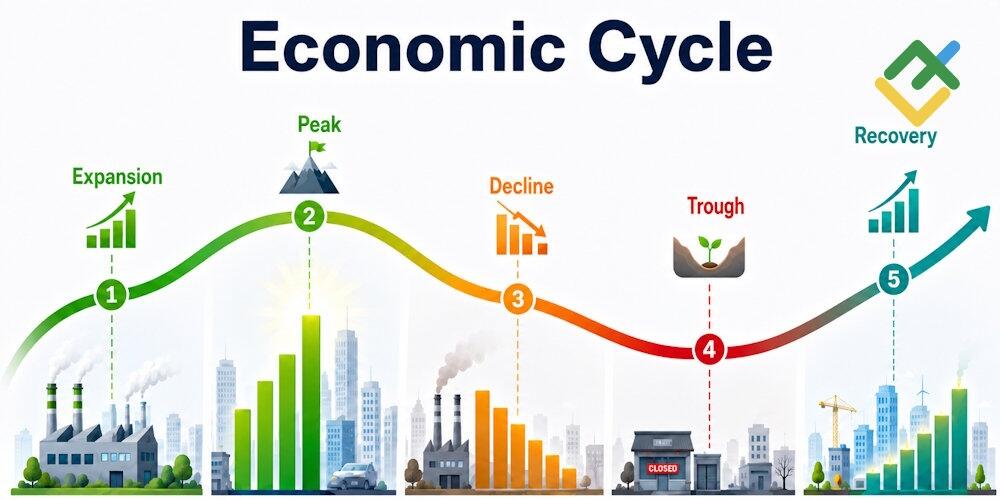
During the expansion stage, the economy grows: GDP, production, household income, and consumer spending increase, while business lending expands. During this period, companies are more likely to pay dividends and increase capital spending.
When the economy expands to its peak, business activity begins to slow: demand, production volumes, and business investment decline, while the unemployment rate rises. Inflation may also accelerate during this period, prompting central banks to raise interest rates. As a result, the economy slows and enters a recession phase.
During economic recessions, job growth slows, unemployment rises, and sales decline. Companies postpone investments and cut costs.
The next stage is economic recovery and the start of a new business cycle. Economic growth usually begins slowly. Governments and central banks use monetary policy to soften the effects of the crisis and stimulate the economy. Inflation pressure eases, GDP stops declining and gradually begins to grow, while unemployment falls.
Understanding these macroeconomic factors helps investors identify the sectors most sensitive to economic cycles. These sectors usually include:
industrial goods;
automobile manufacturing;
airlines and aerospace;
expensive clothing and perfumes;
tourism and leisure;
the financial sector;
semiconductor manufacturers;
the housing and construction market;
luxury goods;
and some technology companies.
These sectors are especially sensitive to economic cycles because their products and services are considered non-essential consumer goods. During severe economic downturns, household income declines, so consumers begin cutting discretionary purchases, for example, by postponing the purchase of a new car or a larger home.
In other words, what are cyclical stocks? They are shares of companies whose revenue and profits strongly depend on the state of the economy. During economic growth, cyclical stocks tend to
rise in value, while during downturns they tend to fall along with the broader economy.
Examples of Cyclical Stocks
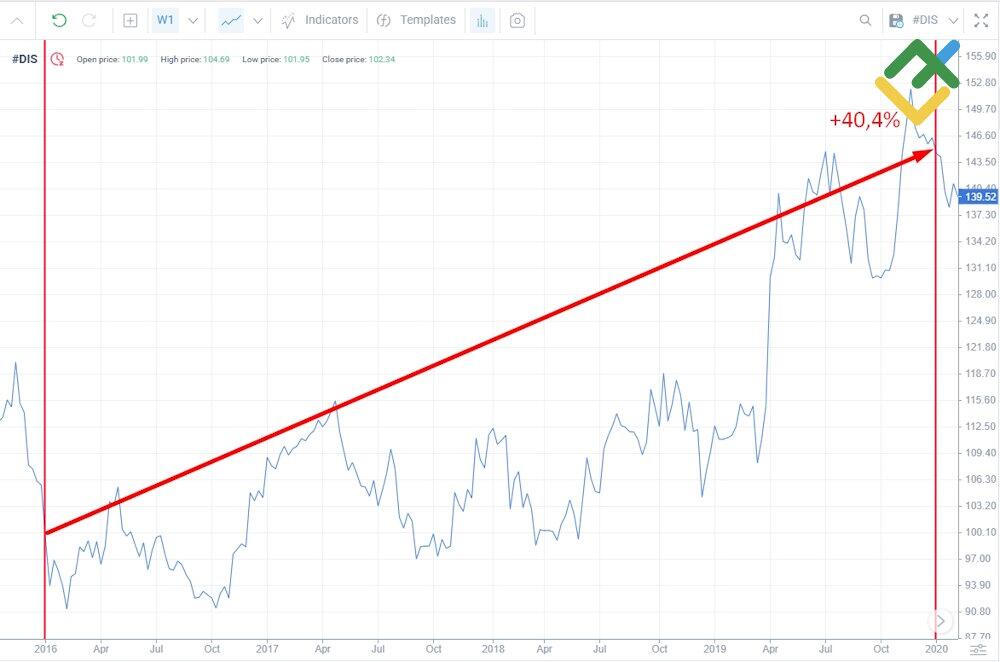
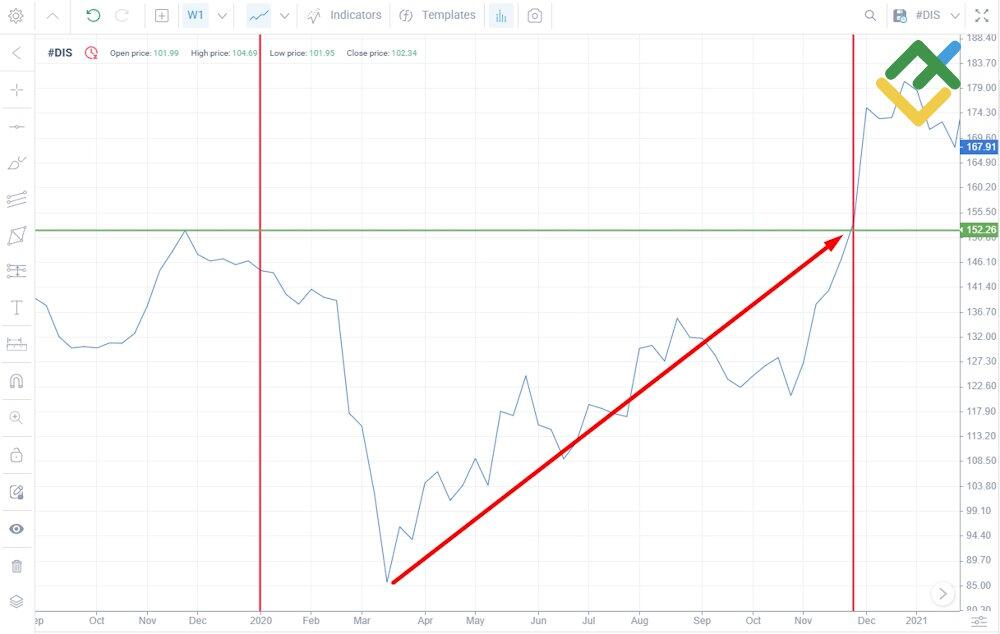
A clear example of a cyclical stock is The Walt Disney Company (#DIS). Disney is one of the world's largest media companies. The company generates revenue from entertainment content, theme parks, and its own brands.
From 2016 to 2019, Disney shares rose despite certain business challenges. Investors were concerned about the future of ESPN, a major sports TV network, and the declining popularity of cable television. Nevertheless, the US economy remained strong during that period.
This period can be described as the late stage of economic expansion before the pandemic. GDP continued to grow, the labor market remained strong, and inflation stayed moderate. The stock market was supported by expectations of corporate earnings growth and a more accommodative Fed policy.
From the beginning of 2016 to the end of 2019, Disney shares gained about 40.4%:
In 2020, the COVID-19 pandemic began, sharply worsening the global economic situation. Stock markets crashed, international trade and air travel were disrupted, and unemployment increased. The economy moved from expansion to recession, while stock market volatility surged.
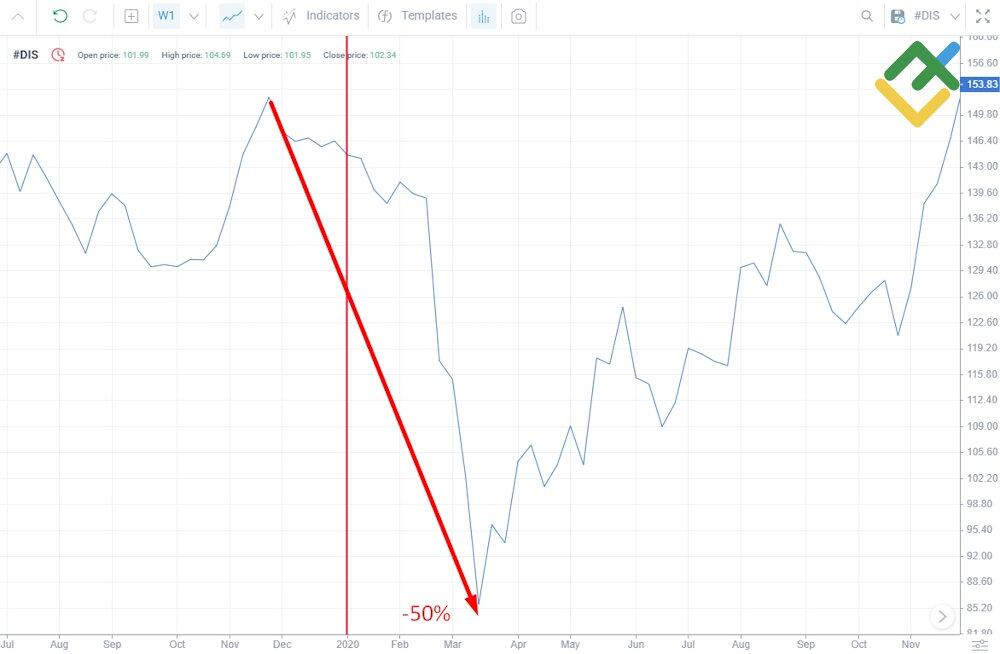
Against this backdrop, Disney shares fell from the 2019 highs near $153 to the March 2020 lows around $77, losing about 50% of their value. The economy and Disney's business then began to recover, and by November 2020, #DIS shares had exceeded their 2019 high:
Other examples of cyclical stocks include #ZM (Zoom Communications), #F (Ford Motor), #GM (General Motors), #CAT (Caterpillar), #BA (Boeing), #JPM (JPMorgan Chase), and #XOM (Exxon Mobil).
Cyclical Stock Sectors
Cyclical sectors are usually those most dependent on the state of the economy. During periods of economic growth, demand, revenue, and corporate profits increase, while during recessions, business performance and stock prices often decline sharply.
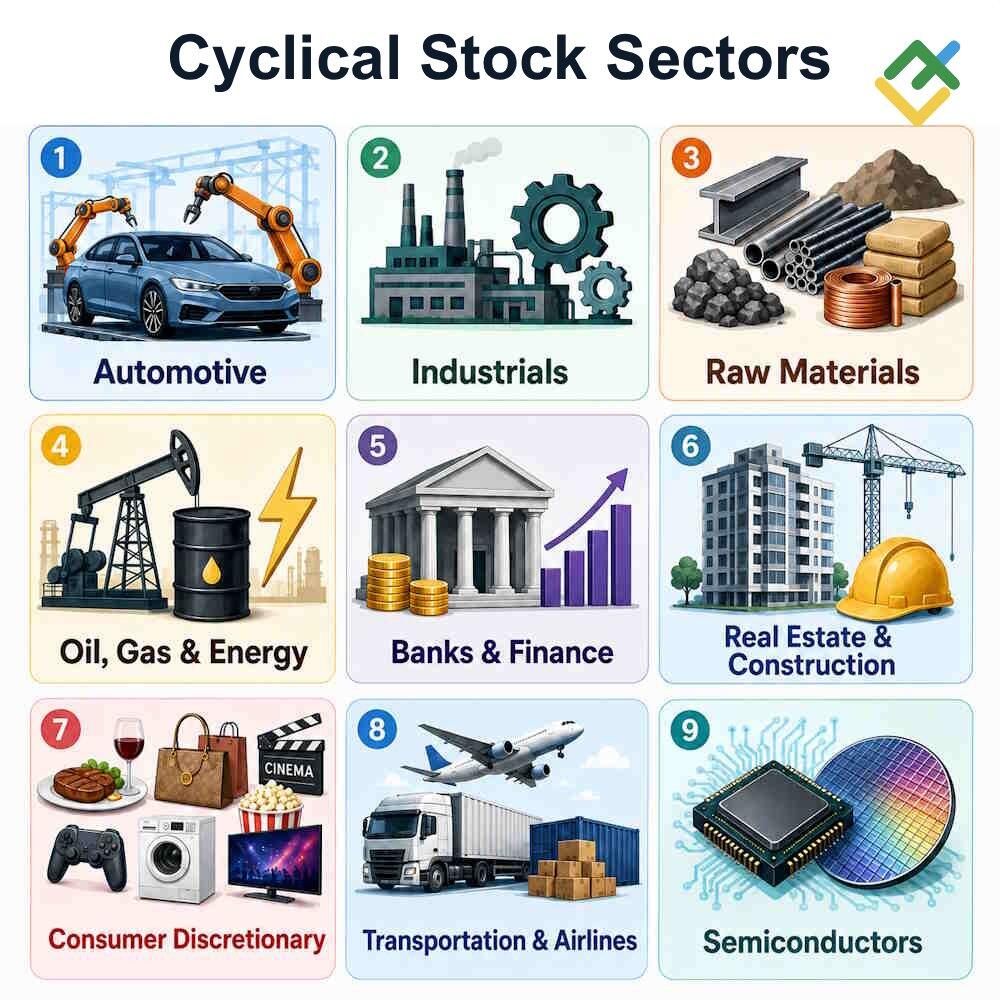
Cyclical sectors include:
the automotive industry;
the industrial sector;
the commodities sector;
oil, gas, and energy;
the construction industry;
the consumer discretionary sector, including leisure, restaurants, expensive clothing, entertainment, cinemas, and household appliances;
transportation and airlines;
semiconductor manufacturers.
Cyclical vs. Non-Cyclical Stocks: Key Differences
Cyclical stocks follow the economic cycle. During periods of economic growth, shares of such companies usually rise in value. During crises, they tend to decline.
In addition to cyclical sectors, economists also distinguish non-cyclical sectors. Non-cyclical stocks are shares of companies whose demand for products and services depends little on the state of the economy. Even during crises, people continue to buy food, medicine, and household goods, as well as pay for electricity and communication services.
Non-cyclical stocks are often called defensive stocks because their prices are less sensitive to economic downturns.
Criterion | Cyclical Stocks | Non-Cyclical Stocks |
Dependence on the economy | Strong dependence on the phase of the economic cycle | Weak dependence on the economic cycle |
Best period for growth | Economic expansion, recovery, and rising consumer spending | Economic slowdown, crises, and market uncertainty |
Behavior during crises | Fall more sharply than the broader market; profits may decline significantly | Hold up better due to the steady demand for essential goods and services |
Type of demand | Non-essential purchases: cars, travel, entertainment, loans | Essential goods and services: food, medicine, communication services, utilities, Internet |
Sectors | Banks, automotive industry, industrial sector, metallurgy, oil and gas, construction | Food, pharmaceuticals, healthcare, telecommunications, utilities |
Main advantage and disadvantage | Advantage — high growth potential; disadvantage — high volatility | Advantage — stability and risk hedging; disadvantage — slower growth during market expansion |
Cyclical stocks are usually bought in anticipation of increased economic activity, while non-cyclical stocks are used to make portfolios more stable during periods of uncertainty and economic downturns.
How to Invest in Cyclical Stocks
On the one hand, the logic of investing in cyclical stocks is quite simple: buy shares during periods of economic recovery and growth, and reduce positions near the peak of the economic cycle or at the start of a recession. If an investor can correctly identify market cycles, cyclical stocks may generate high returns.
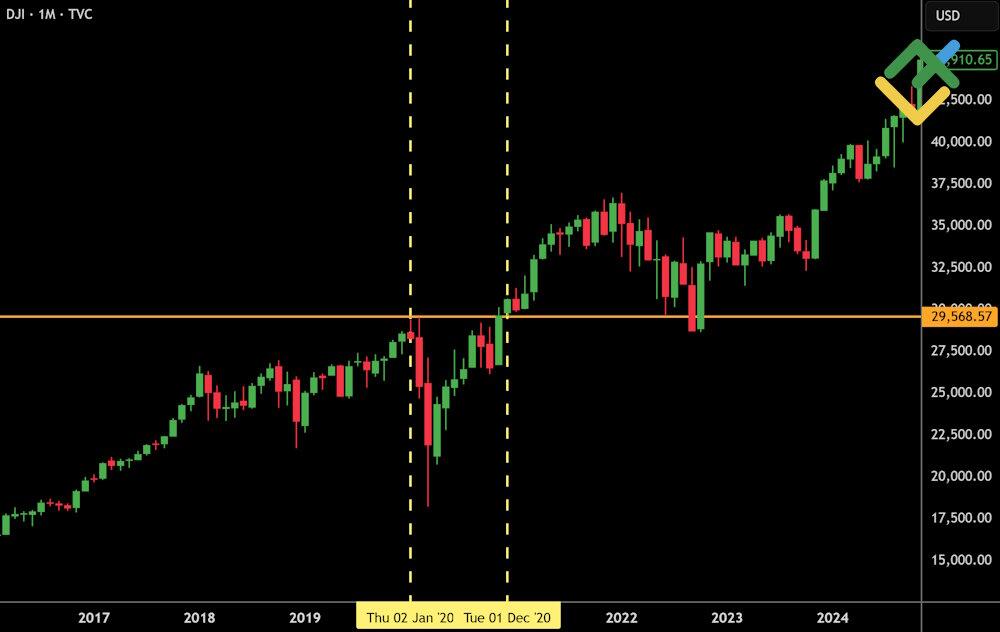
However, this is also the main challenge. It is extremely difficult to determine when the economy moves from one phase to another. Identifying the market bottom is especially difficult: a decline may prove temporary, followed by a quick recovery. The chart below shows the Dow Jones during the COVID-19 pandemic.
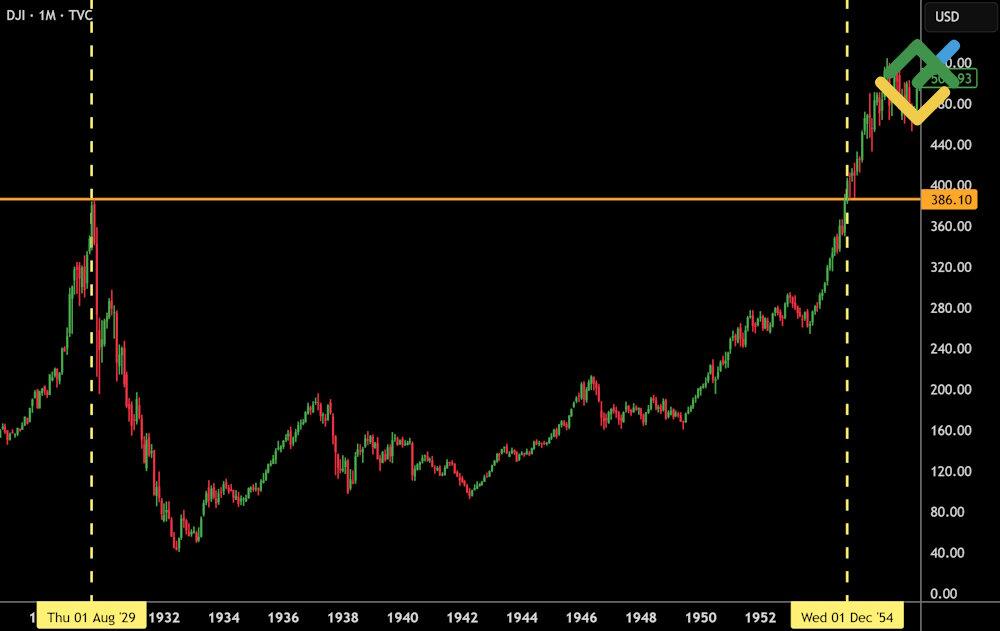
In other cases, downturns may last for years, while the effects of recessions can be felt for decades. One of the best-known examples is the Great Depression in the US after the 1929 crisis. The chart below shows the Dow Jones Industrial Average and the economy's 25-year recovery after the crisis.
At the same time, an investor's goal is not necessarily to buy cyclical stocks exactly at the bottom and sell at the absolute peak. Unless it is a major economic shock, transitions between economic phases usually take a long time, from several months to several years. This gives investors time to assess the situation and act gradually.
Stocks can be bought and sold step by step as the investment idea is confirmed by new facts and macroeconomic data. This approach is called position averaging.
Pros and Cons of Investing in Cyclical Stocks
Investing in cyclical stocks can significantly increase overall portfolio returns. During periods of economic growth and consumer confidence, these stocks often outperform major stock indices.
However, during economic fluctuations, cyclical stocks often fall more sharply than many other assets, including non-cyclical stocks. If investors fail to lock in profits in time, the value of the investment portfolio may decline significantly.
Before investing in cyclical stocks, investors should consider several important factors:
Risk management and position sizing are critical. It is important to define an acceptable level of risk in advance and develop a capital management strategy.
Investors should understand the current stage of the economic cycle and the expectations associated with specific stocks. For cyclical companies, fundamental analysis is usually more important than technical analysis.
The portfolio should preferably be diversified with defensive holdings such as bonds.
As an alternative to individual stocks, investors may consider ETFs. Such funds are usually less risky for beginner investors and provide broader portfolio diversification.
Cyclical stocks are better suited for investors with high risk tolerance and a long-term investment horizon. Even after sharp declines, shares of strong companies may eventually recover.
Cyclical stocks should not be confused with growth stocks. Growth stocks are shares of companies that actively increase revenue and profits regardless of the economic cycle.
Before buying a stock, it is useful to study its historical data and analyze how it behaved during economic changes.
Conclusion
The value of cyclical stocks depends on the phase of the economic cycle. During periods of economic growth, companies from cyclical sectors often outperform the broader market and help increase overall portfolio returns.
However, during economic downturns, these assets tend to be more volatile and may decline much more sharply than noncyclical stocks. The main challenge when investing in cyclical stocks is correctly identifying the current stage of the economic cycle.
FAQs
The largest US cyclical stocks often include Disney, Ford, General Motors, Caterpillar, Boeing, JPMorgan Chase, Bank of America, ExxonMobil, Chevron, and Delta Air Lines. Their businesses depend on the state of the economy, consumer demand, interest rates, and commodity prices.
Yes, many cyclical companies pay dividends. These include banks, oil and gas companies, metals and mining companies, and industrial firms. However, dividend payments may be unstable. When economic conditions worsen, corporate profits decline, causing companies to reduce or even suspend dividends.
Cyclical stocks move together with the economic cycle: they usually rise during economic expansion and fall during downturns. Investors buy growth stocks expecting rapid growth in revenue and profits. At the same time, the same company can be both a cyclical stock and a growth stock.
The content of this article reflects the author’s opinion and does not necessarily reflect the official position of LiteFinance broker. The material published on this page is provided for informational purposes only and should not be considered as the provision of investment advice for the purposes of Directive 2014/65/EU.
According to copyright law, this article is considered intellectual property, which includes a prohibition on copying and distributing it without consent.