The world of trading is full of unique phenomena, and one of them is the gap. It occurs when an asset's opening price differs significantly from the previous day's closing price. For some traders, gaps present an opportunity for quick profits, while for others, they represent a high level of risk.
However, to trade gaps successfully, it is essential to understand how they form. In this article, we explain what a gap is, explore the different types of gaps, and discuss how to trade them using proven strategies. We also cover risk management, as protecting your capital is essential in every trade.
The article covers the following subjects:
Major Takeaways
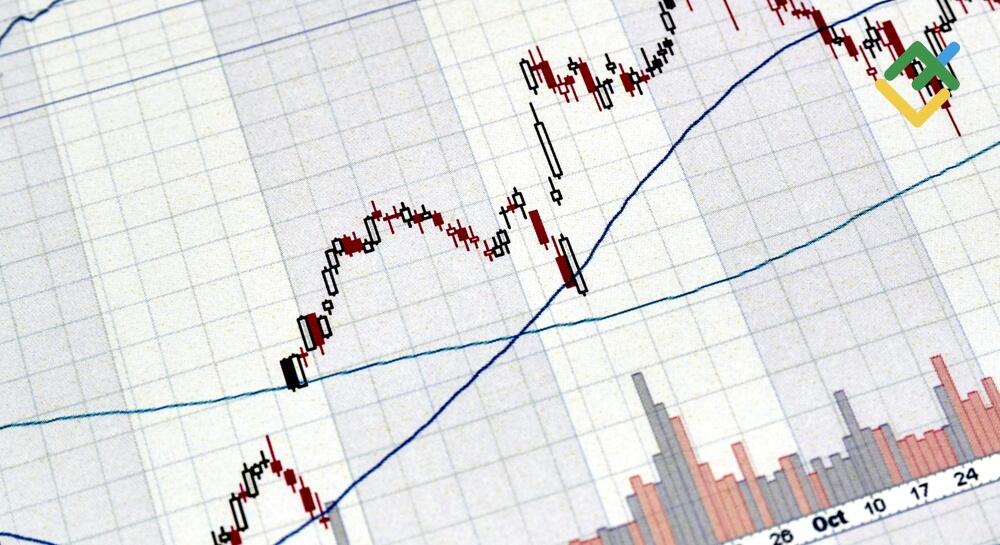
A gap, also known as a price gap, is an area on a chart where an asset's price jumps sharply from one level to another, with no trading activity in between. It occurs when the market closes at one price and opens at another.
The main cause of gaps is the release of significant news or events between trading sessions. These may include earnings reports, central bank decisions, geopolitical developments, or natural disasters.
Common gaps usually have little long-term significance and are filled quickly. Breakaway gaps occur when the price breaks out of a trading range, signaling the beginning of a new trend. Continuation gaps appear in the middle of a strong trend and confirm its strength. Exhaustion gaps indicate that a trend is nearing its end and are often filled within the following days.
One of the most popular strategies is gap-fill trading, where traders wait for the price to retrace and fill the gap before entering a position. For breakaway gaps, traders enter in the direction of the gap and place a stop-loss below its boundary. Another approach is the gap-and-go strategy: if the gap remains unfilled during the first few minutes of trading, a position is opened in the same direction as the prevailing trend.
Due to sharp price movements, stop-loss orders may be executed with slippage. Avoiding trades during the first few minutes after the market opens can help reduce this risk. Calculate your position size assuming a potential 2–3% gap against your position. Risk no more than 1–2% of your account balance per gap trade.
What Is a Gap in Trading?
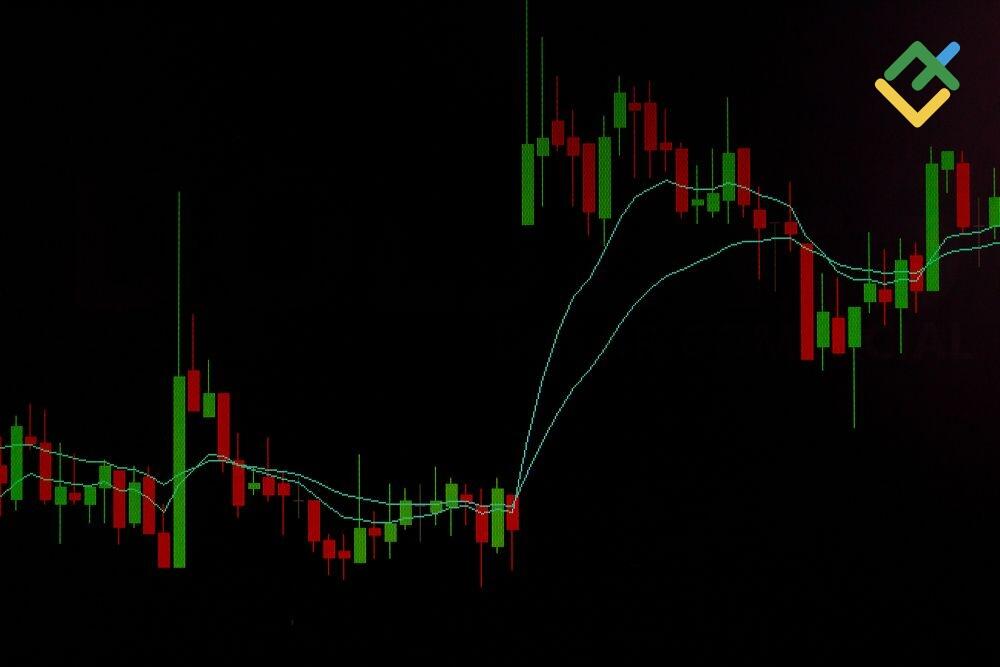
In simple terms, a gap is a break on a price chart where the current opening price differs from the previous session's closing price. Such gaps occur due to events that take place while the market is closed.
For example, in the Forex or stock market, a stock's price may change sharply after the release of important news or an earnings report. A gap is more than just a blank space on the chart—it signals a shift in market sentiment.
By understanding how gaps form, traders can better anticipate future price movements. Gap trading is a branch of technical analysis that focuses on either trading the gap fill or the continuation of the move.
Why Do Gaps Occur?
Price gaps can occur for a variety of reasons. One of the main causes is the release of important news or reports outside regular trading hours. Earnings reports, central bank interest rate decisions, and economic data releases can all trigger gaps.
In the Forex market, gaps often appear after the weekend and are commonly referred to as weekend gaps. Another factor is pre-market and after-hours trading. If a significant imbalance between buy and sell orders develops during this period, a gap may form when the regular trading session opens.
Gaps may also result from sudden shifts in market sentiment caused by political developments or other unexpected events. In addition, they can be triggered by technical disruptions. Understanding the reasons behind gaps helps traders decide how to trade them in different market situations. It is important to remember that gaps reflect the collective reaction of market participants and should not be ignored.
Types of Gaps
There are four main types of gaps, each providing unique insights into market conditions. By analyzing them, traders can assess the strength of a trend, identify potential reversals, and spot possible trade entry points.
Common Gaps
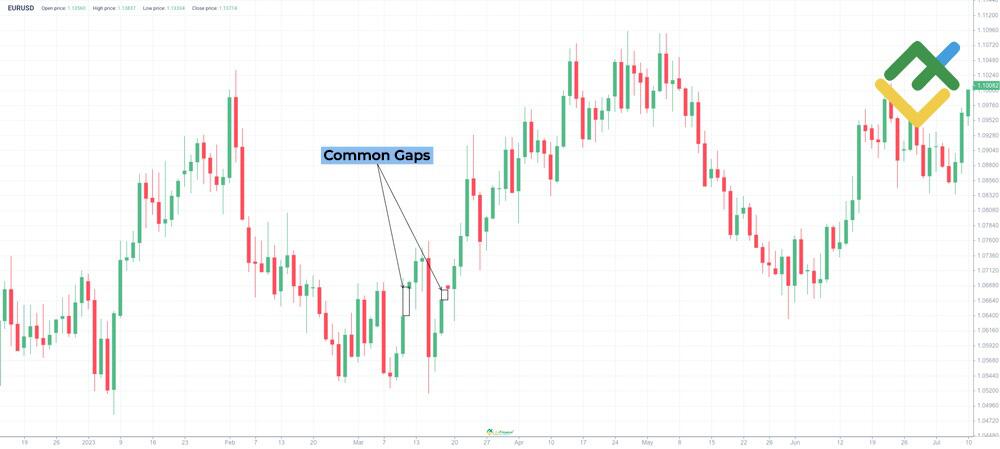
A common gap is a price gap not driven by significant fundamental events and usually filled quickly. It typically occurs in low-liquidity conditions.
These gaps are common in thinly traded stocks or during quiet market periods. The previous day's closing price and the current day's opening price may differ only slightly, yet the gap is still visible on the price chart.
The key characteristic of a common gap is that it is almost always filled within the next few trading sessions. In other words, the price returns to the level where the gap first appeared. For traders, this creates an opportunity to trade the gap fill. However, common gaps rarely signal the beginning of a new trend. Instead, they usually reflect a temporary imbalance between buyers and sellers.
When you spot a common gap on a chart, pay close attention to trading volume. Low volume confirms that the gap is likely common. This type of gap is generally considered market noise rather than a meaningful trading signal. It should not be confused with more significant types of gaps. Trading common gaps requires caution, as price movements can be unpredictable.
Breakaway Gaps
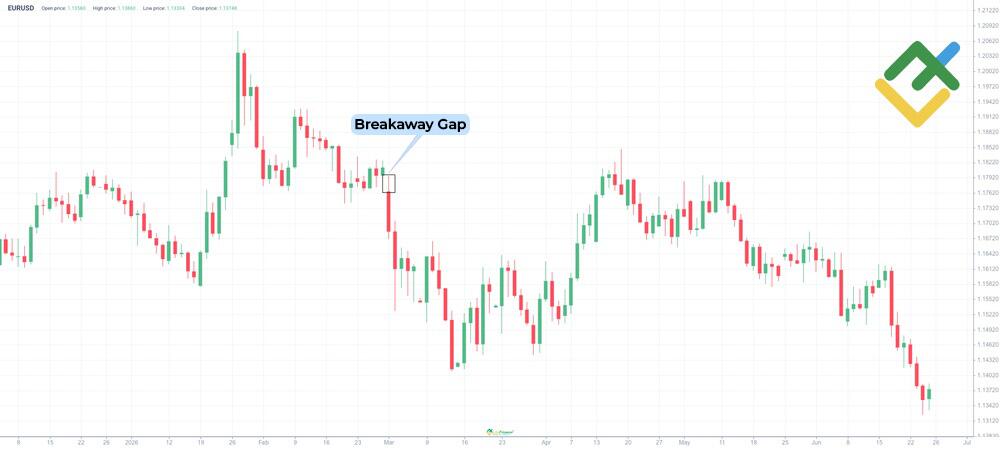
A breakaway gap is one of the strongest signals in technical analysis. It occurs when a stock's price breaks out of a prolonged trading range or breaks through a key support or resistance level. A breakaway gap signals the beginning of a strong trend and is often accompanied by high trading volume.
On a price chart, it appears as a clear gap between the previous close and the next opening price. Such gaps often confirm a shift in market sentiment in favor of either buyers or sellers.
For example, if a company reports better-than-expected earnings, the previous day's closing price may be significantly lower than the next day's opening price. A breakaway gap is often the first sign of a new trend, and traders use it to enter positions in the direction of the breakout.
The gap-and-go strategy is specifically designed to exploit this type of gap. Trading breakaway gaps requires confirmation that the trend is likely to continue. It is important to monitor key support and resistance levels, as a gap breaking through them strengthens the signal. Breakaway gaps are also common in the Forex market following the release of major economic data.
Runaway / Continuation Gaps
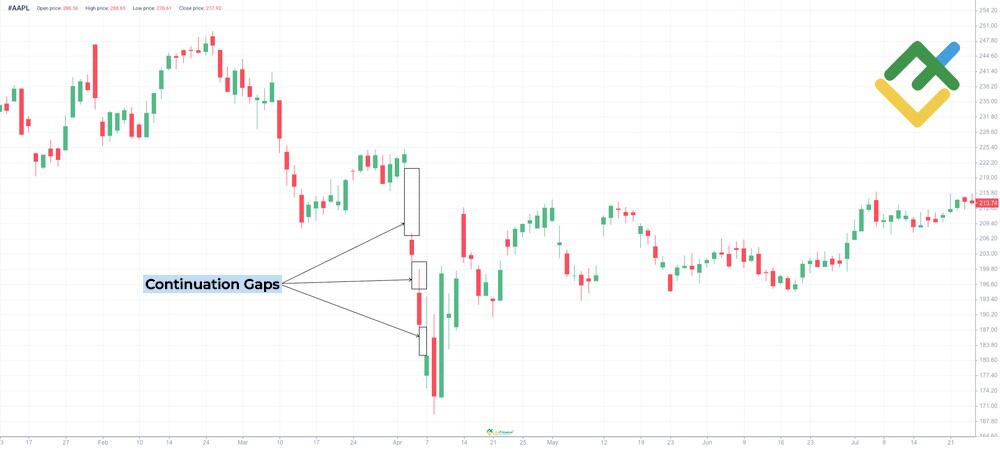
A continuation gap, also known as a runaway gap, forms within an existing trend and signals that the trend is accelerating.
If the price is moving strongly higher or lower, a continuation gap confirms that the trend remains intact. This type of gap often appears after a brief period of consolidation. A continuation gap is usually not filled. Instead, it acts as a springboard for further price movement.
Trading volume is usually high, although it may be lower than during a breakaway gap. From a technical analysis perspective, a continuation gap serves as confirmation of the prevailing trend. Continuation gaps often form after news releases or reports that reinforce market sentiment.
They are generally unfavorable for traders attempting to trade against the trend, as the likelihood of a reversal remains low. Gap-fill strategies are typically ineffective in this situation. Instead, traders generally look for opportunities to trade in the direction of the trend. Trading continuation gaps is particularly effective when the gap is accompanied by a breakout above resistance or below support.
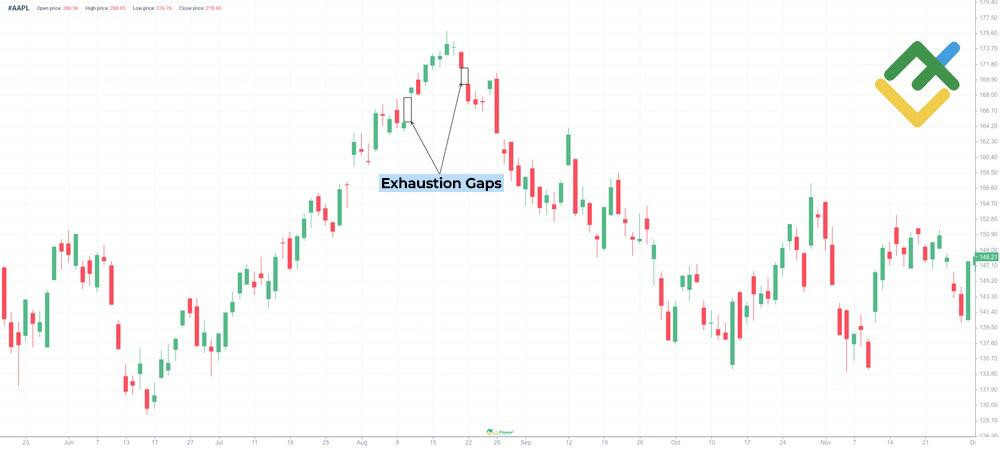
Exhaustion Gaps
An exhaustion gap appears near the end of a strong trend. It may look like a breakaway or continuation gap, but its key distinguishing feature is a sharp decline in trading volume after the gap forms.
Traders entering positions in anticipation of the trend's final move may initially push prices higher or lower, but the momentum quickly fades. Exhaustion gaps often signal that a trend reversal is approaching. For example, after a prolonged uptrend, the price may form an upward gap on low trading volume before beginning to decline.
An exhaustion gap is typically filled within the following trading sessions. According to technical analysis principles, traders should look for reversal signals, such as candlestick patterns or breaks of key support and resistance levels.
It is important to evaluate the gap in the context of trading volume and the overall market environment. Exhaustion gaps may provide opportunities to open short positions near the peak of an uptrend. Trading this type of gap requires a solid understanding of price action and sound risk management principles.
How to Trade Gaps: Gap Trading Strategies
Trading gaps requires a systematic approach. Below are three basic strategies, each based on a different trading principle.
The Gap and Go Strategy
The gap-and-go strategy involves trading in the direction of the gap, particularly when it is a breakaway or continuation gap.
The idea is simple: once a gap appears on the price chart, the trader enters a position in the direction of the gap. For example, if the opening price is significantly higher than the previous closing price and trading volume is high, a long position is opened. The gap-and-go strategy works best in the Forex market and in highly liquid stocks.
Let's look at an example using a 15-minute chart of TSLA stock.
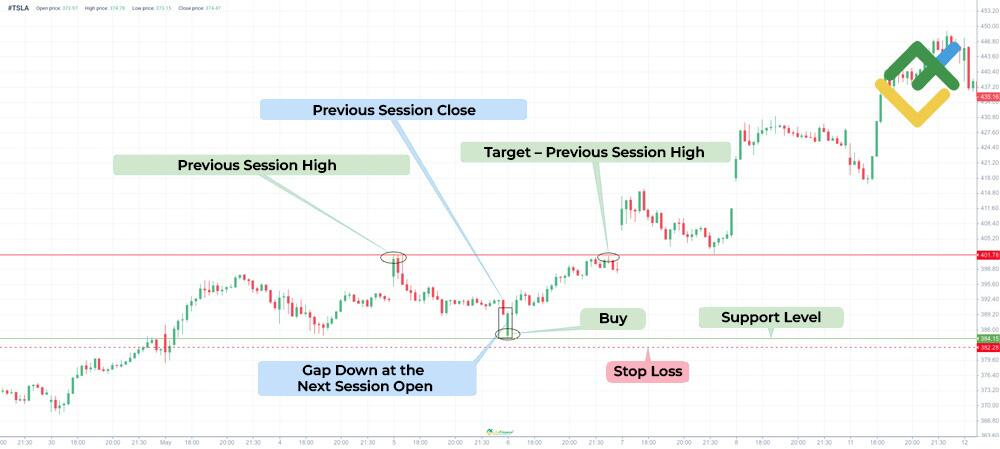
Trading setup:
Identify the key support and resistance levels.
Identify the gap on the chart. In this case, it was a gap down followed by a rapid recovery. This indicates strong buying interest at the market open.
Open a long position near $384.15.
Place a stop-loss at $382.28.
Set the profit target at the previous session's high of $401.78.
The Gap Fill Strategy
The gap-fill strategy is based on the observation that many gaps are eventually filled. According to technical analysis, approximately 70–80% of common gaps are filled over time. This strategy requires patience, as a gap may remain unfilled for several days, weeks, or even months.
Pre-market and after-hours trading may provide additional clues. Price action patterns can help identify when a gap fill is likely to begin. This strategy is best suited to conservative traders.
The following example shows a trade after a gap down was filled on the daily chart of CSCO stock.
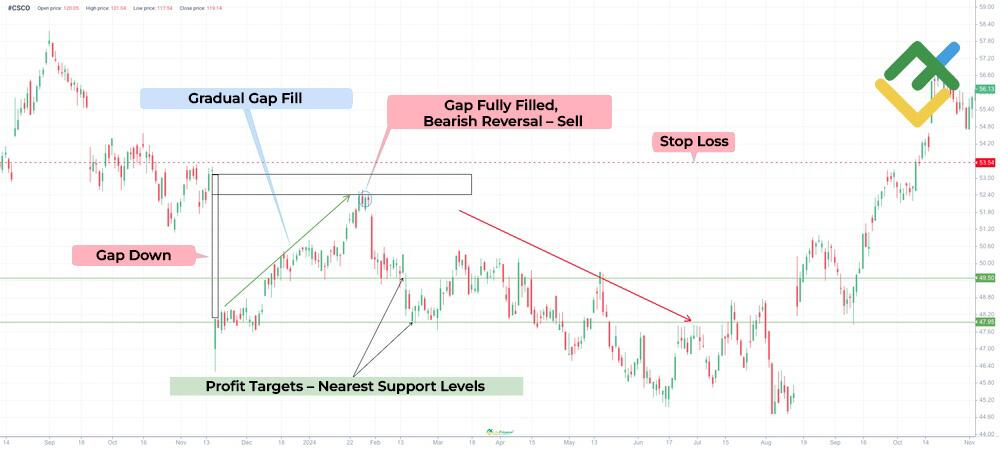
Trading setup:
Open a long position after the gap forms, anticipating a price recovery and a gap fill.
Once the gap has been filled, consider opening a short position, as prices often resume their original direction afterward.
Open the short position in the $52.40–$53.00 area.
Place a stop-loss above the gap at approximately $53.54.
Set profit targets at the $49.50–$47.95 support zone.
Confirming Gaps with Volume & Technical Analysis
Every gap should be confirmed before trading. The first step is to analyze trading volume. High volume accompanying a gap indicates trend strength, while low volume may signal an exhaustion gap.
Support and resistance levels can also provide confirmation. When the price opens above or below a key level and forms a gap, it creates a strong trading signal. The Forex and stock markets require different approaches to gap trading. It is also important to consider the news or events that triggered the gap.
The prevailing trend is another key factor —a gap in the direction of the trend is generally a stronger signal. The following example demonstrates a combined gap-trading strategy using technical indicators and candlestick patterns on the URBRENT chart.
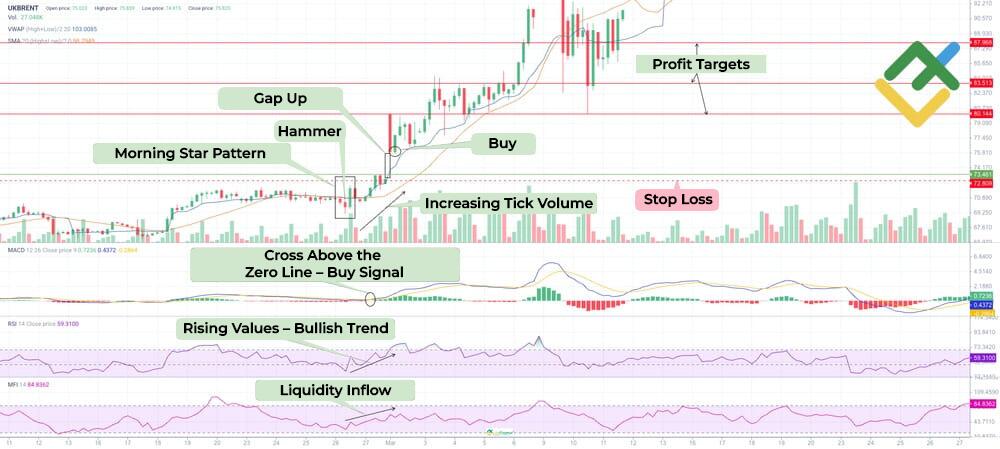
Trading setup:
The Morning Star and Hammer candlestick patterns signal a bullish trend reversal.
An upward breakaway gap is then formed.
Additional confirmation comes from technical indicators: the MACD crosses above the zero line, the RSI continues to rise, the MFI indicates increasing money inflows, and tick volume increases.
The signal is further supported by fundamental factors—the outbreak of military action involving the United States and Iran.
Open a long position after the gap near $75.81.
Place a stop-loss at $72.80 (below the $73.46 support level).
Set the take-profit target in the $80.14–$87.96 resistance zone.
Risk Management for Gap Trading
Gap trading is inherently unpredictable, and even the best strategy can result in losses. The basic principles of risk management include:
Never risk your entire trading capital on a single trade.
Always use stop-loss orders.
When a gap occurs, prices can move sharply, and trading without a stop-loss can lead to significant losses. Sound risk management means limiting the risk on any single trade to 1–2% of your trading capital.
How can you trade gaps more safely? It is important to monitor news releases and economic reports, especially when trading the Forex or stock markets. Support and resistance levels can help determine where to place a stop-loss.
Trading volume is another useful tool for managing risk. If volume does not confirm the gap, it is often better to stay out of the market. Opening a short position after a gap up can be particularly risky.
Gap traders should also consider market liquidity, as low liquidity can lead to slippage. A gap is not always filled, especially when it is driven by fundamental factors.
A trend can reverse unexpectedly after a gap, so every trade should include a well-defined exit plan. Ultimately, effective risk management is the key to long-term success in trading.

Conclusion
Gap trading can offer significant profit opportunities. However, technical analysis and sound risk management are essential components of a successful gap-trading strategy. Remember: Gap trading involves elevated risk. Study trading volume, support and resistance levels, and overall market sentiment to make more informed trading decisions.
Continuation, breakaway, and exhaustion gaps provide different trading signals, but all require discipline. A gap does not always have to be filled—sometimes it marks the beginning of a new trend. Price gaps are common in both the stock and Forex financial markets, and success depends on thorough preparation. Practice gap trading on a LiteFinance demo account.
Get access to a demo account on an easy-to-use Forex platform without registration
FAQs
Yes, gap trading can be profitable when approached correctly. Gaps can provide clear trading opportunities, especially when combined with sound risk management and trading volume confirmation. However, without sufficient knowledge and discipline, gap trading can also result in losses.
A gap appears on a chart as a blank space between the closing price of one candlestick and the opening price of the next. It represents a price range where no trading has occurred. Gaps are easy to identify, particularly on daily charts.
The content of this article reflects the author’s opinion and does not necessarily reflect the official position of LiteFinance broker. The material published on this page is provided for informational purposes only and should not be considered as the provision of investment advice for the purposes of Directive 2014/65/EU.
According to copyright law, this article is considered intellectual property, which includes a prohibition on copying and distributing it without consent.