Facebook Libra cryptocurrency: core structure, unique features, advantages, and flaws. Libra benefits, problems, and future outlook.
Facebook announced that it was to create a cryptocurrency platform, called the Libra in 2018. In June 2019, the project was first presented to the audience. Despite its relative transparency and an original realization of the idea outlined in the white paper, the project was not approved by the regulators. They suggested the project could compete with world banking and the financial system in general. Now, the matter is who among the Libra Association members will sign the statutes of the Association, thereby going against the regulators, and what consequences will follow.
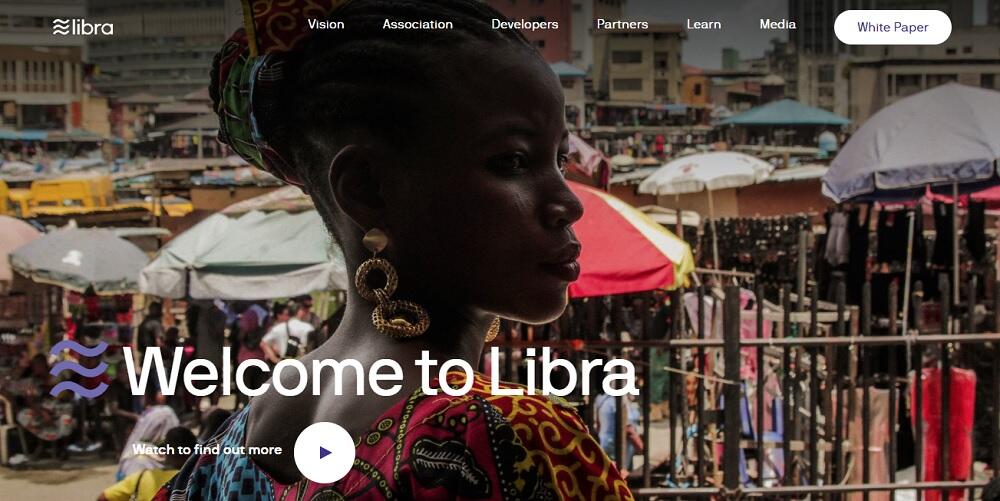
Libra: cryptocurrency breakthrough for the future or a black label of Facebook?
In 2017, the cryptocurrency market was developing so fast that the world's largest corporations were anxious not to lag behind the new technologies. In 2018, everything changed much, but those, who had already started investing in the development of their own platforms millions of USD, just could not step back. First of all, the technology of data transfer by means of blockchain was interesting to investment banks, which faced two ways: to join already existing systems (for example, Ripple, positioning itself as an alternative to SWIFT) or to develop their own cryptocurrency startup.
Citibank and JPMorgan chose the second way. True, the instability of the cryptocurrency market and the ambiguous attitude of regulators forced them to somewhat slow down the pace of development and shift to a wait-and-see attitude. However, Citibank finally decided to give up all its cryptocurrency experiments, preferring SWIFT. The stablecoin JPM Coin was ready for testing in June 2019, but JPMorgan has not yet made any public announcements.
What is the Libra cryptocurrency, and does it have any future?
In spring 2018, Mark Zuckerberg, the founder of Facebook, announced the creation of a new cryptocurrency platform. It is an electronic payment system that provides transactions in WhatsApp and Facebook Messenger instant messengers in all countries where the social network is used. In theory, by means of this cryptocurrency, Facebook users will pay for various kinds of virtual purchases, which are now paid with real money.
According to the developers, the need to create their own payment means due to the cryptocurrencies' high volatility, as well as that of the fiat currencies. To make sure that the currency is not as volatile as traditional cryptos, Libra will be a stablecoin backed by several currencies (including the US dollar and the euro).
Features of the Libra cryptocurrency:
- Libra’s consensus algorithm suggests 100 validators at the initial stage, 2/3 of the votes will be enough to adopt any changes in the network (something like DpoS). It is suggested that the validators will be the largest network participants, and the number of validators may be further increased in the future.
- Libra will be of the least interest to speculators, as the developers are aiming at maintaining a stable exchange rate within the social media network.
- Using Libra within the network will increase the transactions speed compared to the banking service and reduce commission costs. It is expected that several applications will be combined into a single one in the future, so that the audience covered will be more than 3.8 billion people worldwide.
- The only wallet compatible with WhatsApp and Facebook Messenger is Calibra. To open an account, you don’t need to have a bank account, you will only need a smartphone.
- The share of the USD in the Libra backing is over 50%. The cryptocurrency will also be backed with the euro, the British pound, the yen and the government securities.

In June 2019, Facebook formally announced Libra and released its whitepaper. The coin is set for a 2020 launch. Although the platform code base was developed by Facebook programmers, the company isn’t willing to reserve the right to exclusive control. The final decision-making authority lies with the members of the Libra Association. The developers also promised that the currency will not be launch until all regulatory concerns have been met and Libra has the "appropriate approvals".
According to the developers, Libra is not basically a common cryptocurrency. This is a payment means within a social media network, which can fall into the category of goods.
There also some arguable points associated with the platform:
- Libra is not set to compete with banks, though this statement can be doubted.
- It is not clear whether the Calibra wallet can be used by the people banned in the Facebook network for some reasons (political views, fueling of the conflicts, and so on). Even being banned temporary, a user can’t use the wallet.
- Companies from countries where Libra is banned will not be able to participate in the association or receive validator votes. It doesn’t seem to be a wise decision, but this issue hasn’t been yet decided.
- It is not clear how the votes will be allocated if one validator company buys another. Theoretically, one company receives one vote. Will the new company, in case of a merger, have 2 votes (it is about the potential danger of the libra blockchain centralization).
- The platform has not yet developed a mechanism to combat unauthorized changes in the Libra protocol.
And the main problem is that it is not clear how technically Libra will prevent transfers outside wallets and exchanges that fall into the category of illegal operations (money-laundering, terrorist financing, etc.).
Why do regulators, along with payment systems and financial services, oppose Libra?
Members of the Libra Association are set to meet on October 14 in Geneva, Switzerland to adopt the Association charter. Originally, 28 organizations were announced to take part in the Association. Before the official start of the project, they need to integrate their own system into the platform and perform testing transactions. Founding members committed an initial $10 million to join the group, but no company has yet transferred the money. Furthermore, it is currently not clear which member will sign the document.
On October 4, 2019, PayPal, a well-known digital payments platform, officially refused to participate in the Libra cryptocurrency project. Thus, the company became the first of 28 previously announced Libra Association members, which refused to support the platform. The reasons for the decision were not announced. Representatives of the company only noted that PayPal intends to focus on its own business priorities.
It is not clear whether other electronic payment systems, Visa, Mastercard, Stripe, will participate in the Association, as they are also planning to withdraw from the agreement. One of the unnamed sources explained this position simply, payment systems do not need excessive regulators’ control over their business, which will inevitably follow after the public support for Libra that fell out of favor. Simply put, payment systems chose not to go against the regulator.
After Facebook presented Libra in the mid-June, the regulators immediately responded:
1. French finance minister Bruno Le Maire said that the central bank refuses to support the development of Facebook's Libra cryptocurrency in Europe because it puts the monetary sovereignty of states “in danger” .
- Comment. It is not clear then why other cryptocurrencies have never been accused of putting the monetary sovereignty of states “in danger”, and why the BTC, being a stronger competitor that is available in open source for more than a million people, is not so much criticized.
2. Germany went even further and passed a blockchain strategy that prevents any parallel currencies to be issued in the country.
Comment. It is not clear how to implement this ban in practice, and how to ban any cryptocurrency in general within the European legal framework.
3.The European Commission has launched investigation of potential anti-competitive behavior related to the Libra Association amid concerns the proposed payment system would unfairly shut out rivals, the report said. . According to the EC representatives, the Libra cryptocurrency can lead to the creation of a completely separate economy, which will put those who do not use cryptocurrencies, and prefer more traditional financial services and bank accounts, in a difficult position.
Comment. It is surprising why the BTC, or, for example, smart contract, blockchains are not criticized in the same way. And it is also strange that the European Commission supports the technically lagging segments of the population, instead of promoting new technologies among people.
4. The US Federal Reserve Advisory Council opposed Libra, concerning that Facebook would create a shadow banking system. The U.S. banks fear Libra will reduce payment volumes in the banking system.
Comment. The Council consists of the presidents of the US 12 largest banks. It is natural that they are concerned about a slowdown in their business, but this what is called competition, where more technologically advanced systems displace less developed ones. It is remarkable that Libra provoked such a strong criticism. This means that Facebook is a strong competitor and it is feared by others.
5. Most of the US congressmen think that Libra should apply for a banking license and be regulated by the U.S. Financial Sector Advisory Council (FSAC). The reason is the payment systems participating in et hLibra project a closely connected. And at some point, the digital wallet may begin to pose systemic risks along with large banks (a hint at the huge Libra Association audience).
Comment. These concerns have some reasons. If one third of the world’s population start using Libra, the attitude to banks and fiat money may change. And the problem of controlling the risks becomes one of the key issues here. ON the other hand, the congressmen themselves admit that cryptocurrencies and blockchain technologies have become fully integrated into the daily life over 10 years of their operating.
The Swiss regulator FINMA, on the contrary, supported the platform. The financial market supervision service of the country believes that the project is developing transparently and does not see any particular risks in digital currency, provided that it develops in accordance with the relevant established rules. It is logical that the Libra Association consortium is registered in Switzerland.
I see a clear algorithm in the actions of the SEC and European regulators.The cryptocurrency community and regulators are a kind of two opponents, and each of them is trying to break a gap in the enemy’s defense. Attempts to take control of the tokens issuance, ban mining and ICOs, and restrict the operation of crypto exchanges have had no effect eventually. It is difficult to control something that does not have a single coordinating center and has an intangible electronic form.
The cryptocurrency community responds in the same way, actively promoting the idea of bitcoin futures and ETF funds, which runs counter to the SEC policy. In turn, the SEC, trying to gain control over the situation, can do nothing against "private" developers, and therefore the confrontation with Libra is an ideal opportunity to show off its power and prevent from such attempts by global corporations in future.
- Imagine a community where there are civilians and people who pose potential danger. Civilians are easily controlled, while the potentially dangerous people create their own underground organizations that cannot be controlled. However, these organizations do not yet pose any particular danger, because the authorities sometimes arrange a demonstrative punishment to prevent the other from doing the same, provided that the authorities catch someone from those illegal organizations red handed. And this is not easy.
- And once, one of those dissident leaders, who is rather popular, tries to create a product that is unfavorable to the authorities. The authorities understand that if they do not do anything, the rest can follow his path and then it will be even more difficult to maintain authority. Therefore, it does not matter whether the product is a threat or a benefit. It is important to show who is the boss here, which happened in the confrontation between regulators and Facebook.
Differently put, regulators just have used the opportunity to demonstrate their power, having tried to destroy an ambitious project created by one of the most powerful technological companies of the world. And the score is one for the regulators so far.
Libra and similar startups do not yet have real prospects because:
They do not have an appropriate place in the world's financial system. The shaky position of cryptocurrencies is explained by the fact that there is neither a legal framework not clear system of regulation/control. If “private” developers can still promote their product in a narrow circle of cryptocurrency enthusiasts, then large corporations interested in cryptocurrency immediately put themselves at risk. So far, from the SEC point of view, cryptocurrency is an asset for the shadow business, and there are no prospects yet.
They do not provide sufficient return or payback. It is impossible to estimate the return on the platform if there is more than one year before its launch. While 90% of cryptocurrency market startups are currently under development, it is impossible to evaluate the effectiveness of investments. "Private" developers at their risk conduct ICOs and hope to cover the costs and gain money on the pre-sale and pump. Corporations cannot take such a step, since, their reputation would be at stake in this case.
Some economies are closed and some countries are lagging behind economically. First of all, it is acute for China, which has its own messengers, that is why, it is not clear how Facebook could promote its product in China. Second, it is about economically lagging countries where there is neither a developed banking system, nor general knowledge of cryptocurrency and electronic wallets. In those countries, even smartphones are not a common thing.
Trying to pick up hype, Facebook, on the contrary, now has to follow the slow path of global cryptocurrency development, headed by SEC and European regulators. The corporation hasn’t benefited from the early product launch in the market. Many investors remember the scandals of 2018 concerning information theft, following which, Facebook, according to the decision of the FTC (Federal Trade Commission of the United States) of July 24, 2019, must pay a record-breaking for social medias fine of $5 billion. Payment systems’ refusal to cooperate with the Libra platform could deliver a new blow to Facebook’s reputation.
Conclusion. I do not think that it is the flaw of Facebook, but the current situation is definitely not the advantage of the corporation. One of Mark Zuckerberg’s mistakes was that he, trying to take over his competitors, has offered the market a flaw, unfinished product without a clear development strategy and the coordination of all issues with regulators. And now, any of the large corporations will hardly want to follow his example and get in confrontation with the regulators. Regulators in the U.S. and Europe, on the contrary, took the opportunity to demonstrate their power and ruin the brand-new project.
Another Facebook’s flaw was the focus on publicity and positioning itself as a leader. JPM Coin developers preferred to stay in a shade. JPM Coin is just fiat tokenization, so, the project will hardly be of interest to a wide range of financial establishments. This way, the developers avoided unnecessary publicity. Facebook, on the contrary, carried out its aggressive marketing policy, trying to gain support form the largest corporate investors. But it got the opposition from the regulators instead.
Unfortunately, Libra is just another example of how far cryptocurrencies are from being a full-fledged financial instrument that is trusted in by investors and venture capitals. It is especially acute, when political intrigues come to the fore. What do you think about Libra? Is Libra a promising project? Does it have any future? I am really eager to learn your ideas in the comments!
P.S. Did you like my article? Share it in social networks: it will be the best "thank you" :)
Useful links:
- I recommend trying to trade with a reliable broker here. The system allows you to trade by yourself or copy successful traders from all across the globe.
- Use my promo code BLOG to get a 50% deposit bonus on the LiteFinance platform. Simply enter this code in the appropriate field when funding your trading account.
- Telegram chat for traders: https://t.me/litefinancebrokerchat. We are sharing the signals and trading experience.
- Telegram channel with high-quality analytics, Forex reviews, training articles, and other useful things for traders https://t.me/litefinance
The content of this article reflects the author’s opinion and does not necessarily reflect the official position of LiteFinance broker. The material published on this page is provided for informational purposes only and should not be considered as the provision of investment advice for the purposes of Directive 2014/65/EU.
According to copyright law, this article is considered intellectual property, which includes a prohibition on copying and distributing it without consent.