Price slippage is the difference between the intended execution price and the actual price. Slippage generally occurs due to heightened volatility or insufficient liquidity at a given price level. In Forex trading, the cryptocurrency market, and other exchanges, this effect cannot be completely avoided.
Understanding how slippage works helps traders reduce trading costs and improve entry accuracy. It is especially important in intraday trading, where both Take Profit and Stop Loss orders are set close to the current market price. Proper risk management, including setting an acceptable price deviation, can turn slippage from a threat into a controlled parameter of a trading strategy.
The article covers the following subjects:
Major Takeaways
Slippage in trading is the difference between the requested price and the final execution price of an order.
Positive slippage benefits the trader, as the trade is executed at a favorable price.
Negative slippage increases losses or reduces profits on a position.
The main causes of slippage include market volatility, low liquidity, and execution delays.
Market orders are more likely to experience slippage than limit orders.
In the Forex and cryptocurrency markets, slippage is more common during periods of low liquidity within the 24-hour trading cycle.
To reduce the risk of slippage, traders can trade during high-liquidity hours and avoid opening positions during major news events.
What Is Slippage in Trading?
Slippage is the difference between the price a trader requests when placing an order and the actual execution price at which the position is opened or closed.
As a rule, slippage is not caused by a forex broker's actions but results from objective market factors such as sudden changes in supply and demand, insufficient market depth, market gaps, and execution delays.

Slippage is especially noticeable when using market orders during periods of heightened volatility. This usually happens during economic data releases, when prices change faster than trading platforms can process orders.
Slippage can work against the trader (negative slippage) or in their favor (positive slippage), which makes it a neutral technical factor rather than an inherent risk. Experienced traders take this into account in advance by setting acceptable price deviation parameters and choosing order types based on market liquidity.
Why Does Slippage Occur in Trading?
Slippage on exchanges is a natural result of rapid price movements and limited market depth. When market volatility increases, prices can change within fractions of a second. Slippage occurs when the price moves during the delay between order submission and execution. It can also happen during early- morning or late-trading sessions, when market liquidity declines. Slippage may occur during news-driven price spikes, when there are not enough orders available at certain price levels. In such conditions, orders are executed at the next available market price.
Understanding how order execution works helps traders choose better entry points and reduce trading costs.
Market Volatility and News Events
Market volatility driven by macroeconomic data releases, central bank decisions, and geopolitical events is unpredictable. During such periods, a market order may be executed several points away from the expected price, as the price can change multiple times between order submission and execution.
Slippage during major news releases is common. In addition to increased volatility, market liquidity may also temporarily decline. Market makers may widen spreads to manage risk, which makes it harder to execute orders at the desired price.
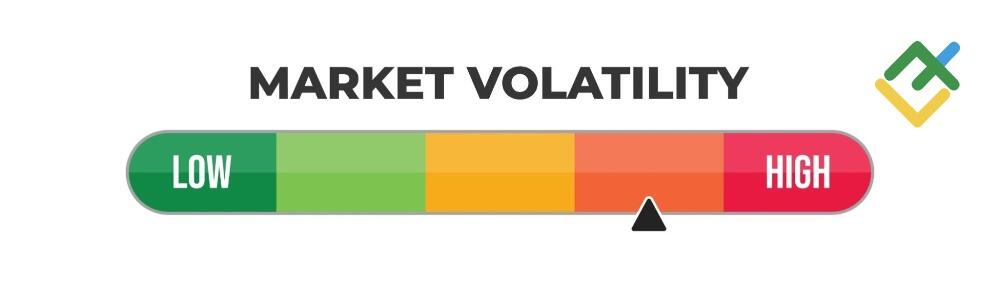
Traders should be aware that slippage caused by fundamental factors can significantly exceed normal levels. Therefore, when opening positions during such periods, it is advisable to use limit orders at predefined levels or to wait until market conditions stabilize.
Important! News trading is often carried out using high-frequency algorithms with ultra-fast access to exchange infrastructure. For this reason, retail traders who place orders manually and do not use specialized trading systems are generally advised to avoid opening positions during major news releases.
Low Liquidity and Large Order Size
Market liquidity determines how quickly and efficiently a trader can open or close a position. In illiquid markets and instruments, such as exotic currency pairs or assets traded during night sessions, the order book becomes thin: with fewer market participants, the number of orders decreases, and spreads widen. In such conditions, a large market order may be filled across multiple price levels, resulting in worse prices and negative slippage.
Stop Loss orders behave similarly. When triggered, a Stop Loss becomes a market order and may be executed with slippage, especially if there is low market liquidity on the opposite side. To minimize risks, traders split large positions into smaller parts or use limit orders, accepting lower execution certainty in return for better price control.
Slippage in Forex Trading
Slippage in Forex trading is common in low liquidity markets and instruments such as GBPCAD, CADCHF, AUDGBP, and others. It is especially noticeable at the end of major trading sessions (Tokyo, London, New York) or during major news releases related to major currencies (USD, JPY, EUR, GBP), when market volatility increases sharply while liquidity tends to decline.

To manage slippage, trading platforms often allow traders to set a maximum acceptable price deviation (slippage tolerance) for order execution.
It is important to note that slippage affects not only major currency pairs in the Forex market but also other instruments such as commodities and indices. Exotic currency pairs are particularly prone to this effect.
Experienced traders avoid placing market orders before news releases and during low-liquidity periods between trading sessions. They prefer limit orders to control execution prices and reduce trading costs.
Slippage in Stock Trading
Stock trading usually takes place on regulated exchanges with transparent order execution systems. However, slippage can still occur. It is especially common in mid- and small-cap stocks, where liquidity is limited, and spreads are wider than in blue-chip stocks.
At market open and close, and during corporate news releases, market orders may be executed at prices significantly different from the last available quote due to increased volatility. Large institutional orders can also temporarily drain the order book, leading to negative slippage for subsequent market participants.
In stock trading, experienced investors use limit orders to define acceptable entry levels and maintain control over execution. This approach reduces trading costs and improves trading discipline.
Slippage in Crypto Trading
Cryptocurrency markets are highly volatile and often uneven in liquidity, which makes slippage a critical factor for traders working with digital assets.
For example, when trading illiquid altcoins, slippage can reach 3–5% of the token price due to a thin order book and low trading activity. Even on major platforms, market orders may experience noticeable slippage, as prices can move faster than orders are processed during high volatility.
To help traders avoid unexpected losses when opening positions, many trading platforms allow users to set an acceptable price deviation (known as slippage tolerance) in advance.
Slippage in crypto trading requires special attention. To minimize risks, traders should follow clear rules: split large orders into smaller parts, avoid trading during news-driven spikes, use limit orders to control execution prices, and monitor market liquidity. This approach helps reduce trading costs and maintain control over positions in highly uncertain market conditions.
How to Calculate Slippage
The slippage calculation formula is very simple:
Slippage = Execution price − Requested price
The result can be expressed in points, percentages, or monetary terms, which allows traders to compare its impact across different instruments and timeframes.
For example, if a market order to buy a stock is placed at $100 but is executed at $100.50, the slippage is $0.50, or 0.5%. To assess how slippage affects your deposit, multiply the price deviation by the position size. With a position of 100 shares, the slippage cost will be $50. When trading leveraged instruments such as futures, this amount can be significantly higher.
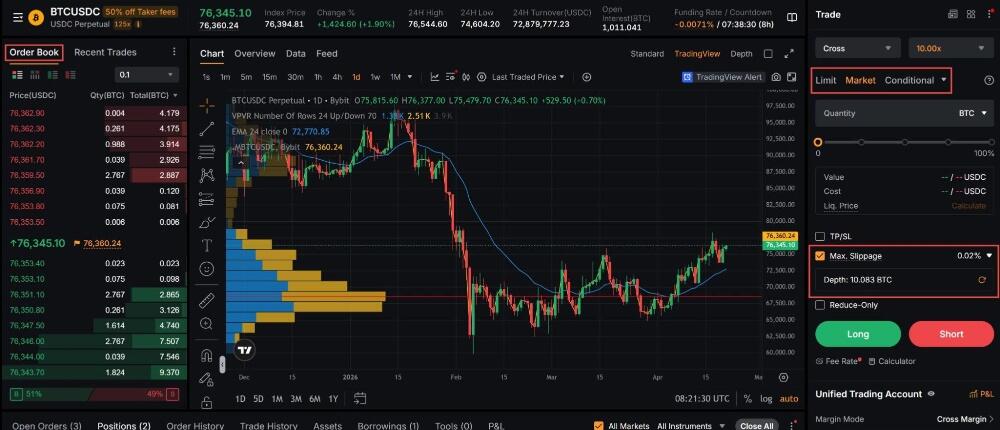
Regularly tracking slippage can help traders adjust their strategies and make more realistic performance estimates. It is important to monitor both negative and positive slippage to better understand execution quality and adjust acceptable price deviation (slippage tolerance) to current market volatility. This helps reduce trading costs over the long term.
Slippage is especially important in intraday trading and scalping, where it can significantly reduce profits and increase losses.
How to Avoid Slippage in Trading
It is impossible to completely avoid negative slippage, as it is a natural part of modern market mechanics, especially when using market orders. However, its negative impact can be reduced through proper order management. An experienced trader understands when market volatility is too high and liquidity is insufficient for a safe entry.
Use Limit Orders Instead of Market Orders
A limit order ensures that a trade is executed at the specified price or better. It protects the trade from negative slippage but does not guarantee execution if the market moves away from the intended entry level and does not return to it. Unlike a market order, which takes the best available price from the order book, a limit order waits for a matching buyer or seller.
When working with large positions, professionals often use so-called iceberg orders. These are a type of limit order that is only partially visible in the order book. Iceberg orders hide the true size of a position from other market participants, thereby reducing the risk of premature price movement. They are effective in financial markets with moderate liquidity, where large orders can significantly impact prices.
Using limit orders allows traders to control execution prices and avoid unexpected losses during sharp price movements. However, by using them, traders risk missing the move if the price does not reach the intended level.
Balancing price control and finding a good entry point is a key skill that helps minimize the negative impact of slippage without losing trading opportunities.
Avoid Trading Around Major Economic Events
During major data releases such as central bank decisions, unemployment reports, or inflation figures, market volatility rises sharply while liquidity often declines, as market makers withdraw orders to manage risk. In such moments, slippage can exceed the normal spread several times, and order execution may be delayed. Even Stop Loss orders may be triggered at levels far from the intended price and executed as market orders at unfavorable prices.
If a trading strategy is not specifically designed for news trading, it is usually better to wait until market conditions stabilize or set an acceptable price deviation in advance. Using limit orders during such periods reduces risk but does not guarantee a favorable entry.
Many traders prefer to analyze market reactions after the fact, reducing exposure to slippage and unpredictable trading costs. They reduce the number of open positions, reassess risk levels, and avoid opening new trades ahead of major news releases.
Conclusion
Slippage is an inherent part of modern trading that reflects changes in supply and demand. Understanding it helps traders assess risks more accurately.
Using limit orders, trading during high-liquidity periods, and avoiding extreme volatility can reduce the negative impact of slippage and improve strategy performance. If positive slippage occurs, it can be a bonus, but it should not be relied upon.
It is important to understand that slippage is not an error, but a market reality and an unavoidable element of trading that should be taken into account in any strategy.
Slippage FAQs
No. Slippage is mainly caused by market conditions such as high volatility and low liquidity. Brokers typically route orders to the market and do not control execution prices.
No. Positive slippage can improve entry or exit prices. However, negative slippage is more common and increases trading costs, reducing overall performance.
Typically, 1–2 pips on liquid Forex pairs or 0.1–0.3% on stocks. Slippage may be higher on illiquid assets and depends on trading frequency and market conditions.
The content of this article reflects the author’s opinion and does not necessarily reflect the official position of LiteFinance broker. The material published on this page is provided for informational purposes only and should not be considered as the provision of investment advice for the purposes of Directive 2014/65/EU.
According to copyright law, this article is considered intellectual property, which includes a prohibition on copying and distributing it without consent.