For a long time, EUR/USD was driven by oil prices, the inflation they generate, and Fed monetary policy. Together, these factors pushed Treasury yields higher and strengthened the US dollar. However, this relationship broke down in October. Let's discuss this topic and outline a trading plan.
The article covers the following subjects:
Major Takeaways
- The Brent rally is not helping EUR/USD bears.
- Concerns about the crisis in France may be exaggerated.
- Fears of an AI bubble are weighing on the US dollar.
- A breakout above 1.126 would provide an opportunity to buy EUR/USD.
Weekly Fundamental Forecast for Dollar
Is the risk of an AI bubble bursting becoming a more important driver of the US dollar than oil prices, inflation, and Fed monetary policy? Is the prospect of another European debt crisis like the one in 2012 as threatening to the euro as it seems? These questions are driving sharp swings in EUR/USD.
Economists surveyed by The Wall Street Journal expect oil prices to decline, Treasury yields to fall, and inflation to slow to 2.3% by the end of 2027. Under this scenario, the Fed would not need to raise interest rates three times over the next 12 months, as the futures market currently expects. This would weaken the US dollar.
US Treasury Yield Trends and Forecasts
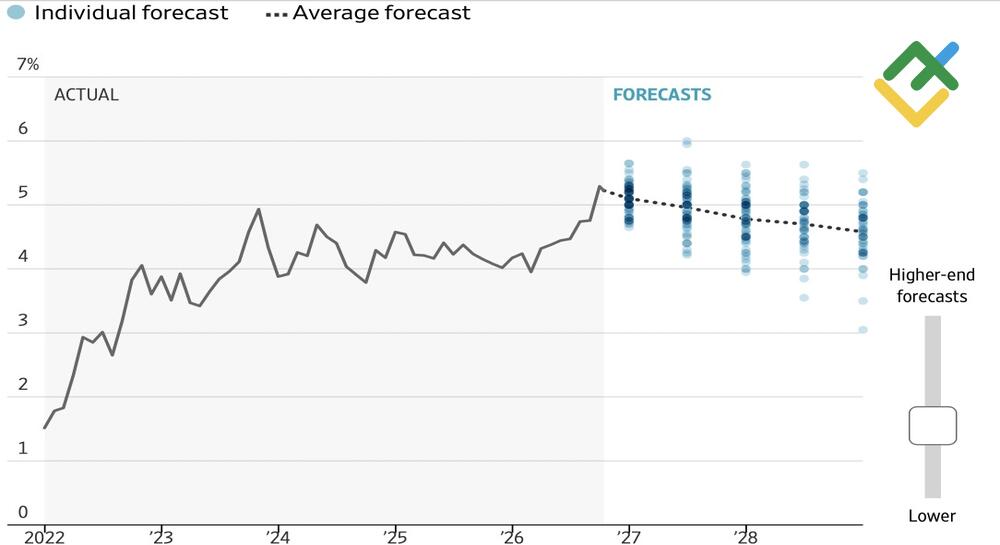
Source: Wall Street Journal.
For now, Brent prices are not falling. The question is why. According to Kpler, oil exports from the Middle East stand at 24 million barrels per day, above the pre-war level of 23.3 million barrels per day. Shipments through the Strait of Hormuz have reached 14 million barrels per day, or 82% of their late-February levels. Around 40% of the region's oil shipments now bypass the Strait of Hormuz, compared with 17% before the bombing of Iran began. Investors fear that Tehran may escalate the conflict. But it is already doing so, with around 30 attacks on ships reported in October. Meanwhile, demand in the US and China is rising, and global inventories are depleted.
A sharp collapse in Brent prices, similar to the one seen in May and June, appears unlikely. This means there is still a high risk that inflation will remain elevated and continue to rise. That should support the US dollar, but in practice, the decline in EUR/USD has stalled. This is despite pressure on the euro from the crisis in France and the widening spread between French and German bond yields, which has reached its highest level since 2012.
French-German Bond Yield Spread
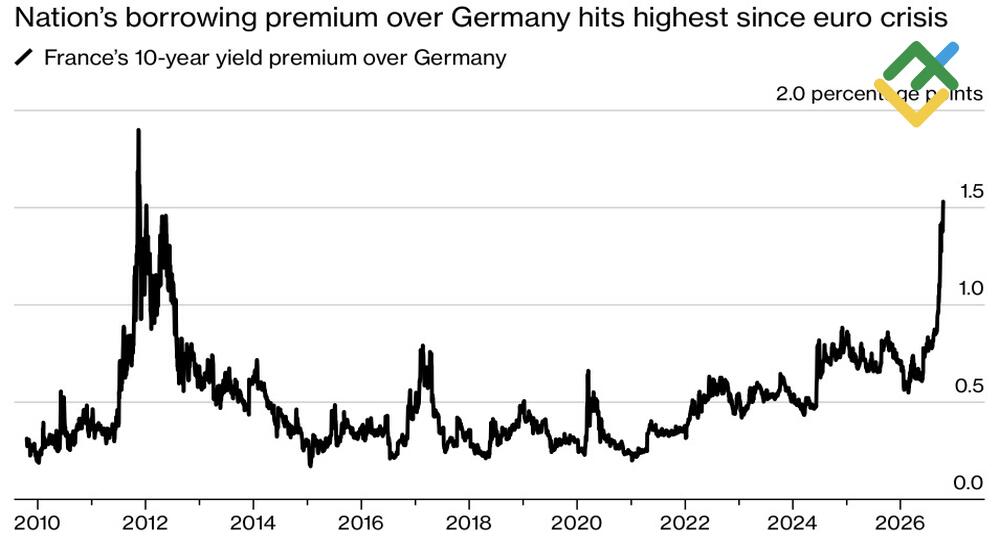
Source: Bloomberg.
BlackRock believes the situation may not be as bad as it seems. Although France's debt has risen to 120% of GDP, the eurozone's overall debt has returned to 89% of GDP, the same level as 14 years ago. European banks are also better capitalized, which is particularly important given that the banking sector played a major role in triggering the 2012 debt crisis.
The main pressure on the dollar comes from fears that Fed rate hikes could prove to be a double-edged sword. When the dot-com bubble burst, investors also believed monetary tightening would not destroy the stock market. In reality, if the Fed needs to bring inflation back to its 2% target, it will spare no one, including the AI sector.
Weekly Trading Plan for EUR/USD
Therefore, if concerns about France are exaggerated and growing fears of a technology stock bubble push Treasury yields lower, a breakout above 1.126 would provide an opportunity to buy EUR/USD. However, in my view, strong corporate earnings will ease concerns about AI and provide a reason to resume selling the euro, targeting $1.10.
This forecast is based on the analysis of fundamental factors, including official statements from financial institutions and regulators, various geopolitical and economic developments, and statistical data. Historical market data are also considered.
Price chart of EURUSD in real time mode

The content of this article reflects the author’s opinion and does not necessarily reflect the official position of LiteFinance broker. The material published on this page is provided for informational purposes only and should not be considered as the provision of investment advice for the purposes of Directive 2014/65/EU.
According to copyright law, this article is considered intellectual property, which includes a prohibition on copying and distributing it without consent.