The rise in the EUR/USD pair was unlikely driven by weaker US GDP or ECB rate hike signals. Instead, it was largely the result of pressure on the euro caused by heavy selling of oil and dollar futures by the US and Japan. Let's explore this further and outline a trading plan.
The article covers the following subjects:
Major Takeaways
- The collapse of oil prices seems unusual.
- Japan has resumed currency interventions.
- The dollar has posted its worst performance since June.
- Consider selling EUR/USD on pullbacks from 1.176 and 1.181.
Weekly Fundamental Forecast for Dollar
Oil prices are falling after Donald Trump said the blockade of the Strait of Hormuz is working and that military intervention is under consideration. Meanwhile, the Japanese yen is gaining strength, even as the Bank of Japan hesitates to raise rates despite higher energy costs weighing on the economy. This may seem contradictory, but the picture is clearer if we consider who benefits and remember that major global players can influence price movements. As a result, EUR/USD bears were caught off guard by the interventions.
Despite the White House trying to project confidence, time is working against it. The Strait of Hormuz remains closed, the pressure is building, and oil is behaving as expected by moving higher. Gas prices are rising fastest in Indiana, Michigan, Ohio, Wisconsin, and Iowa, all states Donald Trump carried. So what are the options? Withdraw from the Middle East, resume military action, or try to push oil prices down through the futures market? No intervention has been officially confirmed, but the sharp drop in Brent suggests it may have taken place.
USD/JPY Trends and Japan's Currency Interventions
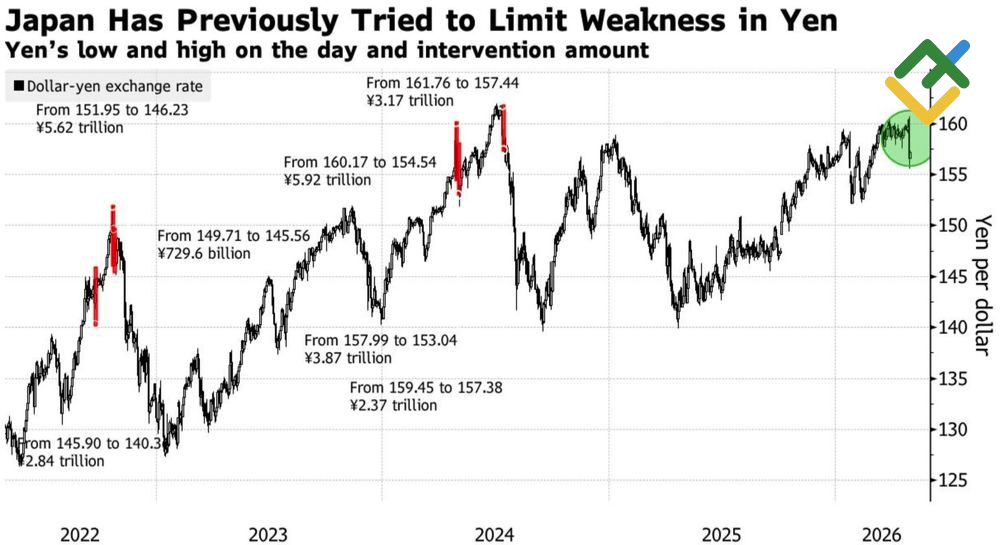
Source: Bloomberg.
Especially since Japan has already shown its hand. Atsushi Mimura said the authorities are ready to intervene in the crude oil futures market to curb excessive speculation. Notably, he is the same Deputy Minister of Finance for International Affairs who warned USD/JPY bulls shortly before the drop to exit their positions or face heavy losses.
He declined to comment on possible FX intervention. However, a Bloomberg source indicates that it did take place and that the US was informed in advance. This raises a simple question: if Japan stepped into the currency market, why wouldn't the US do the same in oil, especially given its financial firepower?
Christine Lagarde and Jerome Powell are trying to reassure investors, arguing that the current situation is far from the oil crisis and stagflation of the late 1970s. In reality, however, the parallels are hard to ignore. Back then, one of the key turning points was coordinated currency intervention that sent the US dollar sharply lower.
US Dollar Monthly Performance
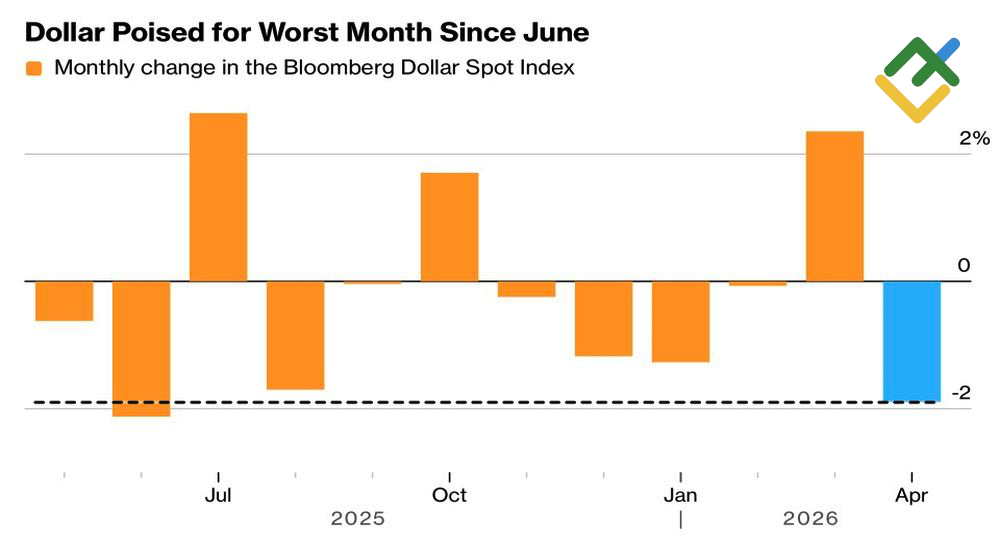
Source: Bloomberg.
In April, the greenback recorded its worst performance since June. The decline was driven by weaker demand for safe-haven assets amid a rally in US equities to record highs, as well as expectations that other central banks will tighten policy. However, those expectations may prove overly optimistic, as many economies are unlikely to withstand higher interest rates.
When the market is moving on fundamentals, interventions don't help. Oil and the USD/JPY pair will keep moving, and that is bad news for the euro.
Weekly Trading Plan for EUR/USD
The recent rally in EUR/USD is unlikely to prove sustainable. If the pair fails to exceed 1.176 and 1.181, or to hold above 1.173, short trades can be considered.
This forecast is based on the analysis of fundamental factors, including official statements from financial institutions and regulators, various geopolitical and economic developments, and statistical data. Historical market data are also considered.
Price chart of EURUSD in real time mode

The content of this article reflects the author’s opinion and does not necessarily reflect the official position of LiteFinance broker. The material published on this page is provided for informational purposes only and should not be considered as the provision of investment advice for the purposes of Directive 2014/65/EU.
According to copyright law, this article is considered intellectual property, which includes a prohibition on copying and distributing it without consent.