Risks are the first thing that anyone, who wants to take up trading/investing, should consider. The risks of losses due to force majeure, due to Forex manipulations by market makers, due to a technical analysis error or if you miss something in fundamental analysis. You can’t completely avoid the trading risk, but you can minimize it. Read on the article and you will learn how to minimize/optimize trading risks and how to make up a balanced investment portfolio.
The article covers the following subjects:
- Types of trading risks and the ways to reduce investment risk: a short guide to risk management for beginners
- Types of risks in FX trading
- Where trading risks come from
- Hedging and locking up positions as a means of risk insurance
- How to reduce trading risks (general recommendations for making up an investment portfolio)
- Conclusion
Types of trading risks and the ways to reduce investment risk: a short guide to risk management for beginners
On January 15th, 2015, the Swiss National Bank (SNB) suddenly announced that it would no longer hold the Swiss franc at a fixed exchange rate with the euro, as it had been done for over 3 years. There was a panic and the franc increased by more than 30% against the U.S. dollar and the euro; the Swiss stock market, on the contrary, dropped by 10%, which hit the exporters. It was a real disaster for traders. Those, who were going short on the frank (holding franc short positions), just in a second lost their deposits because of a stop out. Brokers also suffered, as many announced liquidity problems.
On Saturday, September 14th, 2019, Saudi Arabia’s oil facilities were attacked by drones, which cut about 50% of the country’s oil output, which is more than 5% of global oil supply. On Monday, Brent oil futures instantly soared by 19%-20%. The intraday jump was the biggest since the 1991 Gulf War. Those, who didn’t exit the short trades before the weekend lost much.
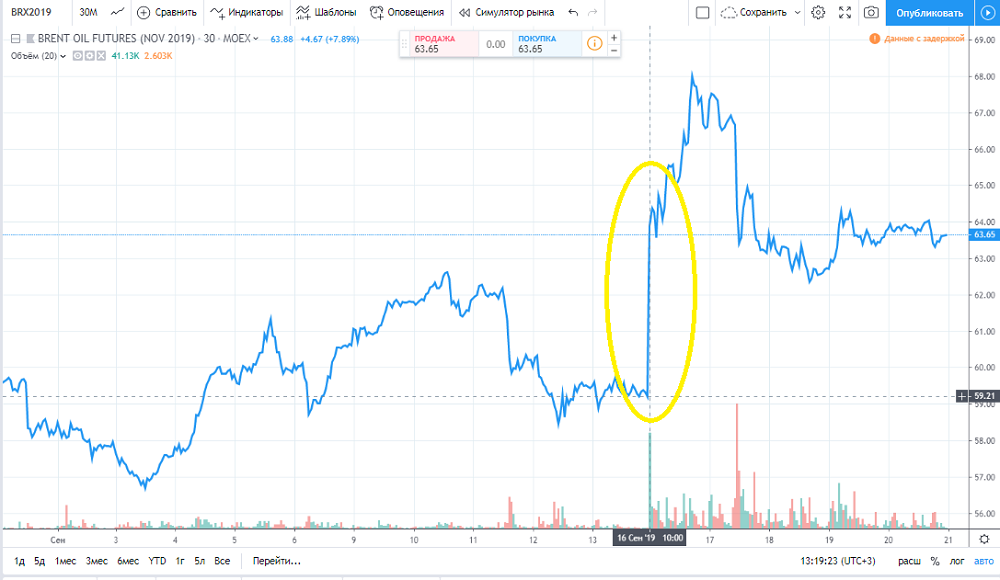
Both examples are trading risks. You can’t predict all the risk factors in FX trading, as there is always the probability of force majeure. But you can reduce the risks. Besides, the higher is the risk, the greater is the potential profit. For example. In the case with oil price surge, those, who were going short – lost, but the traders betting on the rise – gained about 20% just in a day.
From this overview, you will learn:
Major risk factors in FX trading and the features of each type.
Ways to reduce trading risks, types of investment portfolio diversification.
I will try to present two aspects of risk minimization, mistakes in employing technical analysis and general risks in FX trading and in making up an investment portfolio. This is partially my subjective opinion, so I suggest discussing it in the comments!
There are many classifications of trading risks, and there is no hard distinction. In addition, different sources use different terminology, which also results in some sort of confusion.
Types of risks in FX trading
- Trading risks or market risks. It is the risk of losses resulted from the factors affecting the price direction or from the errors in the analysis (forecast) of the market situation.
- Technical risks. The risk of losses resulted from technical problems or failures: platform failures, failure of orders, fraud by the broker, etc.
- Psychological (behavior) risks. The risk of wrong trading decisions resulted from the trader’s excitement, or psychological state: stress, fatigue, fear, greed.
I will deal with trading or market risks.
Trading risk is the uncertainty about the future price movements resulted from the market and non-market factors. Basically, if you have an open position, you face an only risk, the risk that you have wrongly identified the price trend. If the price goes in the opposite direction to the trade entered, the trader will lose.
If the position hasn’t been yet opened, the risk is in the wrong forecast of the trend direction or its reversal. I should note that there is no clear definition of the trend concept, so traders understand it in their own way. Traders determine for themselves the value of the critical amplitude (price reversal), which is called the risk limit and depends on the amount of money on the deposit. In other words, one trader can survive through, for example, a drawdown of 100 points, another no more than 20 points. Everyone determines the level (limit) of risk for themselves, but you need to understand the nature of trading risks.
Where trading risks come from
- Errors in market analysis and forecast. Any publication of the economic data, the release of the results of the Fed’s meeting, meetings of other central banks have their effects. The only question is whether the investor correctly assessed the significance of this or that news? And did the forecasts, made by the majority, meet reality? Traders must take into account these and other factors in the forecast. And there can often be mistakes. Traders often ignore or miss something important, which may result in a wrong forecast.
- Force Majeure. It can take any form: unexpected political decision, man-made disaster, terrorist attack, the discovery of new mineral deposits, market launch of a new product that has not been previously announced, sudden bankruptcy. Force majeure can have both immediate and long-term consequences. Examples of long-term force majeure effects include the dotcom crash and the mortgage crisis in the United States, which has turned into a global crisis. By the way, there are people, who managed to make profits from the crisis. (I recommend an American movie. The Big Short, which quite well describes this situation).
- Human factor. The wrong interpretation of patterns, signals due to fatigue, inattention, stress, etc.
Another classification suggests a simplified grouping of the causes of trading risks into the forecast errors in technical, fundamental analyzes and the human factor. I have already listed the reasons for the fundamental risks in the Force Majeure section above, and I will dwell in more detail on the risks resulting from errors in technical analysis.
1. High volatility at the time of entering a trade. The higher is the volatility, the wider is the amplitude of the price swings, and, so, the more and the faster you can earn on it. It appears reasonable, but the risk is in assessing this volatility, because, if the price goes against you, you can lose more than earn. Indicators’ data are relative, as well as the data of volatility calculators.
Advice. Identify volatility visually. The price range can be identified as a distance between the opposite fractal extremes.
2. Horizontal levels trading strategy. The strategy of trading horizontal levels is individual. Someone enters the trades expecting a level breakout, someone tries to pick up the price rebound from the level. Some traders use support/resistance levels to set a stop loss. There is the so-called turbulence zone around fractal levels in short-term timeframes, where the price is moving in different directions with a narrow amplitude. It has little effect to try to predict the price moves in this zone.
Advice: use the horizontal levels only as reference levels in trading. Enter trades beyond the levels and do not set stop losses at the support/resistance levels, because this can be used by big traders (they are market makers, who I will write about later). If the trade is already entered in the direction of the levels, then it is better to exit it before the level is reached. Otherwise, there could be a rebound with slippage is possible, which will worsen the performance.
Basically, the analysis comes down to determining whether the breakout/rebound from a level is true (the trend) or false (the correction). Does it make any sense to risk?
3. Entering trades in the overbought/oversold zones. It is about the risk to open a position at the end of a finishing trend. It means entering a trade when the trend is already going on. At the peak of the growth, big traders exit trades, harvesting some less smart traders.
It seems reasonable to employ the RSI or stochastic, but they are not efficient in minimizing the risks. They are often lagging, reverses in the extreme price zones, and so on. So, even if you utilize the indicators to determine the zones, you can still make a mistake.
Advice. You can identify the signs of the trend exhaustion in the following way. You compare the amplitudes in the three fractal sections next to each other in the M1 timeframe (the trend exhaustion is clear there earlier). If the amplitude is getting narrower (the amplitude of each subsequent fractal is getting less), this suggests that the trend is exhausting.
And the simplest and wisest recommendation is to enter a trade at the beginning of the trend, do not try to follow the majority. Be careful with interpreting the signals of indicators, there are no perfect, flawless indicators.
4. Entering a trade when there is no clear trend. There are situations when a trader takes a correction or a local price swing for a new trend, which often occurs in the flat. It is difficult, especially without experience. To identify the flat end, as it doesn’t often have a clear beginning or an end.
Advice: I suggest again using the comparison of the price amplitude within the flat trend. If in the short-term timeframe, there is a price movement whose amplitude strongly deviates from the average value, you should be alert. Do not enter a trade immediately, the first price swing could be a correction. Analyze multiple timeframes, the signal timeframe is M1-M5, confirming timeframes are the longer periods.
Unfortunately, there is no universal recommendation on how to cut the risks in this situation. There is still a risk of the wrong identification of the trend direction or the risk of entering too late if the trend has been correctly identified.
5. Wrong indicators’ parameters. This will result in the wrong interpretation of signals.
Advice. Before you start using an indicator with the adjusted parameters in trading on a real account, test the system (MT4 strategy tester, FxBlue). You can learn more about testing and optimization of the strategies in this overview.
6. Using pending orders. Pending orders are utilized in the trading strategies based on entering trades when the price breaks out consolidation range. The orders are put in opposite directions, betting that one of them will work out. The risk results from the fact that pending orders are set based on the intuition, rather than on real price movements. The distance is calculated, for example, as a percentage of the average value of the price movement in the consolidation zone. There is a risk that the price will leave the zone, touch the order, and then go in the opposite direction.
Advice. To reduce risk, avoid using pending orders.
7. A sharp price drop when a long position is opened. There are examples when the price changed by 500-1000 points just in a few minutes. Naturally, hardly anyone could react, take a decision and make a transaction.
Advice. Always use stop losses.
8. Market makers. An individual trader is just a pawn in a bigger game. Market makers are big players, who can influence the price through their huge capitals. They can create the needed information background manipulating the media, forums and other resources by forecasts, analytics, and information.
But this is not their only means. They could see the levels where buy and sell orders are concentrated, that is stop losses and pending orders set in advance. As experience proves, most traders set stop losses in the zones of local price extremes, stick to strong or round-value levels, support/resistance level. The pending orders can be set in the same way. Market makers go opposite the majority, pushing the price to the levels where these orders are concentrated, so that, despite all the forecasts, most stop losses work out.
Example. Market makers want to sell a currency at a better price. They see multiple stop losses higher than the current rates (green flat line in the screenshot below), which are basically the ask orders. On the other hand, there are many pending orders in the same price zone, which doesn’t let the price go higher (balance of volumes).
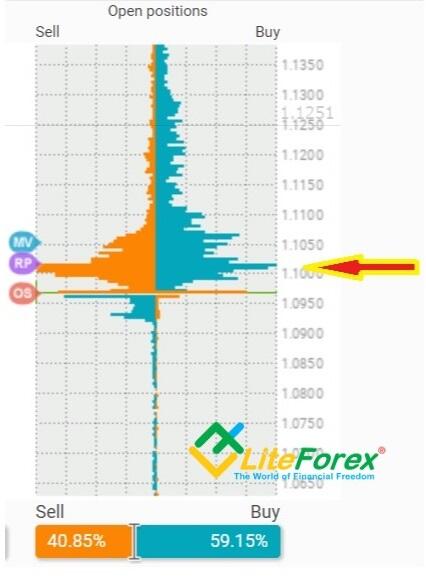
The price is pushed with small orders up to the needed level, next, the manipulators fill their volumes through ask orders (stop losses). Taking into account the corresponding number of short orders, the price will hardly go higher.
Advice. It makes no sense to fight with market makers. So, you need to learn to identify potential zones of order concentration and try to avoid them. You should also bear in mind that indicators can’t anticipate the possible actions of market makers. So, it makes sense to trust indicators less, and pay more attention to the levels, patterns and the exchange information (trade volumes, table of orders).
You can suggest any other risks of technical analysis, write in the comments. Let us look for more ways to cut trading risks together.
As for reducing the risks of wrong forecasts based on fundamental analysis, there few recommendations:
- Do not blindly trust in everything that is reported in the media and be especially careful with “expert” forecasts. Refer to official data reported by news agencies and official resources.
- Employ supplementary analytical tools: economic calendar, stock screeners.
- Estimate the economic data in dynamics, comparing it with the expectations of analysts and with the previous reports.
And be prepared to instantly react to a force majeure.
Hedging and locking up positions as a means of risk insurance
Hedging and locking mean the same, you enter two opposite trades (I won’t go too deep in dwelling upon the major difference between them). Suppose a trader opens a long position, but the price goes down. But the trader has opened a short position with the same volume. The loss yielded by the first trade is compensated by the profit yielded by the second trade.
Advantages of locking up a position
- If you set locks correctly and unlock the positions on time (cancel the losing or the insuring position), you can even make profits this way. There is even the trading strategy based on creating a grid of orders.
- Locking allows managing the floating loss that is doesn’t affect the balance or spoil trading statistics.
There is, however, a significant flaw in locking positions. In case of the wrong opening and closing of insurance and main positions, the trader is more likely to receive the loss resulted from both transactions and the spread. So, locking up is a high-risk strategy for a beginner trader, like trading the Martingale way; but an advanced trader can hedge against losing trades employing locking and hedging.
I can describe the trading strategy and the rules of locking up a position in more detail in a different article. If you would like me to, write in the comments.
How to reduce trading risks (general recommendations for making up an investment portfolio)
1. Diversification
This is so far the best recommendation on how to protect your investment from trading risks. But it is a kind of art to skillfully diversify your investment portfolio and to regularly re-balance it.
Types of diversification:
- Diversification based on the asset types. It is the most common type of diversification. Besides, you can allocate your funds not only among different currency pairs or stocks but also among deposit accounts, precious metals, cryptocurrencies, antiques, real estate, etc.
- Diversification according to the risk level. There are assets that, in the case of force majeure, grow in price (for example, gold). There are assets that, even amid sharp market fluctuations, hardly change in price. There are assets with a volatility of 5% per day. The distribution of investments between assets with different levels of volatility, risk (and, accordingly, profitability) is the diversification of risks. I advise you to read the article about safe-haven assets.
- Institutional diversification. This suggests working with several contractors: different brokers, Forex and exchanges, trust management, etc. If in case of force majeure (as in the example with the Swiss franc) one counterparty goes bankrupt, then you can withdraw at least the rest of the money from the second one.
- Applied diversification. Distribution of investments between strategies with different risk levels: Martingale and conservative trading, scalping and long-term strategies, manual and algorithmic trading.
- Statistical diversification. It's about positive and negative correlation. For example, futures for corn and wheat most often have the same price direction, USD and gold trends are often oppositely directed. A portfolio with negatively correlated assets will be less profitable, but more secure since at the time when one asset falls in price, an increase in the price of another asset will compensate for the loss.
Diversification of investments is limited only by the trader’s imagination and the ability to feel and analyze the market, as well as the risk appetite. The higher is the risk, the greater is the potential profit. That is why trading risks are often intertwined with psychological risks.
2. Technical hedging against trading risks
Set a stop loss. Here, I could suggest an example of drivers who for some reason ignore the mandatory rule to fasten their seat belts. It is difficult to say why some people do not use protective means. On the one hand, market makers can figure out the zones where many stop losses are concentrated and can deliberately drive the price so that trigger the stop losses. On the other hand, a stop loss will help you is there is a price gap resulting from a force majeure. Another argument is that a trader may not be able to react time in a volatile market, and a stop loss can save at least a part of your deposit.
Close all your position for the weekend. Sometimes, the market situation can just in an hour. On weekdays (suppose a trader works 24 hours per day) one still could react to a force majeure. But the weekend, when the markets are closed, can bring unpleasant surprises. An example is drone attacks on Saudi Arabia. And it is even worse if the market opens with a price gap after the weekend.
Reasonable use of financial leverage. It stands to reason. If you use high leverage, an insignificant force majeure will close your positions because of the stop out.
Calculation of the lot volume according to the deposit volume, the risk level of the transaction and the deposit, and other factors. Read more in this article.
Conclusion
Should forex trading risks be minimized? I do not think so. Those who want to eliminate or minimize all FX risk factors may not engage in trading at all and invest their capital in a bank deposit. Risks need to be optimized by adequately assessing your opportunities and the ability to put up with losses. The strategy of cutting and balancing the risks is the risk management strategy. You must build your own risk management strategy before you start real trading and you must always observe risk management and money management in trading. Only you yourself can develop a risk management system because there are no universal recommendations that can be suitable for all investors in all the cases.
I hope that the links presented in the overview will somehow help you develop your strategy of optimization of the FX risks.
If you have any questions, comments, ideas to share, you don’t agree with anything or you want to add something, please write in the comments! I wish you successful trading.
P.S. Did you like my article? Share it in social networks: it will be the best "thank you" :)
Useful links:
- I recommend trying to trade with a reliable broker here. The system allows you to trade by yourself or copy successful traders from all across the globe.
- Use my promo code BLOG to get a 50% deposit bonus on the LiteFinance platform. Simply enter this code in the appropriate field when funding your trading account.
- Telegram chat for traders: https://t.me/litefinancebrokerchat. We are sharing the signals and trading experience.
- Telegram channel with high-quality analytics, Forex reviews, training articles, and other useful things for traders https://t.me/litefinance

The content of this article reflects the author’s opinion and does not necessarily reflect the official position of LiteFinance broker. The material published on this page is provided for informational purposes only and should not be considered as the provision of investment advice for the purposes of Directive 2014/65/EU.
According to copyright law, this article is considered intellectual property, which includes a prohibition on copying and distributing it without consent.