In Forex trading, a lot refers to a standard trading unit that defines the amount of the base currency you are buying or selling. To make it easier to understand, think of a carton of eggs: you usually buy eggs in packs of 10 or 12, not one at a time. Similarly, in the Forex market, trades are executed in standardized units known as lots.
Trade volume is measured in lots. The larger the trade volume, the greater the risk and potential profit. You can calculate the risk by factoring in volatility and leverage using the trader calculator.
The article covers the following subjects:
- Major Takeaways
- What Is a Lot in Forex?
- What Is the Size of a Lot in Forex?
- Types of Lot Sizes
- How to Calculate Lot Size in Forex
- Maximum Lot Size in Forex
- What Lot Size to Use in Forex: Building an Optimal Risk Management System
- What Determines the Lot Size in Forex
- How Does Equity Change Depending on the Lot Size
- How to Set the Lot Size in MT4 and MT5
- Conclusion
- Forex Lot FAQ
Major Takeaways
- A lot in Forex is a standard amount of the base currency. The larger the lot, the higher the risk and potential return.
- A standard lot = 100,000 units. Besides, there are mini (0.1), micro (0.01), and nano (0.001) lots.
- The choice of a lot size depends on your strategy and account type. For example, cent accounts allow you to trade nano lots.
- It's not just currencies that are measured in lots. Other assets, such as oil and gold, follow the same principle. Check the details with your broker.
What Is a Lot in Forex?
A lot is a standard unit of measurement for the volume of a trading position. In other words, it is the amount of money that an investor spends on buying a particular currency or asset in order to sell it later at a more favorable price. Calculating lots is one of the elements of a solid trading strategy and risk management, making it crucial to take this aspect seriously.
What Is 1 Lot in Forex?
In the Forex market, trades are opened in fixed volumes, or lots. For example, you cannot buy exactly 1,000 euros, only 0.01 or 1 lot. A lot is a unit of measurement for a trade: the amount of currency, oil, or other assets.
Example: With oil priced at $40 per barrel, a trader specifies the number of lots rather than the number of barrels. One lot may equal 10 or 100 barrels, depending on the broker's terms. But in both cases, the trade volume will be one lot.
What Is the Size of a Lot in Forex?
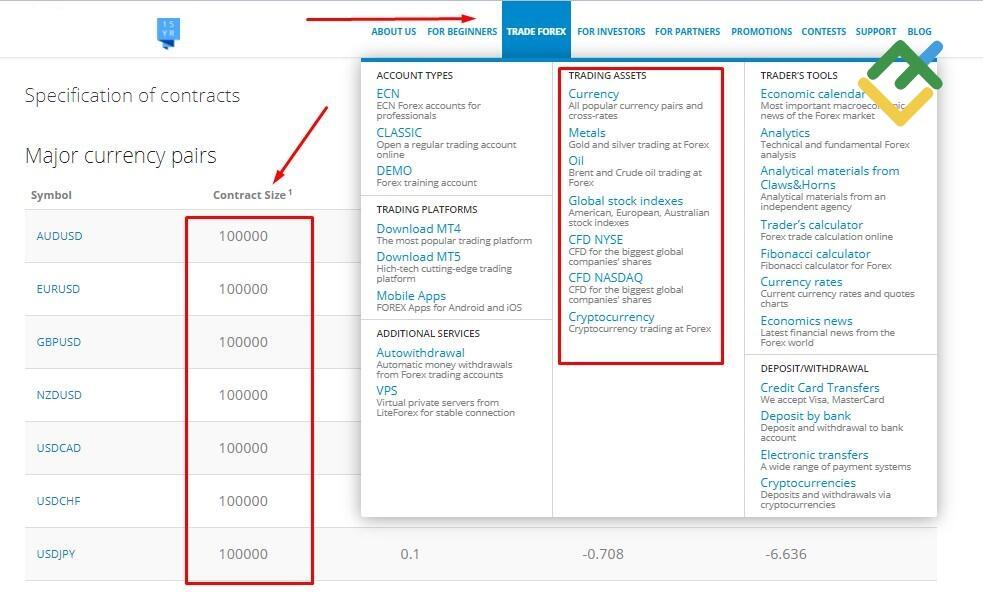
One standard lot in Forex is equal to 100,000 units of the base currency. For example, if the EURUSD pair is quoted at 1.1845, buying one lot (100,000 euros) will cost 118,450 US dollars.
The base currency is always first in a pair, followed by the quote currency. Examples:
- 0.01 lot of the GBPUSD pair at a price of 1.29412 = 1,294.12 USD for 1,000 GBP.
- 0.01 lot of the EURUSD pair at a price of 1.65981 = 1,659.81 AUD for 1,000 EUR.
For currencies, the standard lot is always 100,000 units. For other assets, the size varies. For instance, shares are traded in units, oil in barrels, and precious metals in troy ounces. You can find the exact value in the contract specifications.
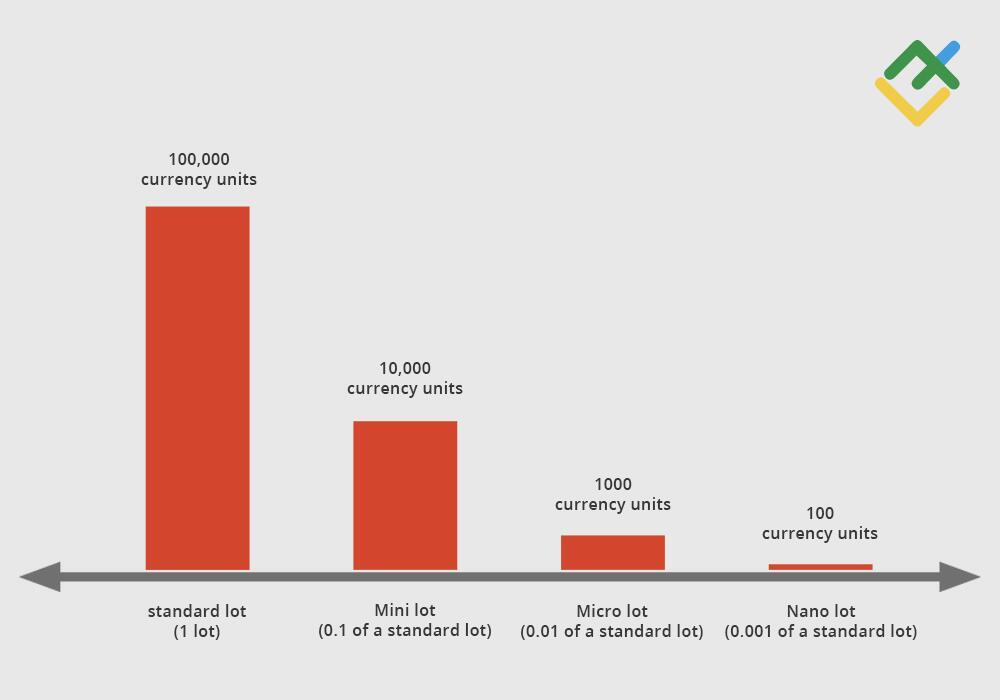
Types of lots:
- Mini — 0.1 lot (10,000 units).
- Micro — 0.01 lot (1,000 units).
- Nano — 0.001 lot (100 units, rare).
Brokers usually offer a lot size range from 0.01 to 100. For example, if the EURUSD exchange rate is 1.184 and you open a trade with 0.01 lots, the total trade value will be $1,184. With 1:100 leverage, you'd only need $11.84 in your account to open the trade.
Cent accounts enable you to trade in cents, which is equivalent to buying a micro lot for $11.84 without leverage.
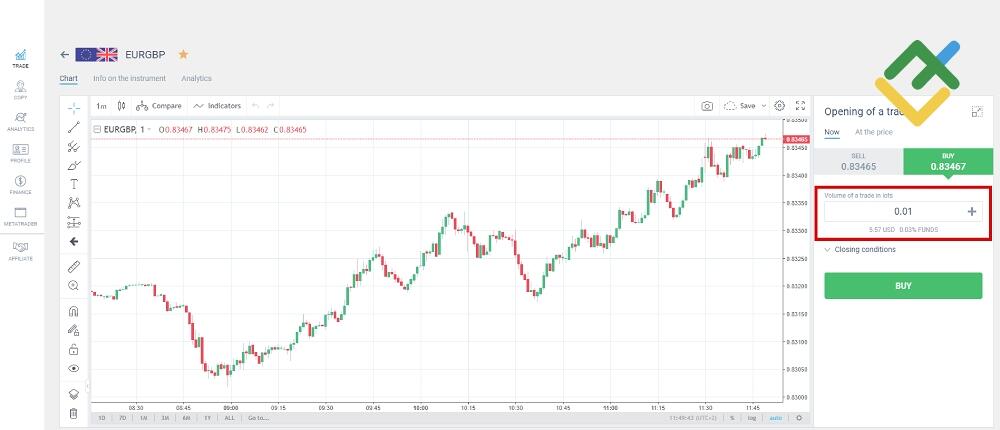
A trader sets the trade volume manually in the terminal. The minimum lot size and lot step are defined in the contract specifications. For example, in a Classic account, the lot step is 0.01 lots.
Note: Some brokers offer non-standard lot sizes (like 10,000 units). Be sure to review the instrument's contract specifications before trading.
Types of Lot Sizes
A lot size directly affects the potential profit and risk. There are different types of lots used in the Forex market.
Mini Lot Size
A mini lot is 10,000 units of the base currency, which is 0.1 of a standard lot (100,000). This lot size requires a smaller deposit and carries lower risks.
Micro Lot Size
A micro lot is 1,000 units of the base currency (0.01 lot). For example, if the EURUSD pair is trading at 1.1826, a 0.01-lot trade would require $11.83. This lot size is perfect for novice traders, allowing them to follow risk management rules with a small deposit.
Nano Lot Size (Cent Account)
A nano lot is equal to 100 units of the base currency (0.001 of a standard lot). You can start trading with as little as $1.18. This option is ideal for beginners who want to:
- Gain experience in live market conditions.
- Test strategies and advisors.
- Check indicators and scripts.
- Train their mind to stay resilient.
Using Standard Lots
A standard lot refers to a specific contract size, such as 100,000 euros when trading the EURUSD pair or 10 barrels of oil. The maximum lot size is the upper limit set by the broker on the number of lots you can trade in a single transaction. For instance, trading 5 standard lots would equal 50 barrels of oil.
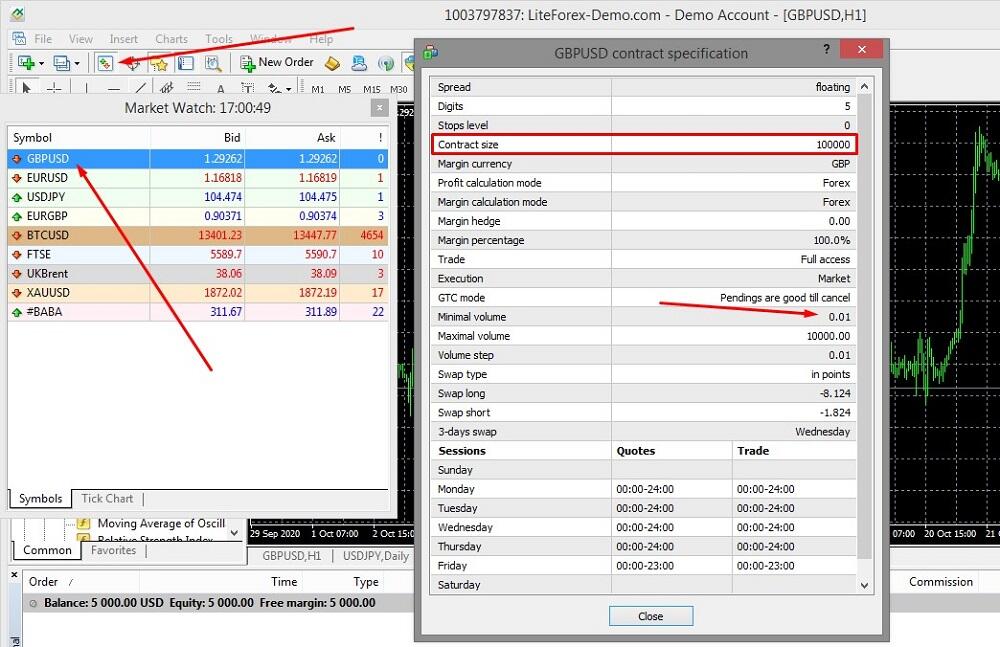
You can check the lot type and volume limits in MetaTrader 4 by going to the Market Watch window, right-clicking on the instrument, and selecting Specification. For example, one lot for the GBPUSD pair equals 100,000 units, the minimum volume is 0.01, the maximum volume is 10,000 lots, and the volume step is 0.01.
Example: Two demo accounts, each with $2,000 and 1:100 leverage. A 1-lot trade requires a margin of $1,174.47 and currently shows a floating loss of $6. A 0.1-lot trade requires a margin of $117.46 and shows a floating loss of $1.90.
To sum up:
- The smaller the trade volume, the lower the risk, and the more trading opportunities you have within your capital.
- If you are confident, use a larger lot to maximize your profits.
- Have doubts? It is better to open a trade with a smaller lot to limit potential losses.
- Aggressive strategies aim for maximum volume, while conservative ones focus on minimizing losses.
Exotic lot sizes
Exotic lot sizes refer to non-standard trade volumes that differ from generally accepted standards and can vary depending on the broker. These lots are designed to meet the specific needs of traders, offering a range of options, including 500 or 50,000 units of the base currency. Their key advantage lies in their flexibility, as traders can more accurately tailor the trade size to their strategy and available funds.
How to Calculate Lot Size in Forex
All trades are executed in the account currency, most commonly in US dollars. Therefore, it is essential to understand how much margin will be required when opening a position, especially when trading cross-currency pairs.
The easiest way to work out the appropriate lot size is to use a size calculator, allowing traders to align the total trade volume with their trading account balance:
Why calculate the lot size:
- To align the trade volume with your account balance and acceptable risk level.
- To avoid losing too much during market swings or drawdowns.
The leverage ratio does not affect the risk if the lot size is fixed. It only determines the margin required to open the position.
When calculating pip value, consider the type of currency pair.
- EURUSD: $10 per pip with a one-lot volume, a typical setup in Forex trading.
- USDJPY: less than $9 per pip due to the pip move being calculated at the second decimal place in JPY pairs.
Formula: (1 pip × lot size) / market price.
The next section covers examples and formulas for calculating lot size in USD across various asset classes.
1. Currency Pairs with Indirect Quotes and CFDs
Lot = contract size * trade volume * asset price
Example 1. The contract size is 1. 1 lot equals 1 share. The share price is 54 USD, so the lot value is 54 USD.
Example 2. For the EURUSD pair, 1 lot equals 100,000 units. The asset price is 1.23456, so the lot value is 1.23456 × 100,000 = 123,456 USD.
2. Currency Pairs with Direct Quotes
Lot = contract size * trade volume
Example. Contract size — 100,000, trade volume — 0.01 lot or 1,000 units of the base currency. The USDCHF currency pair rate is 0.91070. The lot value in USD = 100,000 * 0.01 = 1,000. This means that with a trade volume of 0.01 lot, 9,107 CHF will be purchased, and 1,000 USD will be reserved by the broker.
3. Cross-Currency Pairs
Lot = contract size * trade volume * asset price / quote currency price
Example. Contract size — 100,000. Trade volume — 0.01 lot or 1,000 units of the base currency. The GBPCAD rate — 1.72608. Base currency (listed first) is GBP, and the USDCAD rate is 1.32972. The lot value = 100,000 * 0.01 * 1.76028 / 1.32972 = 1,298.08 USD.
How to Calculate the Pip Value?
The pip value is the amount a trader gains or loses in the deposit currency when the price moves by one pip in either direction, the smallest price movement in most currency pairs, typically at the fourth decimal place. For professional traders who execute larger positions, understanding the pip movement and how it affects the trading capital is essential for success. The pip value is very easy to work out using the trader calculator.
The Pip Value for One Full Lot (Trade of 1 Lot):
- Standard lot: 1 pip yields $10.
- Mini lot: 1 pip yields $1.
- Micro lot: 1 pip yields 10 cents.
- Nano lot: 1 pip yields 1 cent.
If a trade is opened with a volume of 0.1 lot, the pip value is reduced by a factor of ten. With a standard lot, one pip typically equals $10, so with 0.1 lot, one pip is worth $1. In other words, the pip value for a 0.1 standard lot is the same as that for 1 full mini lot.
Example of Lot Size Calculation in Forex Trading
Given:
- Deposit: $3,000.
- Risk: 5%.
- Leverage: 1:100.
- Stop-loss: 50 pips.
Acceptable risk = $150 (5% of the deposit). With 50 points, the point value = $3. Since 1 lot = $10 per point, the effective lot = 0.3. It requires a margin of $375 (12.5% of the deposit) with a leverage of 1:100.
Outcome: A lot size depends on the risk per trade, which is determined by the stop-loss size, and the drawdown a trader is willing to accept. An Excel model can be a convenient tool for calculating this correlation.
An alternative approach is to limit the total risk across all trades. For example, 15% of a $3,000 deposit equals $450. With a leverage of 1:100, this allows for a trade size of $45,000. Divide this number by the EURUSD price (1.25) → 45,000/125,000 = 0.36 lots. However, this method does not take drawdown into account, making it less accurate.
If you use a fixed risk percentage for each trade, leverage does not affect the outcome. The higher the lot, the greater the value of a pip and the faster your deposit will be depleted in the event of a loss.
Trade volume management includes:
- Selecting the volume/risk ratio. It is better to reduce the volume when volatility is high.
- Assessing the viability of a trade: the drawdown should not reach the stop-out level before the price rebounds from the key level.
Maximum Lot Size in Forex
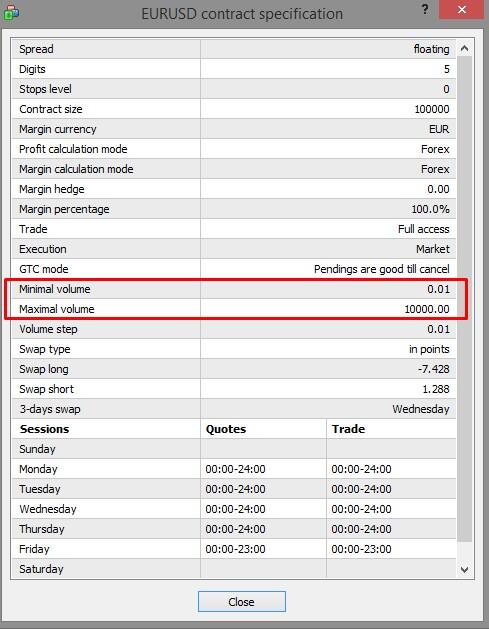
The minimum and maximum lot sizes are specified in the trading conditions for each account type. You can find these values in the contract specifications, for example, on the MT4 platform.
Example 1. EURUSD
The contract size is 100,000 (standard lot). The minimum trade volume is 0.01 lot (€1,000), which at an exchange rate of 1.1824 is $1,182.40. The maximum volume is 10,000 lots (€1 billion), which requires $1,182,460,000.
Example 2. UKBrent
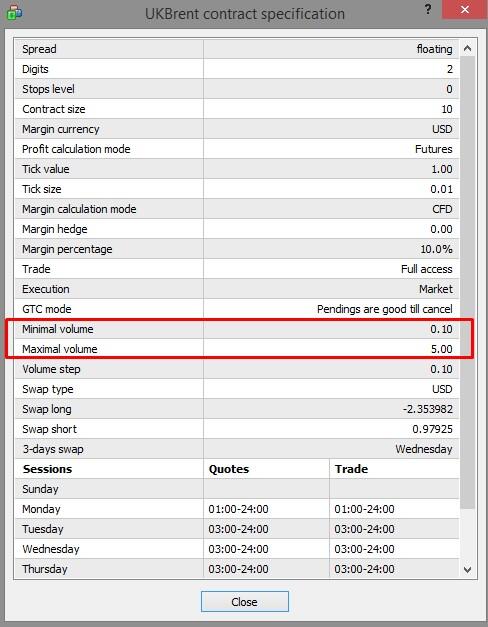
1 lot = 10 barrels of oil, 1 barrel is priced at $41.07. The minimum lot size is 0.1. This means you can buy 1 barrel worth $41.07. The maximum volume is 5 lots (50 barrels) = $2,053.50.
Note: The examples above do not take into account leverage and margin requirements, which significantly reduce the amount of funds needed.
What Lot Size to Use in Forex: Building an Optimal Risk Management System
A risk management strategy should answer the following three questions:
- What level of risk is a trader willing to accept? The higher the risk, the greater the potential profit and loss. It is essential to find a balance between profitability and acceptable drawdown.
- What trade volume is appropriate for the strategy? The trade volume depends on market volatility, deposit, and leverage.
- Where should a stop-loss order be placed? Since the pip value depends on the trade volume, market volatility should be taken into account when determining the stop-loss level.
Key parameters: trade volume, lot type, leverage, pip value, volatility, spread, risk per trade, total account risk, deposit, and profit targets.
Most calculators do not take risk into account. The formula for calculating risk is as follows:
Lot size = (risk% * deposit) / A * (price 1 - price 2)
Where:
- Risk% — the portion of the deposit that can be allocated to a trade (5% recommended).
- A = 1 for a long trade and -1 for a short trade.
- Price 1 — entry price.
- Price 2 — stop-loss level.
This formula allows you to plan the trade volume considering market volatility and drawdown limits.
What Determines the Lot Size in Forex
The standard lot size for currency pairs is fixed at 100,000 units of the base currency. However, the margin required by the broker to maintain an open position varies. It depends on the asset's price and the trade volume. The higher the asset's value, the larger the required margin, and the greater the associated risk.
The choice of lot size when opening a trade by a trader depends on:
- An asset's volatility and a trader's method of assessing it (the stop-loss level).
- The level of acceptable risk for all open trades which is defined individually by each trader.
- The size of the trading deposit.
- Leverage (depending on the calculation method).
How Does Equity Change Depending on the Lot Size
Equity in Forex refers to the total value of a trader's account, including both the used margin and floating profit or loss from open trades. It fluctuates in real time based on market movements. The larger the trade volume, the faster equity can increase or decrease.
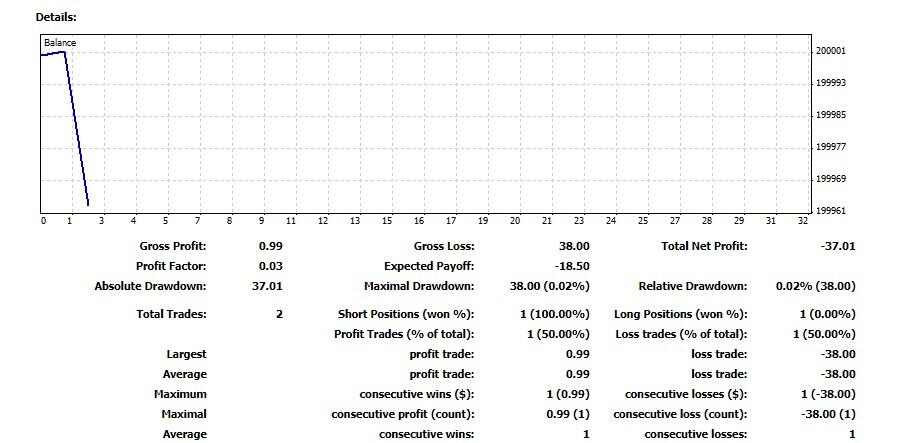
Example: On a demo account with a $200,000 balance and 1:1 leverage, a trade of 0.01 lots on the GBPUSD pair generates a profit of $0.59.

Next, a 1-lot trade is opened. The required margin increases sharply, losses grow to tens of dollars, and the trade risks being closed by a stop-out.

The outcome of each trade is clearly visible on the balance chart in MT4. The first trade caused a smooth upward movement, while the second led to a sharp drop. Conclusion: trade volume has a significant impact on equity fluctuations.
How to Set the Lot Size in MT4 and MT5
In MT4, the default lot size for a trade is 1.0, which corresponds to a Forex lot, the standard trading volume in most pairs. When every millisecond counts, there is no time to manually adjust the trade volume each time. Therefore, if you consistently open trades with the same trade volume, it's more efficient to set it in advance:
For MT4: Tools — Options — Trade — Size by default.
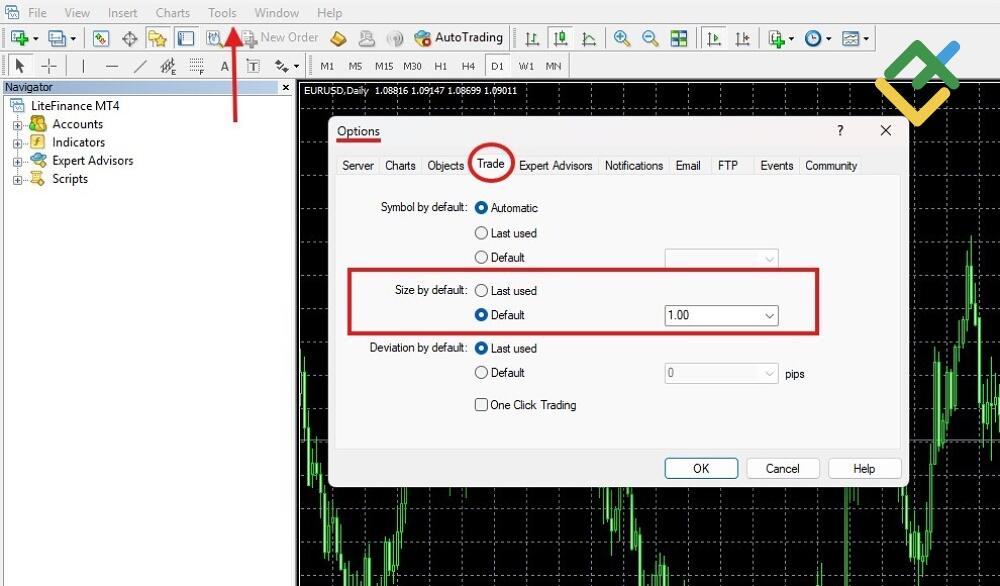
For MT5: Tools — Options — Trade — Volume by default.
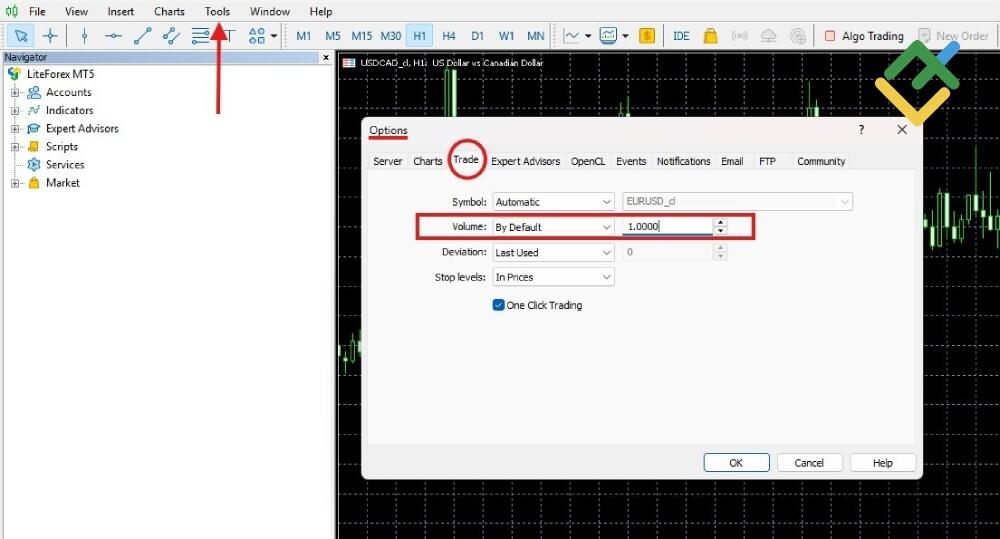
In trading advisors, the initial lot size is defined by the Lots parameter. You can also enable automatic lot size calculation by turning on the UseMoneyManagement option and specifying the risk level and maximum lot size.
Conclusion
Risk assessment and proper lot sizing are fundamental to effective risk management. In volatile markets, Forex trading requires you to reduce your risk exposure and use a wider stop-loss to maintain a high degree of control over your trading activity. This is particularly important when working with a single trade, where significant losses may occur due to rapid price changes. In contrast, in trending markets, you can afford to use a tighter stop-loss while increasing your position size.
Before you start trading, review the price history and define appropriate stop-loss levels for each instrument. You should also prepare a trading model that allows you to quickly adjust the volume of your trades and adapt to changing market conditions.
Get access to a demo account on an easy-to-use Forex platform without registration
Forex Lot FAQ
Define the risk level per trade (up to 5% of the deposit), take into account volatility, and the width of a stop-loss order. Reduce the volume during high volatility and factor in the specifics of your trading strategy.
Check the contract size in the instrument's specifications. For CFDs and indirect quotes, multiply the contract size by the asset's price. For direct quotes, the pip value equals the contract size. Cross-currency pairs are calculated based on the prices of both currencies involved.
The number of units depends on the lot type. A standard lot equals 100,000 units, a mini lot 10,000 units, a micro lot 1,000 units, and a nano lot 100 units. For example, 1 lot of the EURUSD pair = €100,000, and 0.01 lot = €1,000. The chosen lot size directly impacts both potential profit and risk.
This means that the trade volume is twice the standard volume for the selected asset. For example, 2 lots of the EURUSD pair is 200,000 EUR, not 100,000. Similarly, 2 micro lots of the NZDCAD pair equal 2,000 NZD, and 2 lots of Brent equal 20 barrels of oil.
The optimal lot size depends on the asset and leverage. With a deposit of $200, it is reasonable to open 0.01-lot trades, for example, on the EURUSD pair, Brent, or the XAGUSD pair.
There is no universal answer. The optimal size depends on the deposit, risk tolerance, account type, and market situation. Consider volatility, targets, and instrument specifications when choosing the trade volume.
This is the amount of an asset that you buy or sell. For example, 1 standard lot of the GBPUSD pair = 100,000 GBP, 1 mini lot = 10,000 GBP, and 1 lot of Brent = 10 barrels of oil.
The lot size depends on the broker's terms and conditions and the asset. Usually, the minimum lot size for currency pairs is 0.01, and the maximum is 100. For oil CFDs, the size ranges from 0.1 to 5 lots. Please check the specifications for exact values.
The size of 1 lot depends on its type and the asset being traded. For example, currency pairs are typically traded in lots of 100,000 units, oil in lots of 10 barrels, gold in lots of 100 ounces, and silver in lots of 5,000 ounces.
A mini lot is 0.1 of a standard lot. If 1 Brent lot is equal to 10 barrels, then a mini lot is 1 barrel.
A micro lot is 0.01 of a standard lot or 1,000 units of the base currency. For example, at an EURUSD pair rate of 1.02, buying 1 micro lot means purchasing €1,000 for $1,020. This lot size is perfect for beginner traders and intermediate traders who are still testing strategies and learning to manage risk and risk tolerance.
The value of 1 lot depends on the asset being traded. For currency pairs, it equals 100,000 units of the base currency. For oil, 1 lot is 10 barrels. For gold, it's 100 ounces, and for silver, 5,000 ounces. When it comes to stocks, 1 lot usually corresponds to the price of a single share.
Price chart of EURUSD in real time mode

The content of this article reflects the author’s opinion and does not necessarily reflect the official position of LiteFinance broker. The material published on this page is provided for informational purposes only and should not be considered as the provision of investment advice for the purposes of Directive 2014/65/EU.
According to copyright law, this article is considered intellectual property, which includes a prohibition on copying and distributing it without consent.