For many potential traders, Forex is associated with speculation on the foreign exchange market. However, there are more than a dozen other options for earnings, which are associated with trading directly or indirectly. And while they all require some kind of knowledge or skills, this is not a reason to discard them. In this article, you will find information about all the major types of earnings on Forex, practical examples and the advantages and disadvantages of each type.
The article covers the following subjects:
15 Tips On How to Start Trading in the Market
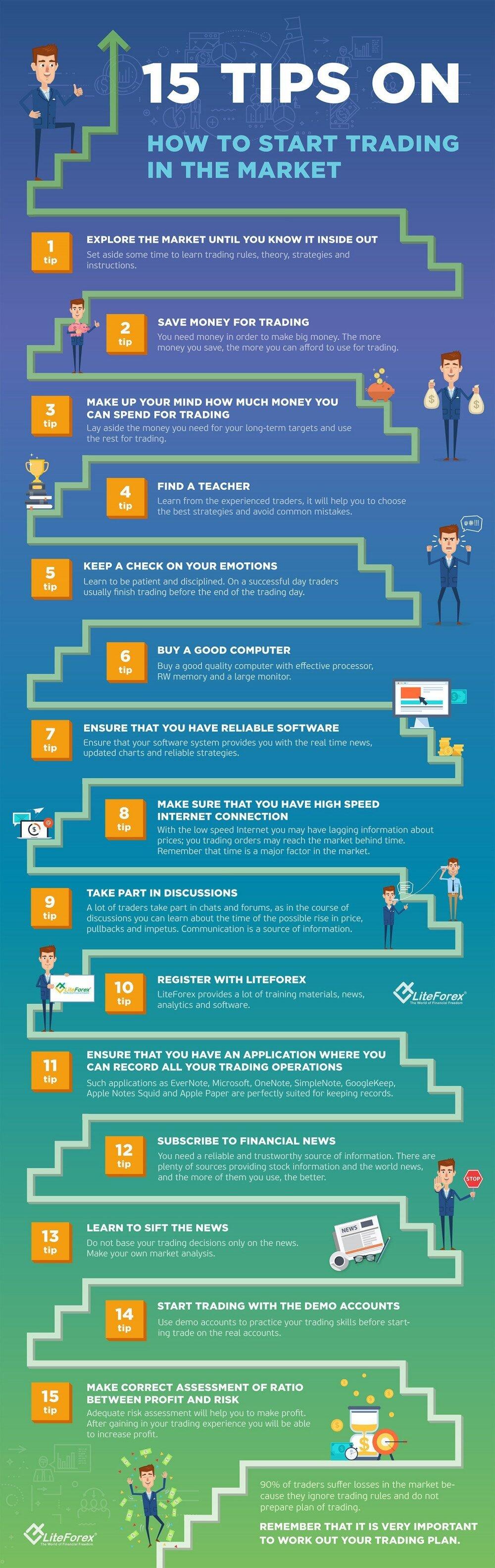
Options for earning on Forex
Forex is an over-the-counter foreign exchange market, where every day thousands of traders make hundreds of thousands of transactions worth millions of dollars. Someone loses, someone gains. Someone is disappointed, and someone becomes a professional, and for them, trading is not just a job, but a way of living. Forex is multifaceted. Despite the rumours surrounding the over-the-counter speculative trading, the market continues to live like a beehive.
If you ask traders about their understanding of earnings on Forex, the most frequent answer would be speculation or earning on the difference in exchange rates. This stereotyped thinking prevents many from taking the path of success. In this review, I will tell you about more than 10 ways to make money on Forex, and maybe you will find something for yourself.
Summary of the review:
trading;
PAMM accounts;
social trading;
participating in contests;
prop trading;
affiliate programs;
selling signals;
writing advisors;
holding seminars and webinars;
creating and posting videos on your own YouTube channel;
writing analytical articles;
blogging;
creating a brokerage company
Active and passive earning on Forex
The options for making money on Forex can be divided into two types: active and passive. In the case of active earning, the trader is directly involved in it. It does not have to be trading per se, but, for example, actively attracting potential broker clients through an affiliate program. In the case of passive earnings, the investor invests money and their capital works for them while the investor is free to do other business not related to Forex. It is possible to combine the two types of earning.
1. Trading
If you are interested in the prospect of earning money on Forex, read many articles online and decided to try your hand, first you should choose a brokerage company and register as a client. If you thought you should start by reading the literature and articles on the subject, this is not the case. It will be very boring for you to read literature without combining it with practice. You need to study trading on the foreign exchange market directly on price movement charts. You can read on how to choose a reliable broker here. You read and practice at the same time - this is the only way to learn trading.
How it works. This is earning on fluctuations in the rates of various assets. You can earn on CFDs (contracts for difference) for currency, commodity assets, stocks, and indices. Recently, most brokers have added cryptocurrencies to their lists of instruments.
I would like to mention two things:
Swap. This is a kind of overnight payment for keeping the position. Without going into details, a swap is linked to the discount and interest rates of other countries. There is a situation when, as they change, instead of paying a fee, a trader may earn on the swap (the so-called positive swap). This strategy is called Carry Trade.
Rebate. This is not quite earnings of the trader, but rather compensation for their costs, but traders should still remember about this option. It is a partial return of the spread to the trader regardless of the effectiveness of the position. Both the broker itself and third-party independent services can provide compensation. For a broker, a rebate is a marketing move aimed at attracting traders, increasing their trading turnover, or increasing interest in certain assets.
From theory to practice. The essence of trading is to buy cheap and sell expensive, and vice versa. The trader has several tools for this: fundamental and technical analysis, as well as the trading platform in which the trades are carried out. The trader can open long positions (buy an asset in order to sell it later) and short (sell an asset, then buy it cheaper and close the debt position). The transactions are executed by a broker who charges a commission (spread). Counterparties to transactions are other private traders, institutional investors, investment banks, etc.
A trader starts with registration (opening a trading account) and verification. It involves providing passport data, scans of documents confirming the place of residence (registration) and personal information. Verification is not always required. But I am of the opinion that opening a bank account is not anonymous for a reason, and my money is safer when I can prove that it is mine. Why? Our traders' blog editor described the essence of the verification very well in the article Security on Forex.

The next step is to test the broker's capabilities and gain experience by opening the first trades on a demo account. A demo account allows you to:
Understand the platform functions and choose the most convenient trading mode.
Get acquainted with the capabilities of indicators, test advisors, and develop your own strategy. In short, take the first steps, earn the first, albeit virtual, money and learn to feel the market.
And finally, the decisive step is the opening of a real account, depositing and finally, trading. The live account features allow you to:
Open any number of positions to buy or sell any asset from Litefinance's arsenal, including cryptocurrencies, in a few clicks. Track the movement of the rate and analyze its change in past periods.
Copy trades of successful professional traders automatically. In the Social Trading system, an investor can get acquainted with the traders' ranking, trading statistics and risks to choose the most suitable trader (read more on the service below).
To those who want to learn more about the capabilities of a live account and start trading, I recommend reading this article. It contains a detailed description of the functions of each menu item and gives practical examples of working with it.
Pros. The brokers' arsenal includes up to 200 and more instruments. In comparison with the stock exchange, there are much more opportunities for diversifying risks and implementing the craziest strategies. To some extent, Forex combines all the advantages of stock, currency and commodity markets.
Cons:
You need to have extensive knowledge of fundamental and technical analysis and be able to use it. You need to be able to build a trading system, to analyze trading history. You need to be able to control yourself and be disciplined. It can take months to learn, this is why not everyone achieves success. According to statistics, only 5% of people remain in trading, the remaining 95% lose their deposit and leave the market.
High risks. Forex is an unregulated market, despite the presence of so-called regulators. The lack of transparency of brokers and the principles of their operation is a stumbling block for potential traders.
2. Social Trading
Those who are not eager to scrutinize the essence of independent trade can explore the advantages of copy trading. You can copy the trades of successful traders to your own account, in part or in full, which will save you from the anxiety of making trading decisions on your own. Trades are copied in exchange for a percentage of your profit from copied trades, which is set by the traders providing their positions for copying.
How it works. Social trading (or LAMM accounts, lot allocation module) is a service for copying trades in amounts proportional to the funds of the investor. It works like this:
The investor adds their account to the account of the trader, whose positions will be copied automatically. In the case of PAMM accounts, the trader sees the amounts on investors' accounts and their number, but in the case of social trading this information is closed.
All open and closed trades on the trader's account are copied to the investor's account.
There are three main options for trading on LAMM-accounts:
The broker's service if available. For example, LiteFinance provides this service.
ZuluTrade. An independent copy trading platform that brings together over a dozen brokers and their traders.
Copying signals from the developer of MT4. This is a platform that somewhat resembles the principle of ZuluTrade. There are also traders to whom you can connect and copy trades automatically. The advantage of the platform is that it has a much more convenient ranking. Traders are divided by groups based on maximum profit, reliability, reviews, use of leverage, maximum deposit, type of trading (manual or automatic), etc. Each trader's page contains conveniently grouped information on the account: statistics, slippage, mathematical analysis of risks, etc. Subscription to signals is available on the MQL5 website.
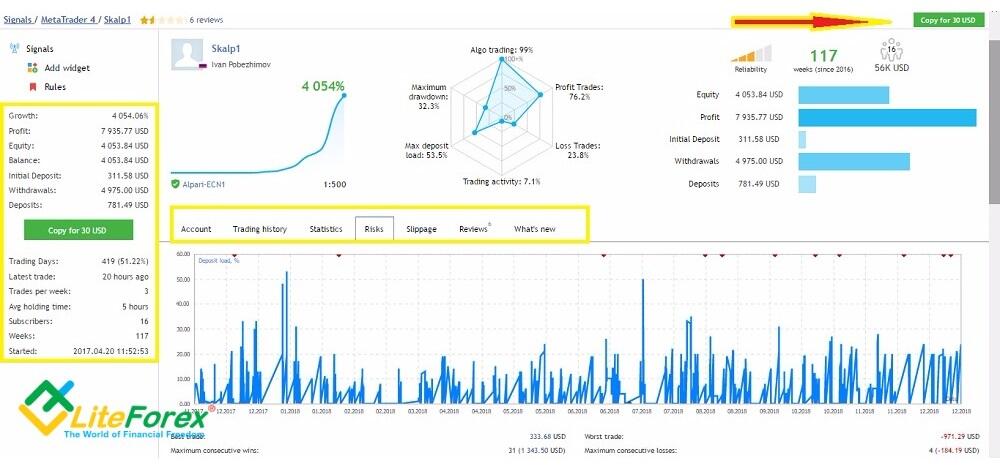
Each of these three most common options has its pros and cons. For example, social trading from an individual broker is inferior to joint copy trading sites in terms of the number of accounts for connecting (which is logical, since the platforms bring together traders from several brokers). ZuluTrade is a specialized platform intended specifically for social trading, it has many interesting tools and multinational chat (including discussions of every trader). But the start deposit here is from 300 US dollars.
MQL5 is a platform that unites everyone who has anything to do with trading or the development of trading products. Copying signals here is one of a dozen possibilities of the platform, and the approach to the technical organization of the process itself is solid. But we read reviews about ZuluTrade, it often has problems with slippages and failures during copying. There are practically no complaints about the processing speed of MQL5.
Despite the apparent advantages of the platforms, they have one serious drawback - the reliability of the traders, who act as signal providers. Platforms are organizational intermediaries and do not have the tools and the ability to track flawed schemes (or maybe they do but are not in a hurry to do anything about it). The examples of the most common issues in platforms include:
Using strategies based on Martingale, averaging, outstaying and other high-risk tactics yielding immediate short-term income and obviously unprofitable in the long term.
Trading on demo accounts, faking trade statistics.
Technical problems with the execution of trades, where it is difficult to divide the responsibility of the broker and the platform itself.
Here, social trading from a broker has some advantages. The company earns on the spread and therefore is interested in the trading performance of its clients. The reputation of traders is the reputation of the broker who controls the ranking and is responsible for removing knowingly unprofitable and fraudulent schemes from it. The probability of loss when copying signals is still there, but thanks to tight control, the risk of losing money and becoming a victim of scammers is reduced. This gets rid of the problems characteristic of the platforms and listed above.
From theory to practice. In order to connect to the signal copying service, you will have to open an account with a broker, make a deposit and go through verification. This procedure is obligatory, even if you are going to copy signals using the platforms. The registration procedure for different platforms is different:
ZuluTrade. Here, after opening an account, you need to send details and the account number opened with the broker to the platform. Then the contract with the website is executed, which takes 1-3 days. The contract is an agreement in which the investor agrees that the data from the platform will be sent to the investor’s broker. It is impossible to refuse to sign the contract or undergo verification (I’ll note that you will have to provide personal data to ZuluTrade) because on the basis of this contract, the platform receives a commission from the broker and ZuluTrade itself becomes an IB for the investor. Then in the personal account of the platform itself (it’s not necessary to control the personal account with the broker), the investor selects the traders to copy and starts trading. Yes, it's that complicated.
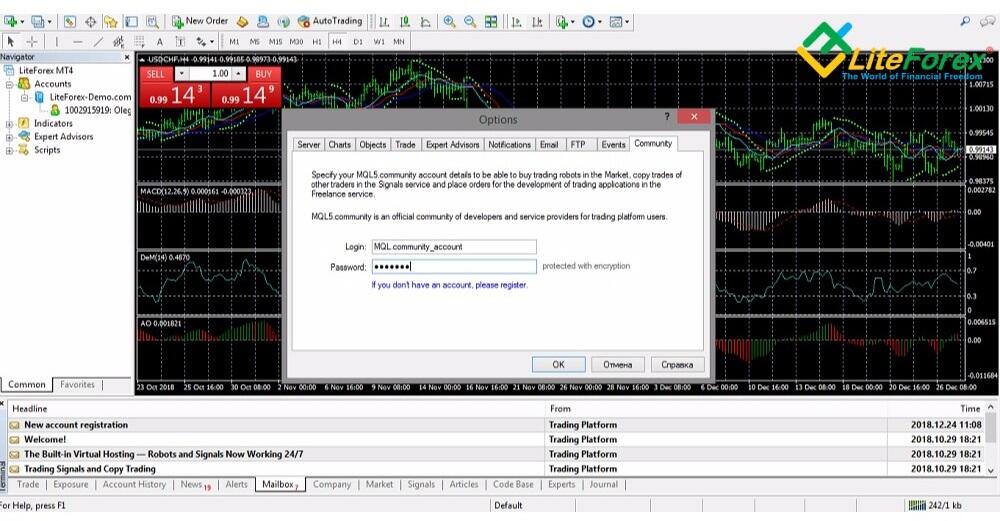
MQL5. Here the process is different and somewhat simpler. You do not subscribe on the website (platform), but rather inside the MT4 / MT5 terminal, where the signal copy service is already integrated into the platform. However, besides the terminal itself, you will also need an account in the MQL5.community. After registering an account and depositing funds to pay to the community for copying signals (ZuluTrade charges no commission), in MT4 / MT5 in the Settings / Community section, you must specify the address of the account. Now you can connect to trades both from the terminal and from your account.
Social trading with a broker is much easier. Here you do not need to provide personal data to any third-party resources, you do not need to pay a commission for copying trades of a certain trader (as in MQL5). There is a Copy button in the trader's personal account, which is accessible after registration.
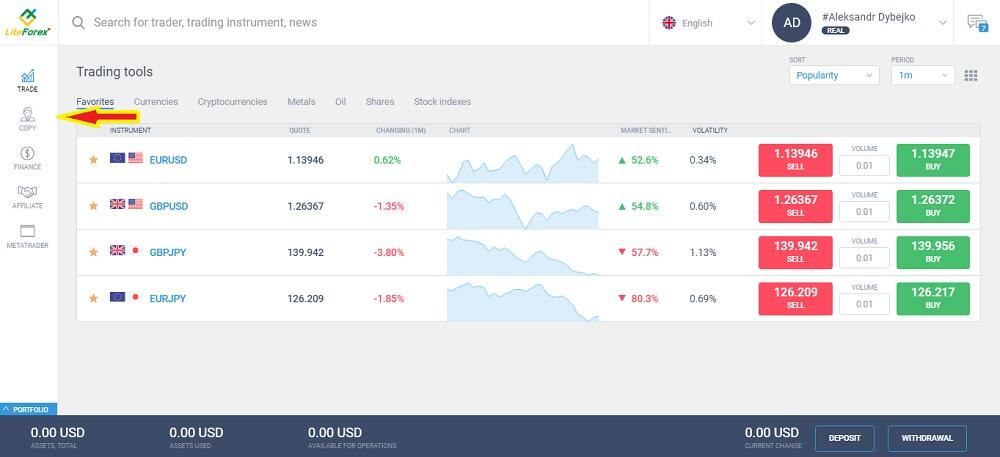
In the Copy menu, there is a list of traders, which can be sorted by profitability and risk. The investor will be also warned about the risks separately. Here you can also see a graph of the trader's profitability for different periods, the number of trades and other statistics, including the number of subscribers to the signals. Anyone who wants to make sure they are dealing with a real trader can contact them in an online chat.
Thus, another advantage of social trading with a broker in comparison with the platforms is that it's really easy to use. Copying can be done in a few clicks, no need to switch between several services while controlling the main account in one terminal with one broker. Read more about social trading in this article.
Pros. For the investor, this is a passive earnings option without the risk of the trader abusing the money.
Cons. The risks are the same as in PAMM-accounts: there is no guarantee of profit. There is still a chance that the ranking of the traders of a B-Book broker is fake. Also, automatic copying does not relieve the trader from the need to monitor the account and evaluate the correctness of the signal.
3. PAMM accounts
How it works. The term PAMM (percentage allocation module) was introduced a few years ago by one of the leading brokers who managed to organize a trading investment system. Now, this term is used for PAMM accounts everywhere.
A PAMM account is an investment service that allows an investor to transfer money to a managing trader and earn on a passive investment. The principle of operation of the PAMM account is as follows:
- The manager opens an account of the required type (if the service is provided by the broker) and invests a certain amount of funds. In order to attract investors, they will need to show some kind of trading history, so the managers have to invest their own money first.
- The investor estimates the performance of managers and makes a decision about investing. Each investor has their own assessment criteria: someone is attracted by stable equity (deposit curve), others by moderate risk statistics or a quick large profit. You can distribute your money among several managers. Technically, the money is not transferred to the manager’s account, but rather the investor connects to the manager’s account, opening access to their money.
- The manager trades and the profit is distributed between the manager and investors in accordance with the amount of money contributed.
Investment conditions are set by the manager and indicated in the offer. The essential items of the offer are:
- minimum investment amount
- trading period
- remuneration conditions of the manager
- penalty for early termination of the offer (if any)
- liability of the manager
frequency of reporting to the investor.
The penalty is a complicated matter. Despite the fact that it is not possible to instantly withdraw money from a PAMM account, there is no penalty for early withdrawal as such. It would be reasonable to ask the chosen broker for details.
From theory to practice. It is quite easy: you need to open an account with a broker that offers a PAMM account service, read the offers, select traders, and press the Invest button. After this, you keep track of the performance of the accounts and actions of the trader. It is good to have the option of early withdrawal of funds.
The profit is distributed as follows. Suppose a trader has received $1,000 to manage and earned 10%, i.e. $100, in one month. The offer provides for a commission of the managing trader in the amount of 35%, therefore, the earnings of the investor will amount to 65% or $65.
Pros. Not all traders have the time or desire to trade themselves. Many brokers present PAMM accounts as a passive earning option for those who do not have an in-depth understanding of trading. I disagree because it is impossible to evaluate the manager’s strategy and risks without knowledge. Therefore, the only advantage is the opportunity to earn money without doing anything. For a PAMM account manager, this is an opportunity to work with large capital and earn a commission.
Cons:
- In case of loss, the managing trader is not liable. Because there are no consequences to losing other people's money, they may be less responsible in their trading.
- Risk of fraud remains. For example, the trading history can be fake (investor’s password is not always helping) or the entire managers’ ranking can be fake. There are a lot of stories like this.
- There are problems with the early withdrawal of investments.
The PAMM account model is criticized for being abused by a large number of scammers, while brokers do not take any action to check the adequacy of managers, so I personally lean towards copy trading system that I described above.
4. Participation in Forex tournaments and contests
How it works. Almost every broker offers traders to participate in tournaments, although we can hardly call it earnings. 99 times out of 100, participation in tournaments only gives the trader bonuses that can be spent on trading but cannot be converted into real currency. Tournaments can be held daily, weekly, monthly, etc. depending on the broker's policy. In most cases, tournaments are held on demo accounts, but there are contests for acting traders (which can participate in tournaments on demo accounts as well) and partner competitions.
Advantages of competitions:
- There is still a chance to get real money (in exceptional cases).
- Knowing your own strengths. Even on a demo account, competitive trading stimulates and causes excitement. You can do a comparative analysis of your strategy with the strategies of other traders.
By taking part in Forex tournaments and contests, the trader loses nothing but time. The chance to win is pretty good: professional traders prefer real accounts with real money, so most likely you will have to compete with inexperienced beginners, half of which will bail before the tournament ends.
From theory to practice. A good example is the Best of the Best contest for demo accounts held monthly by LiteFinance. Its general conditions are as follows:
- Participation is completely free, no deposit is necessary!
- The tournament starts from the 1st of each month and lasts until 23:59 of the last day of the month. Each trader who submitted an application for participation in the contest in the current month is automatically added to the list of participants in the contest, which starts on the 1st of the next month. Each trader can participate in the contest an unlimited number of times, but only one account is allowed to be registered in the current tournament.
- Each participant receives a $5,000 on their demo account, and they can trade any instruments without any restrictions on strategies (if they comply with the Client Agreement).
- The prize fund is $10,000 distributed among the 5 winners: $4,000 for the 1st place, 2,500 and 1,500 for the 2nd and 3rd place, $1,000 for the 4th and 5th places.
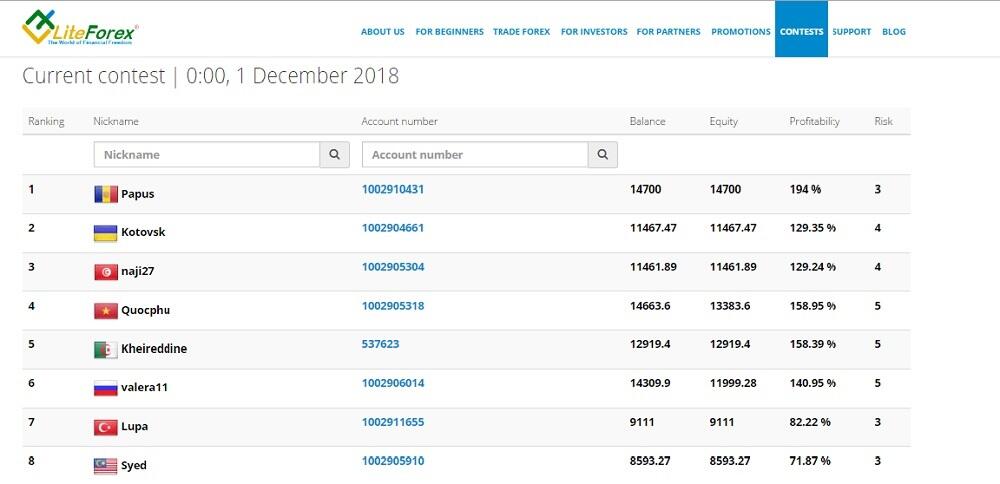
The trader receives the prize money to their real trading account, but it cannot be withdrawn. It is to serve as a springboard for trading and provide an opportunity for the winner to take part in the Social Trading service. But unlike the demo account, the profit from the prize money can be withdrawn as real currency.
Traders who have active accounts can also take part in this contest, but there are other offers for them too. You can read more about them here.
Pros. No financial costs, there is a chance to get a reward for winning. The atmosphere of healthy competition calls for more informed and responsible decisions.
Cons. The probability of winning is slight; the risk of losing time remains. However, if a trader is already focused on gaining experience on a demo account, this is not really a disadvantage. The psychological risk remains: getting a bonus can be a trigger, after which a potential trader will become a client of the broker. If we are talking about dishonest brokers, the tournament is a marketing ploy designed to trick the trader into making a deposit.
5. Prop trading
How it works. Prop trading is one of the forms of cooperation between the company and the private trader. The company provides the trader with investor capital under certain strict conditions. In other words, investors give money to prop companies, which look for prop traders to multiply this money.
Such cooperation is different from trust management in that the trader bears the risks only within their own capital, although they manage both their own money and the broker’s money at the same time. The trade ends when the trader’s own funds face margin call.
Basic principles of prop trading:
- The trader must deposit their own funds.
- The trader is always under the control of the company's risk manager and adheres to the risk management strategy developed by the company.
- The trader gets the profit next month after the reporting month, which insures the loss of future periods (optional).
On average, a prop-trader can be managing 20-300 thousand US dollars’ worth of investor money.
You have two options to become a prop trader: win tournaments or provide a statement for a certain period (in order to prove your skills, but this option is rare). This is how it usually happens: a potential participant of the Combine (a term referring to every selection; their number is unlimited) pays an entry fee and gets access to a demo account with strict requirements for profit, drawdown, number of trades, etc.
The trader must become the best and fulfil the requirements of the account, after which a contract is concluded (if the selection rules are violated, the trader is removed from the competition and must pay the entry fee to the selection again). After receiving money for management, the trader must strictly fulfil all the conditions. If the money is lost and it falls under the breach of contract (for example, the first month without a loss), the trader must return to the beginning of the quest.
Examples of conditions for prop traders:
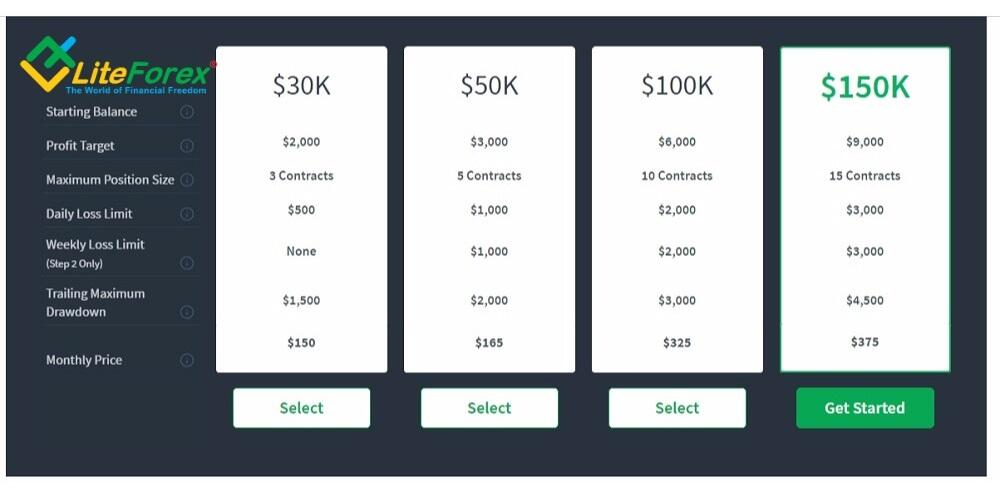
These are the conditions of one of the world's most famous companies, TopStepTrader. The entry fee used to be $250, now there no information. There are reviews that say the Combines here are very reliable, but recently the conditions have become so strict that it is difficult to pass them.
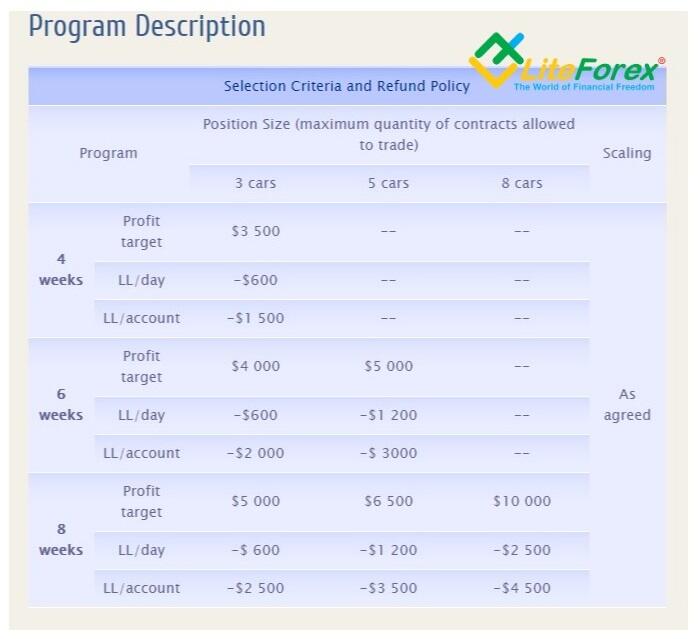
Here the fee for participation in the selection is $175-285 depending on the duration.
From theory to practice. The general principle of participation is similar to tournaments: a trader needs to register with a prop company (each company has its own verification requirements), read the rules and requirements of the tournament, pay for participation in the Combine and wait for the start. Some prop brokers offer prop trading too. Here is an example of stage-by-stage participation in the selection at one of the companies:
- The first stage is the qualifying stage, which lasts 20-30 days. During this time, the trader must earn a predetermined amount of money on a demo account while meeting the requirements for the maximum daily drawdown, daily loss (loss limit), and the minimum number of profitable days. In case of violation of the requirements, the trader’s participation in the selection ends.
Interesting fact. There are many strategies online that can help you pass the first qualifying stage. For example, a trader can have a successful trade on the first day and earn the amount required for the entire period, after which they can stop trading or trade with minimal risk.
- The second stage (for those who passed the first stage) is trading with even more stringent conditions mostly not for profits, but on compliance with risk management: trading with stop signals, no averaging, no trading during news releases, taking 50% of profit upon the occurrence of certain conditions, etc.
Important note. The conditions of prop companies do not always say that there is a second stage. This requirement is sometimes veiled by the phrase “You must prove your risk management knowledge,” and contains no information as to how the knowledge is to be proved and what the conditions of the next stages are. According to traders, qualifying rounds can last 2-3 months until the trader gets real money to manage. Moreover, the prop company may make unfounded claims, and the trader must be prepared for the fact that they will have to firmly defend their position. Some manage to prove their case and there are real examples of those who passed all the selections.
Pros:
- For trader. If a person already intended to make money by trading, they lose nothing because they do not risk someone else’s capital. On the contrary, due to the fact that their deposit increases by several times, they can earn additional income. Not everyone has a large amount to start and get more opportunities, and prop trading is one of the options for getting it. There is also a psychological aspect: it is easier to trade with other people's money than with your own.
- For prop company. The company charges commission on the money earned by the trader.
- For investors. They get passive income subject to the good performance of the prop trader.
Cons:
- For trader. It is difficult to get the position with the prop company (broker), strict conditions for the use of investor money, a high risk of not being selected and losing the entry fee.
- For prop company. Its reputation is important for it, so a prop-trader needs to be raised. When a person becomes a professional, they prefer individual trading (I’ll write more about this in my next article on collective trading and affirmations).
- For investor: money will not be working.
Important note: there are many so-called “prop companies” online that offer paid training courses, promising subsequent employment and other bonuses. Prop companies select the best traders but do it for free (entry fee is for organizational purposes and paid training is not provided). Therefore, I would not recommend considering these courses.
6. Affiliate programs
How it works. Almost every broker has one. This is active-passive earning based on attracting clients and getting some of their trading costs. The broker can pay either a fixed amount for each referred trader (subject to a certain trade turnover), or part of the spread (trading costs of the referred client). You can build your network.
From theory to practice. Each trader or other interested person can take part in the affiliate program by registering as a partner on the broker's website. After registration, the partner receives free information materials that can be used at their own discretion:
- A referral link sending a potential trader to the broker's website.
- Banners that can be placed on your information resources.
- Informers. They are small useful applications, which also lead to the broker’s website.
- Business cards to be handed out in live communication with a potential trading audience.
- Templates for the design of individual website pages (wallpaper, avatars, etc.).
The partner is not limited in the methods of attracting clients, provided that these methods are legitimate and do not cause reputational damage to the broker. They can include, for example, direct communication with potential clients at specialized events, in social networks, etc. They can also include the development and promotion of your online resource (website, video channel), telling about the benefits of your broker.
Types of affiliate programs:
The multi-level network providing for a fixed fee or a percentage of the income of the referred trader. A partner can attract potential traders or build a multi-level network of sub-partners.
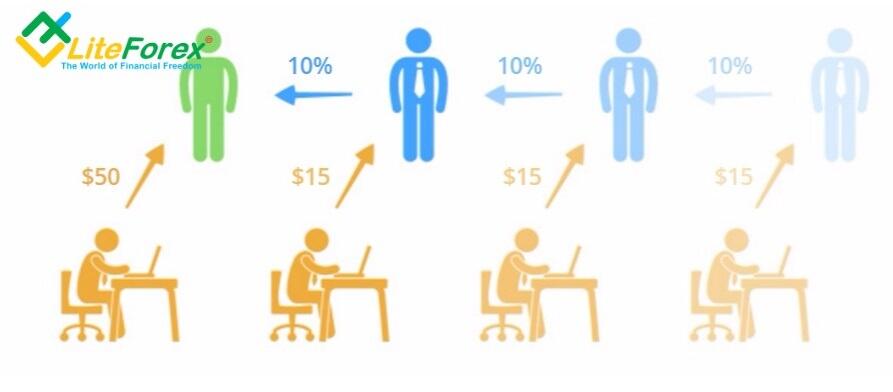
- Rebate. An affiliate program where the partner reimburses part of the trading costs to the referred trader from their earnings. For example, if out of $10 of the trader’s cost, the partner gets 30% ($3); they can return 0 to 100% of this amount to the trader.
- Regional office. This option will be discussed below.
Important note! In addition to partner earnings, LiteFinance also offers to take part in the partner competition, which is held monthly from the 1st to the last day of the month inclusive. The winners are the first 30 people to get the largest amount of commission in a month. The prize amount is available for withdrawal in cash.
To anyone interested in this option, I recommend the article Affiliate Programs: Types and Algorithms of Earnings. Here you can find out in detail what affiliate programs and earning options are available, how to become a partner and create your own affiliate network, how to work with referrals and much more.
Pros. Additional passive earnings subject to stable trading of your referrals.
Cons. It is difficult to find potential clients and even more so to convince them to stay with the broker and trade. This may take so much time that it would seem more rational to invest it directly in the trade.
7. Sale of signals
How it works. If a trader uses signals, then why not sell them? The question is how to organize it and most importantly - where to look for buyers. The first problem is easier to solve. To generate signals, you can use indicators, fundamental analysis or automatic analytical applications. For example, the Autochartist application for MT4 is an automatic trading signal program for MT4. It recognizes the appearance of patterns (graphical analysis figures), finds key price levels and determines the likely direction of the trend.
From theory to practice. Practical implementation of this idea can be divided into two stages: the generation of signals and their delivery to the investor. Signals can be created in two ways:
- Manual generation of signals. What strategy the signal provider will use is their own choice. You can use anything from technical and fundamental analysis to insider information. A signal is the simultaneous coincidence of several factors, which makes it possible to predict with a high probability the further direction and strength of the price trend. The suppliers of successful signals are successful traders or teams of traders, for whom earnings on the sale of signals is additional.
- Automatic generation of signals. Using advisors that mark the most successful entry points or special programs. Also, we have already mentioned the Autochartist application, which you can read more about on autochartist.com.
Implementing the second part of the task is more difficult. There are several options for organizing a sales scheme:
- Targeted work with potential traders on forums or social networks in order to form an audience interested in signals. Signals are sent to all subscribers.
- Creating an analytical blog website that attracts readers with its content and invites everyone to subscribe to a newsletter. Signals are sent to the phone or email. It is also possible to publish signals in the blog itself. However, here we can talk only about long-term trade since the intraday trading every minute counts and the information simply becomes outdated.
- Create your own mailing service. There are several options for implementing the idea. For example, it can be a platform with embedded signal alerts (the cost of such a platform only for binary options starts from 30 thousand dollars. The signal provider is the platform developer). A simpler option is to order the development of a mailing service on freelance exchanges.
- Work for a broker. Most often, the signals are offered by the brokers themselves as a separate service or an attractive addition to the trading package. Conclusion: you need to convince the broker of the effectiveness of their signals. How do you do it? Create a convincing portfolio of your work with detailed statistics and go directly to broker representatives.
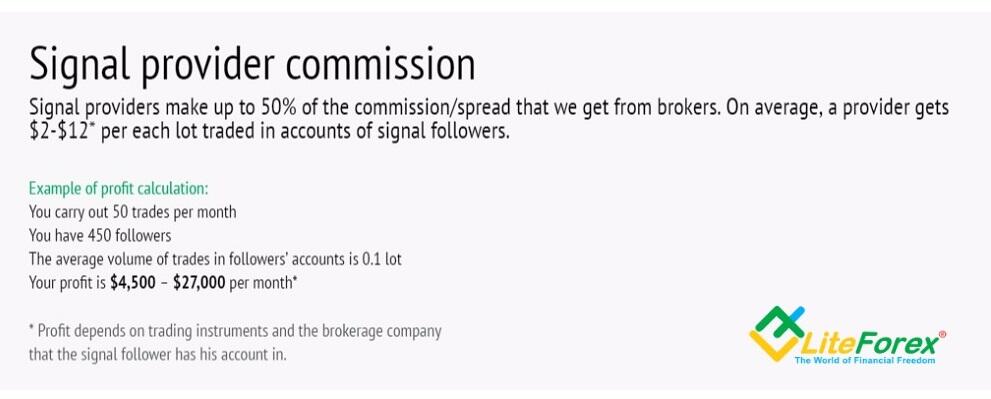
In addition to brokers, signals are also supplied by specialized companies, although there are not many of them. You can subscribe to them, and vice versa, you can become a supplier of signals for such a company by proving your skills.
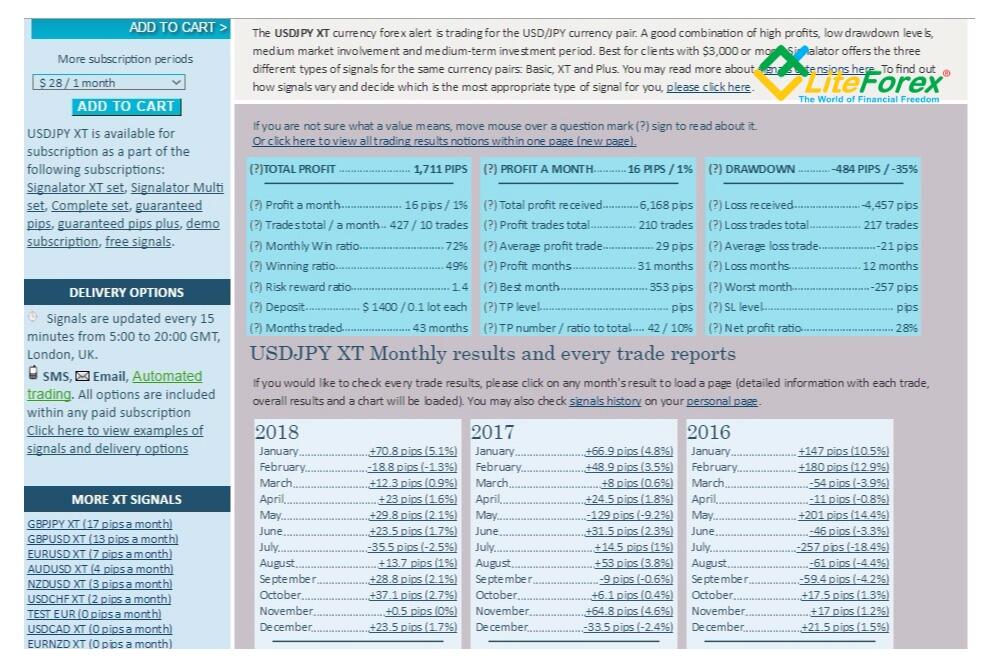
Recently, the service of sending signals has given way to social trading, which uses the same principle of copying, only in automatic mode.
Pros. The opportunity of getting additional income.
Cons. Time spent searching for customers could be used more productively. The payback of the mailing service is questionable. Most services aim to get money from a client (for example, why do services not have real trade statistics on these signals, but only performance statistics?). The service can be used only by novice traders who do not know how to use Autochartist, scripts or advisors that generate signals automatically.
8. Writing advisors
How it works. This earning option has two options for implementation:
- Owner Seller. Professional traders have one or several established trading systems, which can be automated and sold.
- Contractor. You do not have to be a professional trader. You need to know the basics, a programming language (for example, MQL for Metatrader) and write advisors to order based on the design specifications.
In the first option, the trader orders (or writes) an automatic system according to their unique tested scheme, accumulates a trading history on it, and then offers it on forums, his website, mailing lists or offers the product on behalf of a broker. The average cost of writing scripts on freelance exchanges is from 10 US dollars, indicators - from 30-50 US dollars, advisors - 50-100 US dollars and more, refining an indicator (adviser) - from 30-50 US dollars.
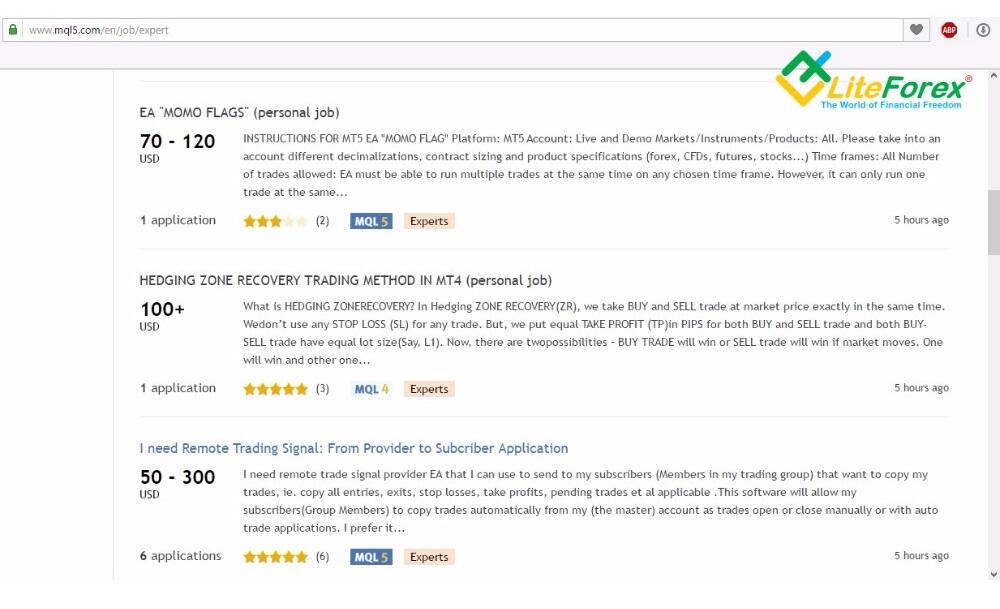
The second option (Contractor) can be described as indirect since the person does not earn directly on Forex and its tools. Nevertheless, in order to understand the requirements of the customer, the coder must be able to read the design specifications, therefore knowledge of indicators and advisers is necessary. You can offer your services on specialized freelance exchanges.
From theory to practice. Writing a robot on your own is not as difficult as it seems at first glance. Professional implementation of a trading system into an automated adviser from scratch will require deep knowledge of the MQL programming language. But you can do without it, for example, using the following ideas:
- Refining a developed robot template (so-called script). Risk management settings, assignment of the Magic number, alerts, position opening by signal, autolot, trailing, robot error handling - in MQL, these are similar commands used by most of the advisors. The trader needs to add the indicators directly to the finished template and specify the parameters for opening the position. Knowledge of MQL is also required here, but working with a template is much easier.
- Using advisor constructor programs that do not require knowledge of MQL. Examples of such programs:
- System Creator. One of the few professional programs that allow you to create dozens of various robots, test and optimize them. This is a full-featured program that combines the constructor, tester and simulator functions in one platform. I could write a separate review on the functions of the program. Its only disadvantage is probably its complexity, you can hardly figure it out in a day by yourself.
- Strategy Master FX. The paid version of 2018 is considered most adapted for the current market, although we cannot say this for sure. But even the developers themselves admit that the 2013 and 2016 versions are already obsolete due to the use of some filters, which are irrelevant today. Functions: creating advisors with options to place up to 42 orders, setting stop signals invisible for a broker, you can build in your own unique indicator, which is not basic for MT4, you can create scalping and grid strategies, etc.
- Ensed COR. This is another paid constructor that works with any custom indicators. However, the subscription has been temporarily suspended by the developers.
The first option gives a lot more opportunities to the developer, allowing them to create a more advanced and high-quality product. The use of constructors is simpler, but they use trading patterns and the trader needs to select a successful coincidence of several factors by experiment. However, constructors are great for understanding the principles of creating robots.
- Important note! The use of constructors only allows you to generate a program that works perfectly on historical data. Its launch in the current market situation does not guarantee a profit in the future. If the robot, which gave positive results on historical data, brings a loss, it needs optimization.
The second option is to delegate the task of writing the advisor to a professional programmer. But it is not so simple:
- You need to be able to draw up unambiguous design specifications. Otherwise, you will have to pay for refining later.
- Your advisor needs to be optimized, and this “maintenance” also costs money. And if you turn to another developer for optimization, it might not get better.
- The responsibility lies with the customer. If the robot does not work – tough luck.
You can easily find contractors on freelance exchanges and here I again recommend MQL5. The platform acts as an intermediary between the customer and the contractor, excluding the possibility of fraud, and also acts as an arbitrator in disputes. The statistics of freelancers who are ready to take your order contain information about delays (but this happens relatively often in programming), the number of completed orders and satisfied customers, etc. This article will tell you more about how an order for a trading advisor is made up and what the stages of interaction between the customer, the contractor and the intermediary platform itself are.
Pros. Additional income. You can never know if your advisors will sell or not. But if the robot is really successful, it can be used for your own purposes. And if you have buyers in addition, it’s even better!
Cons:
- No buyers. Why bother buying an adviser when there are dozens of free ones online? Plus, sometimes a developer takes a free version of the adviser, modifies it slightly (for example, adds an indicator) and sells it.
- Responsibility. It’s simple for the buyer: if something does not work (and it doesn’t matter whose fault it is), the seller will go straight to the blacklist. It’s not easy to find new customers with a bad reputation.
- Optimization. No matter how ideal the adviser is, it must be constantly optimized. The intellectual product of the developer quickly becomes outdated and instead of earning and developing new strategies, the trader is forced to engage in optimization.
Writing advisers to order looks more promising compared to their development. But, in my opinion, it is still easier to develop advisors for yourself and make money on trading. At least it is less time-consuming.
9. Holding webinars and seminars, developing training courses.
How it works. The description speaks for itself. Possible formats:
- Development of own unique training course for traders with different levels of knowledge and step-by-step sale of its sections in order to motivate to buy the following parts. Sales channels: social networks, your own website or partner websites, video blogs, events, etc. The budget for promotion varies significantly.
- Creating a school (it can be an online school or courses with live communication between the teacher and students. Both options have their own advantages and disadvantages). The performance will depend on the marketing policy (including the reputation of the teacher) and on how much the audience is satisfied with the course.
- Creating a video channel with analysis of specific trading cases and strategies in real trading mode.
You can think of many such options. It is important to answer the following questions:
- What product will be sold?
- What is the target audience and what are the sales channels?
- How much will be invested at the promotion stage?
This type of earnings is called info business and there is a lot of information about it online.
From theory to practice. It is hard to give any specific recommendations since everything depends on your imagination, skills and financial resources. To create your own school, it is enough to rent a room with computers and trading software, find a teacher (or become one yourself). The success of your own training course will depend on the unique methods of teaching and presenting information, therefore I cannot make any recommendations here. There is no template and you need some luck, although online advertising and promotion will play an important role.
Read about creating a video channel in the next section.
Pros. Additional earnings and professional reputation in the eyes of the audience.
Cons. There will always be satisfied and dissatisfied clients. In order not to lose reputation, you need to be able to work with negative reviews and work your way through a large amount of information. Recently, the interest of traders shifted to paid courses and webinars, as there is a lot of free information online. In addition, the audience’s confidence has declined: the image of a successful trader is associated with a professional in trading, and not in public speaking.
10. Creating and posting on your own YouTube channel
How it works. People are divided into visuals and auditories: while for some, it is more convenient to perceive written text with their eyes, someone prefers to watch videos and hear the voice. Another advantage of audio and video is the option to learn, for example, while on commute. Textual presentation of information is convenient for those who read it on a stationary computer, but when you only have a smartphone at hand, it will be more efficient to use audio and video feed.
Development of video and audio content is a separate line of earnings and promotion of your own product. And for now, YouTube remains the platform where it’s easiest and most effective to promote your own channel.
From theory to practice. Creating a channel is simple: open YouTube, upload a video and accept the offer. You can manage the channel only from your Google account.
Creating a channel is a matter of a few minutes, it will take another 1-2 hours to understand the channel's functions and options (video download formats, delayed publication, adding video recorded using a webcam, monetization, etc.). A more difficult task is sharing your video with your entire YouTube audience. Below are five factors affecting the promotion of the channel:
- High-quality content. Design is secondary in comparison with the quality of information. It is important to give information that will catch the interest of the viewer.
- High-quality video and sound. The user can be using audio-only, so everything is important in voice recording: intonation, sound tone, speed, etc. You cannot use parasite words.
- Channel optimization: setting up the home page and playlists, design, linking with Google Adwords and Google Analytics, tagging.
- Video optimization: SEO header design, tips, subtitles, logical and useful description structure.
- Interaction with video (engagement level analysis): likes, comments, viewing duration in minutes, audience retention, etc.
Several useful channel design tools that attract visitors:
- Channel description (up to 1000 characters, here you can give a short description, links, and the video upload schedule).
- Logo (branding and copyright protection).
- Thumbnails that attract visitors. You can add them after verifying your account.
- Channel icon and background image (wallpaper).
- Channel trailer - the first video that the visitor sees. 10-15 seconds is enough.
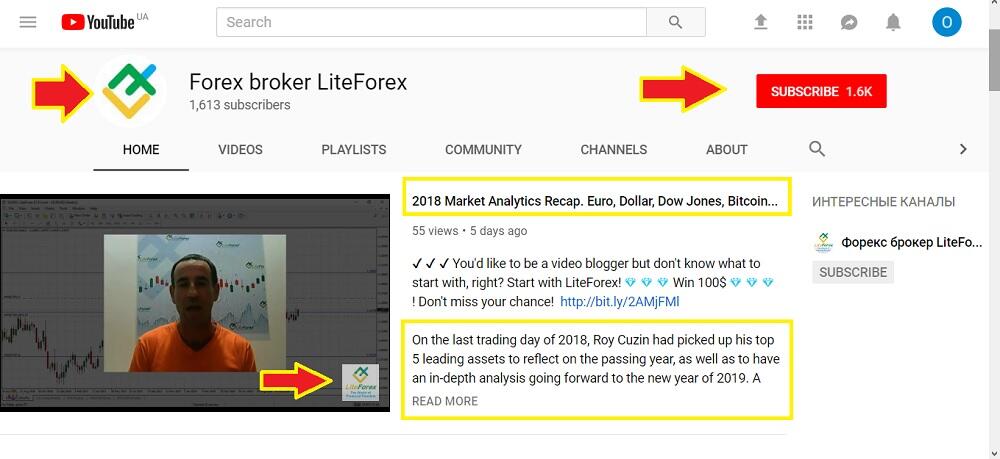
The above is enough for the successful launch, besides there are many tutorials on the design and optimization of the channel online. Its further progress depends on the methods you choose. This could be a viral link to the channel, internal optimization, etc. The goal is to get as many comments and likes as possible, increase viewing time, etc.
Pros. There is a concept of transcription in Internet marketing - the transition of information from audio and video format into text. There is also the opposite: recording video and audio material based on the text. Your own video channel is an additional income tool, which is successfully combined with blogging and webinars. Using skillful promotion, it will be faster and cheaper to promote the channel than an online resource with text content.
Pleasant news from Litefinance (link to the channel) for all video content creators: each person can take part in the monthly competition of video bloggers with a prize fund of $100. To win, you need to make a 5-minute video on trading and register on the broker's website. The author with the most likes, views and comments is the winner. You can find more information about the conditions of the contest here.
Cons. You need oratory, acting and public speaking skills, you must be able to record high-quality videos and edit them. While text can always be edited and corrected, it will take much longer to edit a video. The video should fit perfectly into the channel theme, capture the viewer's attention from the first seconds and ultimately answer their questions. In addition, you need feedback from the audience, which takes time away from the main tasks (in particular, trading). The person must be a professional both in trading and communication. Such talents are rare.
11. Writing analytical articles
How it works. Both brokers themselves and independent analytical portals are ready to pay professionals for writing articles, strategies, ideas and other materials. Someone pays real money, someone offers bonuses that can be converted into money for trading. Subjects vary depending on the website. The broker is interested in the growth of website traffic, the trader - in promoting their name. The knowledge of other languages and skills in SEO writing (key insertion rules, LSI, stop words, keyword density, etc.) will be an advantage.
From theory to practice. At first glance, it’s pretty straightforward until you actually try to do this in practice. I recommend working in two stages:
1. Searching for customers who are ready to post articles on a paid basis. Before you write anything, you need to understand the format of the customer and know their design requirements. It is nice to have a portfolio.
Possible customer search channels:
- freelance copyright exchange. Here you can find orders for writing a series of texts on trading, but this search channel is not the best one. You need to compete with other contractors who may be intermediary dumping companies. A professional will not write for a low price (why would they bother?), while the customer does not always understand the quality of texts preferring a lower price. Plus, there is the exchange’s commission, and the orders are often one-time offers.
- Search for intermediary companies. First of all, I recommend paying attention to companies engaged in the turnkey development and promotion of websites. They are approached by customers who want a ready-made product: an analytical portal, an investment blog, or a website for promoting any services. Such companies will be interested in a professional content manager.
- Direct distribution of your portfolio with the offer to potential customers: brokers with active blogs, investment blogs of private traders, rebate services, analytical news resources, etc
- Passive attraction: creating a social network account that may be of interest to a potential customer. The LinkedIn business network is an example.
2. Finding out the customer’s requirements (getting clear design specifications). Even if the customer does not know what they want, the contractor should get all the information they need with the help of leading questions. Otherwise, the customer might not accept the article. All discussion should be conducted in correspondence so that there is evidence in case of claims. What you need to find out:
- Subject of the article, form, structure.
- Size of the article and each section in particular.
- Requirements for the keys (if necessary), uniqueness, stop words, and keyword density.
- Design requirements for pictures: uniqueness, size, name, watermarks, etc.
- Terms of delivery of the article.
What additional knowledge you may require:
- How keys are selected and the semantic core is built.
- What anti-plagiarism programs exist and how to ensure the uniqueness of the text.
- What the rules for formatting headings, subheadings, lists, etc are.
- What AIDA is (for selling articles) and how to prepare texts for this model..
As practice shows, serious customers are interested in professionals, so their requirements are minimal. The articles have to be interesting to readers.
Pros:
- Additional earnings.
- The opportunity to declare yourself as a professional to a wide range of traders and then sell your name as a brand. If a person is recognizable, then it will be easier to find potential webinar listeners or buyers of advisors/scripts.
- Psychological distraction. Writing thoughts on paper is not only the option for a change of activities (rest from trading), but also the chance to analyze your actions and assess your knowledge. A trader gathers their thoughts in a text, putting them in a structured form, which helps to make a decision and figure out where to go next. The realization that your knowledge and experience are valuable and the recognition of others (readers) will give you the strength to go on.
Cons. You need to be able to write well, read the audience, give accurate predictions and be able to respond to criticism. This is a kind of talent that not everyone has.
12. Blogging
How it works. A blog can have several goals:
- Promoting a single product (training course, for example).
- Attracting potential traders through affiliate links.
- Presenting as a platform for discussing any topics or a source of useful information.
- Placing banner ads of brokers for the target audience.
Often the blog owner is a part-time trader and publishes reports on the public investment portfolio as a tool to attract funds for trust management.
From theory to practice. It all starts with developing an action plan, which is essential. First, you need to answer the following questions:
- What do you want to achieve and when? What is the estimated budget for the start and for the maintenance of the blog?
- What will be the subject and the target audience of the blog?
- What tools will be used to promote the blog? Will you need to attract additional specialists for this purpose?
- What channels will be used to attract readers to the blog? What will you earn on?
- What is the approximate return on the blog (how long will it take to get to the breakeven point)?
- How does this blog differ from similar websites of competitors: what are its strengths, why will it be more interesting, etc.?
The return is the most important factor. It may take 6 months or more before the website starts to bring some tangible income.
How to create your own blog:
- Select the hosting and domain names. There are free hosting services, but if you plan to create a full-featured blog designed for a large audience, spare some money. Selection criteria: hosting specifications, website speed, backup, etc.
- Choice of CMS - content management system (WordPress, OpenCart, Joomla).
- Blogging. A real blog website must provide stable unique content: texts, videos, audio recordings and images. It is desirable to develop the semantic core before starting the blog (an ordered set of words that most closely matches the subject of the website) and at least 50 topics.
The next stage is website promotion in search engines, social networks, and this is a topic for a separate section. Learn more about how to make money on blogs in the article on affiliate programs, a link to which you will find in the 4th subsection.
Pros. With the right approach, the trader earns not only on advertising but also makes a tool (product), which costs money too.
Cons. You need to constantly update the website and promote it. You may not break even.
13. Creating a brokerage company
How it works. Creating this type of business from scratch is troublesome and maybe is impossible for an average person. In addition to concluding partnership agreements with liquidity providers, banks, regulator fees, etc. you need to open offices in different countries and run a marketing campaign.
There are easier ways: opening a representative office of a foreign broker. For example, a company is interested in opening an office but does not want to engage in staff training and invest. The organizer needs start-up capital (for organizational costs) and a database of traders. Cooperation options:
- The broker pays a fee to the organizer for each attracted client.
- Introducing Broker (IB). The organizer attracts traders, prepares documents, is responsible for financial transactions and website development. The technical organization of trading lies with the broker.
- White Label. For a certain fee, the organizer accepts the technical operation from the broker and is engaged only in the servicing. The organization of the entire trading process from deposits to withdrawals of money lies with the organizer.
There is another option: creating your own business from scratch, which will be based on the software development of other companies. UTIP, MetaQuotes, and others offer such services.
From theory to practice. It is hard to give any specific recommendations. Creating a brokerage business, as creating your own Internet resource, begins with planning. I would advise first to talk with those who have already tried to create something similar on a smaller scale. For example, a mailing service or an intermediary company. You can also contact a broker directly as they are often interested in new representatives.
Pros. This is a full-fledged large-scale business that can bring profit incomparable with the income from trading.
Cons. Considerable financial expenses. Although judging by the number of brokerage companies, we can conclude that this is quite a profitable business.
Conclusion
I am sure that if you think hard enough, you can come up with a few more options for earning on Forex. Someone wants to make money will always find opportunities. As practice shows, professional traders can combine several types of earnings. For example, besides trading, I invest in PAMM, post to my own blogs and do analysis. How do you earn?
Share your ideas in the comments!
You can become an author in the traders’ blog, but of course, you need trading experience and relevant knowledge that you can share to get paid for the written materials.
P.S. Did you like my article? Share it in social networks: it will be the best "thank you" :)
Useful links:
- I recommend trying to trade with a reliable broker here. The system allows you to trade by yourself or copy successful traders from all across the globe.
- Use my promo code BLOG to get a 50% deposit bonus on the LiteFinance platform. Simply enter this code in the appropriate field when funding your trading account.
- Telegram chat for traders: https://t.me/litefinancebrokerchat. We are sharing the signals and trading experience.
- Telegram channel with high-quality analytics, Forex reviews, training articles, and other useful things for traders https://t.me/litefinance

The content of this article reflects the author’s opinion and does not necessarily reflect the official position of LiteFinance broker. The material published on this page is provided for informational purposes only and should not be considered as the provision of investment advice for the purposes of Directive 2014/65/EU.
According to copyright law, this article is considered intellectual property, which includes a prohibition on copying and distributing it without consent.