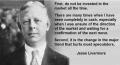
Devaluation may seem a disaster for a resident of the country in question as the rapid decline of the rate means prices go up, which devalues any savings one might have. However, devaluation is not always accompanied by inflation. There are cases where the reverse process - revaluation - turned out to be disastrous for the national economy. Devaluation and revaluation are tools to adjust the investment climate and balance of payments, provided that they are controlled. If the devaluation takes on an avalanche-like character, it causes a crisis. Read all about devaluation and revaluation with real examples from history in this review.
The article covers the following subjects:
Devaluation and revaluation: definition, reasons, consequences
Devaluation is depreciation of the national currency against hard currencies, whose exchange rate is tightly controlled by the state (most often these are freely convertible currencies that are adjusted using market instruments).
Initially, devaluation meant a decrease in the content of gold in a monetary unit. At the time the gold standard was in place, the national currency was tied to the country's gold reserves. And if a country additionally issued a batch of paper money with its gold supply unchanged, then the value of each banknote decreased in gold terms, i.e. there was a devaluation of the currency.
Revaluation is the reverse process of devaluation, which means an increase in the national currency.
Devaluation and revaluation: how to make money on speculation
Devaluation is often confused with inflation. Both terms mean depreciation of the national currency. But inflation characterizes a change in purchasing power, i.e. depreciation of the currency relative to the goods - you can buy less goods for the same amount of money. Devaluation means depreciation of the national currency relative to other currencies.
Examples:
- Everything is fine in country A, but there is a large-scale economic crisis in country B. You cannot buy anything for the national currency and prices change every day. In country B, both devaluation and hyperinflation are occurring.
- There is deflation in country A, i.e. the currency is not getting cheaper, but, on the contrary, more expensive, and prices in the domestic market are falling. In country B nothing happens. Country B is experiencing devaluation of the national currency in relation to the currency of country A (it is logical: if one currency rises against the other, then the second automatically becomes cheaper in comparison to the first). But there is no inflation in country B, since the prices of goods in the domestic market remain unchanged.
- In country A inflation is at 10%, in country B inflation is also at 10%. In both countries, prices of goods increased by 10% and purchasing power in both countries decreased. But relative to each other, the value of currencies has not changed. There is inflation, but there is no devaluation.
According to another definition, devaluation is deliberate depreciation of the national currency by the central bank. If the rate is floating and falls due to market factors (supply/demand), this is called depreciation.
Devaluation is a relative concept, since the national currency can change its value in relation to one foreign currency but not another. Therefore, when we talk about devaluation without mentioning a specific currency, we mean it in relation to freely convertible (hard) currencies or to the currency basket (one example of the currency basket is SDR - special drawing rights that include the US dollar, euro, yen, British pound, and yuan since 2016). Sometimes you can see devaluation tied to gold, which is considered the standard of monetary value.
Devaluation can be controlled and uncontrolled. In the first case, the state deliberately weakens the national currency to pursue several goals (reasons for the controlled devaluation):
- Support exporters and automatically reduce imports.
- Accelerate inflation to the target level (characteristic of developed countries).
- Increase the competitiveness of the national currency.
- Reduce the costs of foreign exchange reserves to maintain the balance of payment.
In the second case, devaluation occurs on its own (only with floating rate, which is formed by supply and demand). The state can only admit its occurrence and, upon its completion, conduct a denomination or a hidden reduction in the money supply (withdrawing the depreciated currency from circulation without an official statement).
Reasons for uncontrolled devaluation may include:
- Inflation, which may also be a consequence of issuing.
- Prevalence of imports over exports and deficit of payments. The country does not have enough internal reserves to fulfill obligations to other countries and satisfy domestic demand for foreign currency.
- Capital outflow in case of instability in the country, imposition of international sanctions on the country.
Devaluation tools:
- Change in discount rate. To suppress devaluation and inflation, the central bank raises the discount rate. The discount rate is the refinancing rate of commercial banks. With an increase in the discount rate, credit resources become more expensive and the influx of the national currency into the real economy decreases. As a result, inflation is reduced and the depreciation of the national currency slows down. If, on the contrary, the central bank is interested in devaluation, it lowers the discount rate. In theory, a reduction in the discount rate should lead to an outflow of foreign capital (who wants to invest in a cheapening asset?). But there are examples when even negative rates retained foreign capital. One of them is the example of Sweden, which is described below.
- Refusal to maintain the national currency rate, for example, to buy out its surpluses in the international market with the country's gold and foreign exchange reserves.
- Manual change of the national currency rate. For example, the abolition of a fixed rate and the transition to a floating rate.
The consequences of devaluation depend on whether it is controlled or not. With the depreciation of the national currency, inflation rises, imports become less profitable, and capital outflows into more profitable assets begin. But the depreciation of the national currency is beneficial to exporters and the country's budget. We can also say that those who invested money in foreign currency and currency deposits in advance benefit from devaluation too, but this advantage is doubtful because of the inflation that often accompanies devaluation.
Revaluation is the strengthening of one currency against another. If currency A becomes cheaper (devalues) in relation to currency B, then currency B revalues (rises) in relation to currency A.
The purpose of a controlled revaluation is to reduce inflation and affect the balance of export-import operations. The tools are the same: increasing discount rate, decreasing the money supply, etc. The tool only works with a low inflation rate (up to 10%), i.e. when inflation is controlled and the state needs to reduce it even more. In the case of uncontrolled inflation, devaluation occurs.
Consequences of revaluation:
- “-” Export becomes less profitable, but income in foreign currency remains at the same level.
- “-” Tourist flow is decreasing as the country becomes more expensive. It is of fundamental importance for countries where tourism is the main source of budget revenue.
- “+” The flow of foreign capital is growing due to investors looking for more attractive assets in terms of profitability.
- “+” Prices decline in the country. As exports become less profitable, goods remain in the domestic market. Domestic supply grows, so prices go down.
- “+” Prices go down, so inflation is slowing down.
Revaluation may be accompanied by deflation, although not always.
The most famous examples of devaluation from the history of the world economy
Since devaluation and inflation are closely related, I will not dwell on examples such as hyperinflation in Venezuela or Zimbabwe. They are characterized by devaluation, which lasts more than one month. Devaluation and inflation are often followed by currency reform and all these cases from the history of the world economy are described in the article on redenomination. I will give examples where just one day was enough for the national currency to depreciate sharply.
1. George Soros and the Bank of England. September 16, 1992 went down in world history as Black Wednesday. On this day, George Soros earned more than $1 billion on one of his most famous frauds, while the Bank of England was forced to drastically reduce the value of the pound.
In the first years after the war, European countries came to the conclusion that it will be both easier and more effective to walk towards a brighter future together, especially when it came to competition with the United States. The idea of cohesion of economic relations was supposed to be the basis of such cooperation, but the countries were not going to lose their national currencies either. Just in case. In 1979, an agreement was concluded for fixing the rates of national monetary units of European countries against the German mark with an allowable deviation of no more than 6%.
Fixed rates meant the following for each country:
- A trade balance is important to maintain the course. Now no country could escape the need to trade with each other or establish customs barriers.
- There were two other options to support the exchange rate: by raising interest rates to attract investors and by buying up their currency for foreign currency - the reserve.
As always, Great Britain stayed away from all this, betting on its own competitiveness. This confidence was sufficient for 11 years, and in 1990, the country joined the agreement, pledging to keep the pound between 2.78 and 3.13 German marks per pound. The idea brought positive results. Inflation declined (which is logical, because they had to maintain the exchange rate by any means), and the European trade markets opened.
In 1992, it became clear that the British currency was greatly overvalued and the original corridor was incorrect. The rate was not declining only because Great Britain promised to hold it at all costs and the foreign market believed it. Everyone was sure that the Bank of England would continue to be ready to buy out the pound at the rate of 2.78 - 3.13. It is possible that the Bank of England would manage to exist on the reserves for a long time, if not for the sucker punch from Germany. A mere statement that the pound was overvalued was enough to cause a panic. By the way, some analysts are still convinced that this spark was ignited by Soros, who knew perfectly well how to manipulate the crowd by leaking informational at the highest levels of government.
By 1992, managing the Quantum Fund created in 1970, George Soros had enough money to influence international markets. After the head of the Bundesbank Helmut Schlesinger suggested in an interview to the Wall Street Journal that lowering German interest rates could negatively affect 1-2 currencies, Soros instantly knew what to do - go short.
- Example. You predict that Facebook shares will fall, but you do not have them. You borrow 10 shares from someone who has them, promising that you will return them in time. Those who own them should bet on the growth of shares. Otherwise it would not makes sense to lend those shares if they need to drop them quickly as soon as they start to fall. You sell the borrowed shares now at $100, thus receiving $1,000. Over time, the share price drops to $85. You buy 10 shares, repay the debt and have a profit of 150 dollars in your pocket. However, the person who lent these shares to you lost money - before they had 10 shares at $100 each, now at $85 each.
Soros did the same. While the market was mulling over the opinion of the head of the Bundesbank, he borrowed the British pound and sold it at the current exchange rate of 2.95 German marks. Soros realized that the pound was already at the lower end of the range thanks to government intervention, so its growth is impossible.
The speculators betting on the depreciation of the pound needed to beat the Bank of England with volumes of capital. If the Bank has enough resources to stay on track, speculators lose, if not, they win. On September 16, the Soros Fund increased its short position in the pound from 1.5 billion to 10 billion US dollars. While the whole of Europe was contemplating, Soros borrowed pounds and sold them immediately. In order to buy out pounds, the Bank of England had to use all of its reserves, but it was not enough.
In order to interest the global market rushing to sell pounds after Soros, the British government decided to raise the discount rate (i.e. interest on currency ownership). However, the avalanche effect could not be stopped. By the evening of September 16, the Bank of England admitted that it was forced to withdraw from the European agreement and release the pound into “free float.” By the beginning of the next day, the British currency fell 15% against the German mark, and 25% against the US dollar.
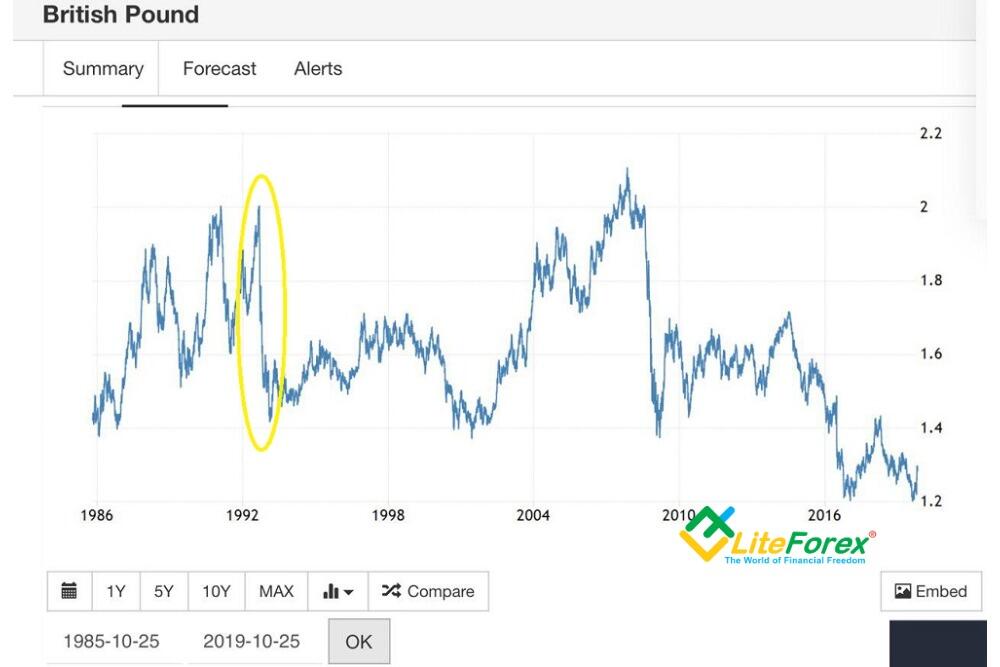
It took almost 15 years for the British currency to regain lost ground, but not for long. Since 1992, devaluation repeated only once again during the 2008 mortgage crisis, and quotes did not return to the previous level.
2. Revaluation that was not expected (Switzerland). If in 1992 the British currency was overvalued and its rate could not be supported by either domestic production or the reserves of the Bank of England, the situation in Switzerland in 2015 turned out to be the opposite.
In the eyes of foreign investors, Switzerland is a safe haven where you can always wait out a crisis. The country received this status due to a measured monetary policy, as well as certain distance from the EU. And it was this status that turned out to be a problem for the country. The economic closeness to the Eurozone forced Switzerland to maintain a tight exchange rate of its currency against the US dollar and the euro using manual centralized methods.
The demand for assets from foreign investors forced Switzerland to introduce a negative interest rate, the yield on short-term government bonds became negative (i.e. investors also paid extra for the ownership of securities), but this still did not save the country from deflation, which was inevitably followed by a decline in production. Switzerland's problem was its excessive export orientation to the EU countries - the USA accounted for about 12% of exports, but the EU countries - for about 50%, which imposed certain obligations on the country to maintain the franc.
The fact that the euro fell against the dollar added fuel to the fire, after which Switzerland abandoned the fixed rate that it had been holding since 2011. And on January 15, 2015, in one day, the franc went up by 41% against the euro, and by 38% against the US dollar.

Consequences of the revaluation of the franc:
- Such a strong appreciation of the national currency harmed Swiss exporters. And since the country was export-oriented, Switzerland's stock market crash amounted to more than 10%.
- Following the euro, other European currencies depreciated against the franc. It most affected the European banks whose loan portfolios were formed in francs, as their volumes in national currencies grew in proportion to the depreciation. For example, in Poland alone, the volume of mortgage loans issued in francs at that time amounted to about 46% of all issued mortgage loans. Polish and Hungarian banks were most vulnerable to the problem.
- After trade opened with a gap, deposits on open positions of traders who bet on the cheapening of the franc instantly went to zero. One of the subsidiaries of a leading Russian Forex broker in the UK filed for bankruptcy.
In both cases, the consequences of devaluation and revaluation were not fatal, which cannot be said about the spontaneous depreciation of money in developing and underdeveloped countries. Zimbabwe completely abandoned its currency for 10 years, Venezuela still cannot get out of a protracted crisis that has lasted for years, and the series of devaluation processes in Russia in the 1990s ended in default.
Playing with the national currency rate against hard currencies is the favorite pastime of China, seeking to win the US trade war. While the United States seeks to devalue the dollar in order to increase exports, China uses both of these tools. In 2005-2008, the rate was raised by 20% and analysts were inclined to believe that revaluation would continue. However, China, on the contrary, devalued the yuan in 2015, thereby forcing the quotes of currencies of other Asian countries to drop. Following this, commodity prices fell (the country is one of the largest importers, and devaluation makes imports less profitable), followed by shares of commodity companies. This caused outrage at the WTO and multinational companies, which lost millions of dollars on this and even gave rise to rumors about the beginning of currency wars between the United States and China.
How to make money on currency devaluation and revaluation
Be faster than the central bank and know the situation with the country's foreign exchange reserves. Suppose there is a current exchange rate of the national currency against the US dollar. It may decrease if investors begin to buy foreign currency massively. If the Central Bank is able to satisfy the demand for it, the exchange rate will not happen. If the central bank’s reserves are not enough, the foreign currency will become more expensive, and those who invested in it beforehand will earn.
Something similar happened with the Bank of England when Soros had guessed that the pound would be devalued. But it is only possible to make money this way if there are those who bet on the growth of the exchange rate. For example, it would be impossible to earn on the devaluation of the currency of Venezuela.
Another option for making money on controlled devaluation is to buy securities of exporter companies. Most often, quotations of securities of exporters of raw materials (oil, metals), agricultural products will grow.
Conclusion
Controlled devaluation and revaluation are tools for managing the country's economy by changing the exchange rate of the national currency. With their help, the state can raise or lower the investment attractiveness of the country, adjust the volume of exports and imports, etc. Uncontrolled devaluation (depreciation) of money is essentially hyperinflation, which can only be stopped through structural monetary reform.
If you have noticed any inaccuracies, want to add something or share your way of earning on exchange rate fluctuations, join the discussion in the comments!
P.S. Did you like my article? Share it in social networks: it will be the best "thank you" :)
Useful links:
- I recommend trying to trade with a reliable broker here. The system allows you to trade by yourself or copy successful traders from all across the globe.
- Use my promo code BLOG to get a 50% deposit bonus on the LiteFinance platform. Simply enter this code in the appropriate field when funding your trading account.
- Telegram chat for traders: https://t.me/litefinancebrokerchat. We are sharing the signals and trading experience.
- Telegram channel with high-quality analytics, Forex reviews, training articles, and other useful things for traders https://t.me/litefinance
The content of this article reflects the author’s opinion and does not necessarily reflect the official position of LiteFinance broker. The material published on this page is provided for informational purposes only and should not be considered as the provision of investment advice for the purposes of Directive 2014/65/EU.
According to copyright law, this article is considered intellectual property, which includes a prohibition on copying and distributing it without consent.