The blockade of the Strait of Hormuz is a double-edged sword for the US and Iran. It is turning into a battle for survival. Against this backdrop, the US is looking for ways to resolve the conflict. The Project Freedom operation is one such option. Let's discuss this topic and develop a trading plan for the EUR/USD pair.
The article covers the following subjects:
Major Takeaways
- The US is threatening Europe with new tariffs.
- The US administration is launching the Project Freedom operation.
- The global economy is resilient to shocks.
- Short trades on the EUR/USD pair can be considered at 1.1715.
Weekly Fundamental Forecast for Dollar
In 2025, it seemed that Donald Trump's tariffs — the most extensive since the 1930s — would cripple the global economy. However, the conflict in the Middle East demonstrated that something even worse could occur. Skyrocketing oil prices are painting an ominous picture of a looming global recession. Yet this is not the worst of it. The US administration has revived old fears by imposing 25% tariffs on European vehicles. Nevertheless, the risks of a new trade war have not rattled the EUR/USD pair.
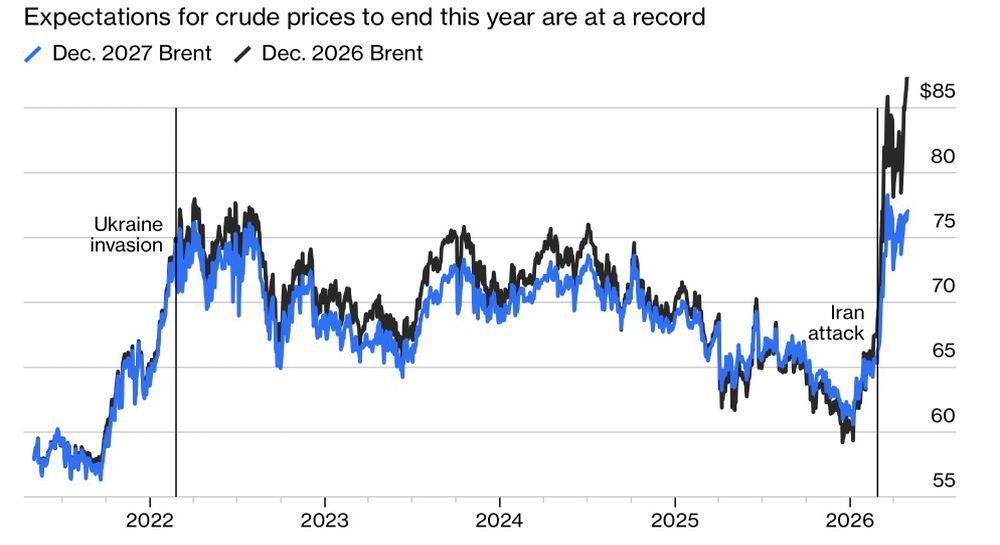
The rise in oil prices to record highs, expected by the end of the year, suggests the US is not yet winning the battle for survival. Treasury Secretary Scott Bessent asserts that the blockade of the Strait of Hormuz has turned into a full-fledged economic blockade and that the United States will ultimately strangle Iran. In theory, that is exactly what will happen. By depriving Tehran of its exports and filling its oil storage tanks to capacity, the US will trigger capital flight.
Brent Price Forecast to Year-End
Source: Bloomberg.
However, this plan requires time. The longer the Strait of Hormuz remains closed, the higher Brent and WTI prices climb. Therefore, Donald Trump has decided to embark on a new risky venture. The effort Project Freedom aims to unblock stranded tankers by coordinating between the US and its allies to identify the safest transit route. If they are attacked, the US government promises to respond with equal force.
Iran has stated that the Strait of Hormuz will not be controlled by Donald Trump's delusional posts on social media. Opponents appear ready to violate the ceasefire, and the US is forcing Iran to do so.
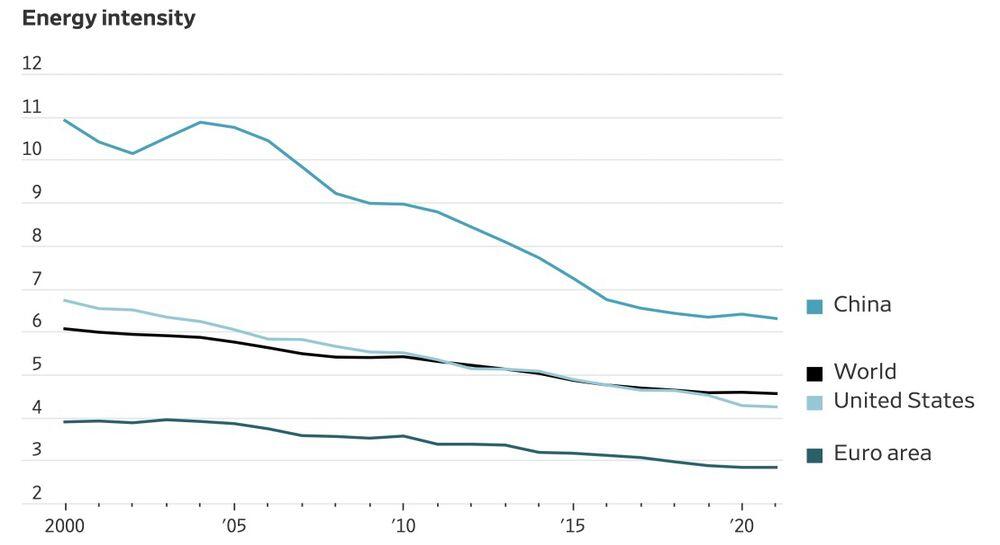
The risks of conflict escalation in the Middle East are rising, but EUR/USD quotes have instead hit a two-week high. The reason for the euro's strength is the remarkable resilience of the global economy. Substantial oil reserves, government policies to support consumers, the offsetting effects of the AI boom, and significantly improved energy efficiency are holding Brent and WTI prices in check.
Energy Intensity in China, US, EU, and ROW
Source: Wall Street Journal.
The IMF predicts only slightly slower global economic growth in 2026 — 3.1% compared to 3.4% in 2025 — provided that energy flows resume by mid-year.
Indeed, if the Strait of Hormuz remains closed for longer, the risk of a recession will mount, and the US economy's stronger position relative to Europe's will push the EUR/USD lower. Nevertheless, investors are currently hoping for the best.
Weekly Trading Plan for EUR/USD
In my view, the Project Freedom mission is indeed a reckless plan that will result in an escalation of armed conflict in the Middle East. At the same time, if EUR/USD quotes fall below 1.1715, short positions can be opened.
This forecast is based on the analysis of fundamental factors, including official statements from financial institutions and regulators, various geopolitical and economic developments, and statistical data. Historical market data are also considered.
Price chart of EURUSD in real time mode

The content of this article reflects the author’s opinion and does not necessarily reflect the official position of LiteFinance broker. The material published on this page is provided for informational purposes only and should not be considered as the provision of investment advice for the purposes of Directive 2014/65/EU.
According to copyright law, this article is considered intellectual property, which includes a prohibition on copying and distributing it without consent.