This article will focus on the minimum price change known as pip. You will find out how much it is, why we measure price movements in them and whether the pip and pip value is the same for all trading instruments, including complex instruments such as CFDs wich come with significant risk. What can I say – there are pips and then there are other pips, and it’s important to understand the pips' meaning.
Trading pip depends on many things, and a trader has to know what position size, basis point and pip move mean. Let’s try to find out!
The article covers the following subjects:
Major Takeaways
Main Thesis | Insights and Key Points |
Definition | A pip is the minimum unit of price change, primarily used in Forex to measure tiny currency fluctuations. Instead of saying the price grew by 0.0054 euros, traders might say it grew by 540 pips. |
Calculating Pip value | Pip value depends on the traded instrument's lot size and the instrument's cost. For example, for EURUSD at an exchange rate of 1.20000, buying 1 lot (100,000 euros) will cost 120,000 dollars. A one pip move can result in a profit or loss of 1 dollar for this instrument. |
Finding Pip value | Pip values for various Forex currency pairs can be found in the trading platform account. The value of one pip also depends on the transaction volume, measured in lots. As the transaction volume grows, the pip value increases proportionally. |
Major currencies | Major currency pairs (Majors) include EURUSD, USDCHF, GBPUSD, USDJPY, USDCAD, AUDUSD, NZDUSD. Most have 5-digit quotes, except USD/JPY with 3 decimal points. The cost of 1 lot for each is 100,000 units of the base currency. Pip values vary based on the currency pair. |
Pips and price movement | Using EURUSD as an example, if the price moves from 1.21247 to 1.21250, it has grown by 3 pips or by $0.00003. The pip value of 0.00001 is also termed a "fractional pip". |
What is a Pipette/Point? | On stock and futures exchange markets, points represent price values before the decimal. In Forex, a point can indicate a specific amount of price change equal to 0.00001. Some traders differentiate between pips and points. A pipette refers to more accurate price changes of 0.001 and 0.00001. |
Risk management | Traders use pips to set stop losses and manage trading risks. |
Pips Definition & Meaning
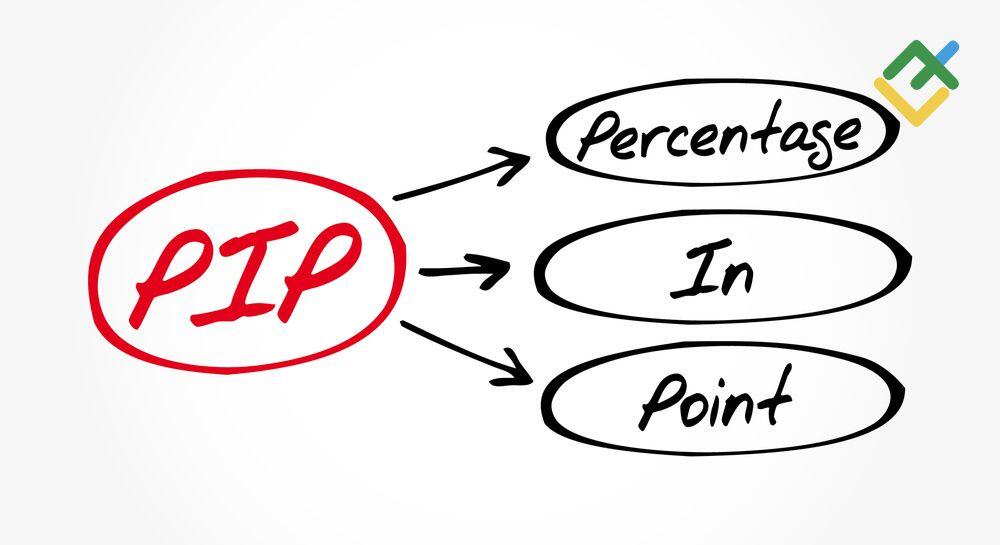
I will not torment the reader with a long introduction. A pip is a general term for the minimum unit of price change. The term is mostly popular among Forex currency pairs traders because it’s inconvenient to calculate miniscule fluctuations of two currencies in dollars or euros. It's easier to say that the price grew by 540 pips than 0.0054 euros, isn't it?
An important detail about the FX pip is that it depends on the accuracy of the price measurement. Some brokers offer 4-digit quotes – here the accuracy of price measurement is limited to ten thousandths. In this case, the pip change of the fifth last decimal point in the EURUSD price – for example, from 1.00000 to 1.00004 - will go unnoticed. A one-pip change for a 4-digit Forex broker will equal a 10 pip change for a 5-digit quote.
Let us consider the spread for the EURUSD currency pair:
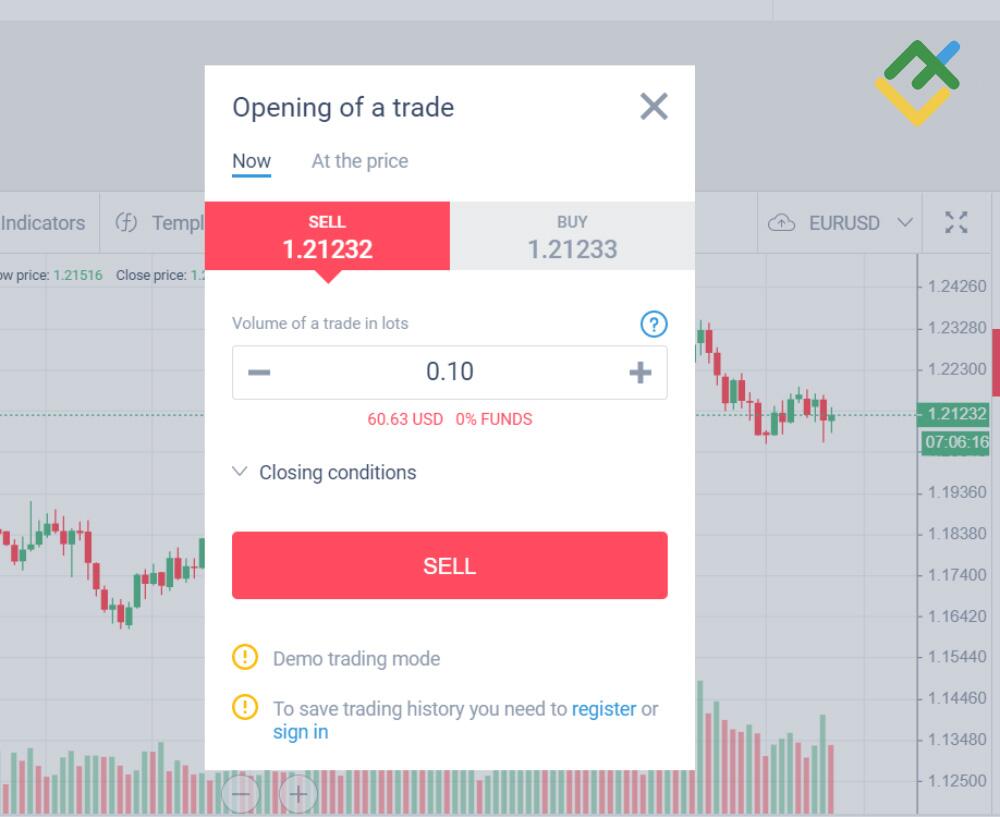
The exchange rate is 1.21232 to 1.21233:
- the best sell price is $1.21232,
- the best buy price is $1.21233.
The spread, or the difference between the quotes, is $0.00001 or 1 pip. As you have probably guessed, LiteFinance provides 5-digit quotes.
Speaking about the minimum price movements, let's analyze how the price of this instrument (EURUSD) has changed during 5 minutes on a minute timeframe (M1).
The price is at the level of 1.21247.
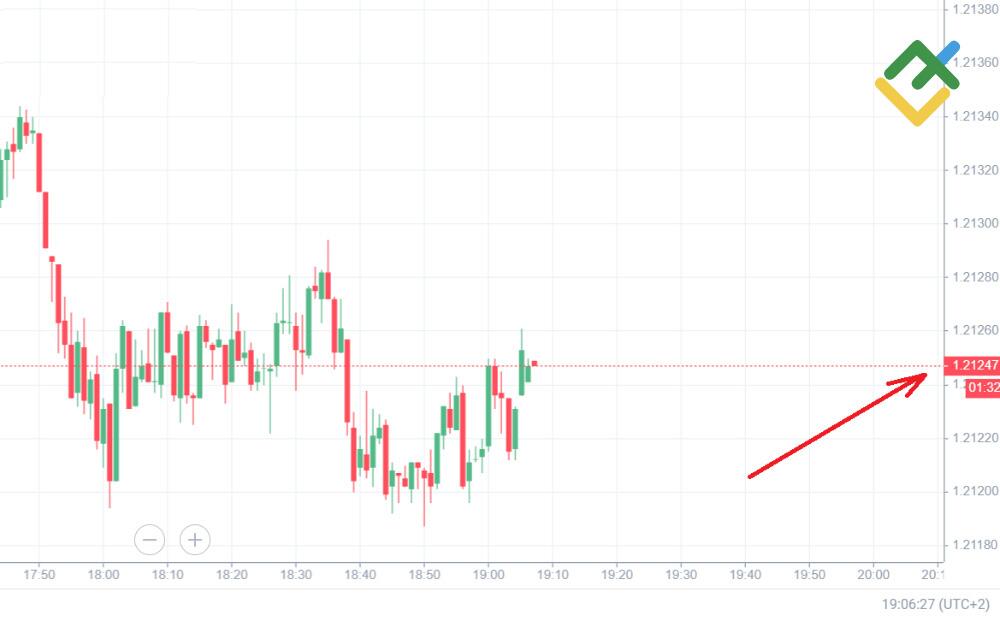
After 10 minutes, the price increased slightly - to 1.21250.
The timeframe is small, that's why the growth is so small
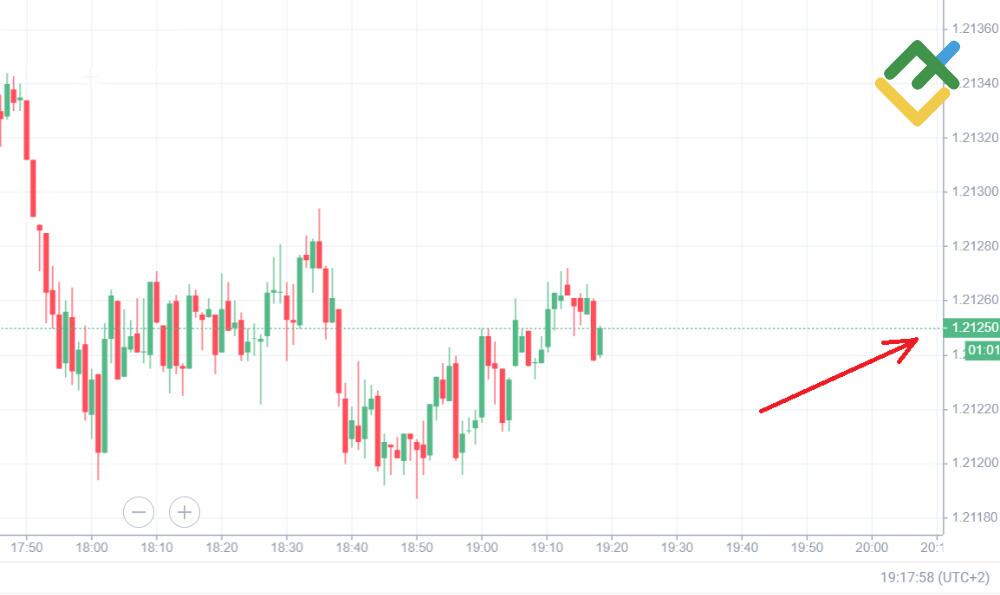
It turns out that the price has grown by 3 pips from 1.21247 to 1.21250 or by EUR 0.00003.
The pip value of 0.00001 is also called "fractional pip" because it is 1/10 of the “standard” value with a 4-digit quote.
Calculating Pip value
To do this, we need to know:
- The cost of 1 lot of the traded instrument. In currency trading, it is usually 100,000 units of the base currency (which is the first in the quote). The second currency in the pair is known as the counter currency. For example, the cost of 1 lot of the EURUSD = 100,000 euros. The cost of 1 lot of the GBPJPY = 100,000 pounds, etc.
- The cost of the instrument. Let's take EURUSD again. At an exchange rate of 1.20000, buying 1 lot (100,000 euros) will cost 100,000 x 1.20 = 120,000 dollars.
If we sell 1 lot at a price 1 pip value higher, i.e. by 1.20001, as a result of such a trading operation we get 100,000 x 1.20001 = 120,001 US dollars. Therefore, we can earn 1 dollar on a move of one pip, which is the cost of a single pip on this instrument.
Other instruments are calculated using the same method.
Let’s take the USDJPY as an example of unconventional 3 decimal digits in the exchange rate calculation.
Cost of 1 lot - USD 100,000
We’ll assume the exchange rate of the instrument is 105.300
In the example with the dollar and the yen, the minimum price fluctuation would be 0.001
When buying 1 lot of the USD/JPY, you need 100,000 * 105,300 = 10,530,000 Japanese yen.
If the exchange rate rises by a single pip to 105.301, then 1 lot (100,000 US dollars as a base currency) can be sold at 10,530,100 yen (counter currency).
Therefore, the trade value of one pip here will be 10,530,100 - 10,530,000 = 100 yen.
Finding Pip value in the trading account
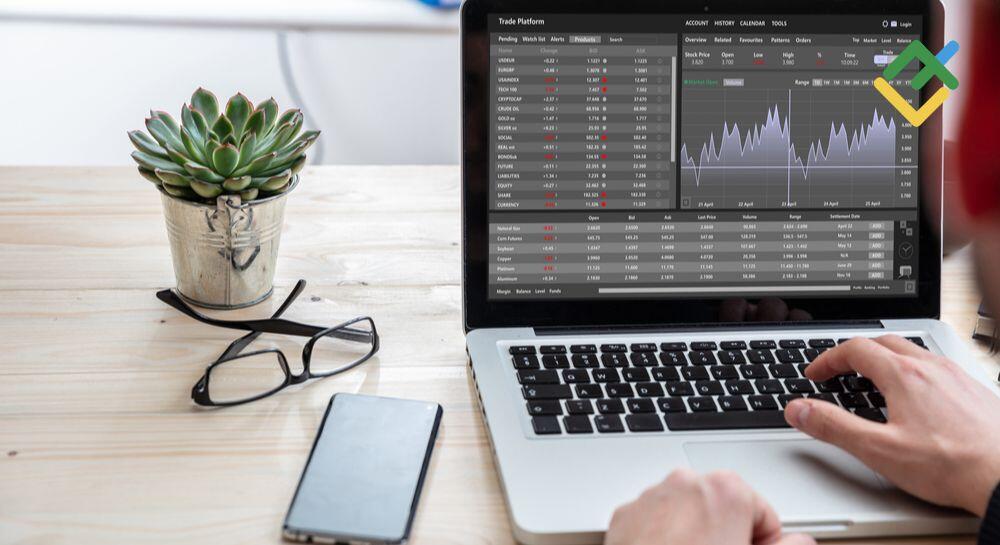
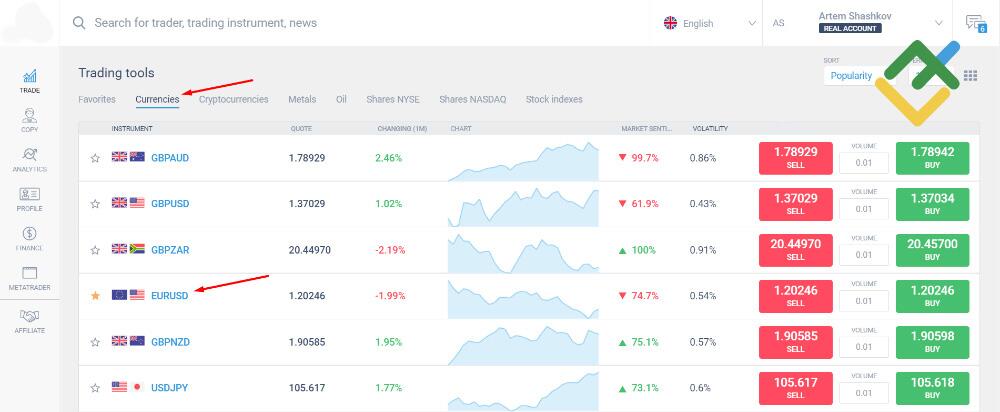
Some of the pip values on the Forex currency pairs market can be found in the trading platform account. Let's open a chart of the EUR/USD currency pair in the online terminal. To do this, select the "currencies" tab and click on the EURUSD pair (EUR - base currency, USD - counter currency).
The scale in the right corner of the chart shows the current price of the instrument. It sits at a value of $1.20241.
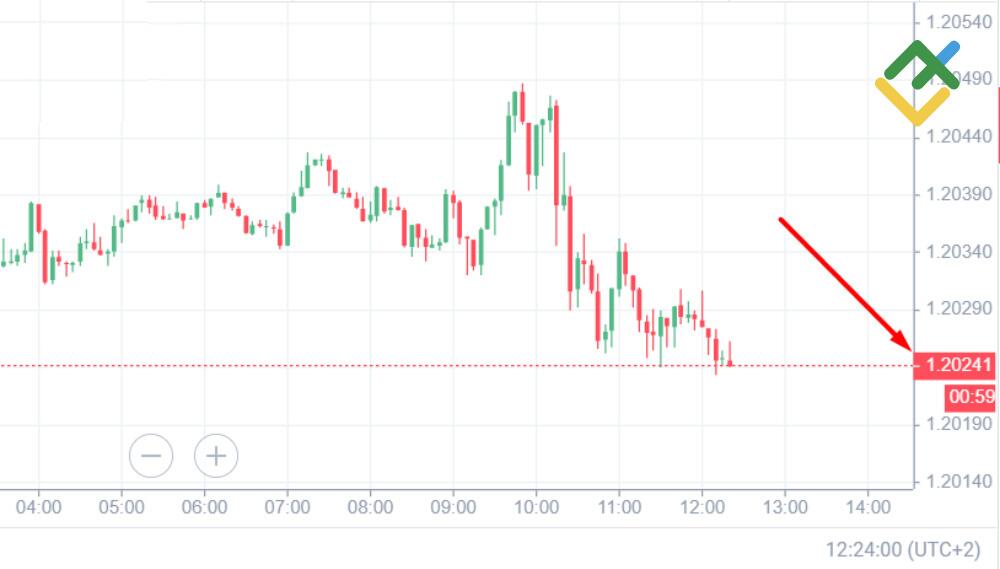
We have 5 decimal places, which means that the minimum price change for this instrument will be $0.00001.
To calculate the trade value of one pip, you also need to know the volume of the transaction, which is measured in lots. The selected volume value is shown to the right of the chart:
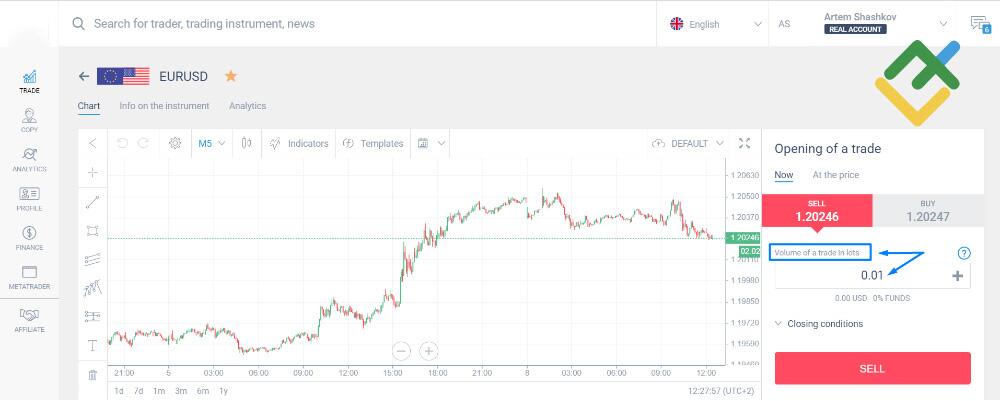
As the volume of the transaction grows, the value of one pip for the trader also increases. As we found out earlier, with a volume of 1 lot, the cost of a pip is $1. This means that with a minimum volume of 0.01 lot, the cost of a pip will be equal to $ 0.01. In this case, the trader will be able to earn $0.5 on the price movement of 50 pips.
If you increase the volume to 0.1, the cost of 1 pip will also increase 10 times - from $0.01 to $0.1. Then the same movement of 50 pips can bring the trader $5.
It is crucial to understand that any trade always has two potential outcomes. So before playing with volumes, it is recommended that the trader should acquire basic knowledge of the risks involved and money management.
Major currencies pips: Forex
The major currency pairs are called the Majors. These include:
- EURUSD (Euro - US Dollar);
- USDCHF (US dollar - Swiss franc);
- GBPUSD (British Pound - US Dollar);
- USDJPY (US Dollar - Japanese Yen);
- USDCAD (US Dollar - Canadian Dollar);
- AUDUSD (Australian dollar - US dollar);
- NZDUSD (New Zealand Dollar - US Dollar).
All these instruments have 5-digit quotes, except for the USD/JPY, which has 3 last decimal points.
The cost of 1 lot for each instrument is 100,000 units of the base currency (first in the quote):
100,000 euro | |
100,000 US dollars | |
100,000 pounds | |
100,000 US dollars | |
100,000 Australian dollars | |
100,000 US dollars | |
100,000 New Zealand dollars |
Now let's add 1 pip value for each currency pair and calculate its value for a standard volume of 1 lot.
100,000 euro | 0.00001 USD | 1 USD | |
100,000 US dollars | 0.00001 CHF | 1 CHF | |
100,000 pounds | 0.00001 USD | 1 USD | |
100,000 US dollars | 0.001 JPY | 100 JPY | |
100,000 Australian dollars | 0.00001 USD | 0.5 USD | |
100,000 US dollars | 0.00001 CAD | 1 CAD | |
100,000 New Zealand dollars | 0.00001 USD | 1 USD |
Depending on the currency in which the trader keeps their trading capital, these values will be converted based on the current rate.
For the calculation you will need:
- The cost of 1 pip of the traded instrument. For example, a trader is trading the USDCHF on the trading platform. Then the cost of 1 pip is measured in CHF and is 1 CHF.
- The exchange rate ratio of the account currency to the currency in which we’re calculating the value of 1 point. In our case, we need the USD (base currency) to CHF exchange rate.
For a trader's account in USD, the cost of 1 point of the USD/CHF currency pair at its exchange rate of 0.90000 will be calculated as follows:
Point value for an account in USD (base currency) = 1 CHF / 0.90000 = 1.11 USD
If a trader with an account in USD wants to trade the USD/JPY pair with the exchange rate 105,600, then the pip value for their account in USD will be as follows:
Calculating the Forex currency pairs pip value for an account in USD = 100 JPY / 105,600 = 0.95 USD
When you’ve mastered the basics of calculation, you can use the trader's pip value calculator to save time:
Pips and price movement

Calculating the value of potential profit or loss is of practical importance for the trader's analysis. Based on the pip values, the trader can calculate the trade volume that fits their risk management rules and trading capital, and thus mitigate the significant risk involved in Forex trading.
For such calculations you will need:
calculate the value of a pip of a traded instrument in the account currency with a standard volume of 1 lot;
calculate the possible loss in the account currency: how much the trader will lose when the stop loss is triggered. This can be done using the formula:
Stop loss for standard volume (in account currency) = pip value in account currency x Stop loss value in pips
Calculate the trade volume based on the risk management rules.
Suppose a trader is trading the EURUSD currency pair on a USD trading account. They want to place a stop loss of 20 pips with $200 of trading capital.
The cost of a pip with a volume of 1 lot = 1 USD
When setting a stop loss of 20 pips in the case of a 1 lot trade, the trader should take the high risk of:
Pip value * Stop loss value in pips = $20
Suppose a trader does not want to risk more than 3% of the deposit per trade. With a capital of $200, this will be $200 * 0.03 = $6
If the stop loss with a volume of 1 lot is $20, then the trader will need to cut the trade volume:
$20 / $6 = 3.33.
Consequently, the trade volume with such risk management parameters should be 3.33 times less than the standard volume of 1 lot.
Therefore, the maximum possible volume, taking into account all the rules and parameters, will be equal to 1 / 3.33 = 0.3 lot
What is a Pipette/Point?
What is 1 point or pipette and how are they different from a pip?
On exchange markets — stock, futures, etc. — points are the price values before the decimal point.
For example, if the price of AMZN shares rose from 3284.7 to 3305.4 in a day, stock traders say that the price grew by 21 points.
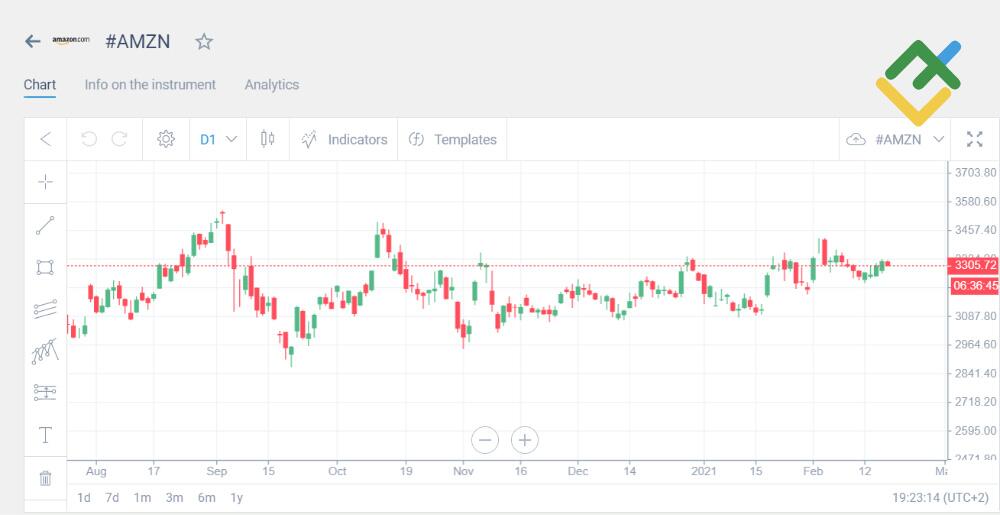
Fractional pip price values (after the decimal point) are not taken into account:
3305 - 3284 = 21 pips.
If you trade contracts for difference (CFDs), whose prices are calculated somewhat similarly to exchange instruments, then even on Forex (Foreign exchange) 1 point will have the same meaning for you.
A currency pairs point can indicate not only the minimum possible price movement, but also a specific amount of price change equal to 0.00001. Some Forex pairs traders differentiate between the concepts of a pip and a point.
Since previously, most Forex (foreign exchange) brokers provided only 2 decimal places (example - USDJPY) and 4-digit (example - EURUSD) quotes, the minimum price movements were 0.01 and 0.0001, respectively. This is what was referred to as a pip.
Pay attention to the screenshot of a 4-digit quote from the MetaTrader terminal.
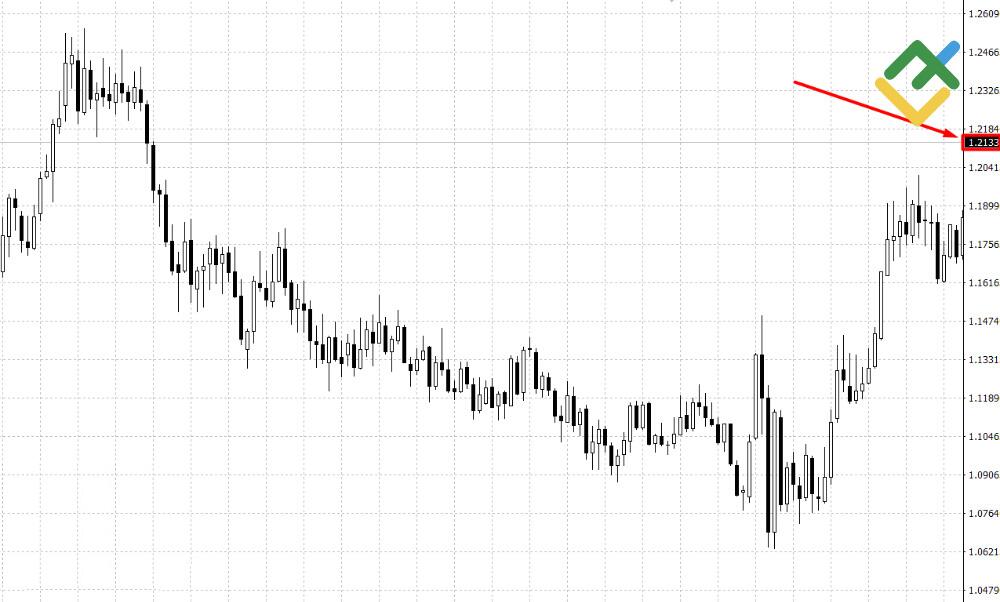
In time calculations of price changes became more nuanced with the help of 3-digit (USDJPY) and 5-digit (EURUSD) quotes. So the minimum price change for the USD/JPY became 0.001, and for the EUR/USD - 0.00001.
Therefore, for old school traders the value of 1 pip is still a price change of 0.01 or 0.0001, and more accurate changes of 0.001 and 0.00001 were called a point or a beautiful word "pipette".
Therefore, if the exchange rate of the currency pair increased from 1.20251 to 1.20274, then the growth was 2 pips or 23 points:
1.20274 - 1.20251 = 0.00023
So, using the example of some instrument measured in US dollars,
Exchange: $1 = 1 point
Forex (foreign exchange) market: a pip is equal to a point and is $0.00001 or $0.0001 with a 4-digit quote.
Cost of one point on Forex
If you are a stock trader, the value of a point for you will be equivalent to the measurement unit of the value of the traded instrument.
If the instrument is traded in US dollars, then 1 point will be equivalent to $1. If it’s in euros, then 1 euro.
For Forex traders, 1 point is the same as 1 pip, so it will be calculated in the same way.
P.S. Did you like my article? Share it in social networks: it will be the best "thank you" :)
Useful links:
- I recommend trying to trade with a reliable broker here. The system allows you to trade by yourself or copy successful traders from all across the globe.
- Use my promo code BLOG to get a 50% deposit bonus on the LiteFinance platform. Simply enter this code in the appropriate field when funding your trading account.
- Telegram chat for traders: https://t.me/litefinancebrokerchat. We are sharing the signals and trading experience.
- Telegram channel with high-quality analytics, Forex reviews, training articles, and other useful things for traders https://t.me/litefinance
Pips FAQ
A pip in Forex stands for Price Interest Point and is a fractional measure of the exchange rate movement. With 4 decimal place quotes, it will be equal to 0.0001. With 5 decimal places- to 0.00001. A pip is usually equal to a fraction of 1%, and the pip value depends on the current exchange rate. Fractional pips allow Forex traders to more accurately measure trades, as they are specified with an additional decimal place, known as a fourth decimal place. To calculate the pip value, one must multiply the number of fractional pips by the base currency with respect to the counter currency. It’s an important definition to know when developing a Forex trading strategy.
The cost of 1 pip depends on the traded instrument and on the volume of the transaction. In the case of trading currency pairs, the value of 1 point is measured in the quoted currency, which is listed second in the quote. For example, when trading the GBP/USD with a minimum volume of 0.01 lot, the cost of 1 point will be equal to 0.00001 USD with 5 decimal places. When the volume increases from 0.01 to 0.1 lot, the cost of 1 point for a trader will also increase 10 times.
If the quoted currency is USD, the calculation will be as follows:
(cost of 1 point with a minimum volume of 0.01 lot) * trade volume / min. volume * 100 pips.
With a trade volume of 0.02, we get: 0.00001 (5 decimal places)* 0.02 / 0.01 * 100 = $0.002.
If the quoted currency is not USD, you will first need to calculate the pip value in USD.
With a minimum volume of 0.01 lot, the value of 50 pips will be 50 times the value of 1 pip. For example, the cost of 50 pips of the EUR/JPY currency pair will be 0.001 yen (cost of 1 pip) * 50 = 0.05 yen. The value of 50 pips will increase by how many times the trade volume is greater than the minimum.
Pips and points are often used interchangeably in trading, but they are actually quite different. A pip is a fractional representation of a change in an exchange rate and is usually denoted as the fourth decimal place of a currency pair (base/ quote currency) - meaning it can represent price movements as small as 0.0001. By contrast, points are simply another name for prices, denoting the market value of exchange rates at any given time. Point value can vary and so fractional pips (also known as "pipettes") have been introduced to allow traders more accuracy in their risk management strategies. Understanding the difference between pips and points is very important when trading high risk markets because even fractional pips movements can dramatically affect the overall return or loss on an investment. Knowing the number of pips gained or lost can make all the difference - especially with a tight stop loss.
A fractional pip is a fractional value of a pip. This fraction allows for tighter bid/ask spreads similar to what currency pairs such as the Japanese Yen have to offer. When trading currencies, it is important to be aware of fractional pips because they can drastically alter the exchange rate of a pair. For instance, the difference between 0.9 and 1.0 in most currency pairs only denotes two decimal places; however, fractional pips denote up to five decimal places which then influence the pip value of that pair. With fractional pips being available, traders often have greater precision when placing their orders on the market which provides more opportunities for favorable trades.
TTo do this, you need to multiply the point value by the number of fractional pips in a profitable trade. Next, the resulting value should be converted into the currency of the trading account based on the current exchange rate. Note that trading on the foreign exchange market comes with high risk, thus it’s crucial to continuously educate yourself and develop a robust Forex trading strategy.

The content of this article reflects the author’s opinion and does not necessarily reflect the official position of LiteFinance broker. The material published on this page is provided for informational purposes only and should not be considered as the provision of investment advice for the purposes of Directive 2014/65/EU.
According to copyright law, this article is considered intellectual property, which includes a prohibition on copying and distributing it without consent.