Dear friends!
As promised in the last lesson, this time we will look at an interesting technique for making profit in the sideways market. Many novice traders get confused when prices move sideways and try to avoid entering the market at such times. However, this strategy limits the opportunities for making a profit. So if you want to trade with maximum efficiency even during price consolidation, Forex grid might be for you!
The article covers the following subjects:
What is Forex grid trading?
The grid trading system is a trading method aimed at making profit by placing long and short orders below or above the base price. Placing orders at specific intervals creates a trading grid. In addition to the obvious possibility of making a profit from the sideways price movement, the grid trading method does not require predicting the direction of the market movement. Therefore, grid trading is suitable for beginners and also easily automated, which I will discuss below.
There are two ways to implement the grid trading method:
- Trading with the trend is used when the price is expected to move in a certain direction. In this case, buy orders are located above the base price, and sell orders - below it.
- Trading against the trend is effective when sideways price movement is expected. Pending sell orders are located above the base price, and buy orders are placed below it.
It is also important to set take profit and stop loss levels for each trade. Otherwise profitable trades may turn against you over time as a result of a market reversal. Or you will have to keep an eye on the market in order to close them on time manually.
Grid trading with stop loss and take profit
Let's look at the simplest grid trading with stop loss using the EURUSD pair as an example.
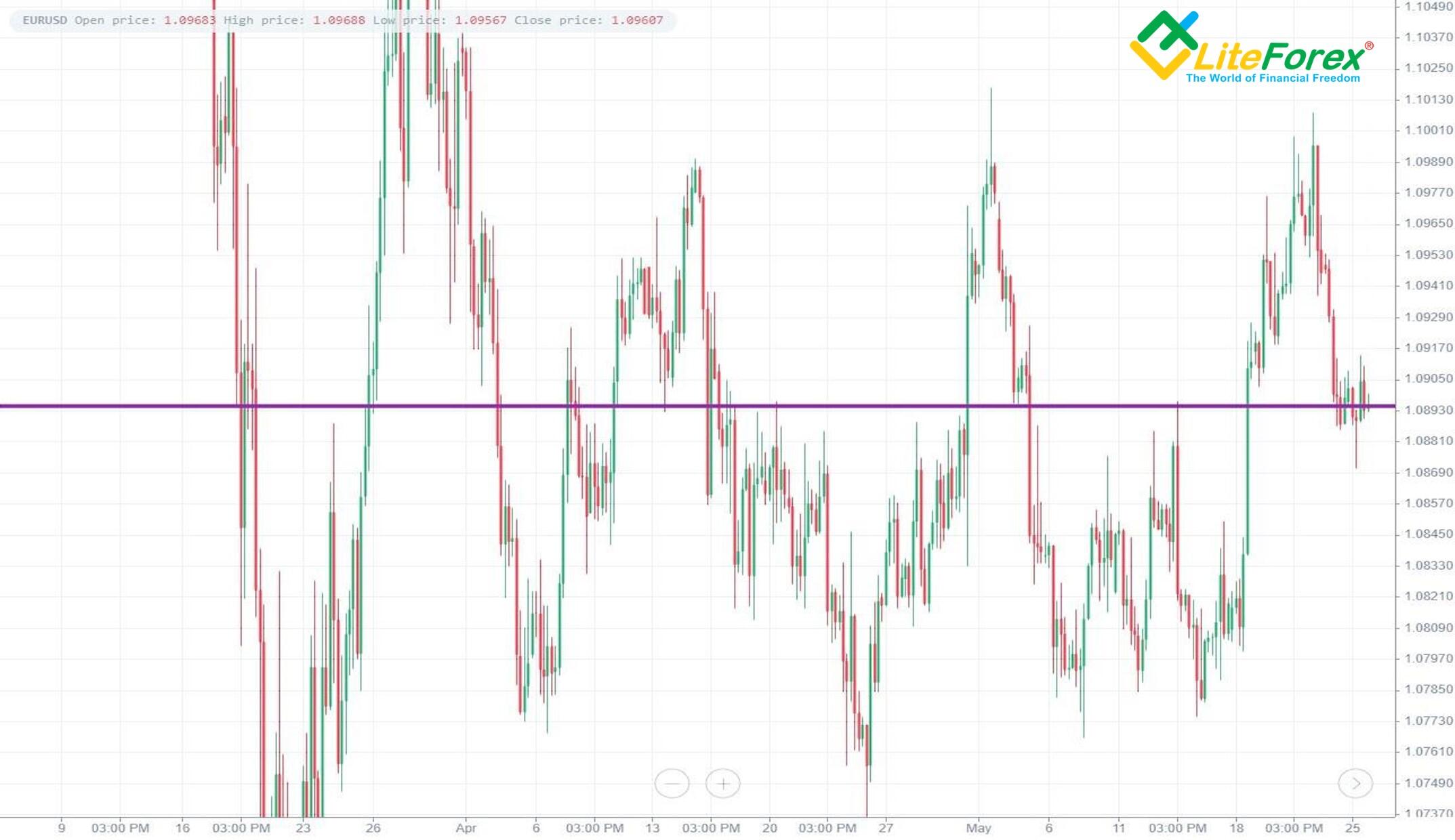
Let's choose 1.08950 (purple line on the chart) as the base price. We will place a pending order on both sides at a distance of 0.00850 from it.
Since it looks like a sideways price movement is forming, we will grid trade against the trend. We will place a pending Sell Limit positions above the base price, and a Buy Limit below it.
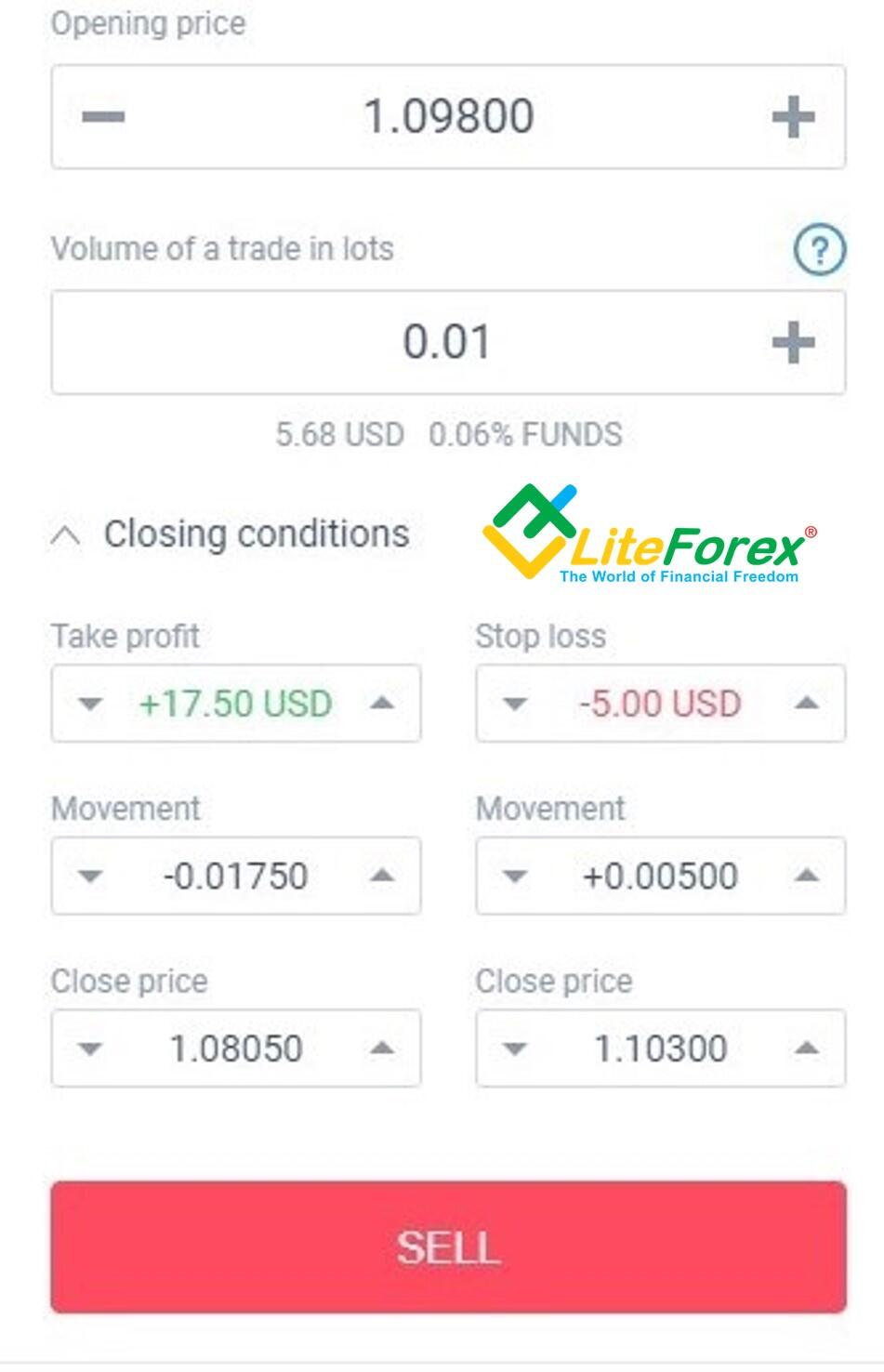
We mark the Sell Limit position at the level 1.08950 + 0.00850 = 1.09800. Stop loss is placed above the position at the level 1.10300 (red line)
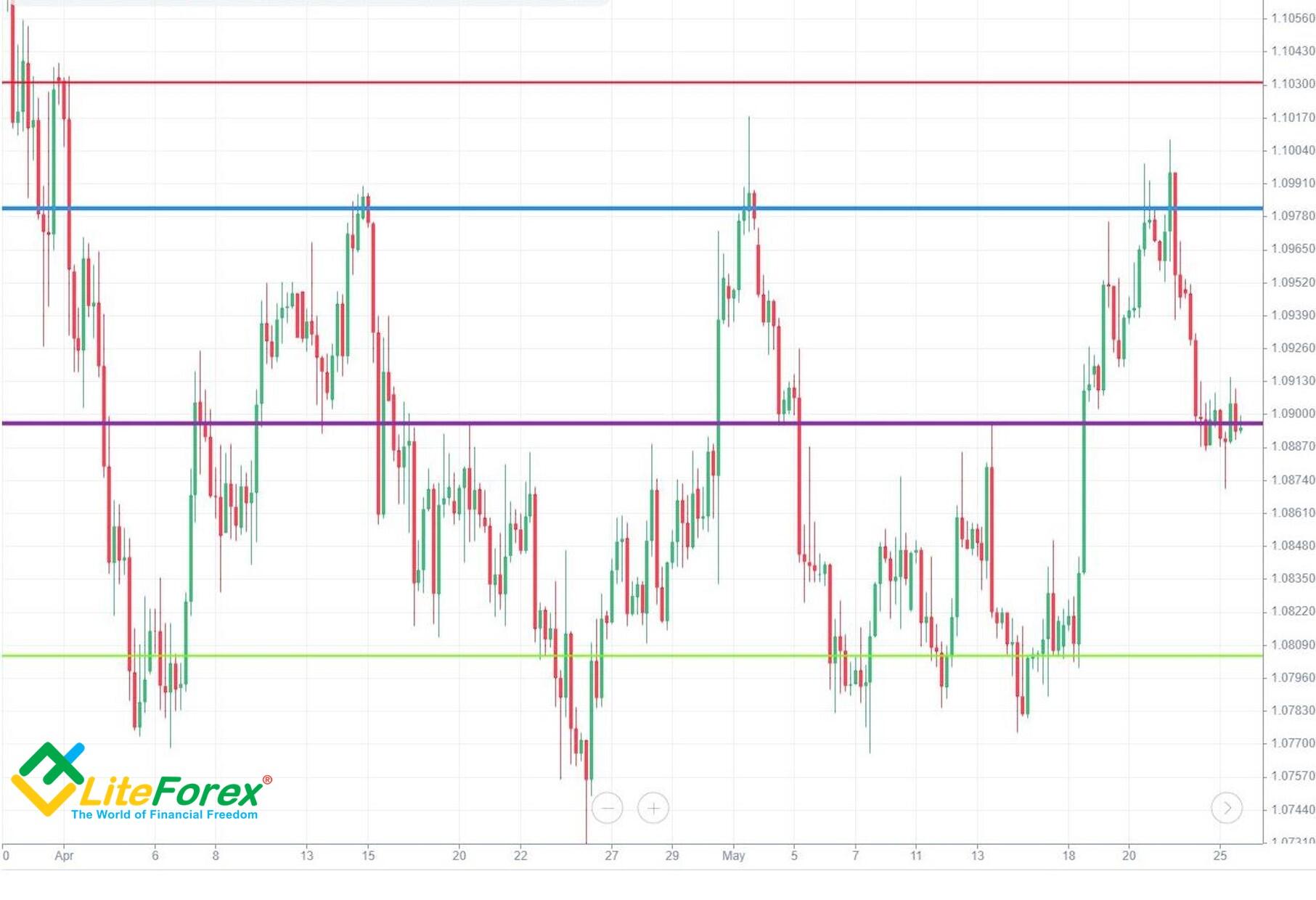
Why this particular level? Because if it is reached, the price will leave the trading range (the chart above shows that its border does not go beyond 1.10200). If the price overcomes this trading range, a trend movement will likely begin. At the same time, it makes sense to place Take Profit around the lower border of the range (below the base price). For our example, I will set take profit at 1.08050 (green line in the chart). Since this level is below the base price, but within the trading range, it is quite likely to be reached.
If the chart moves upward from the base price, the pending sell order will be executed. Then, continuing to move in the trading range, it crosses the green Take profit line and we take the profit. Of course, we can do this trade without Stop loss and Take profit levels and close positions manually. However, this approach creates the danger of increasing your losses and even losing your deposit. But in a positive you risk missing the impulse and not taking the profit on favorable levels. So I strongly recommend automatic take profit and stop loss when using this strategy.
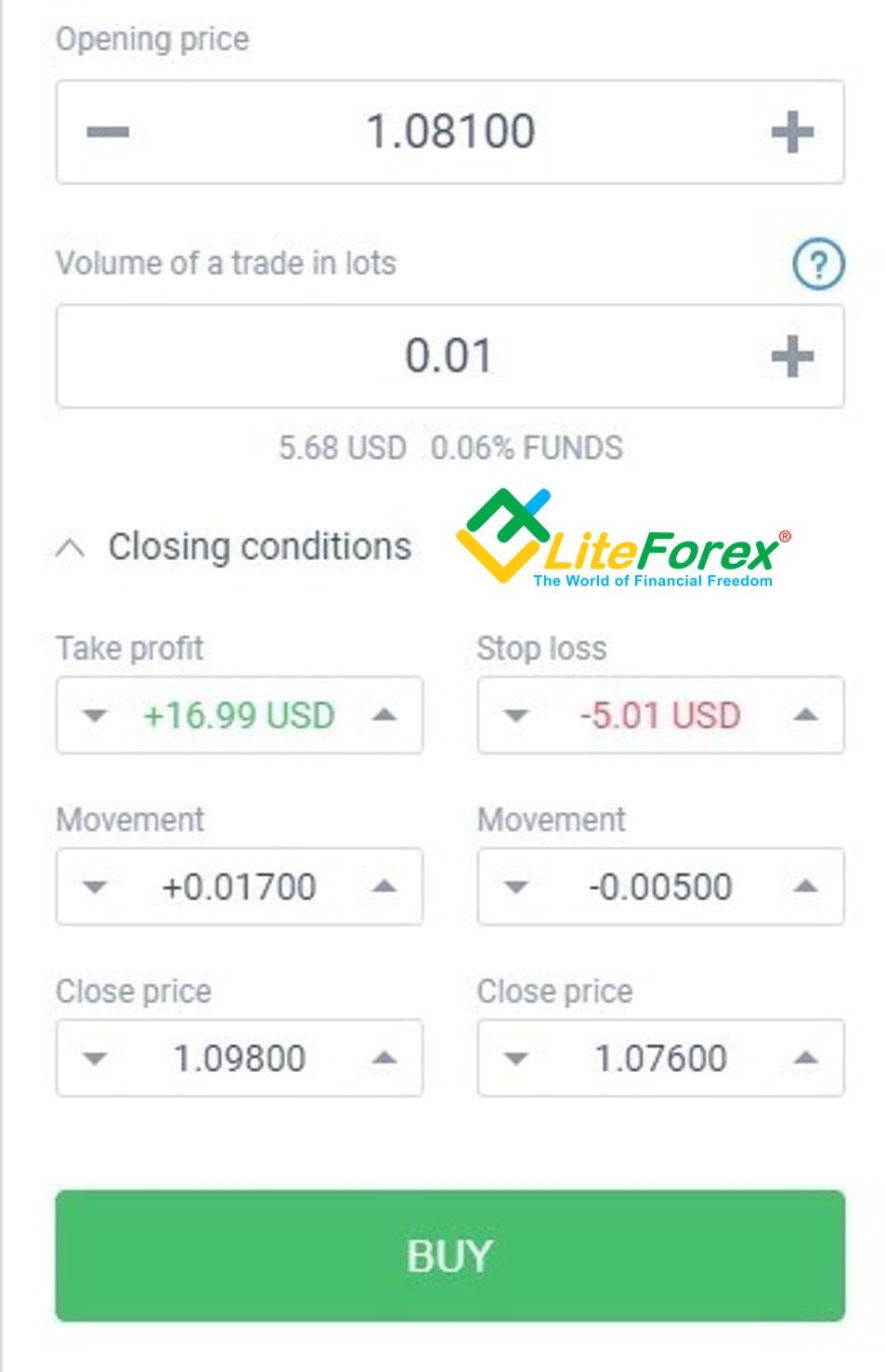
Now let's place a pending Buy Limit order.
After calculating the distance, we place a buy order at the level 1.08950 - 0.00850 = 1.08100 (orange line in the chart above). Set the stop loss lower - at 1.07600 (red line at the bottom of the chart), and take profit - around the Sell Limit position - at 1.09800. Continuing the logic of the pending sell order, I will set the take profit for the buy order at the top of the trading range at 1.08850 (see the green line at the top of the chart).
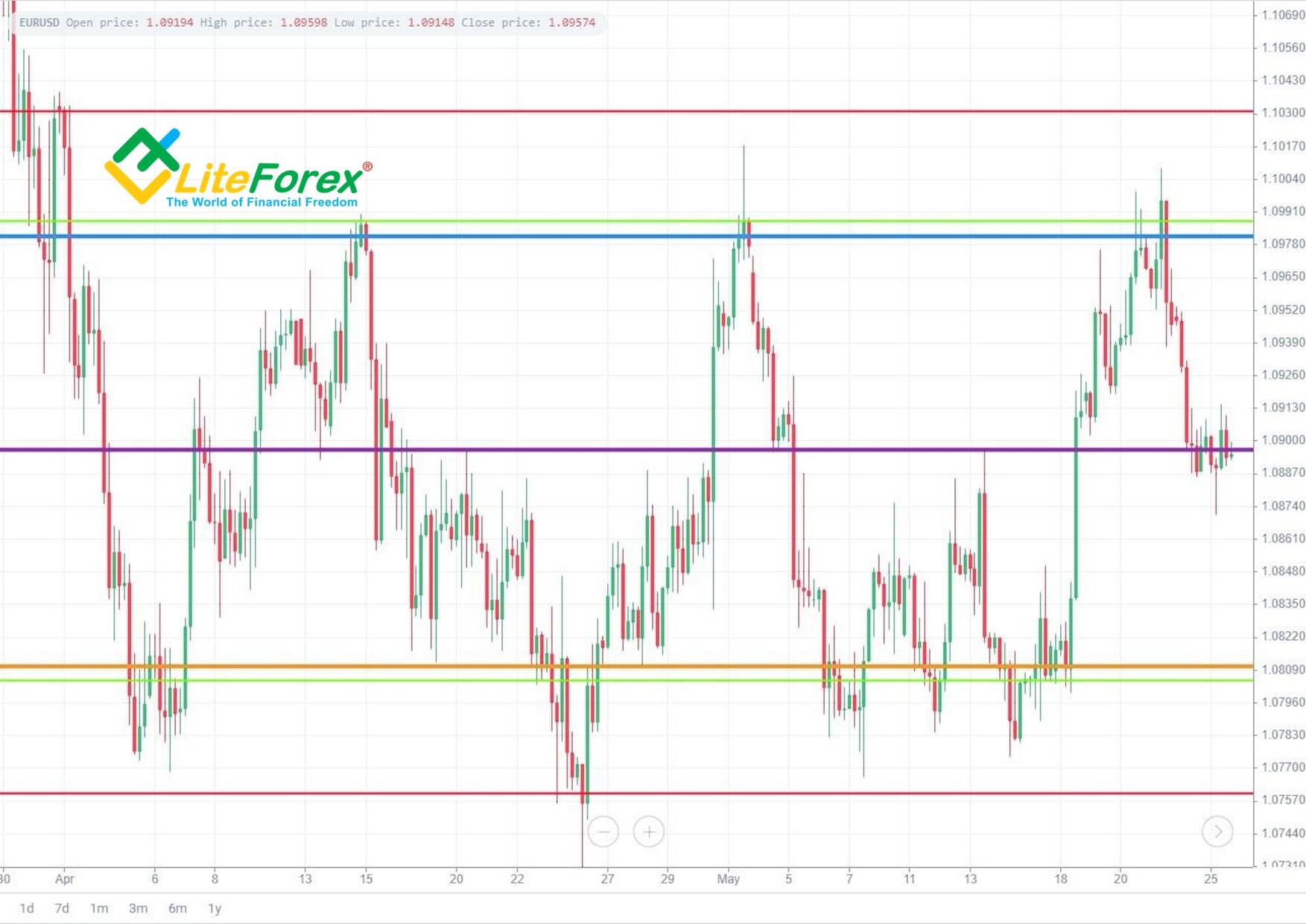
A trading grid with a stop loss is too complicated for visual perception. So for clarity, I removed the automatic profit and loss levels for each of the two orders.
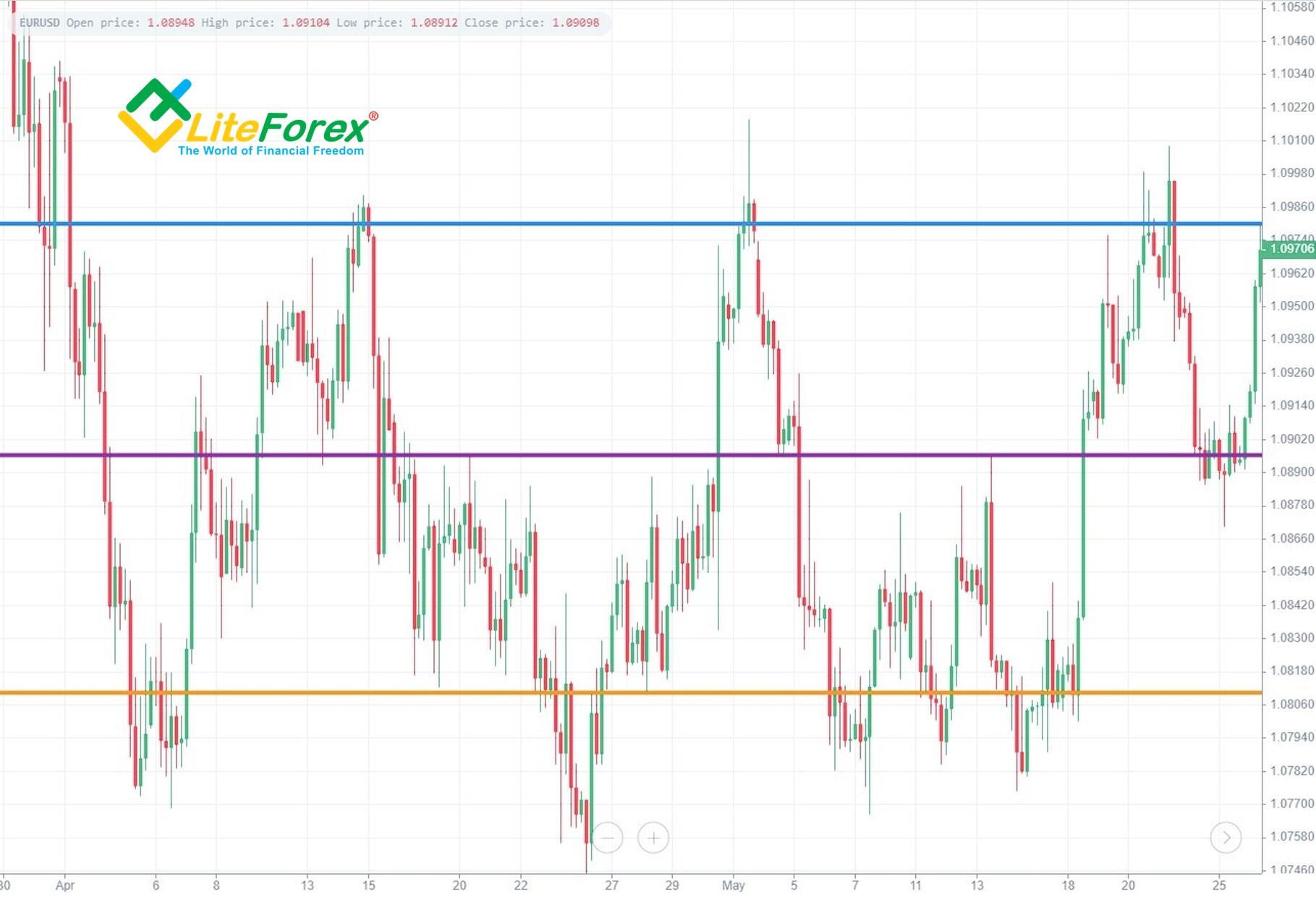
In the chart above, we see the following designations:
- Purple line is the base price,
- Blue line is the Sell Limit,
- Orange line is the Buy Limit.
As you can see, grid trading is a variety of trading channel strategies. The main common feature of this approach is effective trading in a flat market and maximizing profits from trading in the channel. That is why this strategy is especially effective on Forex currency pairs, which mainly trade in price channels. As you understand, in such conditions, the strategy will generate income until there is movement in the channel. Because regardless of the market moving up or down, we will take the profit on the rebound. Here I have presented the simplest trading grid scheme. A more complex Forex grid system may contain several consecutive pending Buy and Sell orders placed in the zones where the price should reverse. We will talk about such systems below.
Example of a classic grid system
Classic Grid systems are often used for protection against price risks. We will consider using the Grid system as hedging on Forex in more detail in this section. We will follow all actions step by step, summarize and calculate the possible profit. As an example, let's take a similar situation of sideways movement in the EURUSD pair.
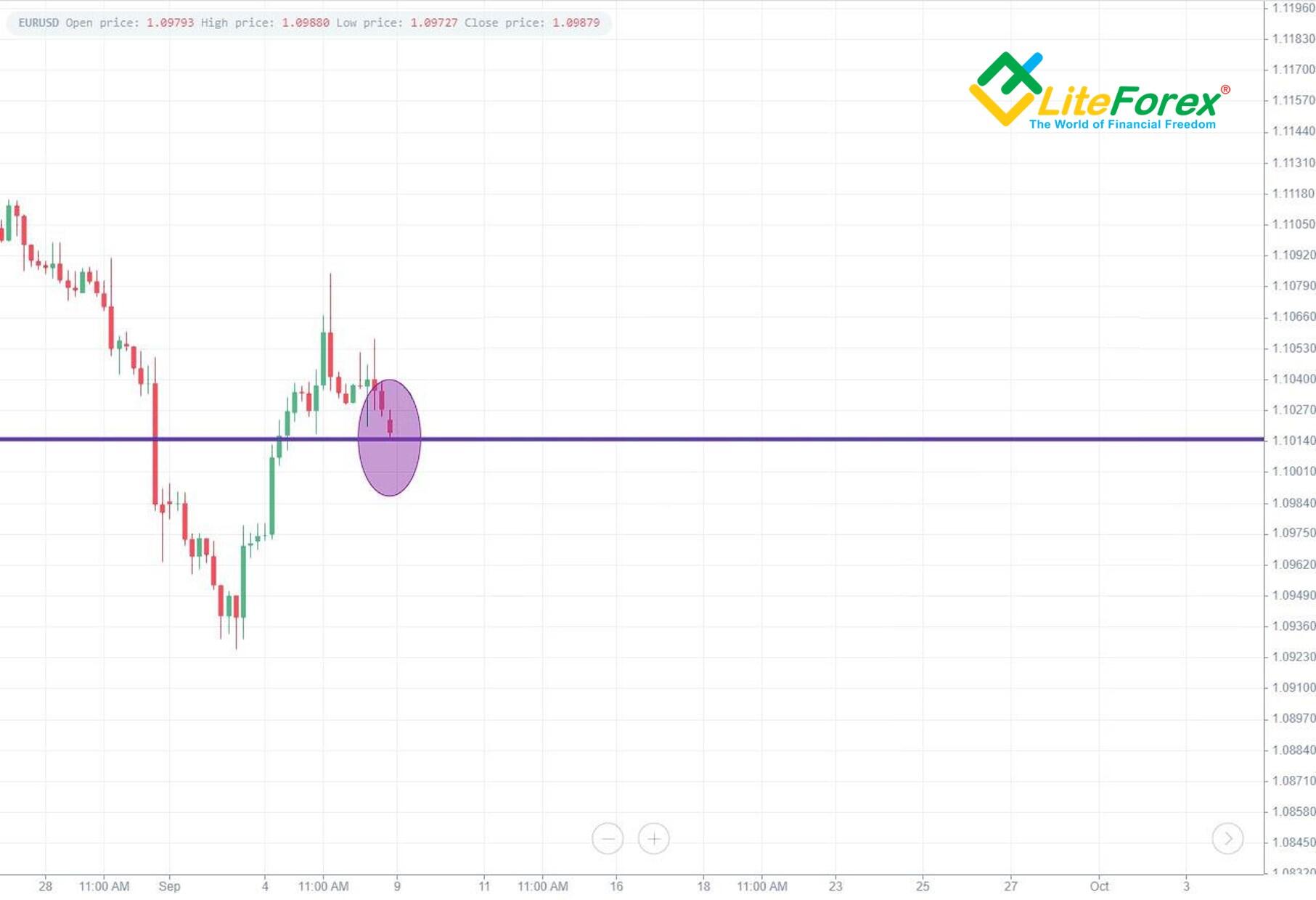
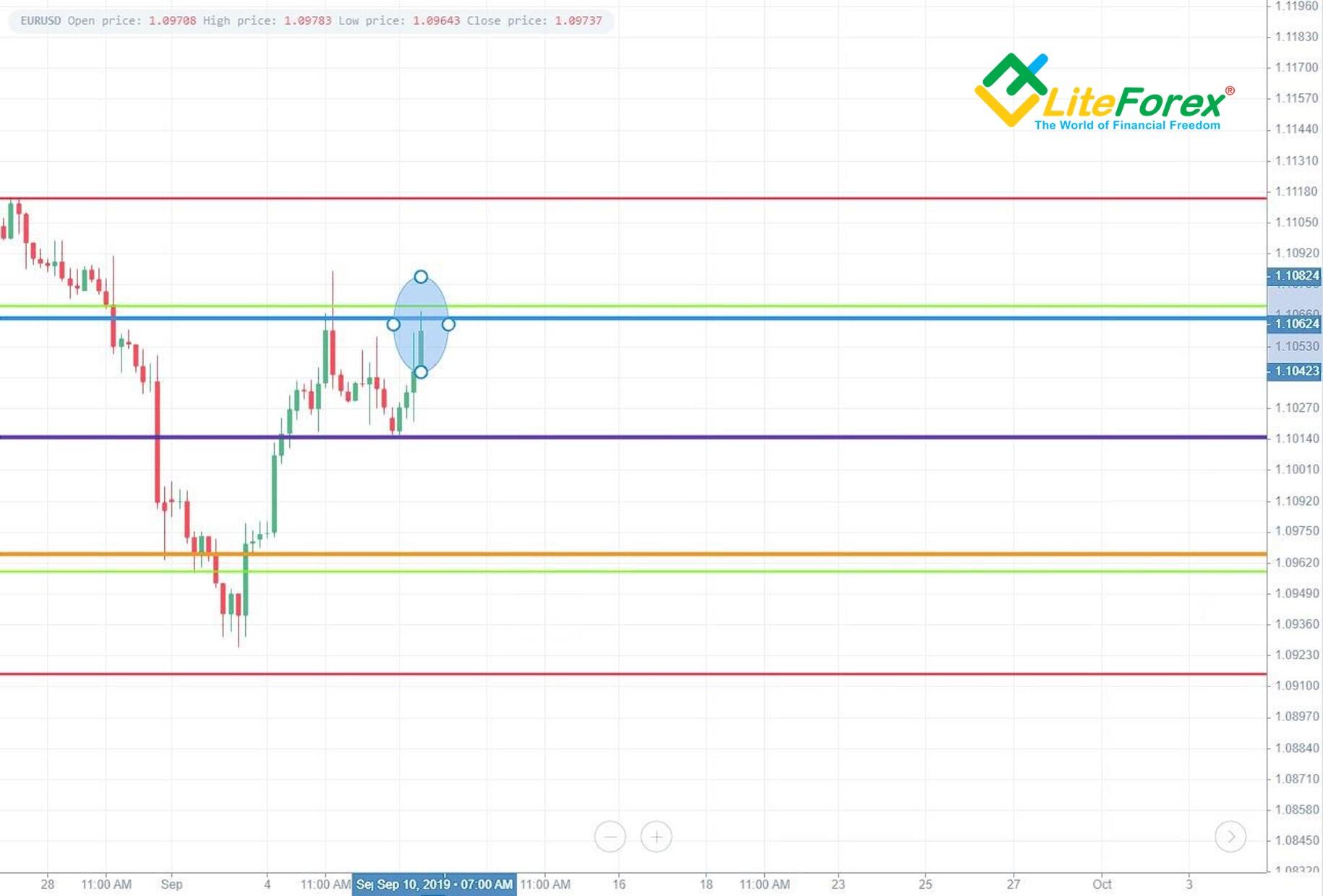
In the chart above, the purple oval marks our current position. Let's say we expect the EUR to grow against USD, but we cannot estimate the horizon of this event. To compensate for possible losses from a fall in the Euro rate, we take our current position 1.10150 as the base price (purple line in the chart above) and build a trading grid from it.
There is no single method for determining the intervals for building a grid.
Main approaches to determining the intervals for placing orders:
- Fixed value calculated as the channel width divided by the maximum number of orders placed plus one.
- Based on the Pivot indicator, Fibonacci levels and other tools to determine support and resistance levels
- Based on the distance to the nearest extreme.
I personally prefer to calculate intervals based on extrema. Below we will analyze this case in more detail.
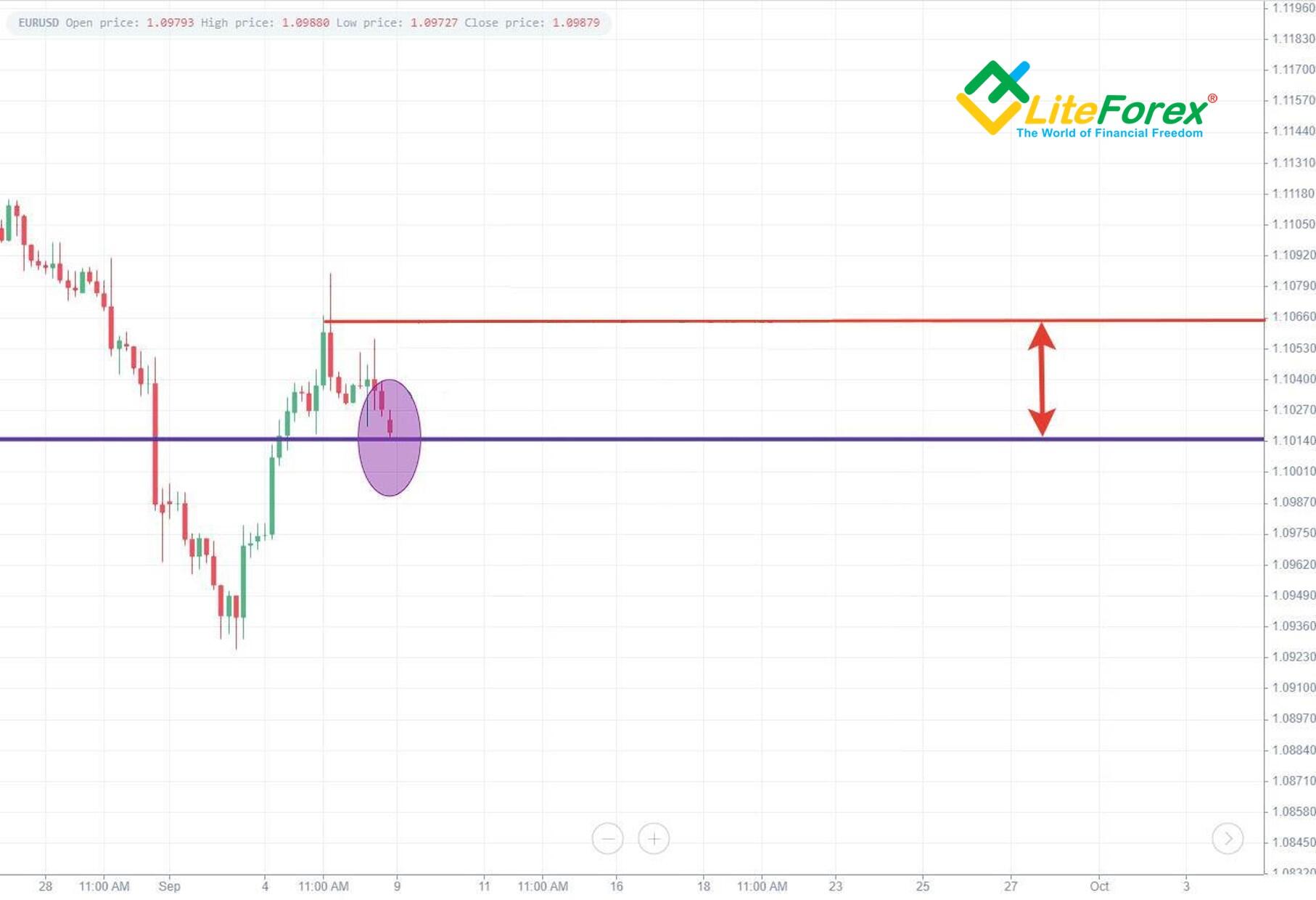
To do this, let's look at the history of the chart and determine the distance from the current level to the nearest extreme. Since we are determining the interval for the first pending orders, they need to be executed within the development of the side channel. Sofrom this extreme we go to the candlestick body or the high value (in the case of a Sell order) of the previous candlestick and round to whole numbers (they act as a magnet for major players). We get Sell Limit order at the level of 1.10650 points, and the interval between the base price and the order is 500 points.
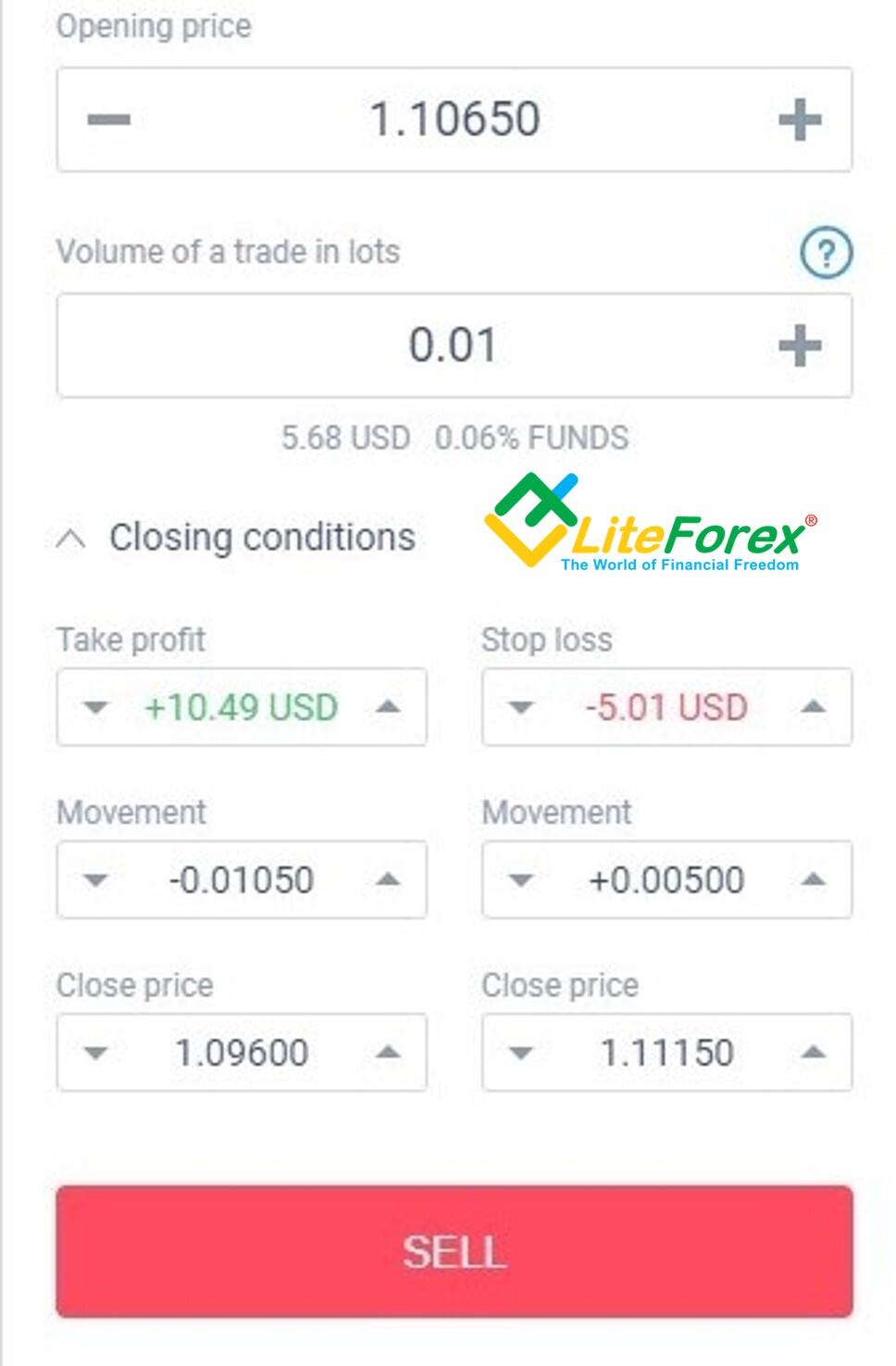
We will move the stop loss by another 500 points, setting it at the level of 1.11150. Take profit is set approximately at a double interval, at the level of 1.09600.
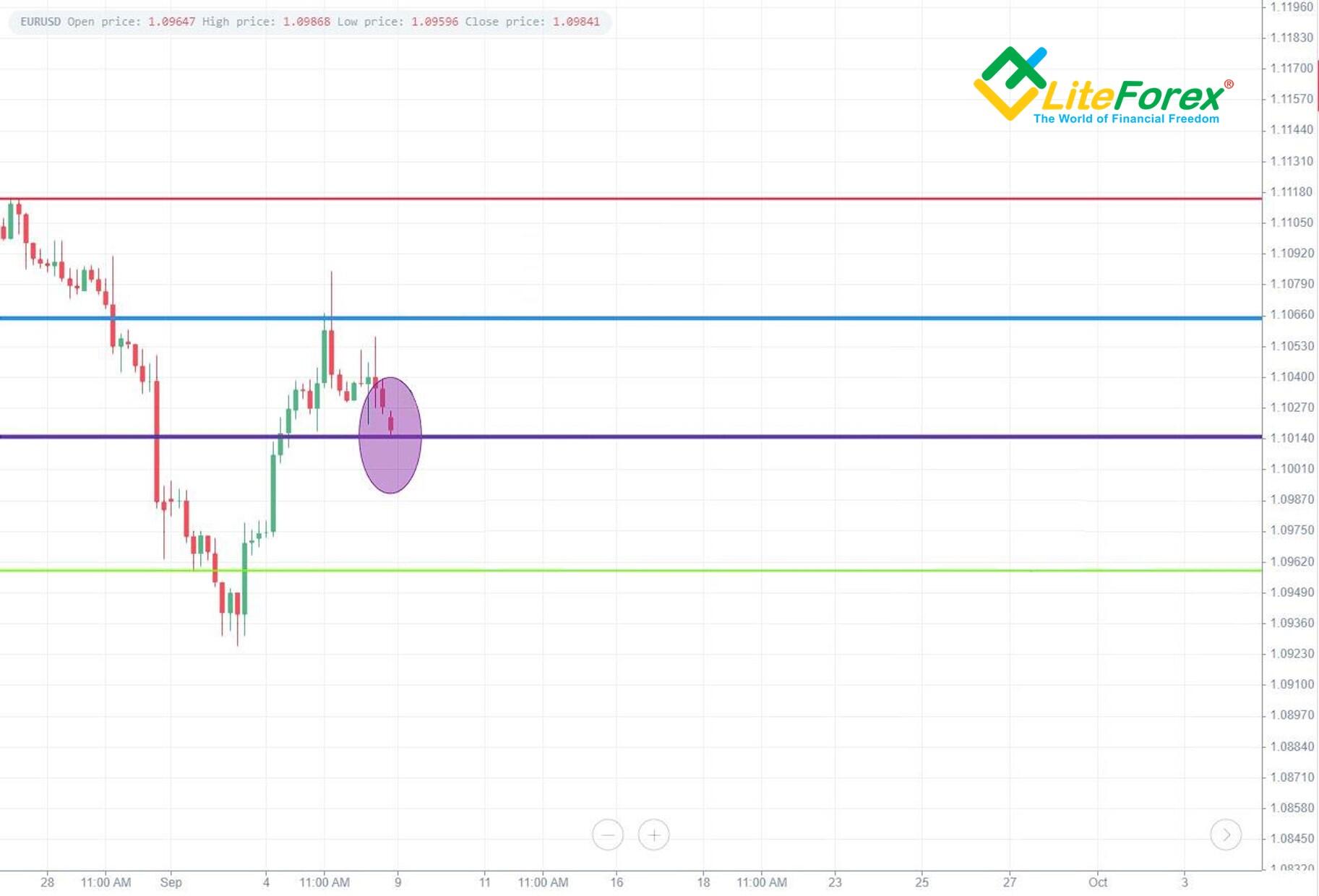
As a result, in the chart, the first part of our grid looks like this:
- Sell Limit - light blue line,
- stop loss - red line,
- take profit - green line,
- base price - dark blue.
Now let's place a pending Buy limit order.
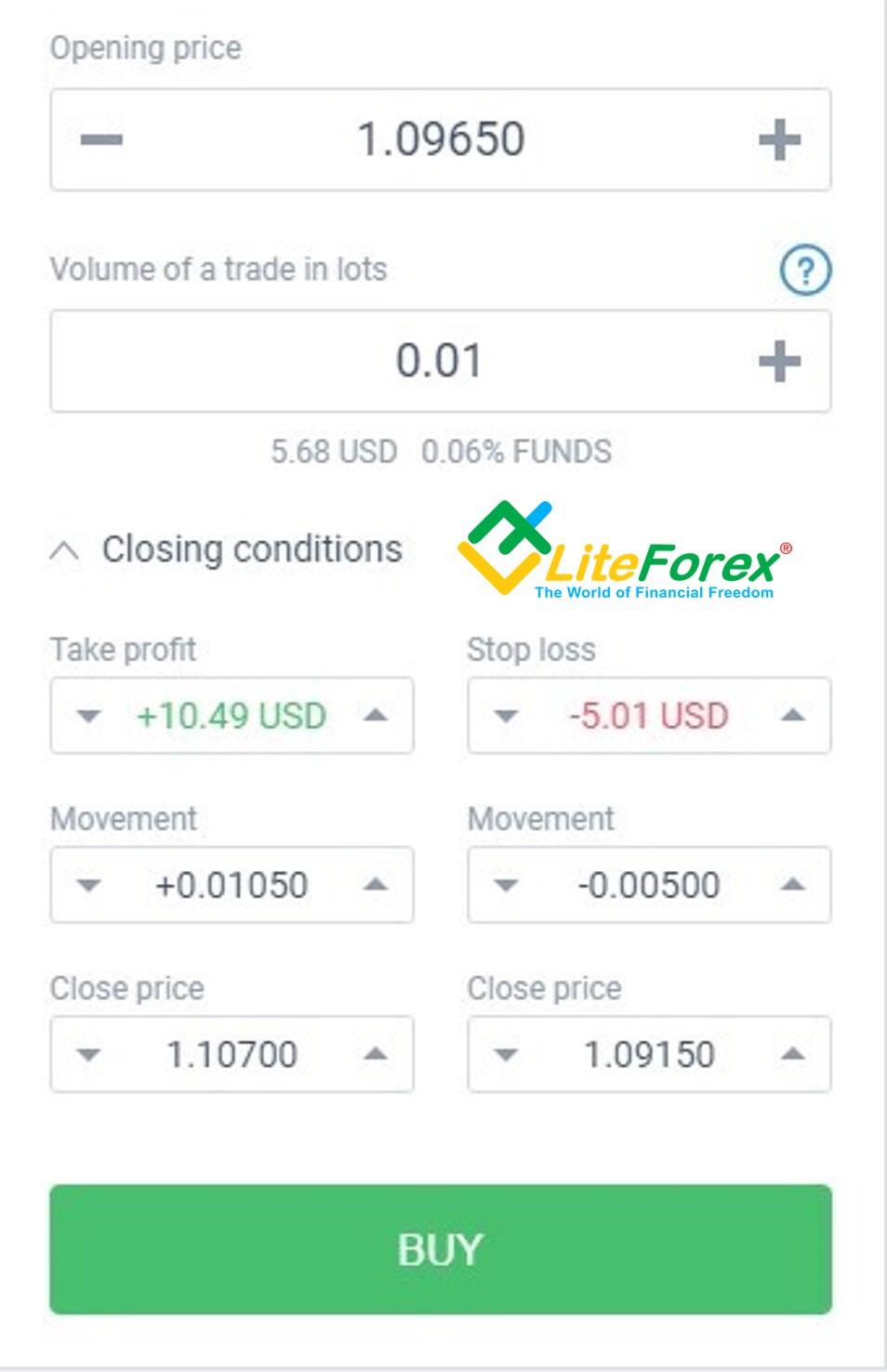
To do this, we measure 500 points down from the base price. The level for opening an order = 1.10150 - 0.00500 = 1.09650. Let's move the stop loss down another 500 points and set it at the level of 1.09150. Set the take profit at 1.10700, next to the pending sell order.
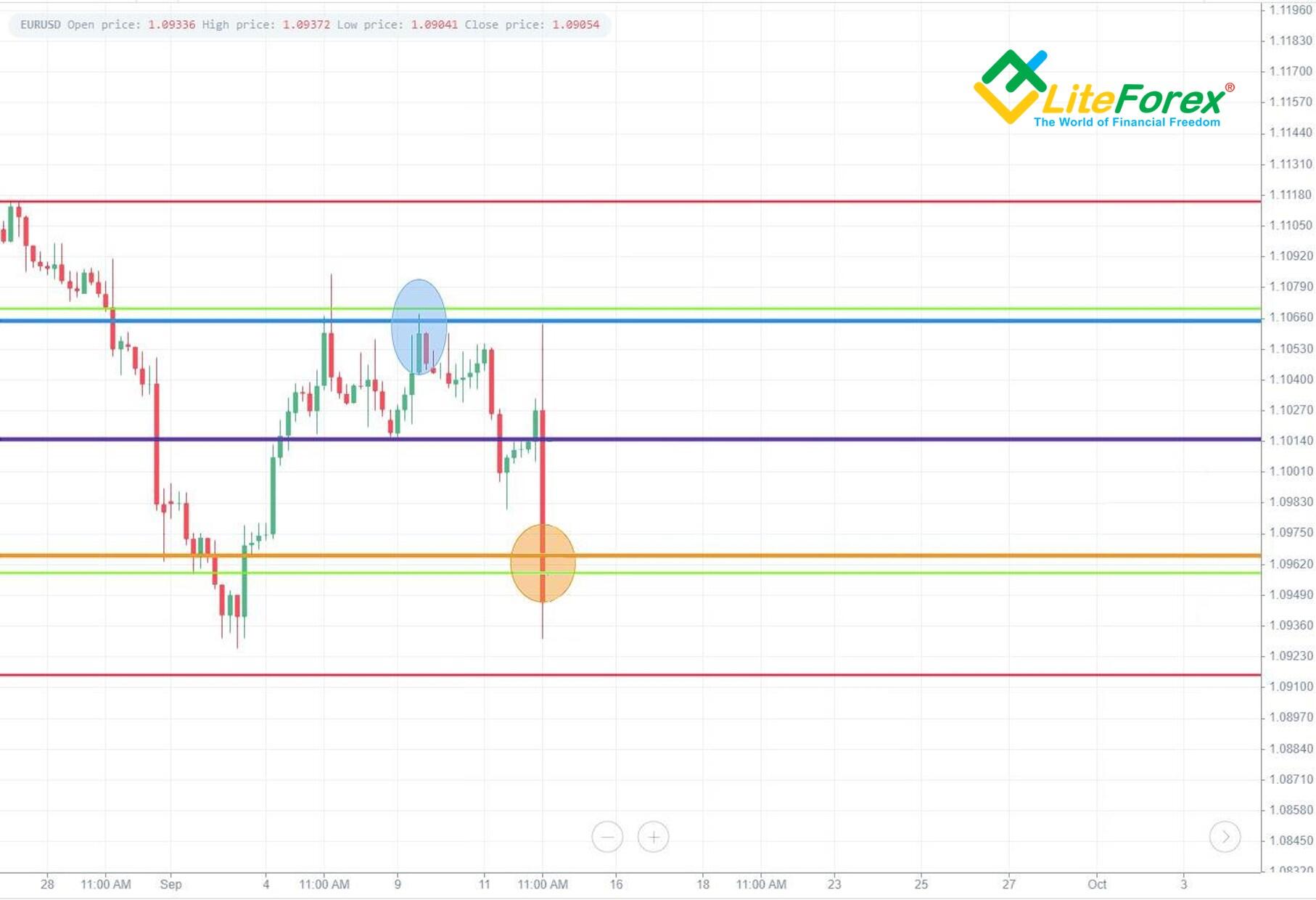
As a result, in the chart above, we see the classic Grid system with Sell (blue line) and Buy (orange) pending orders and automatic take profit (green lines) and stop loss levels (red lines).
As we can see, first the price hits is the Sell Limit order (blue oval in the chart). After its opening, the price immediately moves down.
After some time, the price reaches 1.09650, hitting the pending Buy order (orange oval). A little later, at the level of 1.09600, the take profit of the Sell order is triggered, which was executed earlier. Immediately after the order has been executed by take profit, we place exactly the same order with the same settings as the previous one. Our net profit without the spread was already 1,050 points.
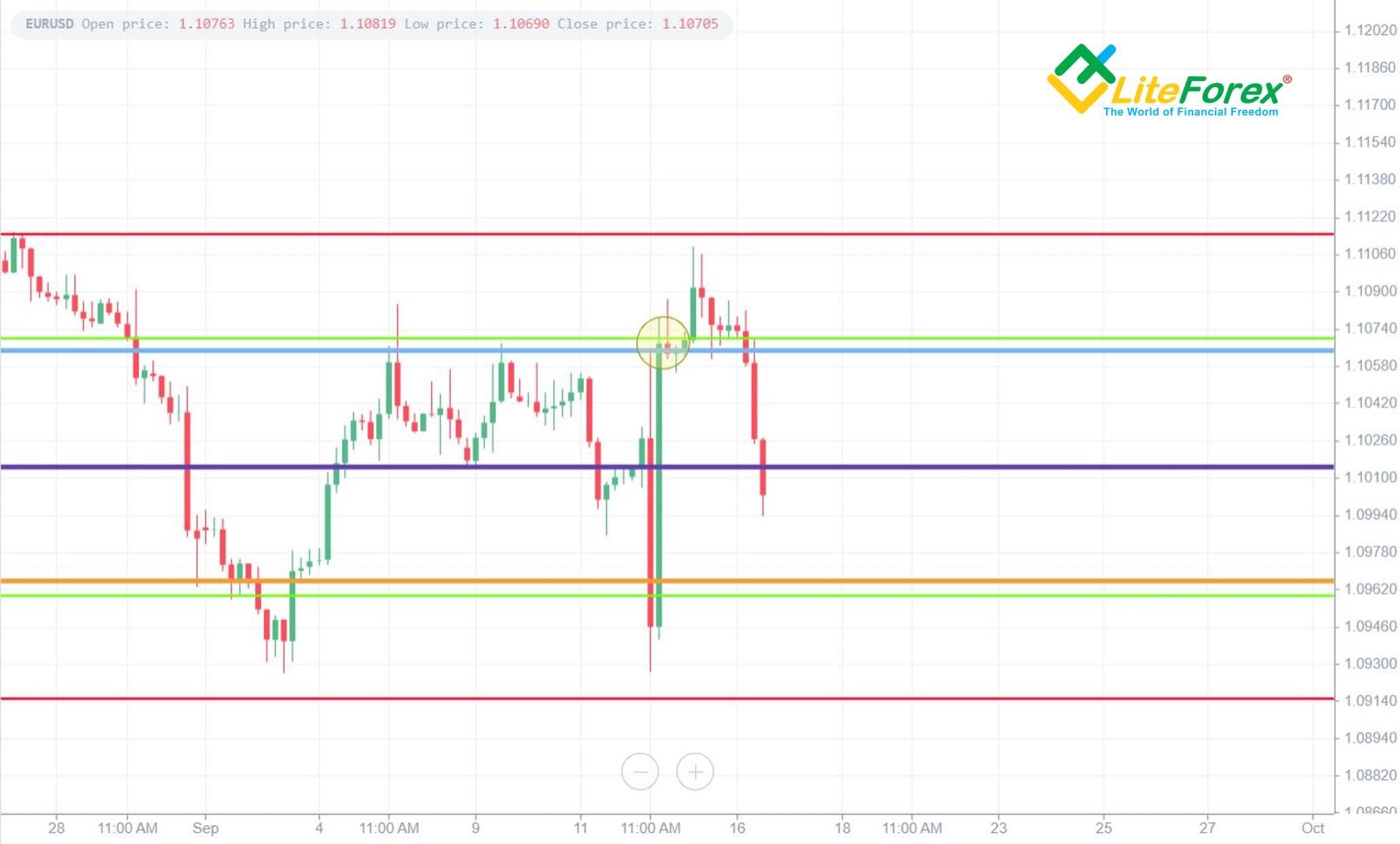
Then, the price goes up rapidly and crosses the take profit at the level 1.10700. The Buy order is automatically closed, and our profit doubles up to 2,100 points. The Sell order is activated and a pending Buy order is placed. As you can see, the price almost reaches the stop loss level of the Sell order and comes back down.
However, what would happen if the price reached the Stop Loss level?
The answer is simple - in this case, we would update the base price based on the result of the last formed candlestick, do a new calculation of the interval and re-place pending orders taking into account the new input data.
However, since there are no signs of the end of the sideways movement or its shift up or down, we continue to use the Forex grid system without changes.
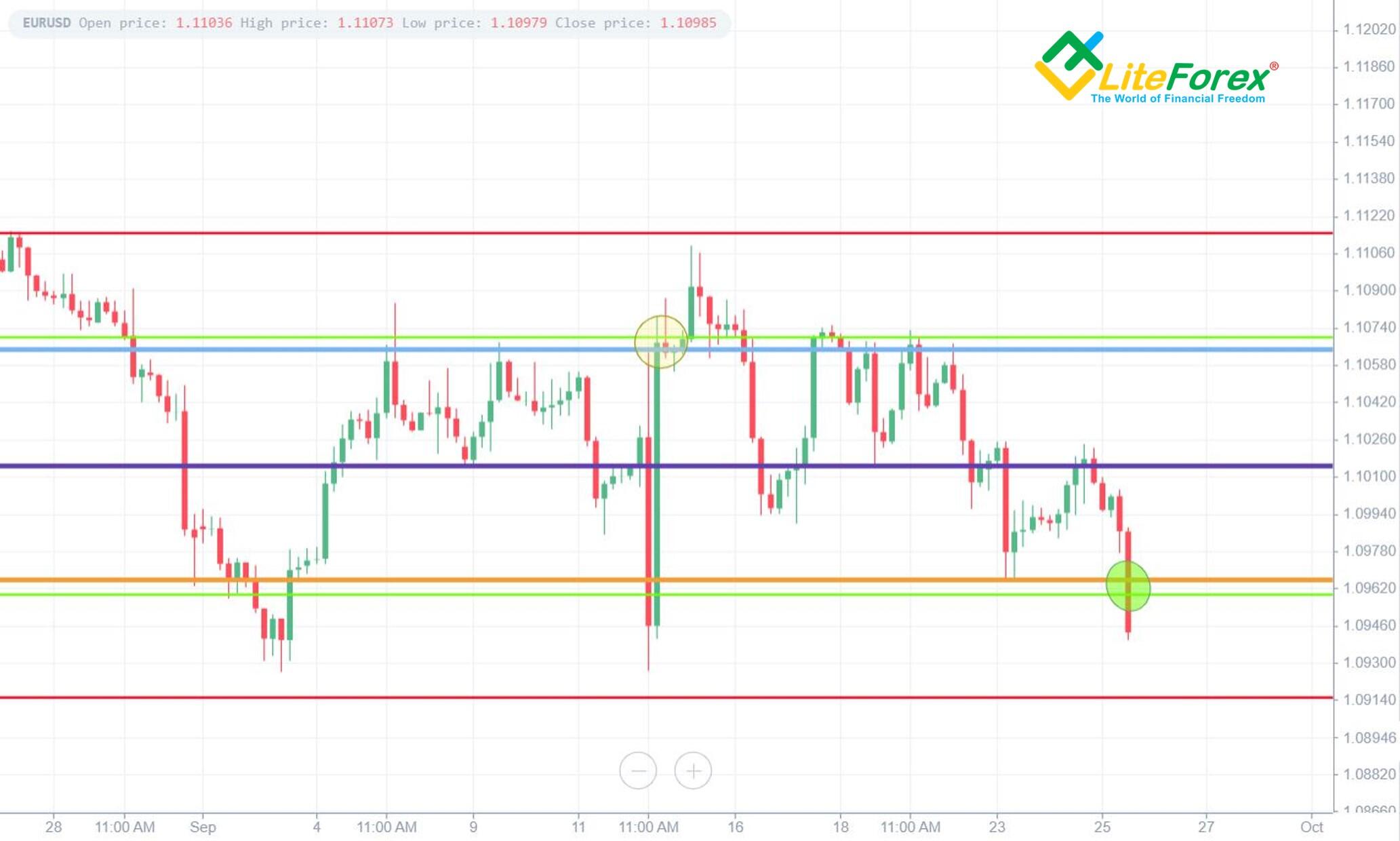
After some upward movement, the price goes down in steps and reaches the lower Buy Limit order (green oval). Then it crosses the take profit level of the Sell position, taking the current profit at 0.01050 points. The total profit of the three closed positions now is 3,150 points without spreads.
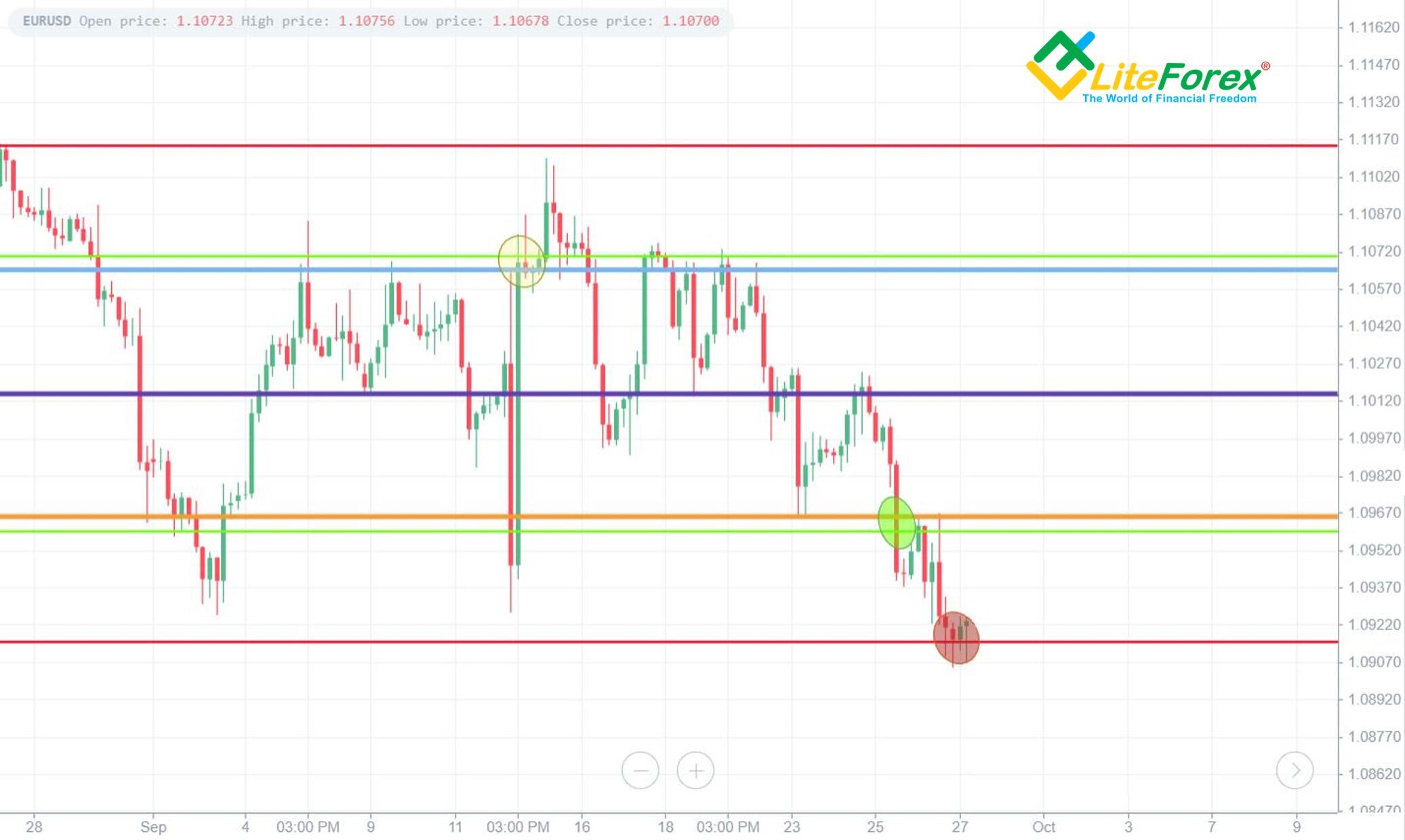
Then the price chart crosses the automatic stop loss level of the active Buy order (see the red circle). Therefore, we subtract from the total profit the loss of 500 points and it is now equal to 2,650 points.
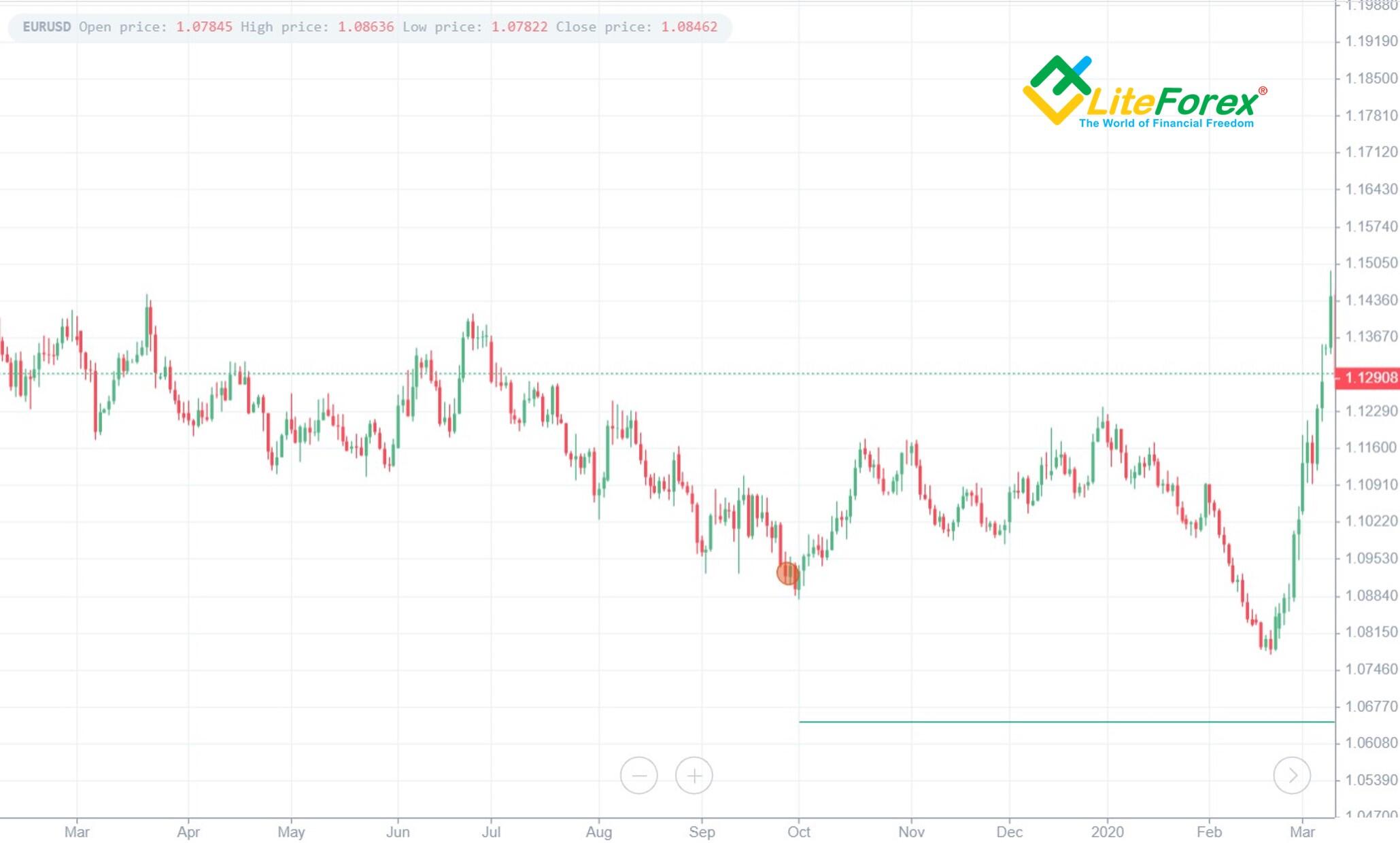
As I said above, the grid strategy allows you to hedge risks on the Forex market. The remaining profit of 2,650 points would be enough to cover the losses in the main buy position in EURUSD in a comparable amount up to 1.06500. The chart shows that until the moment of a strong upward impulse, we did not see the crossing of this level (marked with a green ray). And given that the work of the grid strategy does not stop there and the profit will constantly expand the break-even range for the main position, we can talk about the grid system being effective as a hedging instrument.
I highly recommend testing this strategy in manual mode with small lots or even on a demo account. This will help you work out the mechanics of the strategy and understand how to work with it. All the necessary tools are available from LiteFinance. After you gain experience trading with this strategy, the next big step for you is to use a quality Forex Grid master or Forex Grid trader. In other words, this is a trading robot / advisor that will automatically set the grid. This will save a lot of time, as well as rid your trading system of the notorious human error. I will talk about this later in this article.
Forex grid strategies
As I said above, high volatility markets are considered difficult for most traders to profit from. On the one hand, the limited range of price fluctuations does not provide any significant profit. On the other hand, the frequent change in the direction of price movement complicates the analysis, increasing the risks many times over. But this is only true for classic trading methods.
The Forex grid strategy is their exact opposite. Even its simplest version presented above demonstrates high accuracy. It therefore allows you to consistently profit from recurring price fluctuations. But at the same time, even the best Forex grid strategy demonstrates low efficiency in the case of a stable unidirectional trend movement.
Absolutely any grid hedge strategy is based on placing "mirror" (opposite) orders. In most cases, positions are placed against the trend, because during the back-and-forth development of the market, price movement in one direction inevitably leads to a quick reversal. Thanks to this, we can simplify the market analysis, since we don’t need to forecast the upcoming price movement in any direction. The usual number of orders placed on each side of the base price is 3-4. In this case, the setting interval can be either fixed or dynamic, and tied to the support and resistance levels of the Pivot indicator or any other instrument that allows you to identify the traded levels.
In principle, Forex hedging with a grid trading strategy is suitable for trend following. However, its effectiveness will be low. In this case, orders with a higher price are placed to buy, and orders with a lower one - to sell.
Let's discuss how to implement a successful grid trading strategy, regardless of which of the methods below you will use:
- Choose the instruments on which the Forex grid hedge strategy works best. You should choose instruments that you can make money on both in a bullish and a bearish market. They include Forex currency pairs, futures, and cryptocurrencies. The latter are characterized by high volatility and most of them are ideal instruments for grid trading. But stocks, with rare exceptions, are not what we’re looking for. Some of them cannot be traded short or have high commissions. By the way, with LiteFinance you can short any stocks. However, the main problem with stocks is that trend movement dominates there, and hedging with a grid strategy will not work effectively. As for timeframes, this is purely individual. If you intend to place orders manually, then it is better to select large timeframes. Otherwise you may simply not have time to place new pending orders, take profit and stop loss. Any timeframes with cyclical price movement and channel tracing are suitable for trading with advisors.
- Almost any Forex hedging grid strategy involves opening a large number of orders. So you need a broker that does not charge a commission for opening orders or charges minimal commissions. Again, LiteFinance is an excellent alternative to most other brokers in this matter. A backup option is a sufficiently large deposit, which will significantly expand the trading grid to a large number of pending orders on both sides of the base price. However, in this case, the efficiency of grid trading will drop sharply.
- In the process of placing pending orders, you need to clearly define the step of positions, as well as the intervals for setting take profit and stop loss.
Forex grid hedge strategy
The Forex grid hedge strategy is classic grid hedging. The essence of the method is to place pending orders opposite in direction, with stop-loss and take-profit orders for each of them. I talked about placing such orders above.
After the pending positions are set, there are three possible scenarios, two of which are favorable:
- If the price starts moving in one specific direction, having previously triggered an order in the same direction, then it will liquidate all trades placed against the main movement and collect Stop Losses for these positions. The result of this scenario will be neutral - with the correct placement of positions, the resulting profit should compensate for losses from liquidated positions.
- Consolidation is observed in the market, and all positions are opened and take profit levels intersect on each side of the base price.
- The price opens a position in one direction only, does not cross the take profit, and then starts moving in the opposite direction. In this case, the only open position will be unprofitable.
The last unfavorable option is one of the drawbacks of the Forex hedging grid strategy, which does not allow you to rely on this method entirely and get 100% profit.
Forex Double Grid Strategy
This strategy is neutral - it does not require the trader to predict the likely price movement. At the same time, it has high requirements for the setting and execution of stop losses and take profits.
One of the key differences in the Forex Double Grid Strategy is the double trading grid. Suppose the EURUSD currency pair is currently trading at 1.1000. To create a grid, we need to do the following (I indicated the prices in the tables without taking spread into account).
Buy:
| Order type | Price |
Buy Stop | 1,1060 |
Buy Stop | 1,1045 |
Buy Stop | 1,1030 |
Buy Stop | 1,1015 |
| Buy | 1,1000 |
Buy Limit | 1,0985 |
Buy Limit | 1,0970 |
Buy Limit | 1,0955 |
Buy Limit | 1,0940 |
Sell:
| Order type | Price |
Sell Limit | 1,1060 |
Sell Limit | 1,1045 |
Sell Limit | 1,1030 |
Sell Limit | 1,1015 |
| Sell | 1,1000 |
Sell Stop | 1,0985 |
Sell Stop | 1,0970 |
Sell Stop | 1,0955 |
Sell Stop | 1,0940 |
The grids in these tables are mirrored. It means when one group of positions is in profit, the other will be unprofitable and vice versa. The number of positions in each grid can be completely different: from two (excluding market orders) to 5, 10 or more. It is important that both grids contain the same number of positions of the same volume. Grids consisting of a small number of positions are easy to use, but they do not always allow flexible risk management.
There are several ways to trade the double grid system. The first way involves managing the two grids as separate systems. Each side has its own take profit and stop loss.
The second option resembles a swing strategy: it involves separate management of trading pairs. It is effective when the market is experiencing sideways volatility requiring take profit and stops for each currency pair. This option is suitable for large timeframes and a small number of positions in each of the grids.
The key to getting the most out of your strategy is active experimenting. The intervals for setting take profit and stops will differ depending on the instrument traded.
Now let's take a close look at the principle of trading with a double grid strategy:
- Stop orders to buy and sell are opened in the direction of the trend when a predetermined level is crossed
- Buy limit orders are executed if the market falls below the current level and stopped when the market rises.
- Sell limit orders are executed when the market rises above the current level and stopped when the market falls.
Now let's talk about risk control. Each of the two trading grids must have clear boundaries for profit and loss. Take profits and stop losses are placed according to the same principle that I showed in the examples above. It makes sense to place stop losses at the level when the profit received from the open trades in one grid will exceed the loss from positions in another grid that is mirrored to it.
When the stop loss density is too high, “market noise” can cause some trades to close before they can generate a profit. Therefore, the minimum possible placement of stops is considered to be slightly higher or lower than the level of the hedging position, depending on the direction. So the hedging trade must be opened before the stop loss is triggered.
Pros of the double grid strategy
You can get profit without predicting which direction of the market.
- The strategy works great in volatile markets without a pronounced trend.
- With a thoughtful positioning, you can get a big profit using the full potential of rapid price fluctuations along the trading grid.
- The amplitude of fluctuations is easily calculated by analyzing the previous cycles.
- The strategy contains many repetitive actions that are easily automated.
Cons of the double grid strategy
Frst of all, like other methods of grid trading, this strategy is not particularly effective during the formation of strong trends. If we compare it with the classic Forex grid hedge strategy, the double grid is more complex in terms of management. Because of this, beginners often place orders at sub-optimal prices, make mistakes with take profit and stops, and deprive themselves of the opportunity to get high profits over and over again.
Forex grid trading ea review
As I said above, the grid system is easily automated. Next I will do a Forex grid trading ea review of the Forex VR Smart Grid, a multifunctional advisor that allows you to trade using order grids. It can show positive results not only during the sideways movement of the market, but also in trend movements.
The grid trading robot is designed to work with any timeframes and financial instruments: currency pairs, futures, CFDs, cryptocurrencies, or metals. To start trading, it uses a simple algorithm based on the signals of the CCI indicator. When the indicator is in the oversold zone, the robot opens a long position, and when in the overbought zone - a short one. When entering the breakeven zone by stop loss, the robot will add new positions, thereby increasing potential profit.
The grid of orders against the trend is closed by hedging them. The grid trend multiplier can hedge all positions, or the last two, or the lowest, and the highest. There is also a Smart Hedging option available, when the robot chooses the most optimal method from the ones described above.
Positions are closed with a minimum profit set in the settings. In addition, positions with the highest risk can be closed using accumulated profit, taking into account broker commissions and swap costs.
Grid trend trading ea download: you can download VR Smart Grid here. In addition to the standard version, a demo version is available on the page. I will use it to show the principles of trading with an advisor.
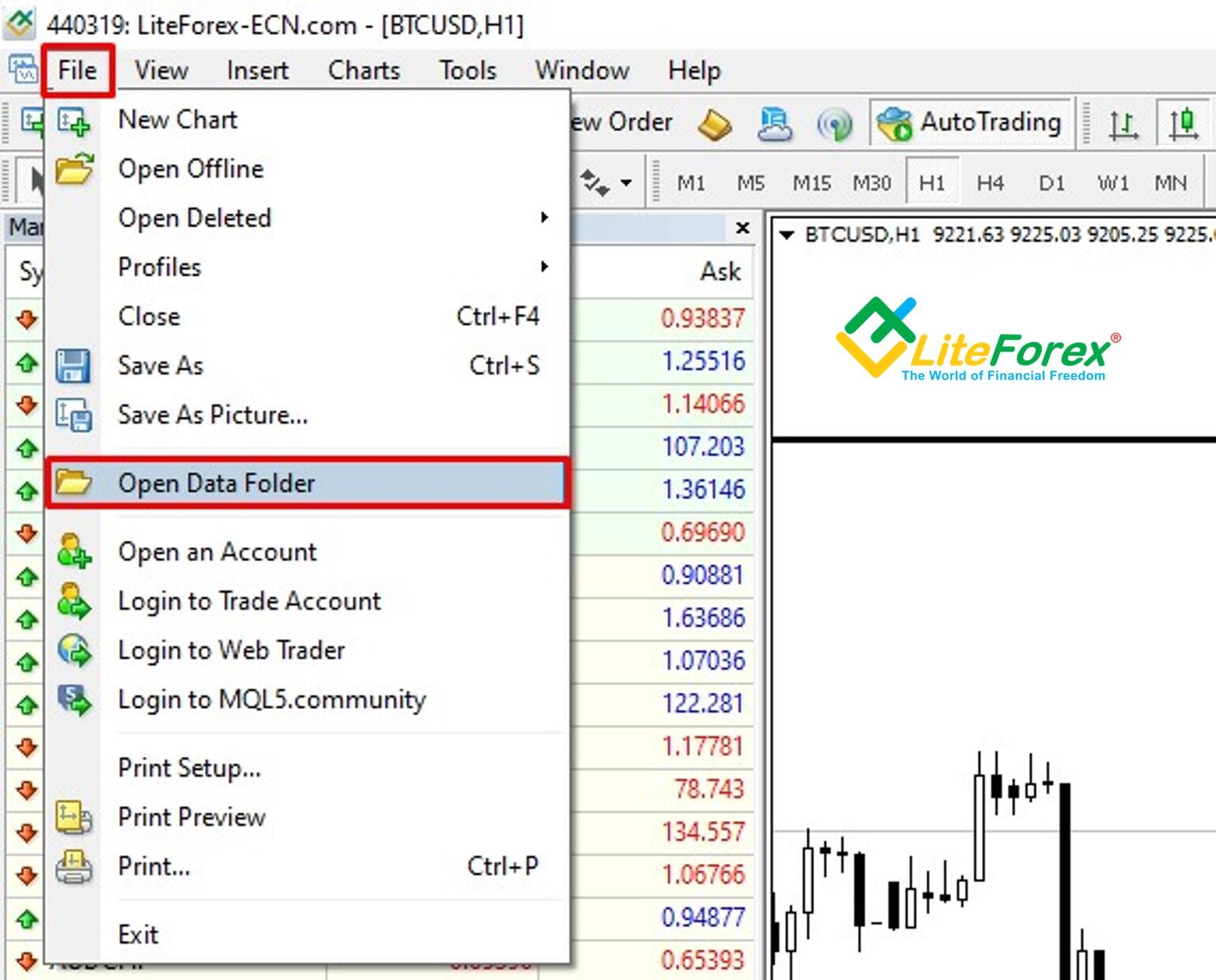
To install VR Smart Grid ea MT4, first of all, you need to launch the terminal, select the "File" tab in the top menu, and "Open data directory".
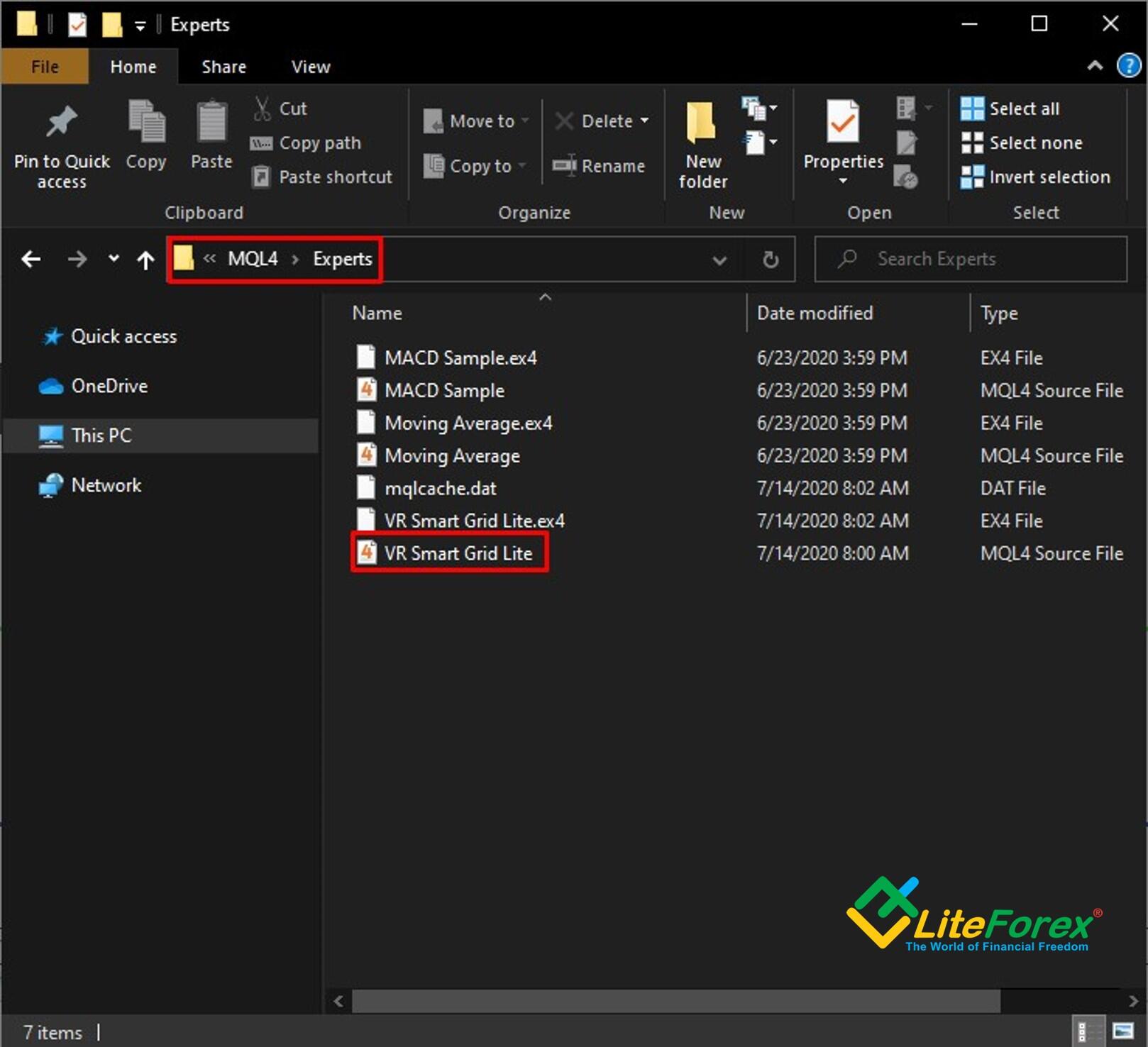
This will open an explorer window. In it, go to the "MQL" folder, then to the "Experts" directory and copy the downloaded robot file into it.
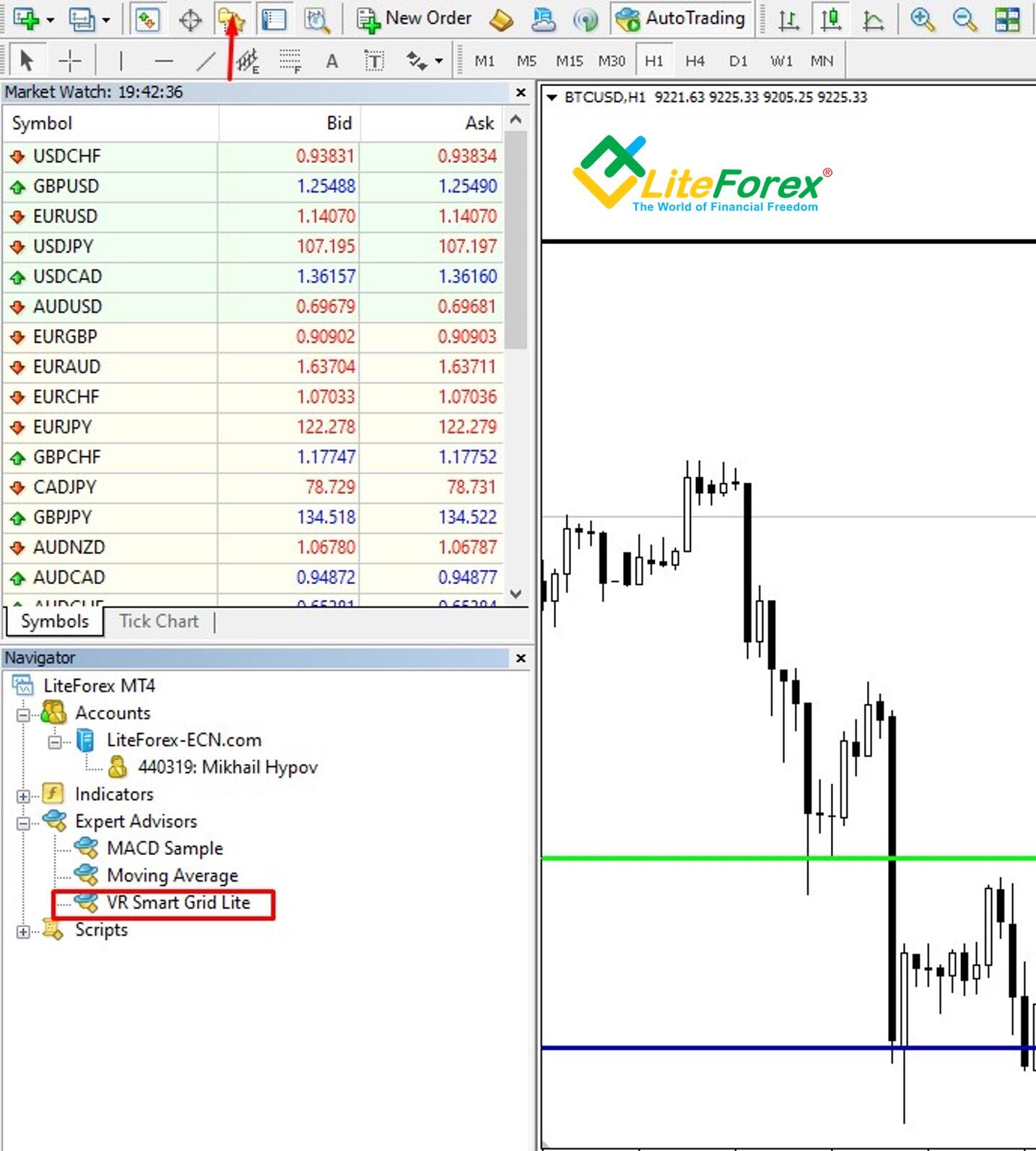
To complete the installation, restart Metatrader. To check if the installation was correct, open the "Navigator" menu, choose the "Advisors" tab and check for the name "VR Smart Grid" in the list.
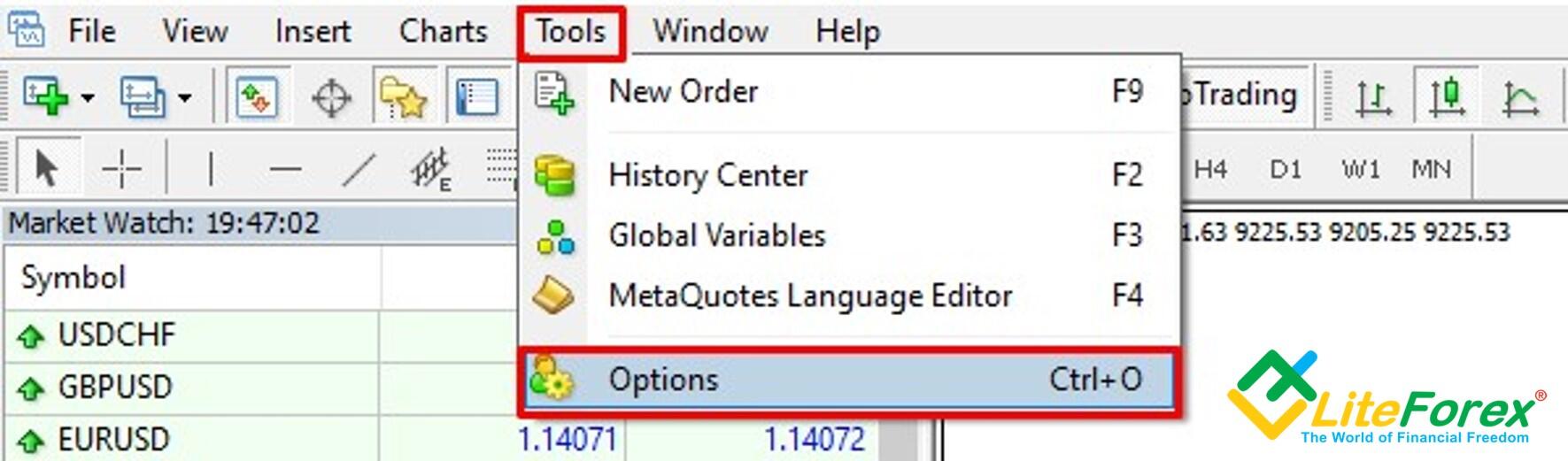
I also recommend making sure that the platform settings are activated, which are necessary for the robot to work correctly. To do this, in the top menu select the "Service" tab, then in the drop-down menu select "Settings".
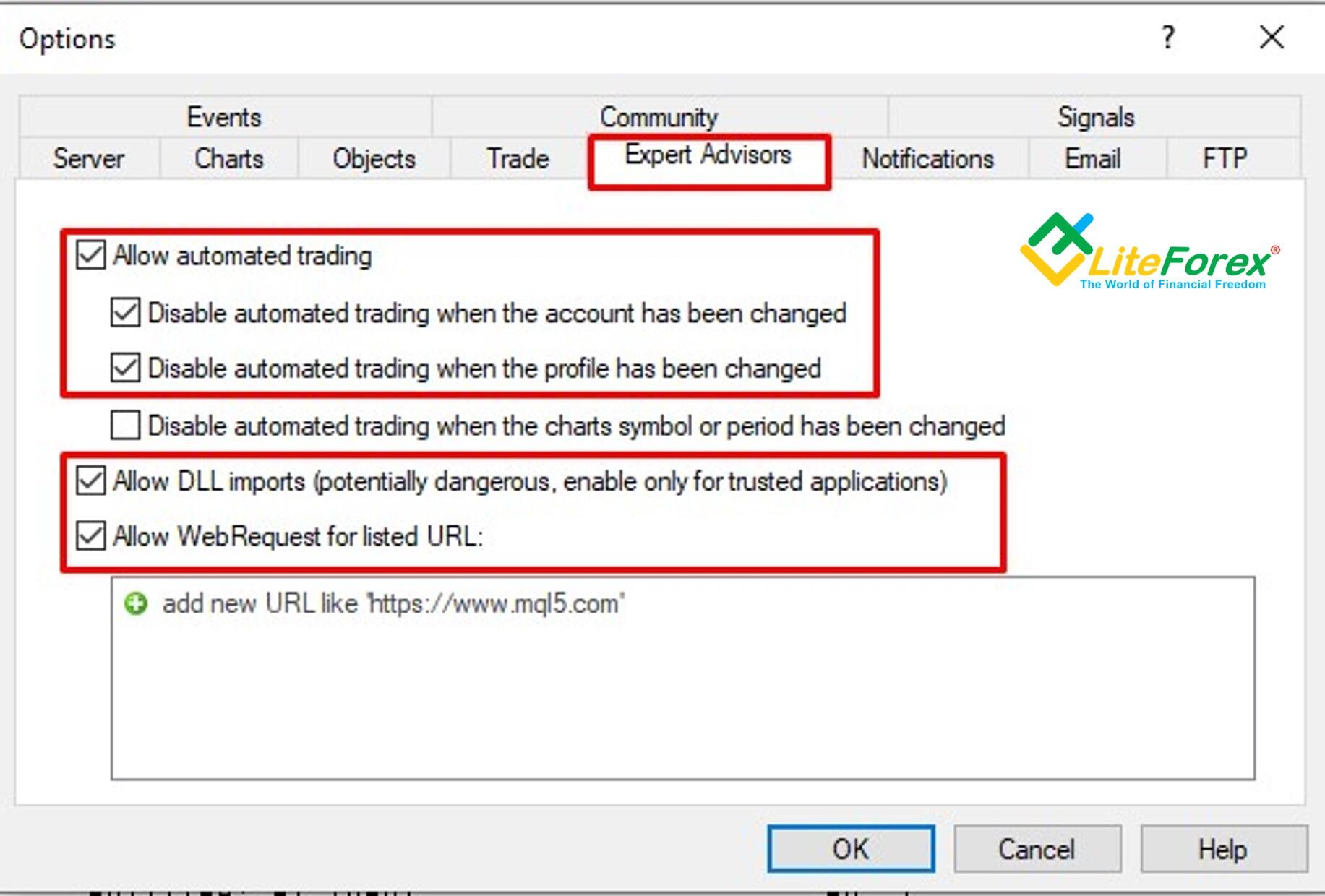
In the window that opens, open the "Expert Advisors" tab. The items "Allow automatic trading", "Disable automatic trading when changing account", "Disable automatic trading when changing profile", "Allow DLL imports" and "Allow WebRequest for the following URLs" must be checked.
Setting up VR Smart Grid Expert Advisor for MT4 (Magic Number)
The VR Smart Grid settings window opens immediately after dragging the Expert Advisor from the Navigator window onto the chart.
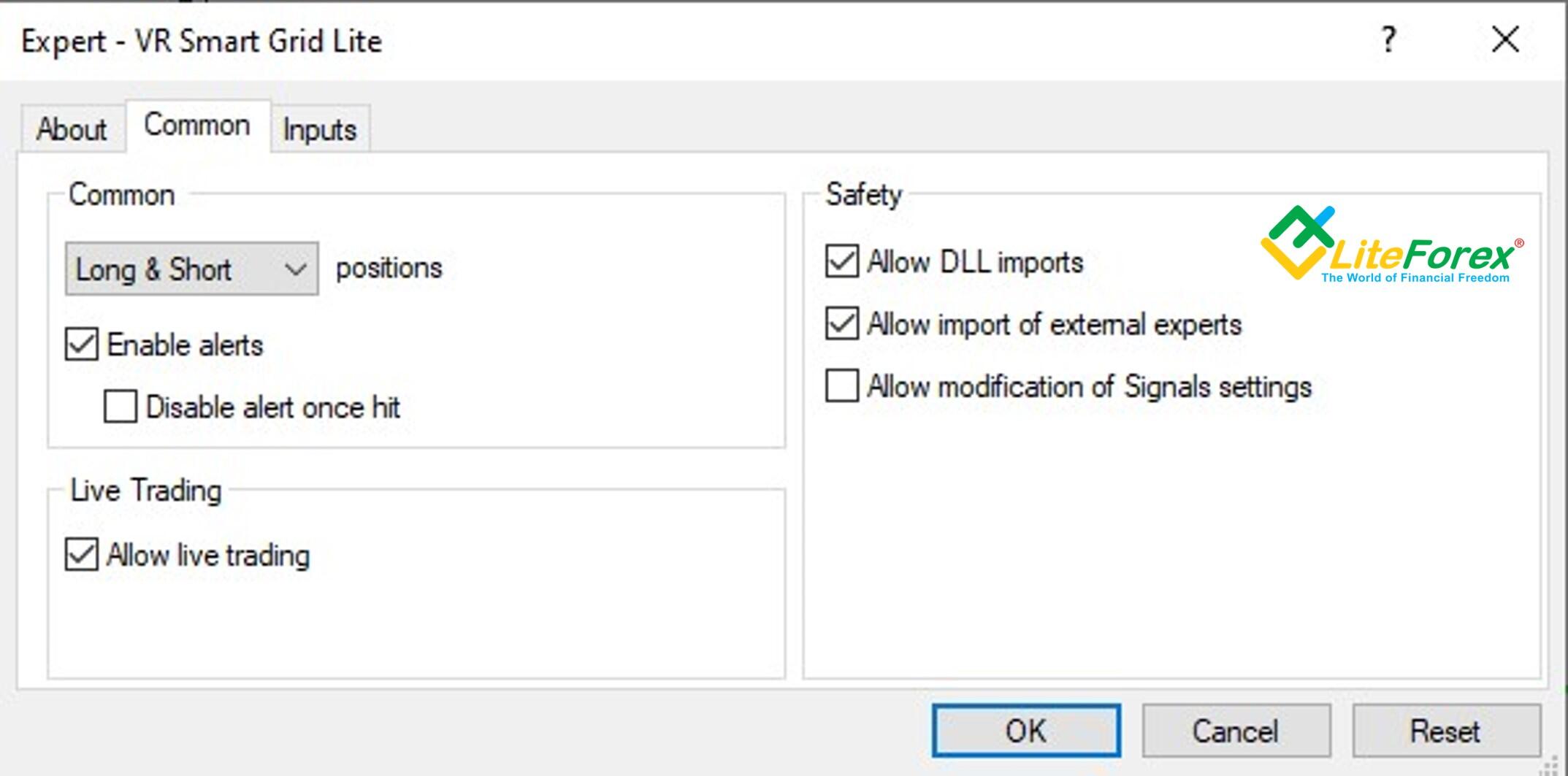
In the "Common" tab, you can configure the type of positions that will be used by the trading robot, allow or prohibit the EA to trade, and add or exclude import permissions.
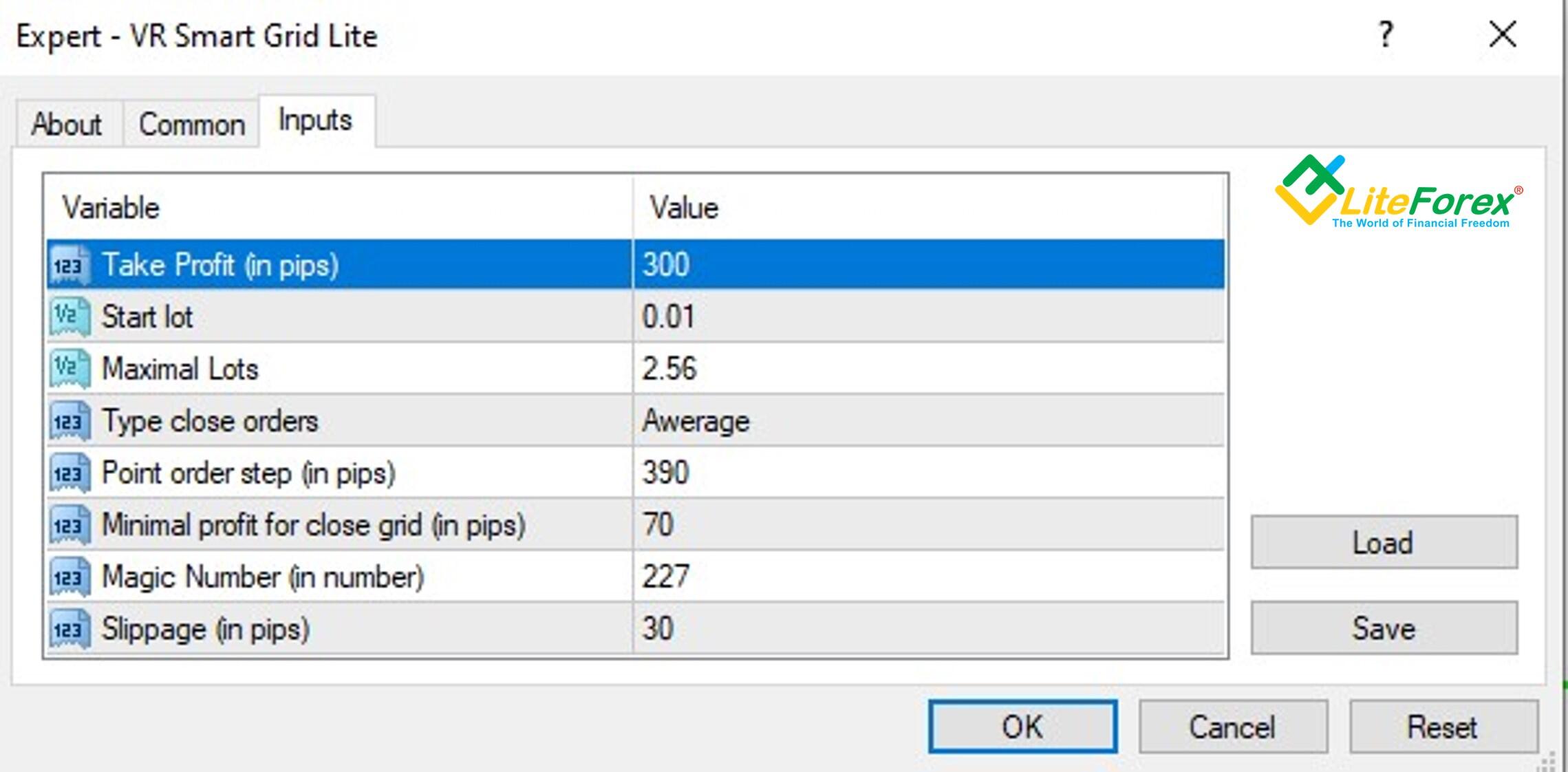
Trading strategy settings are in the "Input parameters" tab:
- Take Profit (in pips) - sets the take profit level.
- Start lot - sets the size of the initial lot.
- Maximal Lots - sets the maximum lot size.
- Type close orders - method for closing orders. Here you can select one of two parameters: Average and Part close.
- Point order step (in pips) - this parameter sets the step between the order grid.
- Minimal profit for close grid (in pips) - minimum profit required for the robot to close the grid.
- Magic Number - the identifier used by the Expert Advisor to identify the orders it has opened. Such identifiers are required when launching multiple robots. If you leave the field at zero, the robot will be able to close any position, and if you assign it a number, it will only close only positions with this number.
- Slippage (in pips) - the difference in pips between the planned price and its actual value, at which the trading robot will not open positions.
The settings may differ for each trading instrument. The author of this advisor herself recommends testing the robot on a demo account or a test live account with a small amount for 2-4 weeks.
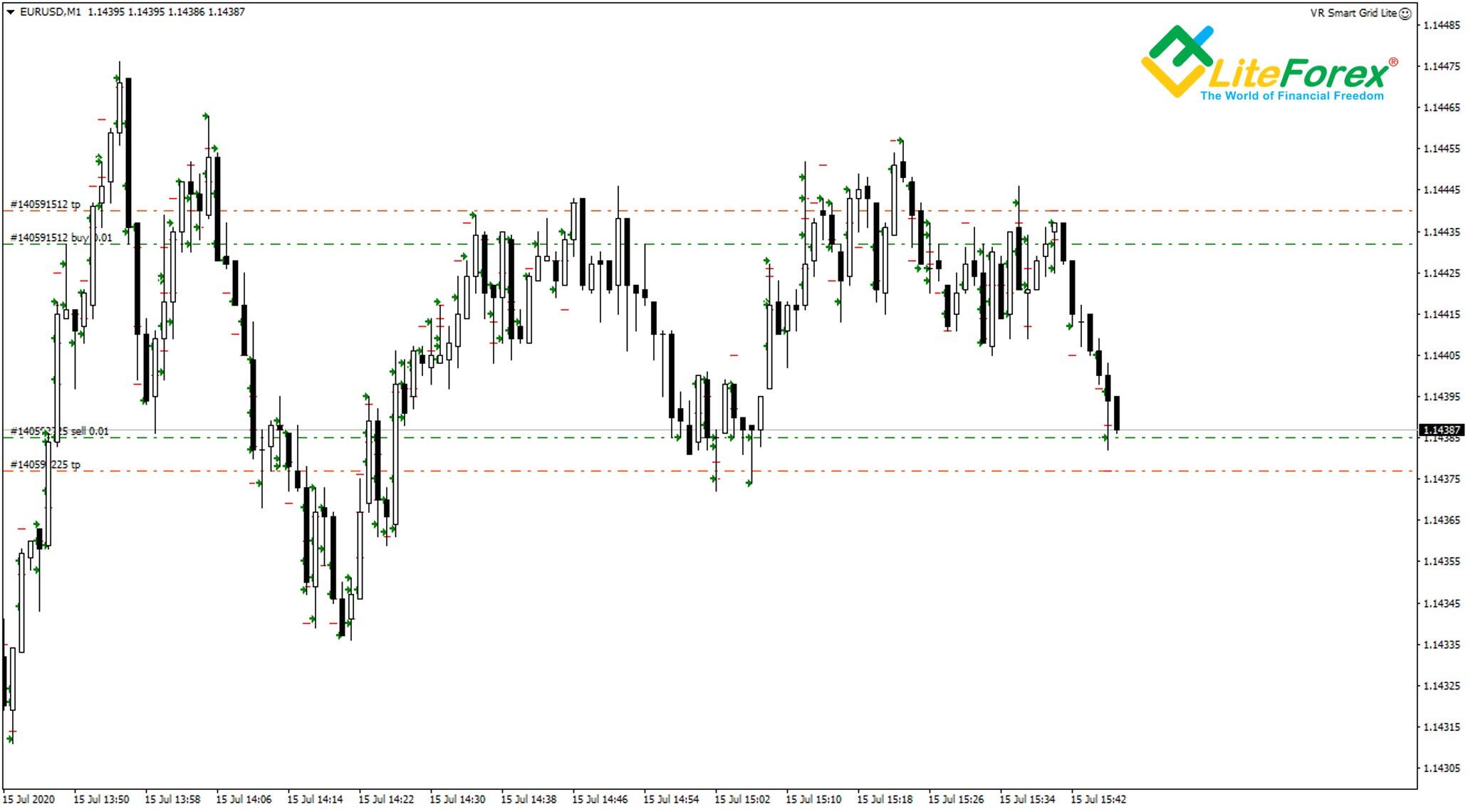
The chart shows the VR Smart Grid Expert Advisor. The algorithm draws arrows in the chart for open positions and dashes for take profit levels. The trading robot is based on the principle of opening the maximum number of trades in both directions. Long and short positions are initially controlled separately from each other. They are combined into a single system only when the advisor detects the possibility of hedging one of the sides due to the excess total profit on the other side.
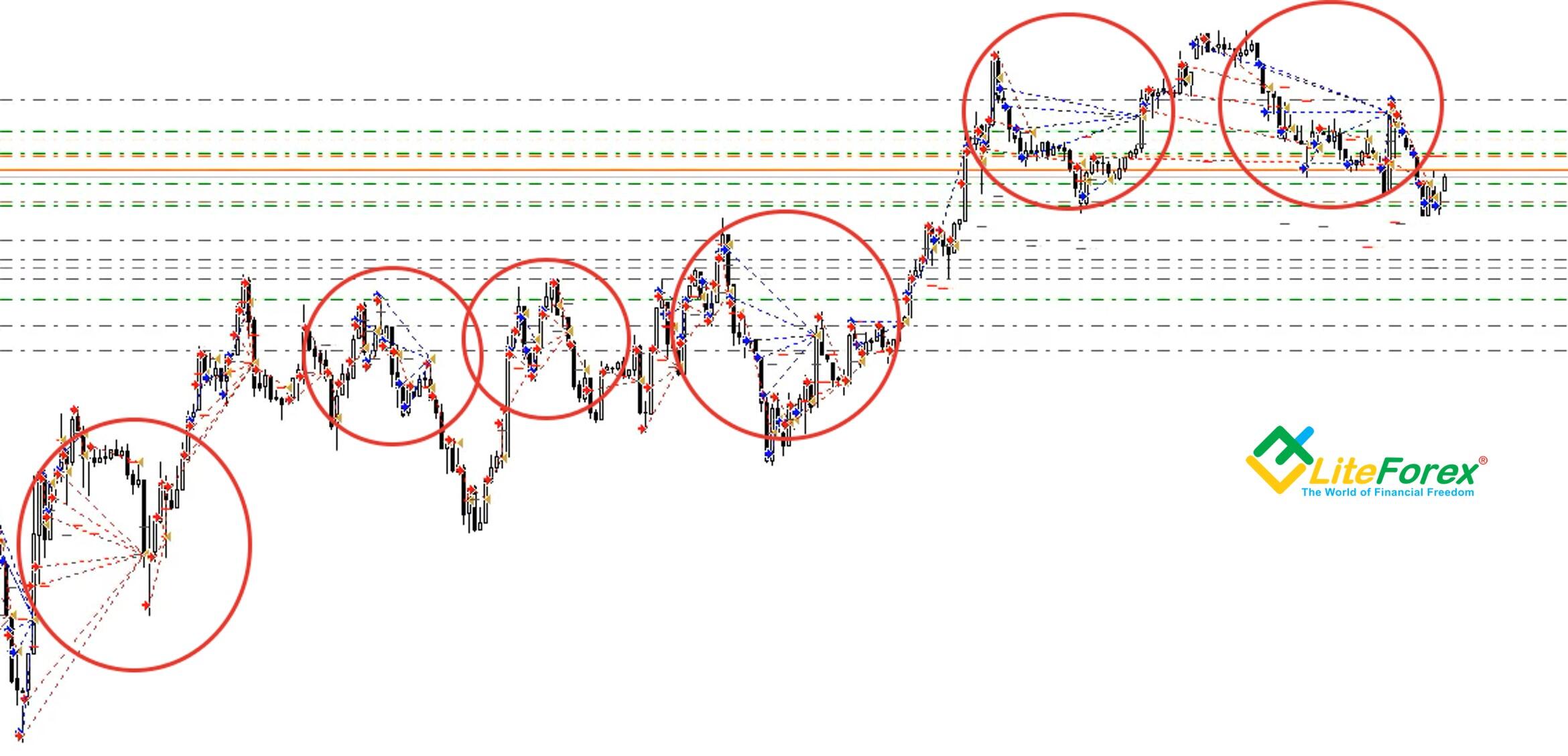
In the chart such combinations of orders look like a bundle of dotted lines, which converge at one point.
VR Smart Grid Expert Advisor is an excellent example of grid strategy automation. Although it is not the Grail, in skilled hands with due diligence, risk management rules and continuous testing, it can bring positive results. I also recommend looking at the Grid Trend Multiplier trading advisor.
Not all brokers allow the use of such tools. Many are openly against such trading automation tools. Don’t waste your time on searching, try this robot with LiteFinance. LiteFinance clients can also rent VPS servers directly from their personal account. Thanks to this, you don’t have to set up the server, you can start trading and setting up robots immediately. Trading quotes and server capacities are supplied by a single provider, thus ensuring reliable and fast operation of advisors around the clock.
Crypto grid trading: an example of using on the cryptocurrency market
Cryptocurrency markets are highly volatile and therefore are great for applying grid strategies. At the same time, cryptocurrency trading is no different from trading with conventional currency pairs. Let's look at the simplest grid through the example of BTCUSD.
Crypto grid trading begins with the formation of a price grid. In the classic version, you use the current price and place pending orders at regular intervals from it. This time we will use another grid trading crypto method - we will calculate the arithmetic mean of the local high and low and take it as the base price. In your trading you can either use the proposed method for calculating the base price or the classical method.
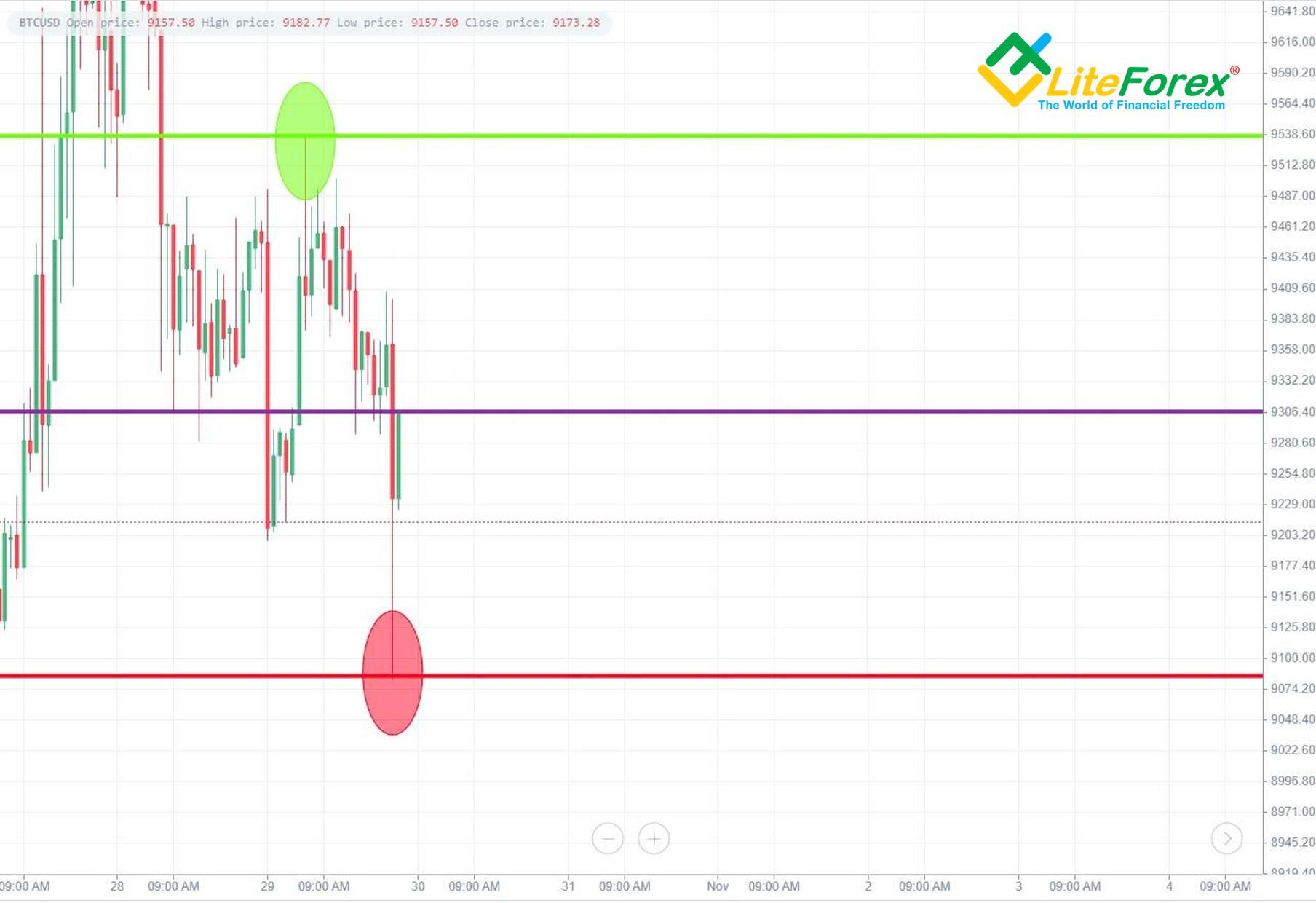
The local high marked with a green circle is 9,540 points, and the local low (red circle) is 9,080 points. Thus, the optimal base price, from which we will count the levels of pending orders, is 9,310 points (purple horizontal line).
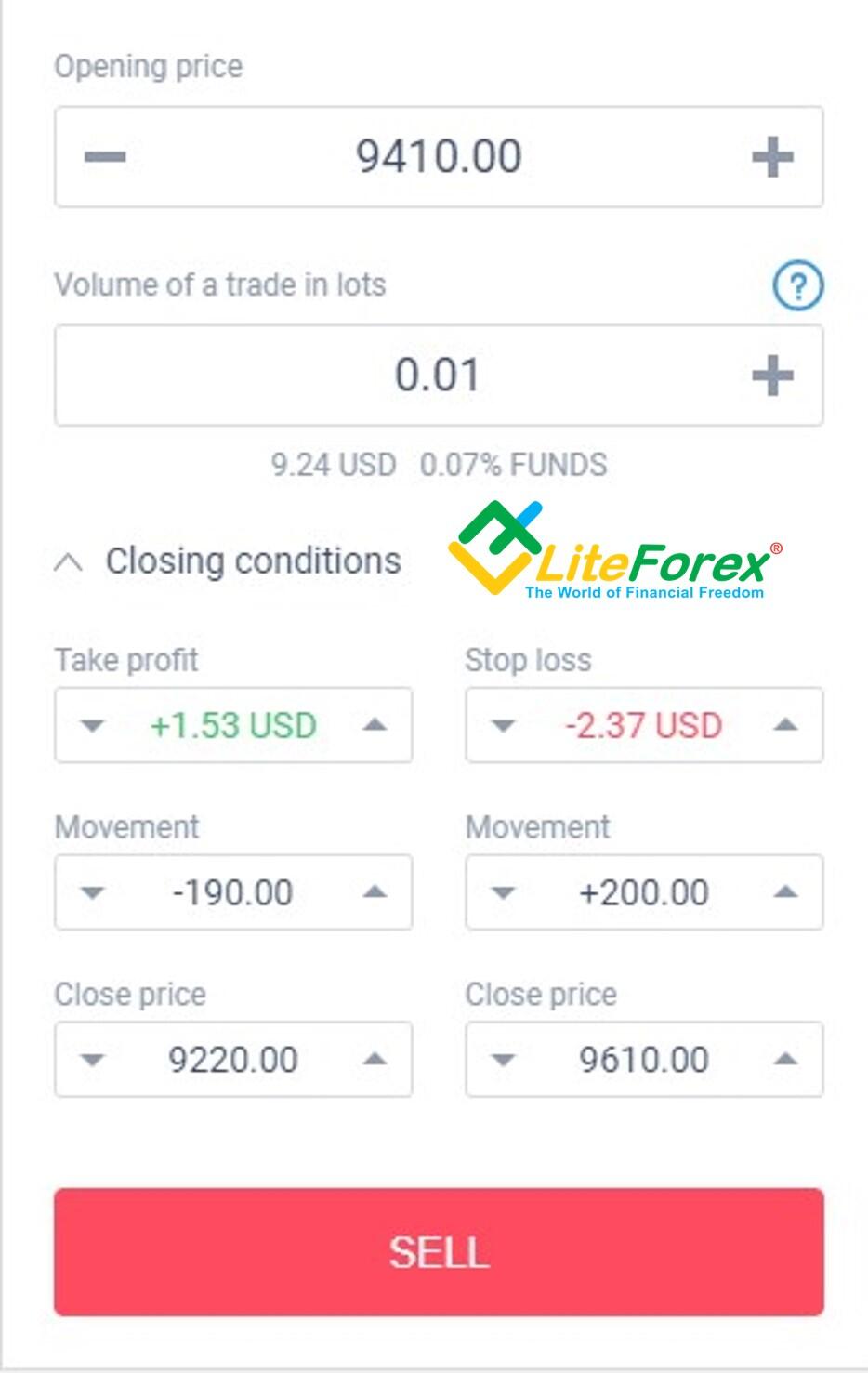
Now we form a trading grid by progressively opening positions. There will be two pending Sell Stop orders and two Buy Stop orders in total.
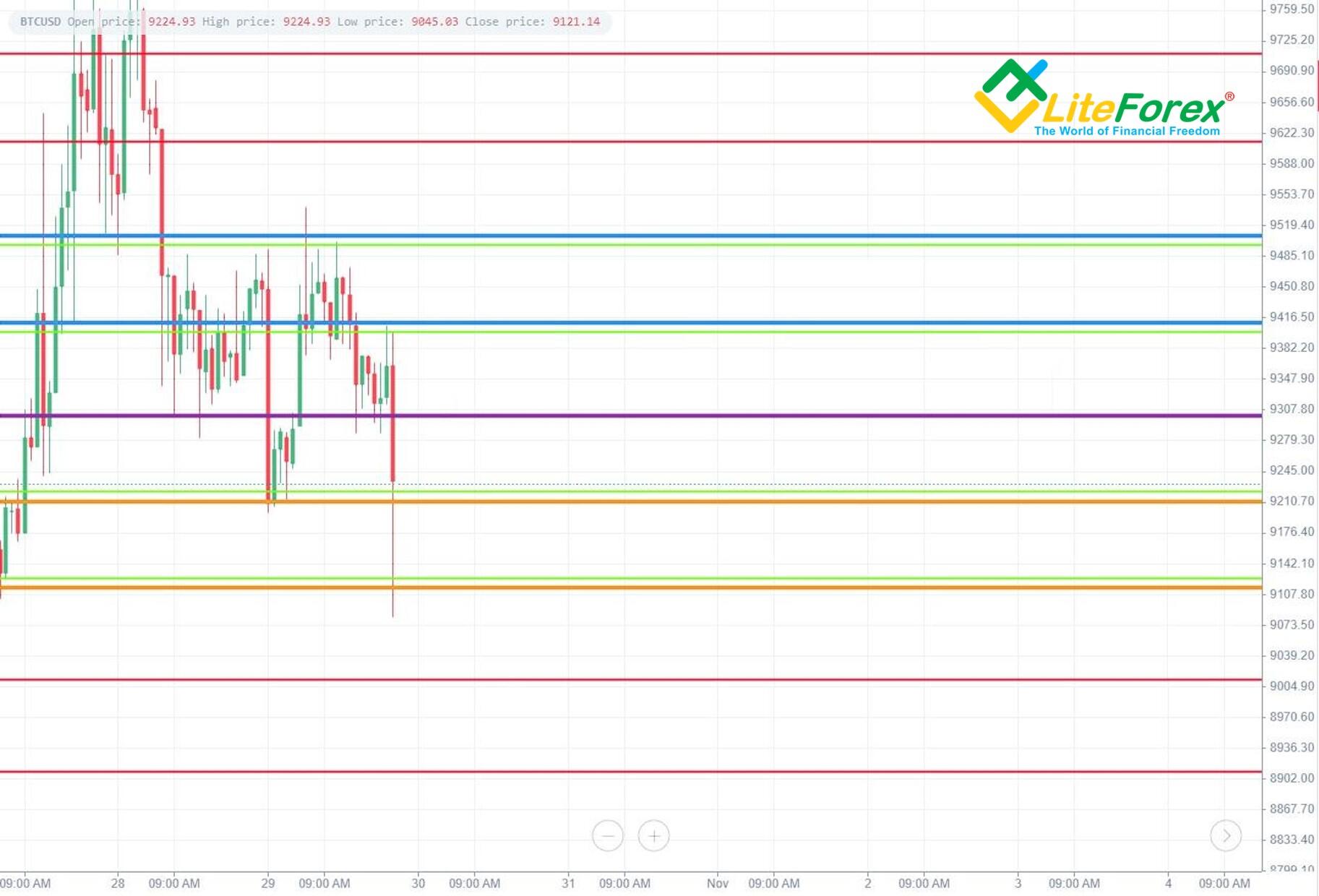
In this strategy, we will calculate the interval taking into account the channel width and the maximum number of orders. Taking into account that the width of the trading channel is approximately 500, the optimal step for pending orders is 100 points. That’s because in this case the price amplitude will presumably cover the entire grid based on the maximum number of orders: 4 orders + 1 base price. As for the intervals for stop losses and take profits, they are 200 points. I made them a little smaller in the chart for clarity, so that the stops do not overlap with positions. Sell Limit is marked with blue lines, Buy Limit with orange lines. I depicted stop losses with red lines, and take profits with green lines. Since there are two orders in this example on each side, the base price will be recalculated after crossing the extreme second level of automatic stop loss. If only one stop loss out of two is triggered in one direction, a new pending order will be placed in the stead of the liquidated position.
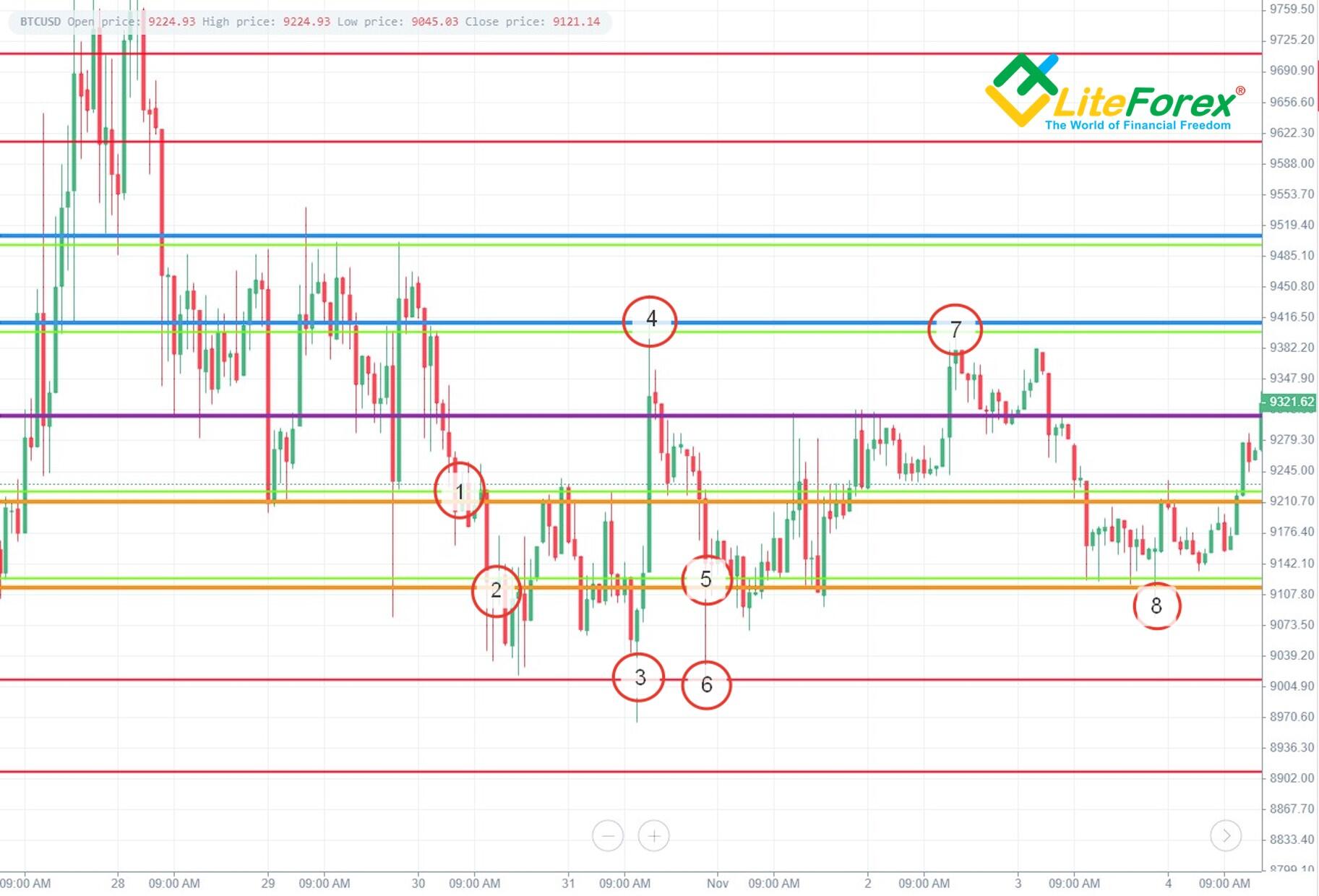
When using the grid strategy for trading Bitcoin, we saw the following picture:
- A position is opened for the first pending Buy order.
- A position is opened for the second pending Buy order.
- The stop loss of the first Buy order is triggered. The final result is a loss of 200 USD. The order for the Buy Stop is reopened in place of the first one with identical parameters.
- An order to open the first pending Buy order is executed. The take profit level of the second Buy order is triggered. A position is opened for the first pending Sell order. The final result is 0 USD.
- The take profit level of the first Sell order is triggered. A new limit order for a Sell order is placed in the stead of the executed order. The final result is a profit of 200 USD.
- The stop loss of the first Buy order is triggered. The order for the Buy Limit is reopened in the place of the first one with identical parameters. The final result is 0 USD.
- The take profit level of the second Buy order is triggered. A new limit order for a Buy order is placed in the stead of the executed order. The final result is a profit of 200 USD.
- The take profit level of the first Sell order is triggered. A new limit order for a Sell order is placed in the stead of the executed order. The final result is a profit of 400 USD.
As this experiment has shown, the Grid strategy is capable of generating profit in the cryptocurrency markets. When placing orders and calculating intervals, you need to make allowances for the extremely high volatility of this trading instrument and possible losses due to slippage of stop losses. To avoid this, it is recommended to use this strategy exclusively for highly liquid cryptocurrency pairs.
Grid trading FAQs
Grid trading is a method that allows you to make a profit by placing hedging orders below and above the base price. It provides the greatest profit making opportunities during a sideways movement, when the price goes first up and then down in a cycle. In this case, pending orders are placed against the trend, so sell positions are located above the base price, and buy positions are below. Orders are placed with the trend when a directed upward or downward movement is expected. However, this method is considered less efficient..
Grid trading on the Forex market is carried out by placing pending orders of the same volume but in different direction above and below the base price. This creates a so-called price grid. This method is mainly used when the price is moving sideways. Cyclical fluctuations allow you to first profit from orders located on one side of the base price, and then from orders on the other side. When taking profit, you need to update the pending positions so that they bring profit if the cycle repeats.
Grid trading works well in volatile markets at times of price consolidation and worse in trending markets. It is most often used to trade currency pairs, cryptocurrencies, and futures. The effectiveness of this trading system largely depends on the correct choice of the interval between pending positions, stop losses and take profits. A correct price grid allows you to profit from even the most insignificant market movement, and with an increase in the amplitude of fluctuations, you can increase your profit.
The essence of grid trading on Forex comes down to creating a price grid of pending orders. First, you determine the base price, from which you build pending positions at certain intervals. In the classic version, sell orders are placed above the base price, and buy orders below it. When the price goes up, sell orders are activated. After a downward reversal occurs, they generate profits that are locked in when they approach buy orders below the base price. After taking profit, you need to reopen closed positions in order to be able to get profit from the next cycle.
The successful application of the grid system is based on several principles. First, you need to select suitable instruments with high volatility. It is best to trade the grid system at the moments of market consolidation when the price fluctuates cyclically. The second important point is the correct calculation of the interval between positions and stop levels. The intervals should be such that pending orders are executed during the next price jump. And stop orders should not be triggered ahead of time, but also they must limit losses in case of a negative scenario. There is no better way to select all the parameters correctly and choose the right strategy than testing the system on a demo account.
Conclusions on the use of the grid system in trading
The grid system differs from most trading methods in that it is more suitable for trading in volatile markets, mainly sideways movement. It’s easy to learn and algorithmize, and it does not require special analytical skills. The disadvantage of this strategy is that you always have to be in the market. Having no open positions is rare when using this strategy, so requires constant monitoring of the market situation and attention. Many traders use Expert Advisors that set the price grid and take profits automatically. The most important parameters for the Grid strategy are as follows:
- As many open positions as possible. On the one hand, you need to be sure that you have enough resources to cover them and not catch margin call at the extreme point of the channel. On the other hand, you need to understand that the fewer orders, the lower the effectiveness of this strategy.
- The base price level is an important factor that impacts the effectiveness of the grid strategy. We analyzed two approaches to determining the base price. They are the arithmetic mean between the last two extreme points, or the current level of the last closed candle.
- The interval between orders, just like the base price level, is critical for the effective operation of the entire strategy.
Based on my own experience and the given practical examples, the most effective trading grid system should be one that allows a flexible approach to revaluation of the channel width, intervals, base price and the maximum number of orders. Adherence to your own risk and money management rules is critical when using this strategy. I strongly recommend to immediately practice the new knowledge. You can try everything I have described today in the convenient LiteFinance trading terminal, which I used when writing this article.
Good luck everyone!
Respectfully,
Mikhail@Hyipov
Just in case, I should remind you that all the information is presented as an example solely for educational purposes. This is not financial advice and I do not give any guarantees of profit. You make all trading decisions yourself at your own risk.
P.S. Did you like my article? Share it in social networks: it will be the best "thank you" :)
Useful links:
- I recommend trying to trade with a reliable broker here. The system allows you to trade by yourself or copy successful traders from all across the globe.
- Use my promo code BLOG to get a 50% deposit bonus on the LiteFinance platform. Simply enter this code in the appropriate field when funding your trading account.
- Telegram chat for traders: https://t.me/litefinancebrokerchat. We are sharing the signals and trading experience.
- Telegram channel with high-quality analytics, Forex reviews, training articles, and other useful things for traders https://t.me/litefinance
The content of this article reflects the author’s opinion and does not necessarily reflect the official position of LiteFinance broker. The material published on this page is provided for informational purposes only and should not be considered as the provision of investment advice for the purposes of Directive 2014/65/EU.
According to copyright law, this article is considered intellectual property, which includes a prohibition on copying and distributing it without consent.