

Dogecoin (DOGE) is the first successful meme coin that challenges the traditional concept of scarcity. Its blockchain uses a Proof-of-Work mechanism, in which the continuous issuance of coins is driven by mining. The asset's market capitalization remains in the top 10 even without a hard cap—that is, a strict supply limit—although the initial limit was set at 100 billion DOGE.
Unlike Bitcoin, Dogecoin's tokenomics originally had an inflationary nature, intended to support low fees and high transaction speeds. Dogecoin's unique issuance model is key to its long-term sustainability.
The article covers the following subjects:
Major Takeaways
Dogecoin has a fixed supply: 5 billion new coins are issued annually, with no maximum supply.
As the total supply of coins grows, annual inflation gradually decreases. It currently stands at around 3.1%.
The asset was created as a tipping currency with an emphasis on accessibility and speed, rather than scarcity.
Large holders control a significant amount of the supply: 149 wallets hold a record 108.5 billion DOGE.
On-chain metrics show a 28% weekly increase in active addresses, signaling a bullish trend despite sideways price action.
Dogecoin tends to exhibit a high beta relative to Bitcoin, amplifying overall crypto market movements and often setting the tone for the broader meme coin segment.
Capped supply does not necessarily imply hyperinflation, as the rate of supply dilution decreases each year.
Understanding Dogecoin's Origins and Purpose
Dogecoin was created in December 2013 by programmers Billy Markus and Jackson Palmer as a parody of the rapid rise of altcoins. The project launched without any white paper or roadmap: it was a meme coin featuring an internet meme featuring a Shiba Inu dog named Kabosu, not yet another attempt to spark a global financial revolution.
The idea was to create a user-friendly currency for microtransactions and tips on social media.
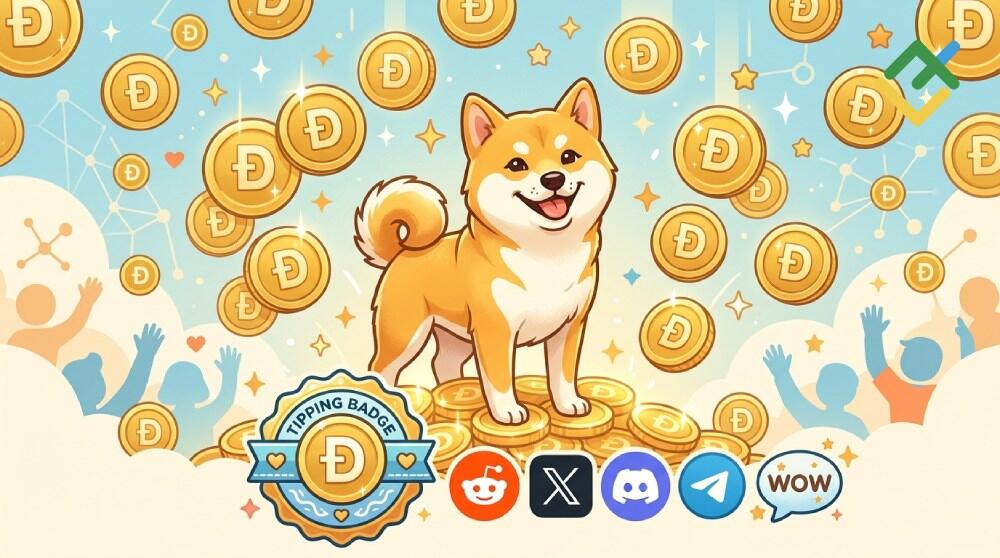
The community quickly embraced the project's low fees and friendly vibe, which helped the meme coin evolve into a fully-fledged means of payment. Over time, DOGE began to be used for crowdfunding, sponsorship, and charity.
Today, the project remains decentralized and continues to compete with other cryptocurrencies, including Shiba Inu.
How Dogecoin's Supply Works
The issuance of new Dogecoins is pre-programmed. Unlike Proof-of-Stake networks, where security is maintained by validators and staking, Dogecoin uses a Proof-of-Work mechanism supported by the mining process. Each new DOGE is created when a block is mined, with the process providing economic incentives for Dogecoin network participants.
Approximately 5.256 billion DOGE are added to circulation annually. This policy, established in 2014, was designed to ensure stable miner rewards and encourage spending rather than hoarding.
How Many Dogecoins Are There?
The total number of Dogecoins in circulation is about 154 billion. However, it is impossible to give an exact number, as miners generate approximately 10,000 new coins every minute, resulting in an annual increase of about 5 billion.
The circulating supply metric is used to estimate the current supply dynamics, rather than a maximum cap, since Dogecoin has no such limit. It is impossible by definition to ask how many Dogecoins remain to be mined: the coin's supply is unlimited and cannot be fully exhausted.
However, the annual supply is fixed, which gradually reduces its relative growth rate. In 2014, with a total supply of 100 billion coins, an additional 5 billion represented 5% inflation. With a current supply of approximately 154 billion DOGE, the same increase corresponds to roughly 3.1% per year.
Why Dogecoin Has No Maximum Supply
The project's creators originally designed Dogecoin as a means of payment, not a store of value. Initially, the coin had a supply cap of 100 billion DOGE, but it was later removed in favor of an inflationary model.
The inflationary model is a mechanism in which new coins are continually introduced into circulation—in the case of DOGE, annually. There is no maximum supply, so the total number of Dogecoins continues to grow. In this respect, Dogecoin differs significantly from most cryptocurrencies with a limited supply.
It is precisely Dogecoin's inflationary nature that makes the coin more akin to a means of payment for everyday transactions than to a store of value.
Impact of Inflation on Dogecoin's Value
Inflation has a mixed impact on Dogecoin. On the one hand, the coin's inflationary nature puts additional pressure on the market: miners often sell the coins they mine to cover their expenses. On the other hand, DOGE issuance remains predictable, and the supply growth rate is gradually slowing.
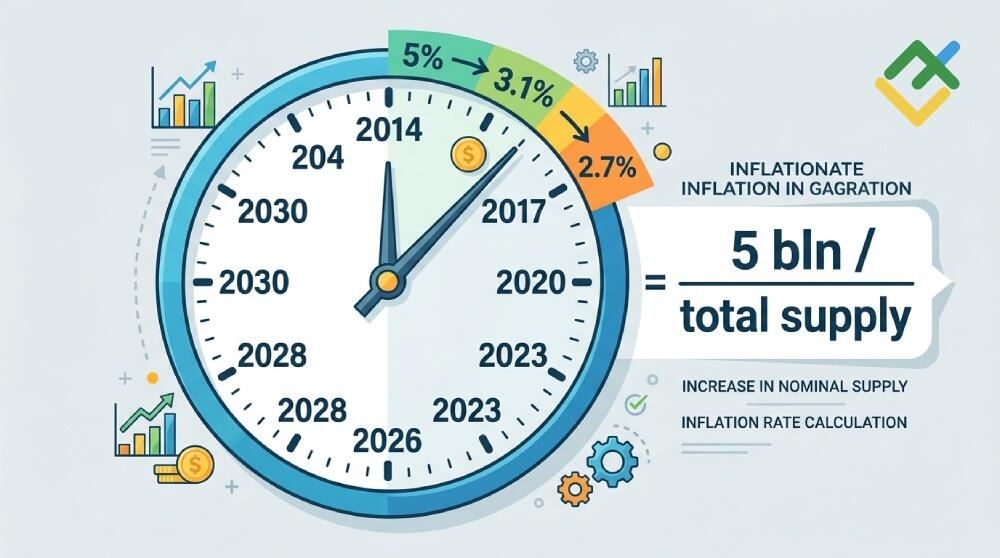
The annual issuance of approximately 5 billion DOGE, at current prices, is equivalent to roughly $500 million. This is a relatively small amount compared to the asset's multi-billion-dollar market capitalization and trading volume.
Therefore, the price of Dogecoin depends not only on its supply. Demand, general market conditions, and investor sentiment have a more significant impact on it. At times of heightened interest in cryptocurrencies, the asset's inflationary nature often takes a back seat.
Dogecoin's Investment Potential
Dogecoin's investment appeal is based on three key factors: a strong community, high brand recognition, and significant liquidity. Today, Dogecoin is no longer just a meme coin, but one of the most recognizable brands in the cryptocurrency market.
At the same time, the asset's price remains extremely volatile and depends largely on market narratives, investor sentiment, and social media activity.
Dogecoin's Price and Market Trends
The price of Dogecoin has historically been highly volatile. It has the following key drivers:
trends on social media, including statements by Elon Musk;
the US Dollar Index (DXY);
the overall state of the cryptocurrency market;
correlation with Bitcoin;
potential integrations, such as X Money.
Market capitalization also serves as an important indicator: the higher it is, the more capital is required to generate a new price momentum. From a technical perspective, the asset is in a consolidation phase until a strong catalyst emerges.
Not only the Dogecoin price but also the trading volume is significant. When volume rises alongside the price, the movement typically appears more sustainable. If, however, the price rises on the back of low volume, such momentum often quickly loses steam.
Historically, DOGE has already demonstrated significant growth. Such periods have almost always been accompanied by increased investor enthusiasm, liquidity inflows, and rising market capitalization.
Risks and Challenges of Investing in Dogecoin
The primary risk associated with Dogecoin is its heavy reliance on hype and social media sentiment. A single positive comment from an influential public figure can cause the price to surge by tens of percent, while a decline in public interest can trigger an equally sharp drop.

While the relative pace of its issuance is gradually slowing, the endless supply of new coins requires a constant inflow of capital to sustain demand. Additional risks include regulatory uncertainty and competition from new meme coins, as well as projects in the AI and real-world asset (RWA) tokenization sectors.
Furthermore, the significant concentration of coins in large wallets increases the risk of market manipulation. The actions of even a single whale can have a significant impact on overall market dynamics.
Future of Dogecoin
Dogecoin's future largely depends on whether the asset can move beyond its status as Elon Musk's favorite meme coin and find broader practical applications. Payment integrations and further adoption could strengthen its market position in the long term.
Will Dogecoin's Inflation Rate Decrease?
The relative inflation rate of Dogecoin will continue to decline over time because annual issuance remains constant while the total supply expands.
By 2030, when the supply is expected to approach 180 billion DOGE, the annual inflation rate could fall to around 2.7%. In the longer term, it may drop below 1%, a level comparable to Bitcoin's post-halving inflation rate.
Factors Affecting Dogecoin's Future
Key factors for Dogecoin include its real-world adoption as a means of payment, regulatory developments, overall cryptocurrency market trends, and the developers' ability to maintain and improve the network. The Dogecoin community also plays an important supporting role.
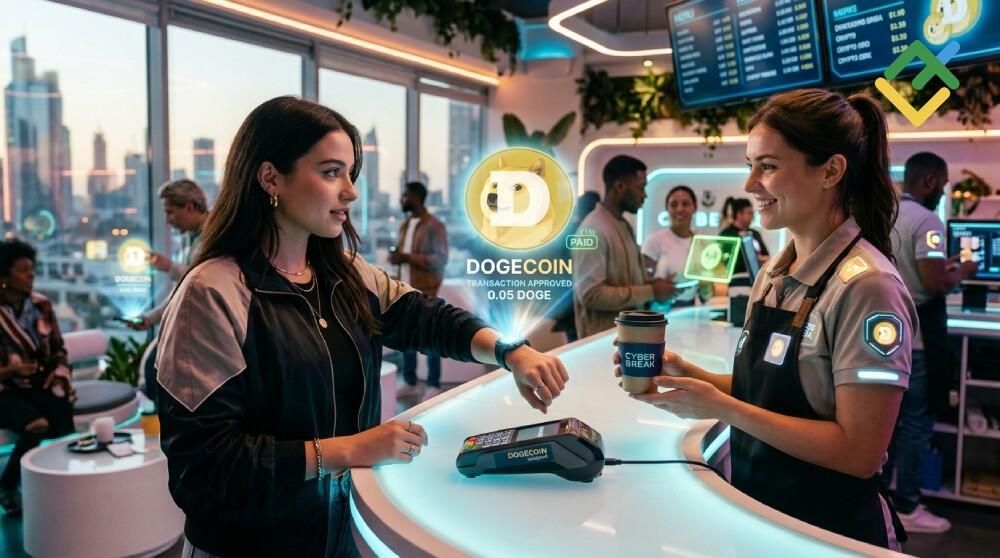
Market sentiment also influences the coin's outlook. When the cryptocurrency market is in a risk-on mode, meme coins typically exhibit more pronounced price movements compared to major digital currencies. During such periods, the market rapidly reassesses participants' expectations, and the Dogecoin community can amplify both price increases and declines.
Therefore, a trading strategy for DOGE should take into account not only the price chart but also overall market dynamics, liquidity, and large holders' behavior.
Dogecoin vs. Bitcoin – Key Differences
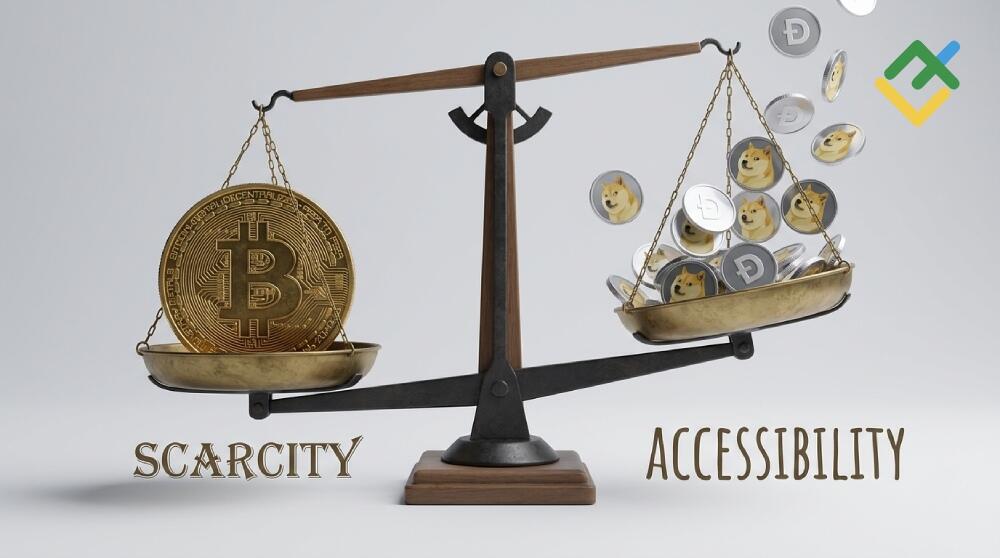
Although both blockchains use the Proof of Work mechanism, their economic models differ fundamentally. Bitcoin is often referred to as digital gold due to its scarce supply, whereas Dogecoin is positioned as digital cash with controlled inflation.
Simply put, the main difference between DOGE and BTC lies in their supply models. Bitcoin has a hard cap of 21 million coins. Dogecoin's unlimited supply means that new coins continue to enter circulation with every new block.
Therefore, the supply models for these assets cannot be directly compared. For Dogecoin, it is not the maximum supply that is key, but rather the rate of supply growth and its gradual decline over time.
In this context, it makes sense to monitor the Bitcoin price prediction, as DOGE often amplifies broader market movements and exhibits a high correlation with BTC.
Aspect | Dogecoin | Bitcoin |
Maximum supply | Unlimited | 21 million |
Coin issuance | 5 billion a year | Halves every four years |
Inflation | ~3.2% | ~0.8% |
Block time | ~1 minute | ~10 minutes |
Commission | Minimal | Depends on network congestion |
Purpose | Payments | Store of value |
Wallets and Dogecoin Storage
There are many options for storing DOGE. These range from non-custodial wallets, which give you full control over your private keys, to custodial solutions offered by cryptocurrency exchanges. The best option for you depends on your priorities for security, ease of use, and the level of responsibility for safeguarding your assets.
Types of Wallets
Hardware wallets such as Ledger and Trezor provide the highest level of security, as they store private keys offline. They are well-suited for long-term storage of larger amounts but require an additional investment and careful protection of the seed phrase.
Software wallets, including Trust Wallet, Exodus, and the official Dogecoin Core, are free and convenient for everyday use, but are more exposed to malware and phishing risks.
Exchange accounts on platforms such as Binance and Coinbase are suitable for active trading but do not give users full control over their assets. In the cryptocurrency industry, this risk is often summarized by the principle: "Not your keys, not your coins."
A balanced approach is to combine cold storage for the majority of funds with a hot wallet for daily transactions.
Does Dogecoin Burn Tokens?
The Dogecoin protocol does not include a coin burning mechanism. The total supply of DOGE is constantly increasing due to the regular issuance of new tokens.
Individual users or projects may intentionally send DOGE to unreachable addresses, effectively removing coins from circulation. However, such actions are not part of Dogecoin’s economic model and do not significantly impact the total supply.
Role of Wallet Holders in Supply Distribution
The distribution of Dogecoin remains extremely uneven. According to Santiment, fewer than 150 wallets control a significant portion of the coin's total supply. The actions of these large holders—whether accumulating or selling assets—can cause both significant price increases and declines.
The high concentration of coins increases the risk of market manipulation, which is why tracking whale activity has become an important element of on-chain analysis. This data helps market participants assess potential volatility and possible shifts in investor sentiment.
Conclusion
Dogecoin is a unique hybrid of internet culture and economics. Although it has an infinite supply, this does not render it useless: mathematically, its relative inflation rate gradually decreases, which brings it somewhat closer to traditional fiat currencies.
Dogecoin's investment appeal rests on its brand strength, liquidity, and potential integration into global platforms. However, its dependence on hype and high concentration of supply creates heightened risks.
An informed decision regarding any trading activities with Dogecoin requires understanding its tokenomics, monitoring on-chain data, and a sound assessment of your tolerance for volatility. Remember that no asset guarantees profits, and Dogecoin is no exception.
Dogecoin Supply in 2026 FAQs
Dogecoin has no maximum supply limit, so the number of coins that can be mined is unlimited. Miners continue to receive new DOGE for creating blocks, and the annual issuance is approximately 5.256 billion coins.
Theoretically, Dogecoin could reach $1, but this would require a market cap of over $150 billion. Such a scenario is possible if there is significant growth in demand, an influx of capital, and favorable market conditions.
Dogecoin has no hard cap on its supply and issues a fixed number of new coins each year. This makes the asset inflationary, even as the relative rate of supply growth gradually slows.
Dogecoin uses the Scrypt algorithm and supports pooled mining with Litecoin. The block time is about one minute, compared to ten minutes for Bitcoin. However, mining difficulty and profitability depend on market conditions.
The content of this article reflects the author’s opinion and does not necessarily reflect the official position of LiteFinance broker. The material published on this page is provided for informational purposes only and should not be considered as the provision of investment advice for the purposes of Directive 2014/65/EU.
According to copyright law, this article is considered intellectual property, which includes a prohibition on copying and distributing it without consent.