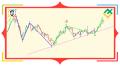
The US currency acts in the same way during recessions
Global economy is cyclic. The US dollar allows other currencies to take the lead in the period of GDP growth or recovery, but when it comes to a recession, the dollar hogs the blanket. The reason is that the US economy is extremely important and the greenback plays the leading role in international settlements, gold and foreign currency reserves, Forex trading volumes and crossborder loans. A global recession makes investors forget about the influence of European macro statistics on the Euro’s rate or the influence of the BoJ’s policy on the yen’s rate. All eyes are riveted on only one currency. The US dollar.
Interestingly, the greenback behaves similarly during recessions, and this became the basis of the dollar smile theory developed by Stephen Jen, a currency strategist at Morgan Stanley. There are three obvious stages in the dynamics of the USD index:
- the USD is actively bought because the US economy is stable;
- the USD is sold amid the Fed’s aggressive monetary expansion
- the USD is bought again amid expectations that the US GDP will recover faster than other countries’ GDPs.
Thus, a picture of a smile is drawn.
Dollar’s smile

Let’s have a detailed look at the USD index’s dynamics. At the first stage, the greenback is in high demand since the US economy is powerful. It looks better than others, which raises a demand for US stocks and bonds and increases investment flows. In 2019 and in early 2020, the USD index is growing amid trading wars which are the reason for an impressive rally of S&P 500 and a high demand for treasuries.
The first stage ends with a correction of US stock indexes, which finally turns the bears into the prevailing force in the stock market. The dollar reaches its peak, “the left side of the smile” as the investors preferred “flight-to-quality”. It’s the main safe haven asset at that moment. At the end of February, S&P 500 moves to the bears’ territory within the shortest time possible - 16 days - because of the coronavirus. The correlation between the USD index and the stock index becomes an inverse relationship. At the first stage of the previous global economic crisis, the greenback consolidated 24% from March to November 2008.
US GDP and dollar dynamics

At the second stage, called the “bottom of the smile”, the USD is sold out aggressively because of the Fed’s aggressive monetary expansion. The cut of the federal funds rate to almost zero, unlimited assets buyout and large-scale fiscal stimulus from the White House reverses S&P 500’s downtrend at the end of March. A higher demand for risky assets contributes to closing long positions in the USD. A very similar scenario took place at the end of 2008 when the Fed attempted to reverse the bearish trend in the US stock market and take the USD fans down a peg through its aggressive monetary expansion, including QE. And it even seemed to succeed in doing that as the USD index had dropped by December.
USD and S&P 500 dynamics

At the third stage, the dollar resumes growing because the investors start thinking the US economy will be recovering faster than other economies. The US shares look cheap while low borrowing costs, the Fed’s ultra soft monetary policy, gradually recovering GDP and hopes for the growth of corporate profits revive non-residents’ interest in US assets.
So, if we are following the dollar smile theory, it’s time to buy the greenback. Still, it’s not certain that the US economy will recover faster than the global GDP led by China, and the Fed’s unwillingness to allow the greenback to consolidate may change the game rules.
P.S. Did you like my article? Share it in social networks: it will be the best "thank you" :)
Useful links:
- I recommend trying to trade with a reliable broker here. The system allows you to trade by yourself or copy successful traders from all across the globe.
- Use my promo code BLOG to get a 50% deposit bonus on the LiteFinance platform. Simply enter this code in the appropriate field when funding your trading account.
- Telegram chat for traders: https://t.me/litefinancebrokerchat. We are sharing the signals and trading experience.
- Telegram channel with high-quality analytics, Forex reviews, training articles, and other useful things for traders https://t.me/litefinance
Price chart of SPX in real time mode

The content of this article reflects the author’s opinion and does not necessarily reflect the official position of LiteFinance broker. The material published on this page is provided for informational purposes only and should not be considered as the provision of investment advice for the purposes of Directive 2014/65/EU.
According to copyright law, this article is considered intellectual property, which includes a prohibition on copying and distributing it without consent.