An exchange rate is the value of one currency expressed in terms of another. A country's exchange rate relative to other currencies is an important indicator of its economic health and stability.
The central bank and Ministry of Finance are key institutions responsible for managing the national economy. Through monetary and fiscal policy tools, they can influence the exchange rate and the balance between currency supply and demand.
For traders, exchange-rate fluctuations create opportunities to profit from short- and medium-term market trends. In this article, you'll learn how to capitalize on these movements, what affects the exchange rate, and why exchange rates matter.
The article covers the following subjects:
Major Takeaways
An exchange rate is the value of one currency expressed in terms of another. A floating exchange rate is determined by market forces, primarily supply and demand. A fixed exchange rate is set and maintained by a central bank or other monetary authorities. Examples of currencies pegged to the US dollar include the UAE dirham, Saudi riyal, and Qatari riyal, while the Danish krone is pegged to the euro.
A national currency's exchange rate is influenced by macroeconomic, political, geopolitical, and speculative factors.
Key macroeconomic indicators include interest rates, unemployment, inflation, gross domestic product growth, and the trade balance.
The impact of economic fundamentals can be short-lived, lasting anywhere from a few hours to several days. However, certain events and economic developments can shape longer-term currency trends.
What Is Exchange Rate?
An exchange rate is the value of one country's currency unit expressed in terms of another country's currency unit. It is the price at which one currency can be bought or sold in exchange for another.
What is FX rate? Here are some interesting facts:
The world's most valuable currency is the Kuwaiti dinar. One KWD is worth more than 3.2 USD. The Kuwaiti dinar's exchange rate is pegged to a basket of currencies.
The world's weakest currency is the Lebanese pound. The LBP/USD exchange rate is about 0.000011.
Not all countries peg their nation's currency to the US dollar. For example, the Danish krone is pegged to the euro; the currencies of Bhutan and Nepal are pegged to the Indian rupee; and the currencies of Brunei and Singapore are maintained at a 1:1 ratio.
Look at how exchange rates work:
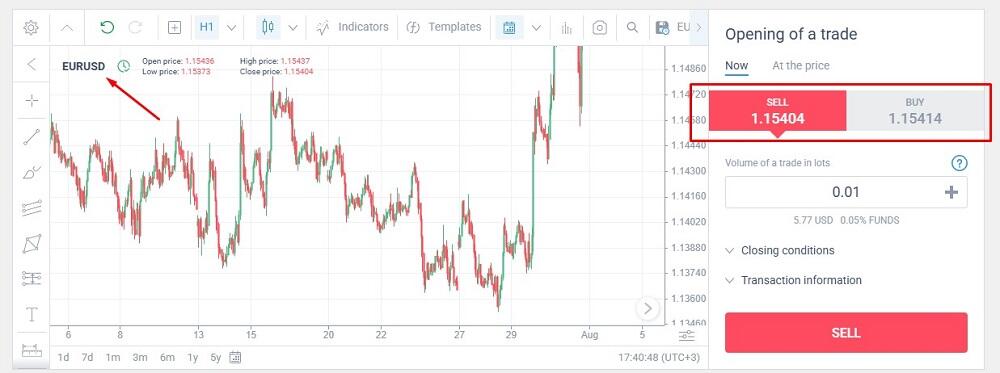
The selling rate for the EUR/USD pair is 1.15404. This means that 1 EUR can be sold for 1.15404 USD and bought for 1.15414 USD. If you execute both transactions in succession while the quotes remain unchanged, the difference would be 1.15414 − 1.15404 = 0.0001 USD per 1 EUR. Therefore, to make a profit, a trader should wait for the exchange rate to change and correctly predict the direction of the move.
An exchange rate can be:
Floating. It is determined by market forces and influenced by importers and exporters, investors and traders, central banks, and the general public.
Fixed. It is set and maintained by a central bank or other monetary authority relative to another currency, such as the USD or EUR.
A floating exchange rate creates opportunities to profit from price fluctuations in the Forex market.
Why Are Exchange Rates Important?
The exchange rate connects a country's domestic economy to the global market and influences the cost of goods in the domestic market. When a country's currency weakens, imported goods cost more, potentially accelerating domestic inflation. Conversely, a stronger national currency helps preserve purchasing power and curb price increases. For traders, constant exchange rate fluctuations create opportunities to profit from currency movements in both directions.
The major currency pairs traditionally include the EUR/USD, USD/JPY, USD/CHF, and GBP/USD.
What Affects Foreign Exchange Rates: 8 Key Factors
In this section, you will find out what factors affect exchange rates. The main factors affecting exchange rates fall into two groups: monetary and fiscal policy measures and market factors.
The first group includes the key interest rate, reserve requirements, money supply, currency interventions, and government bond issuance. The second group includes geopolitical events, speculative transactions, and traders' and investors' expectations.
1. Interest Rates
An interest rate is the rate set by a country's central bank. It is a key monetary policy instrument through which the central bank manages inflation and, indirectly, the national currency's exchange rate.
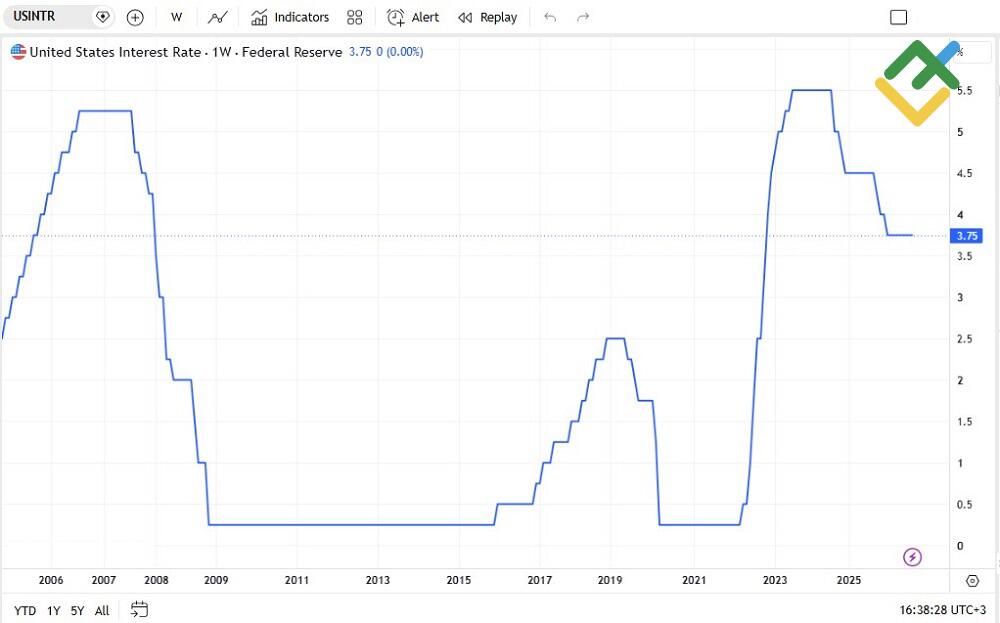
Changes in the Fed's interest rate.
The impact of changes in the interest rate on a national currency's exchange rate:
1. When the central bank raises the interest rate, the national currency may appreciate:
Borrowing becomes more expensive for commercial banks, which in turn raises loan costs for businesses and consumers. This can reduce economic demand, slow price growth, and ease inflationary pressures. As a result, the national currency may depreciate more slowly against other currencies or even appreciate.
Government bonds and bank deposits become more attractive to investors. This can encourage foreign capital inflows and support the national currency.
2. When the central bank cuts interest rates, the national currency may weaken:
Lower borrowing costs stimulate consumption and economic activity but can also accelerate inflation and increase the supply of the national currency.
Foreign investors may sell the local currency and move their capital to countries offering higher interest rates. An increase in the supply of the national currency on the market can put downward pressure on its exchange rate.
A high interest rate does not guarantee a strong national currency. If investors perceive an economy as high-risk—for example, because they expect high inflation, a debt crisis, or currency devaluation—a 20% interest rate may be less attractive than a 5% rate in a more stable economy.
2. Inflation Rates
Inflation is a sustained increase in the general price level of goods and services, which reduces the purchasing power of the national currency and can contribute to currency depreciation. Moderate inflation, when kept within a target range, can positively affect the economy. A gradual rise in prices can support economic activity. In developed economies, central banks often target inflation of around 2% per year, while targets may be higher in developing economies.
Deflation is a sustained decline in the general price level of goods and services, which increases the purchasing power of money. Deflation may be accompanied by an appreciation of the national currency; however, investing in that currency still involves currency risk. Prolonged deflation can negatively affect the economy: consumers may postpone purchases, reducing demand and potentially slowing production and GDP growth.
An example of how an exchange rate can react to rising inflation and subsequent central bank intervention:
Between July 2020 and July 2022, US inflation accelerated significantly, rising well above normal levels.
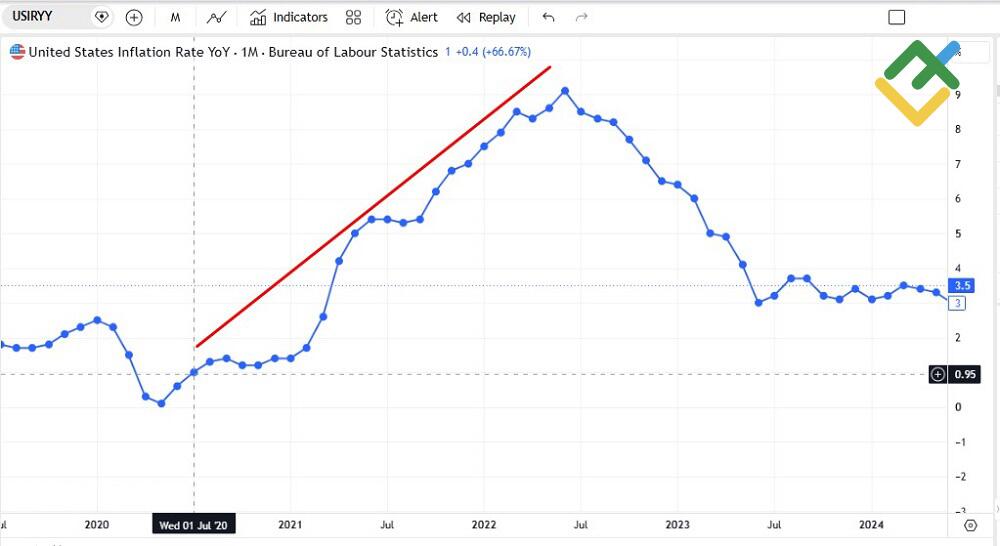
In theory, rising inflation could have weakened the US dollar against the euro and the Swiss franc. However, the EURUSD pair rose—meaning the dollar depreciated—only initially. Starting in mid-2021, the dollar began to strengthen, and the EURUSD pair turned downward.
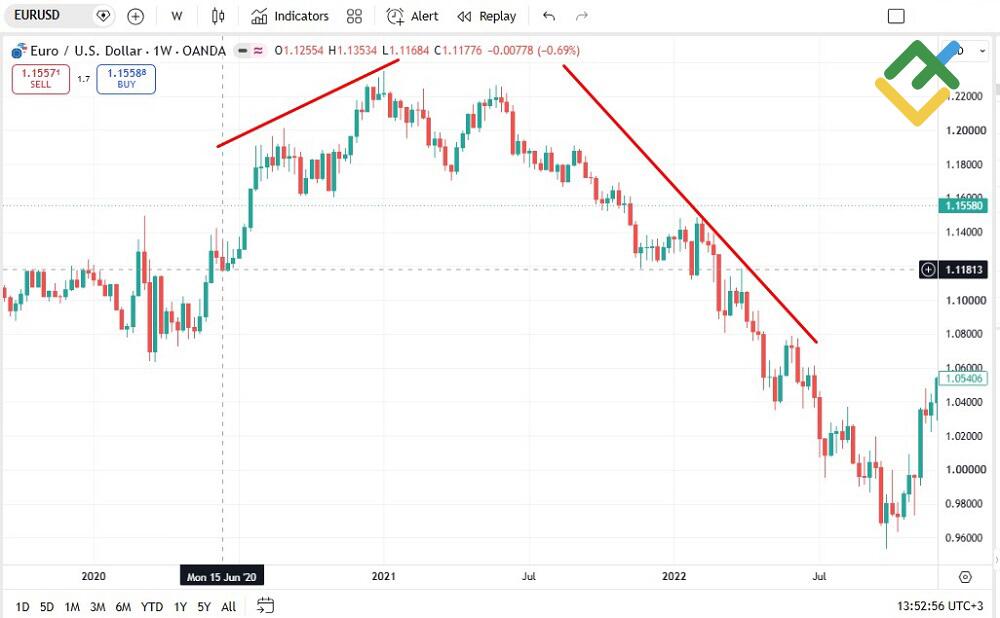
Until July 2021, the Fed considered inflation to be temporary, attributing much of the increase to pandemic-related supply chain disruptions. Interest rates remained near zero, while the US dollar was relatively weak during the first half of the period.
In the second half of 2021, inflation accelerated above 5%. Investors expected that the Fed would tighten monetary policy. Markets started pricing in rate hikes. These expectations increased the dollar's appeal as Treasury yields began to rise even before the Fed delivered its first actual rate hike in March 2022.
The ECB did not begin raising its key interest rates until July 2022. As a result, the euro weakened against the US dollar.
3. Economic Growth and GDP
Positive trends in economic growth and GDP can affect the exchange rate in the following ways:
Increased attractiveness to foreign investors. Sustained GDP growth can signal a stable and expanding economy, making it more attractive to foreign investors.
Capital inflows. Foreign investors may purchase local stocks and bonds, which requires them to buy the national currency. This creates additional demand and can contribute to currency appreciation.
Higher exports. Economic and production growth may lead to increased exports. Exporters typically convert foreign-currency revenues into the national currency, increasing demand for it and potentially supporting its appreciation.
High GDP growth rates also have a downside: they can increase the risk of accelerating inflation as the economy overheats.
4. Trade Balance and Current Account
When exports exceed imports, the country's inflow of foreign currency increases. Exporters exchange the foreign currency they receive for the national currency, thereby increasing demand for it. This can help strengthen the national currency.
Conversely, if imports exceed exports, importers buy foreign currency with the national currency to pay for foreign goods. As a result, demand for foreign currency rises, the currency's value increases, and the national currency may depreciate.
5. Central Banks and Monetary Policy
The central bank regulates monetary conditions by influencing bank liquidity, the money supply, and, indirectly, the country's balance of payments.
The main instruments of monetary policy used by central banks include:
Instrument | Action | Impact on the exchange rate |
Benchmark rate | Increase | Appreciation. Returns on assets rise, while demand for loans declines. |
Currency interventions | Purchasing their own currency and selling foreign currency | Appreciation. The amount of the national currency in circulation decreases. As its supply declines, the currency becomes more valuable, causing its market rate to rise. |
Reserve requirements | Increase in reserve requirements and tightening of reserve conditions. | Appreciation. Banks curtail lending, and the money supply declines. |
Money issuance | Turning on the printing press | Depreciation. The money supply increases. |
Open market operations | Sale of government bonds. | Appreciation. The central bank reduces the amount of domestic currency in circulation. |
Verbal interventions | Hawkish statements, signaling rate hikes. | Appreciation. Investors buy currency on expectations. |
When the central bank takes the opposite course of action, it produces the opposite result.
6. Political Stability and Investor Confidence
Political stability and transparency in the actions of regulators and legislative bodies strengthen investor confidence and reduce capital-related risks. For foreign investors, this means greater predictability and less uncertainty. For the national economy, it can encourage foreign capital inflows and support the national currency.
Political crises and sanctions can trigger sell-offs and capital outflows, hurting the national currency.
7. Market Sentiment and Speculation
Market sentiment can rapidly shift the balance between supply and demand. If breaking news triggers a buying frenzy or a significant sell-off, it may be wise for a trader to wait until market conditions stabilize. Such sharp movements are often observed when macroeconomic data are released, particularly when market expectations have already been shaped by forecasts.
Large institutional investors can also influence exchange rates. The substantial volume of their trades can significantly affect market trends and amplify exchange rate movements.
Tip: Use a volatility calculator to assess exchange rate fluctuations. It can help you identify the most volatile currency pairs for short-term trading.
8. Government Debt and Credit Quality
Rising public debt can either weaken or strengthen the national currency, depending on the reasons for the increase, how the borrowed funds are used, and the overall state of the economy.
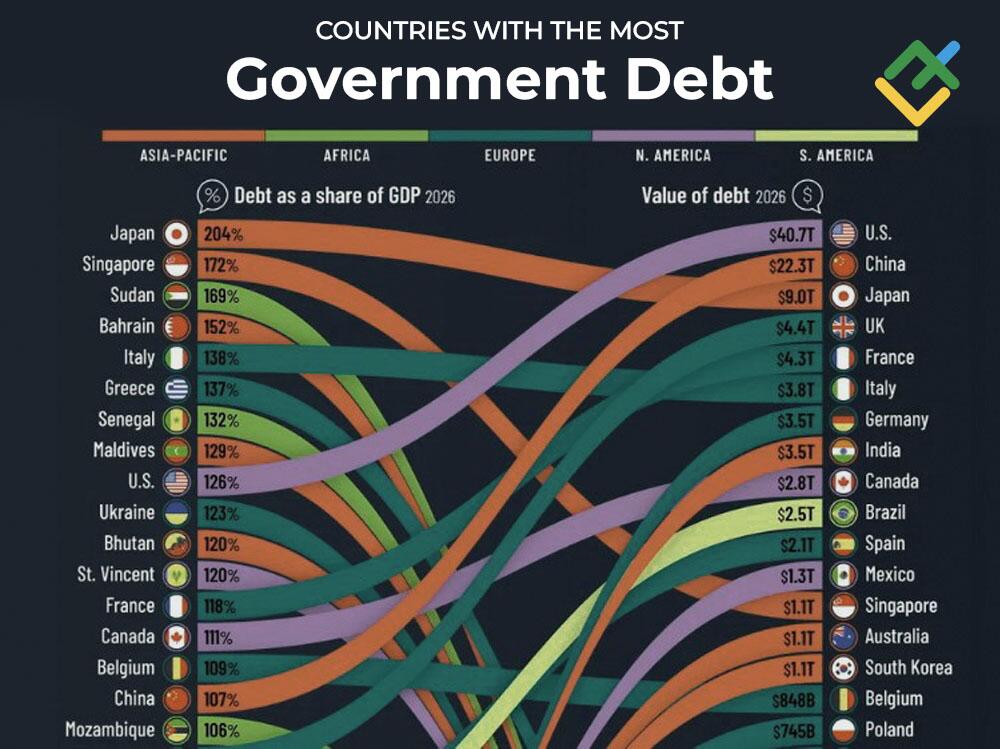
Negative scenario. A growing budget deficit may force the government to increase domestic and foreign borrowing, for example, by issuing government bonds. Rising public debt leads to higher debt-service costs, particularly interest payments. If the deficit is financed through money issuance, this can increase inflationary pressure and weaken the national currency.
Positive scenario. The country's economy is performing well, with low unemployment, low inflation, and steady GDP growth. The Treasury issues government bonds, and foreign investors purchase the national currency to invest in them. This increases demand for the currency and can support its appreciation. A good example is the US, where Treasury securities are widely regarded as highly liquid and relatively safe assets.
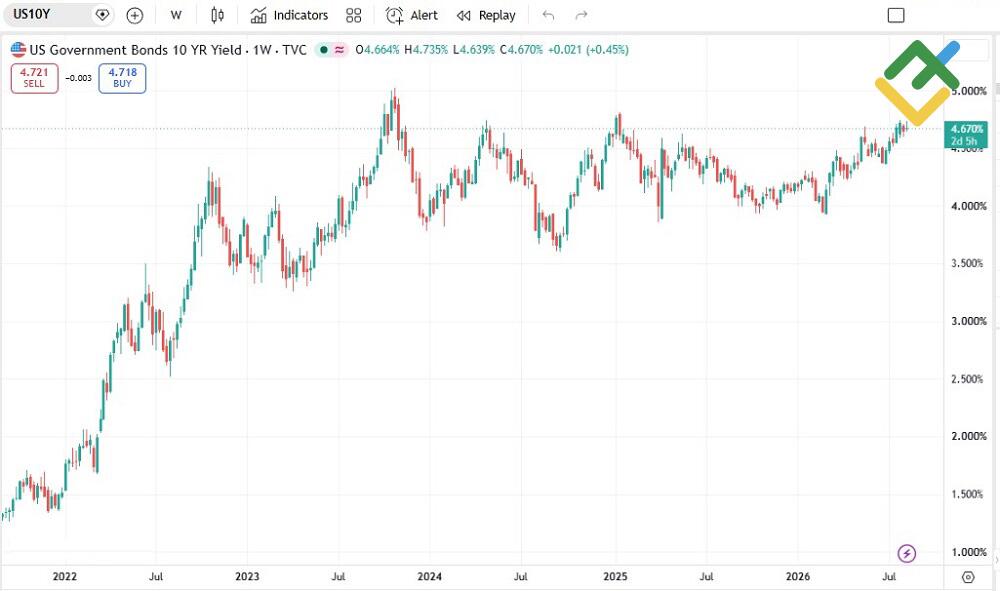
The chart shows the yield, rather than the price appreciation, of 10-year US Treasury securities. Rising Treasury yields may support the USD exchange rate against other major currencies, but they do not guarantee a sustained appreciation of the US dollar.
Investors may be more cautious about investing in economies with high public debt because of increased risks, including currency devaluation. However, no direct relationship exists between a country's public debt level and its exchange rate. US public debt exceeds 100% of GDP, while Japan's exceeds 200% of GDP, yet both currencies remain among the most liquid and actively traded in the Forex market.
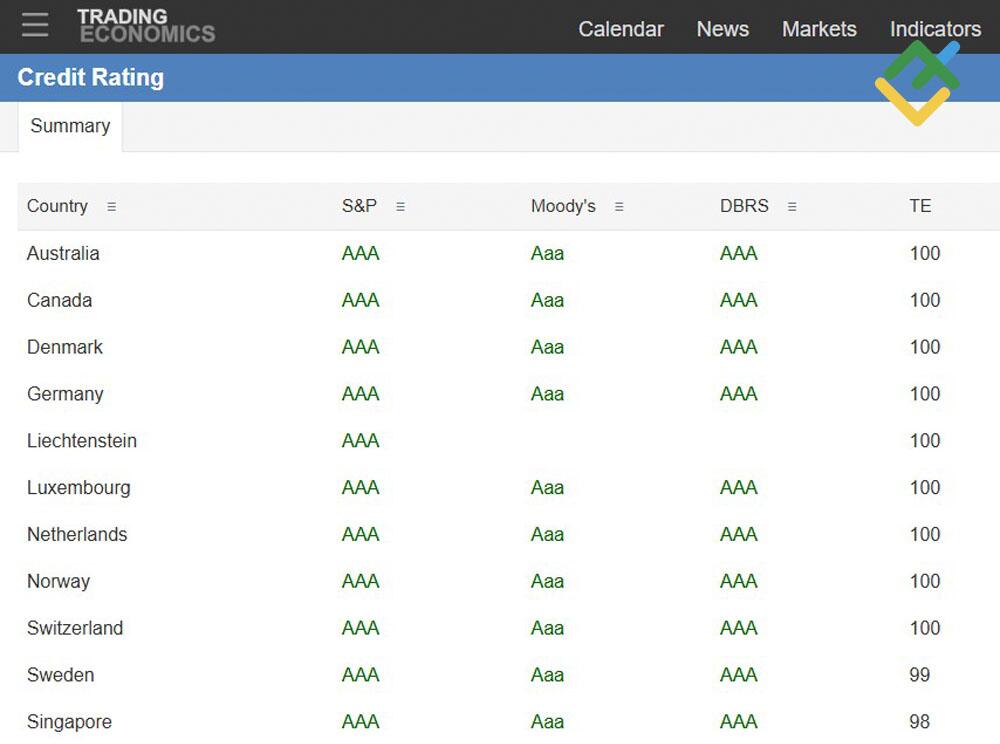
Sovereign credit ratings are assigned by international rating agencies, including S&P Global Ratings, Moody's Ratings, Fitch Ratings, and Morningstar DBRS. A downgrade signals higher perceived credit risk. Structural weaknesses in an economy can undermine investor confidence and, in some cases, lead to a depreciation of the national currency.
How Traders Use These Factors
Traders can consider these factors when identifying trading opportunities and planning trades. They can help you assess the potential direction of exchange rate movements and anticipate periods of increased volatility.
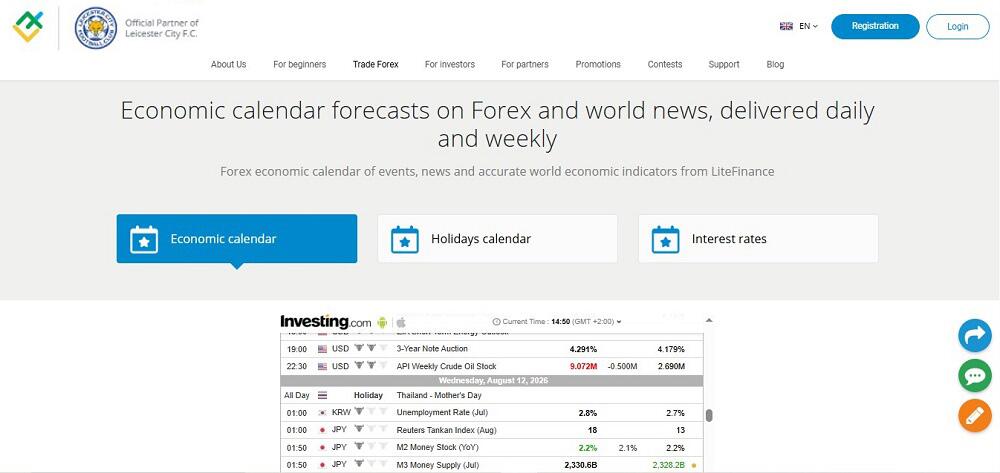
Use the economic calendar. It provides the dates and times of important news releases and macroeconomic data. Currency exchange rate volatility may increase around these events. If you are uncertain about the expected outcome, consider closing positions before major news is released. If you are prepared to accept higher foreign exchange risk, you can use pending orders to account for potential price movements in either direction.
In Forex trading strategies based on news, compare actual data with market forecasts. For example, if the market expects a 0.5 percentage point increase in the central bank's interest rate, but the rate rises by only 0.25 percentage points, this may be interpreted as a negative signal for the national currency.
Explore the carry trade strategy, which seeks to profit from interest-rate differences between countries.
Consider trading currency pairs with a strong direct correlation. A move in one pair may offer signals for another, particularly when there is a time lag between their price movements.
As geopolitical and economic risks increase, consider safe-haven assets such as gold, the Swiss franc, and the Japanese yen.
Diversify your risk by trading multiple currency pairs. An overview of the world's strongest economies may also help you identify diversification opportunities.
Conclusion
Forex exchange rates are influenced by both objective and subjective factors. Objective factors include a country's economic health and macroeconomic indicators, while subjective factors include market sentiment and speculative activity.
Compare fundamental economic indicators across at least two countries. For example, in the case of the EUR/USD pair, both central banks may raise interest rates. However, the currency of the country whose rate-hiking cycle began earlier and is proceeding more aggressively may be more attractive to investors.
Strengthening a national currency depends not only on positive macroeconomic indicators but also on their trends and how closely actual results align with market expectations.
If you want to gain practical experience with the factors that influence exchange rates, try trading on a demo account. Registration takes up to two minutes and requires no deposit.
Factors Affecting Exchange Rates FAQs
Exchange rates are directly influenced by the balance of supply and demand. Macroeconomic indicators such as GDP, inflation, and interest rates, along with geopolitical events, global economic conditions, market sentiment, and speculation, shape this balance.
Exchange rates fluctuate and are determined by the interplay of supply and demand in the Forex market. Importers, exporters, investors, and traders all influence this balance. Central banks can also affect exchange rates through monetary policy measures.
A floating exchange rate fluctuates with market supply and demand. A fixed exchange rate is set relative to another currency or a basket of currencies and is maintained by a regulatory authority, including through currency interventions.
The content of this article reflects the author’s opinion and does not necessarily reflect the official position of LiteFinance broker. The material published on this page is provided for informational purposes only and should not be considered as the provision of investment advice for the purposes of Directive 2014/65/EU.
According to copyright law, this article is considered intellectual property, which includes a prohibition on copying and distributing it without consent.