A margin call in Forex is a notification from your broker that you do not have enough funds in your trading account to keep your trades open. It means you need to deposit extra funds into your account urgently or close losing trades and reduce the size of the remaining positions.
If losses continue after a margin call, a stop-out occurs, meaning your positions will be forcibly closed, starting with the most losing ones. In other words, your deposit may be almost entirely wiped out. Understanding how this process works is essential, so this article explains how the margin call level is calculated in Forex, why a stop-out happens, and how to avoid it.
The article covers the following subjects:
Major Takeaways
- A margin call in Forex is a warning from the broker that the margin required to maintain open trades is insufficient and will soon reach a critical level.
- A stop-out is the minimum margin level set by the broker at which the trader's positions are automatically closed, starting with the most unprofitable one.
- Maintenance margin and stop-out levels vary by broker and are defined in the broker's margin requirements, as outlined in their trading terms and conditions.
- You can monitor your margin level in the trading platform. If the margin call level for your account is set at 100%, you will receive a warning from your broker when your account equity drops below 100% of the required margin.
- The causes of a margin call are having too many open trades at once, leverage (margin trading), and mounting losses.
- To avoid margin calls, you need to deposit additional funds when the broker's required maintenance margin drops, or close all or some of your losing trades.
What Is a Margin Call in Forex: Definition and How It Works
A margin call is a broker's notification that your account no longer meets margin requirements. It may be delivered via:
- The trading platform or account messages.
- Email or push notifications.
- Platform alerts.
If no action is taken and losses continue to grow, the margin level may fall further and reach the stop-out level.
The stop-out level in Forex is the minimum margin level, expressed as a percentage, set by the broker. This is the point at which the broker will automatically begin closing your positions if the value of your margin account falls below the level set by the broker. However, this situation can usually be avoided with proper risk and margin management.
If the position size is relatively small, several minutes or even hours may pass between a margin call and a stop-out. With large positions, a stop-out is triggered within a minute.
Margin Call Formula and Example
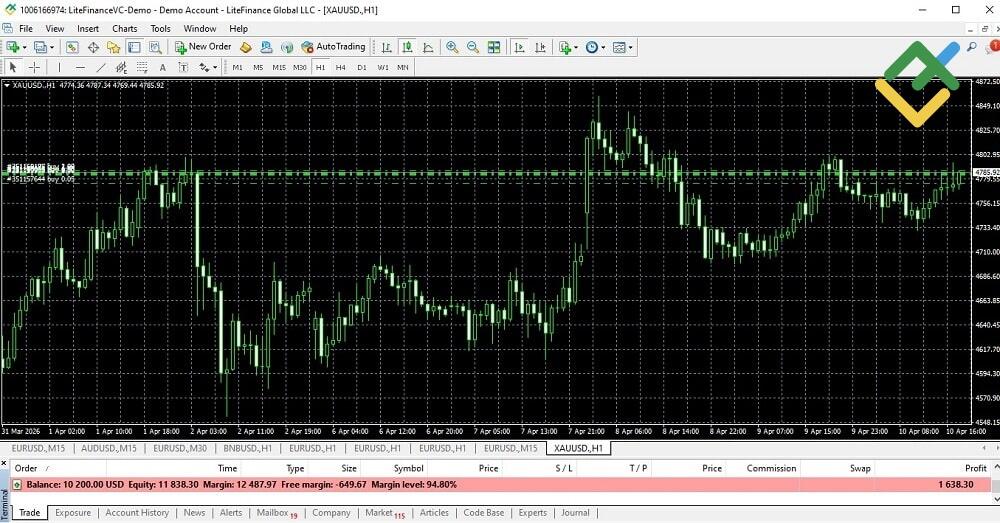
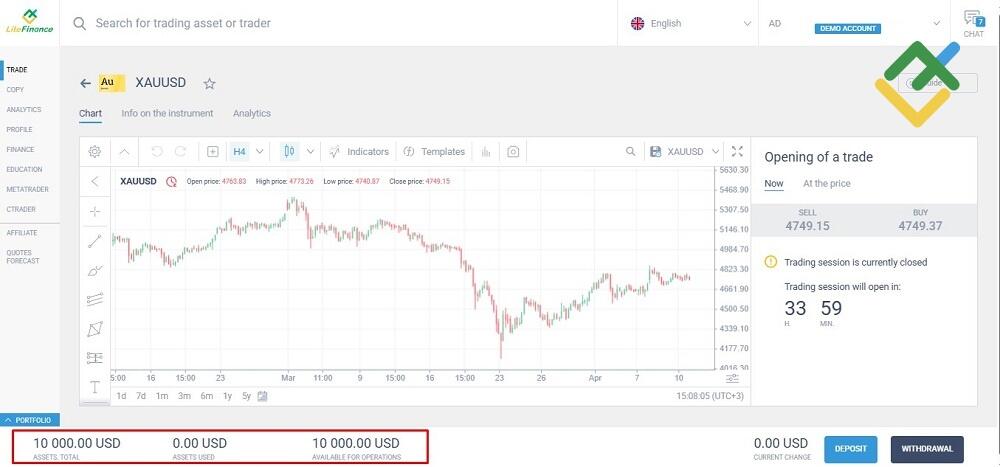
In any trading platform, the trade or account information section displays key parameters such as Balance, Margin, Free Margin, and Margin Level. Although the exact terms may vary, their meaning is the same. Below are examples of how these parameters are displayed.
The LiteFinance trading platform:
The MetaTrader 4 / MetaTrader 5 trading platform:
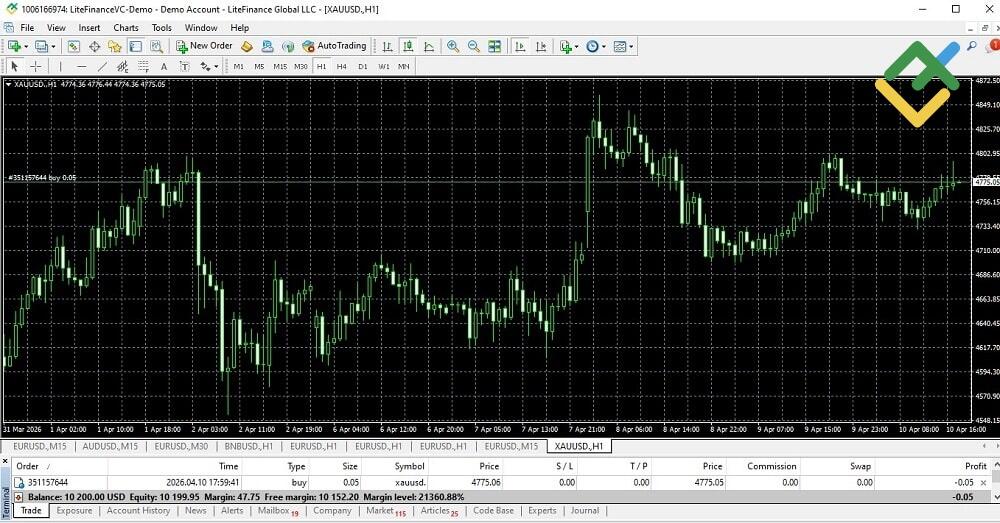
Parameter descriptions:
- Balance. Your own funds (initial investment), excluding open positions. This amount changes only after you close positions or deposit/withdraw funds.
- Equity (Total Assets). The current real-time account value, including floating profit or loss from all open trades. Formula: Balance ± Floating Profit / Loss. Once positions are closed, the result is reflected in the Balance. If losses occur, the account equity decreases.
- Margin (Assets Used, Initial Margin, or Required Margin). A deposit that the broker holds in the account to sustain open positions. The larger the trade size and the lower the leverage (borrowed funds), the higher the margin. For example, if you buy an asset worth $1,000 without leverage, the margin will be $1,000. With a 1:100 leverage, the margin will be $10.
- Free Margin (Available for Operations). Funds that are not used as margin. These are the funds you can use to open new trades or withdraw from your account. Formula: Equity - Margin.
- Margin Level. An indicator of the health of a trading account, expressed as a percentage. It shows the ratio of equity to margin. Formula: Equity / Margin * 100%.
As losses increase, the Equity decreases, which in turn lowers the Margin Level. The Balance remains unchanged until positions are closed. As a result, the margin account's equity decreases. A margin call and a stop-out are thresholds set by the broker that determine when action must be taken.
Example of trading the XAUUSD pair. Initial deposit: $10,000. A trade is opened with a minimum lot size of 0.01.
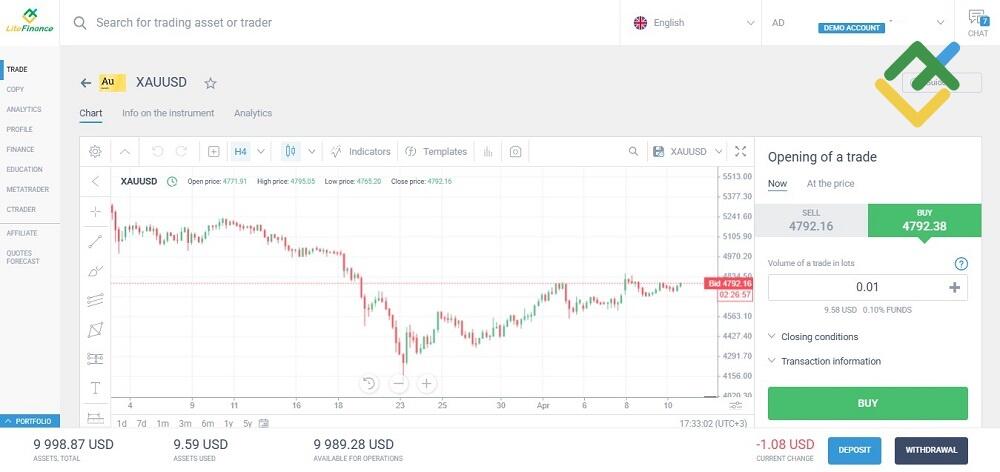
Assets Used (Margin required as collateral) is $9.59. This value is calculated as follows:
Margin = Trade Volume * Contract Size * Price / Leverage.
According to the contract specifications, the contract size is 100 units, and the leverage is 1:500. 0.01 × 100 × 4,794.14 / 500 = $9.59.
Total Assets reflects the current value of the account, including floating profit and loss, while Available for Operations indicates the amount of funds available for opening new trades.
When we increase the position size by 9 lots, the account equity decreases:
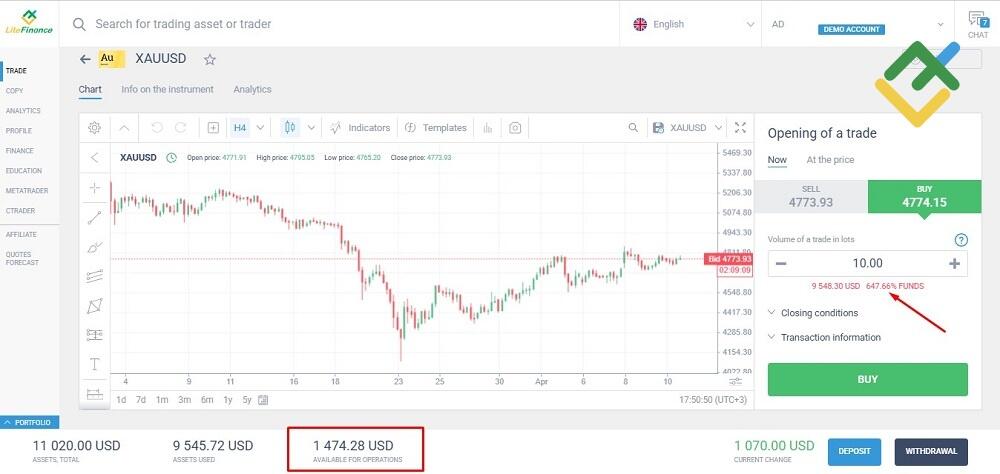
Despite the floating profit, there are still sufficient funds available for new trades, slightly over $1,000. The margin level is displayed in the right-hand panel. Once it falls below the critical threshold, indicating a margin deficit, a margin call is triggered, followed by a stop-out if the situation worsens.
Margin Call vs Stop Out: Key Differences
Here are the main differences between a margin call and a stop-out:
A margin call always happens first. When a margin call occurs, you cannot open new trades, but existing ones stay open. With a stop-out, all open trades get closed. Margin call example:
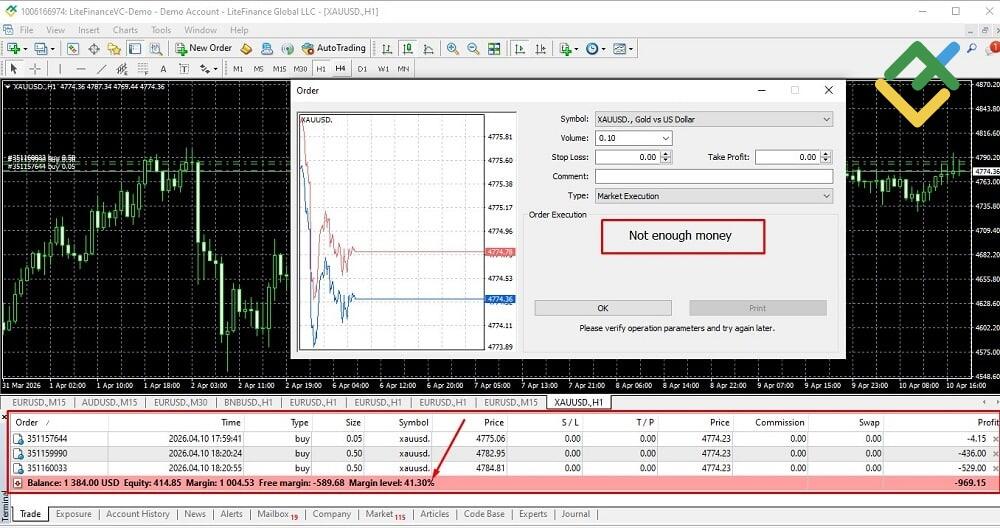
- A margin call is a notice that you do not have enough money to cover your open positions. A stop-out in Forex refers to a situation where positions are automatically closed.
- If you are facing a margin call, the situation can still be rectified. Once a stop-out occurs, it is too late.
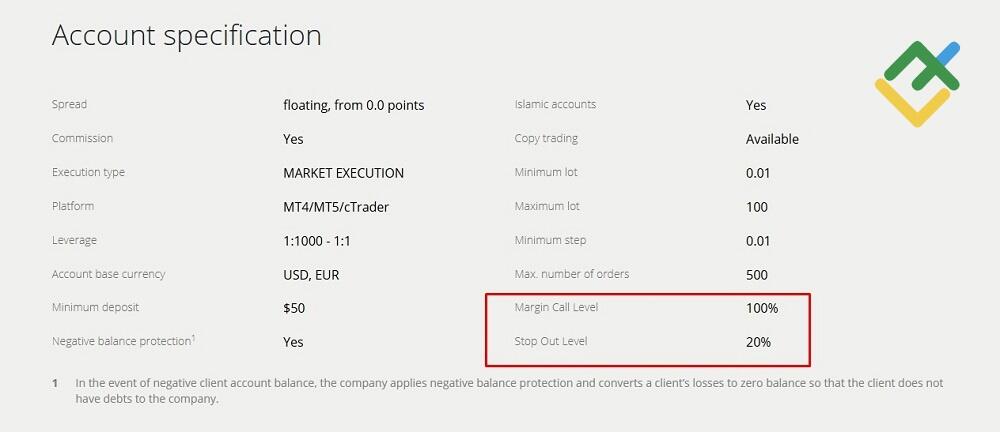
These two parameters may vary between brokers. Their values are specified in the Client Agreement or in the trading account specifications.
What Causes a Margin Call in Forex
The main reason for a margin call is accumulating losses. If the price moves adversely and the trade remains open, your losses will continue to build. And since your total losses cannot exceed your account balance, sooner or later you will receive a margin call, followed by a stop-out.
Causes:
Leverage increases your position size, which means every pip movement has a larger monetary impact. Pip value = Lot size (position) * Contract size * Pip size. The higher your exposure, the greater the loss per pip. As a result, even small adverse price movements can quickly diminish your deposit and trigger a margin call. Thus, excessive leverage significantly increases the risk of losing your entire deposit.
Example: The pip value for the EUR/USD pair with a position size of 0.01 lots is $0.10. If the price moves 10 pips in the adverse direction, the loss will equal $1. With a leverage of 1:100 and a position size of 1 lot, the loss will be $100.
- High volatility. Your account balance drops when the price suddenly reverses due to fundamental factors.
- Using the entire deposit to open trades will leave you with no funds to cover temporary drawdowns.
- Neglecting risk management. The lack of a clear strategy and an understanding of how much capital can be lost in a single trade.
- Trading without stop-loss orders or incorrectly calculating their size. It does not matter whether you use a single long stop-loss order on one trade or multiple short stop-loss orders across several trades. What matters is the total acceptable risk across all open trades relative to your deposit.
- Trading against the trend. In other words, opening a position that is obviously unprofitable.
- Emotional decision-making. The fear of admitting a mistake and closing a losing trade causes investors to hold onto a position until it is liquidated.
Always monitor your Forex margin level. If you miss the critical point, your positions may be automatically closed during a stop-out.
How to Avoid a Margin Call
Seven rules for protecting your deposit and preventing a potential margin call:
- Limit your leverage. The higher the leverage, the greater the value of each price movement, and the higher the risk and potential losses.
- Always set stop losses. A stop-loss order should be triggered well before the margin call level is reached. However, in the event of gaps or slippage, it may be triggered too late.
- Stick to your acceptable risk per trade. Do not risk more than 1–2% of your deposit on a single trade. Avoid opening multiple positions at the same time. The more trades you open, the more margin you use, which increases your overall exposure and margin debt.
- Control your account. Keep an eye on the Margin Level on your trading platform. A level above 300–500% is generally considered safe. If it falls below 300%, the risk of a margin call increases.
- Never average down on losses. Adding to a losing position in the hope of a reversal only depletes your free margin faster.
- Be cautious when trading highly correlated assets. If one trade goes into a loss, the other is likely to follow, doubling the impact on your account balance.
- Avoid trading during news releases. The market is highly volatile during this time, so the price may swing in either direction, potentially causing slippage.
What to Do When You Get a Margin Call
Having all your positions closed at once can be one of the most challenging situations for a trader. The key is to remain calm, as there may still be an opportunity to recover.
What you can do when you get a margin call:
1. Deposit funds.
Pros:
- More time to manage your positions.
- Lower risk of position liquidation.
Cons: Higher risk of losing more funds if the strategy is flawed.
Adding funds increases your margin level and moves it further away from the margin call threshold. You decide how much to deposit. This approach makes sense if the market is temporarily moving against you and there is a chance it will reverse. However, if the market keeps moving against you, adding more funds is not a viable solution.
2. Close unprofitable trades.
Pros:
- Further losses are limited.
- Profitable positions remain open.
- Emotional pressure is reduced.
Cons: Trades are closed at a loss.
You take the loss, but it will not get any bigger as long as your winning trades stay in profit.
3. Reduce position size.
Pros:
- Less margin is used.
- Potential losses are reduced.
- Lower risk of position liquidation.
Cons: You lose some of the potential profit if the price moves as predicted.
Avoid excessive use of leverage to increase position size.
4. Hedge positions. Lock in losses or use other tools.
Pros:
- Losses are contained.
- More time to assess the situation and make a decision.
Cons:
- No new trades can be opened, so losing positions need to be hedged early.
- The loss is not eliminated; proper timing is required to close the hedge.
Although hedging is a temporary solution, it allows time to wait out periods of high market volatility.
Review the situation: A margin call is a sign that something has gone wrong. For example, a stop-loss may not have been set or was placed too far away, risk management rules may not have been followed, or there was poor diversification.
Conclusion
A margin call occurs when:
- Risk management rules are not followed, with trades placed without stop-loss orders or with excessively wide stops.
- The market becomes highly volatile, and price movements consume the available margin.
- Leverage is used imprudently.
Margin trading in Forex carries high risk, especially if you use leverage to increase your position size. A margin call is a signal that you need to close losing trades immediately. Otherwise, they will be closed by a stop-out. However, there is no need to fear a margin call, as every mistake or setback is a new learning experience and an opportunity to analyze your errors.
To minimize mistakes, practice on the LiteFinance demo account, where you can trade with virtual funds and gain practical experience. Wishing you successful trading!
Get access to a demo account on an easy-to-use Forex platform without registration
Margin Call and Stop Out FAQs
During a margin call, your open positions are not closed immediately. It is a warning that your account equity has fallen below the required margin level. At this stage, you may need to reduce your position size, partially close positions, or add funds. Opening new positions is usually not allowed. If no action is taken, your positions may be automatically closed due to a stop-out.
Yes, this is possible if the broker does not offer Negative Balance Protection. Even with this feature, losses are not always fully prevented. Such losses can occur during sharp price gaps or when using high leverage. Such cases are rare among Forex brokers but more common with stockbrokers and cryptocurrency exchanges.
As long as you want or as long as your margin level remains above the stop-out level. A margin call is simply a warning that your account is approaching a critical threshold. If one position is in profit and another of the same size is in loss, the margin requirement remains unchanged. However, if the critical level is reached, positions will be closed by a stop-out.
Price chart of USDRUB in real time mode

The content of this article reflects the author’s opinion and does not necessarily reflect the official position of LiteFinance broker. The material published on this page is provided for informational purposes only and should not be considered as the provision of investment advice for the purposes of Directive 2014/65/EU.
According to copyright law, this article is considered intellectual property, which includes a prohibition on copying and distributing it without consent.