FOMC doves are looking for reasons to keep rates unchanged. Tariffs are not as inflationary as expected. The central bank's influence on oil prices is limited. However, it is not enough for the markets. Let's analyze the situation and develop a trading plan for the EUR/USD pair.
The article covers the following subjects:
Major Takeaways
- US inflation continues to accelerate.
- The Fed may increase interest rates in March 2027.
- Oil prices are likely to rise further.
- Short trades on the EUR/USD pair can be opened with the target of 1.168.
Weekly Fundamental Forecast for Dollar
One report does not make a trend. A single US inflation report is unlikely to be enough for the Fed to radically change its stance. The main reason for the surge in consumer prices to a three-year high of 3.8% was higher energy prices. Core inflation at 2.8% is still far from its 2022 peak, so the central bank is not rushing headlong into tightening monetary policy. Therefore, the EUR/USD pair's reaction to the April CPI data was muted.
US Inflation Change
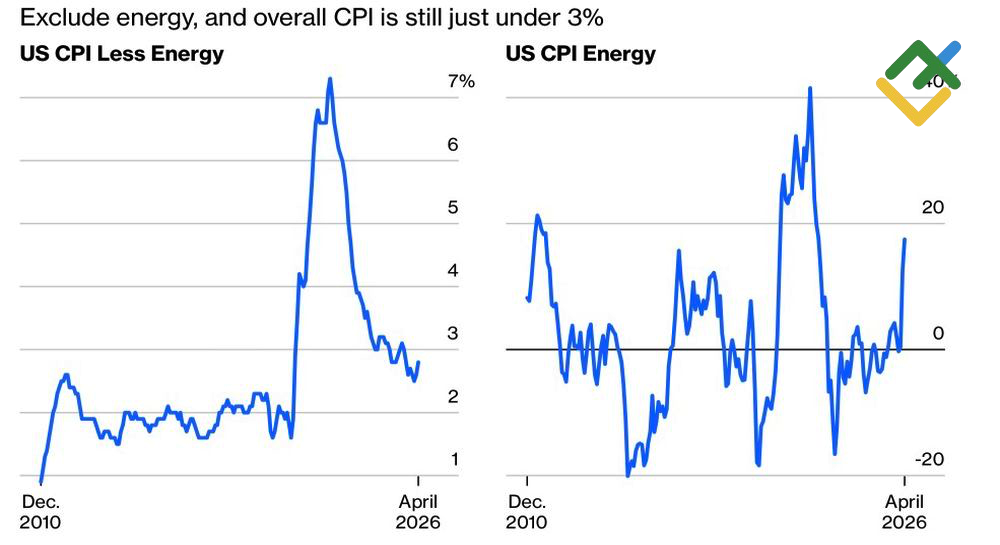
Source: Bloomberg.
The conflict in the Middle East has prompted FOMC doves to shift their stance. Whereas they previously insisted on continuing the cycle of monetary expansion, they are now emphasizing the need to avoid raising interest rates. MUFG believes that Kevin Warsh, who was just confirmed by the Senate by a vote of 51 to 45, is unlikely to change the status quo. He will push for monetary policy easing, but most Fed officials will remain deaf to such calls.
The futures market has raised the probability of a federal funds rate hike in 2026 to 36% and shifted expectations for such a move from April to March 2027. Investors' concerns are understandable. The yield spread between Treasuries and TIPS — a key gauge of inflation expectations — has climbed to 2.7% over a five-year horizon, the highest level since 2022.
Inflation Expectations and TIPS Yield
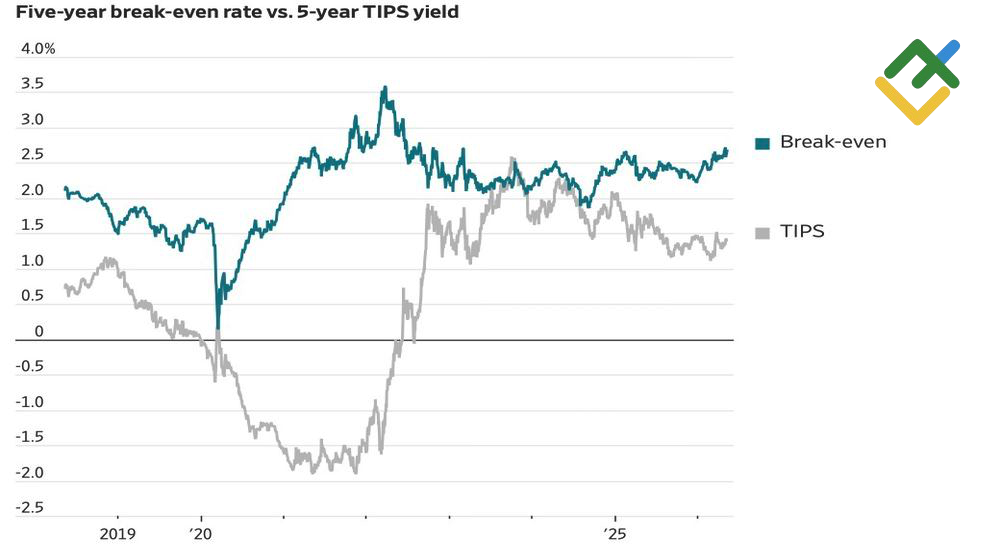
Source: Wall Street Journal.
This could result in a self-fulfilling prophecy: expectations of higher inflation will prompt US consumers to spend more. The rise in domestic demand will fuel consumer price inflation.
Dovish arguments that prices are not rising — and therefore tariffs are not driving inflation — are hardly convincing. Service-sector inflation is accelerating, which is even more dangerous. As a result, US Treasury bond yields are rising. Goldman Sachs calls this a bullish factor for the US dollar. High inflation coupled with strong economic growth, along with continued concerns about the energy crisis in the Middle East, are elevating debt market rates and boosting the dollar’s appeal. The bank recommends buying the dollar against the Swedish krona, the euro, and the British pound.
This position seems quite logical. The oil market is walking on thin ice that could crack at any moment. Updated estimates from the US Energy Information Administration project a reduction of 2.6 million barrels per day in global oil stockpiles by 2026, assuming the Strait of Hormuz reopens by the end of May. This is significantly higher than the previous forecast of 300,000 barrels per day. Brent has not yet reached its full upside potential, and neither has the US dollar.
Weekly Trading Plan for EUR/USD
Under these conditions, our previous strategy for the EUR/USD pair remains valid. It calls for adding to short positions initiated at 1.178, with targets at 1.168 and lower.
This forecast is based on the analysis of fundamental factors, including official statements from financial institutions and regulators, various geopolitical and economic developments, and statistical data. Historical market data are also considered.
Price chart of EURUSD in real time mode

The content of this article reflects the author’s opinion and does not necessarily reflect the official position of LiteFinance broker. The material published on this page is provided for informational purposes only and should not be considered as the provision of investment advice for the purposes of Directive 2014/65/EU.
According to copyright law, this article is considered intellectual property, which includes a prohibition on copying and distributing it without consent.