The US economy can withstand higher interest rates, unlike its European and Asian counterparts. Combined with a decline in global risk appetite, this provides a compelling argument for buying the US dollar. Let's analyze the situation and develop a trading plan for the EUR/USD pair.
The article covers the following subjects:
Major Takeaways
- The US national debt is rising rapidly.
- The Fed can afford to raise interest rates.
- Rumors of negotiations have boosted the euro.
- Short trades can be considered as long as the EUR/USD pair remains below 1.1645.
Weekly Fundamental Forecast for Dollar
When the armed conflict in the Middle East began, the most alarming factor seemed to be the rise in oil and gasoline prices. In fact, the most severe oil market crisis did not push Brent prices to record highs. Bond yields, however, are another matter. They continue to rise worldwide due to fears of accelerating inflation and a massive tightening of monetary policy. The Fed will unlikely stand aside, which is helping the US dollar.
Net Debt-to-GDP Ratios
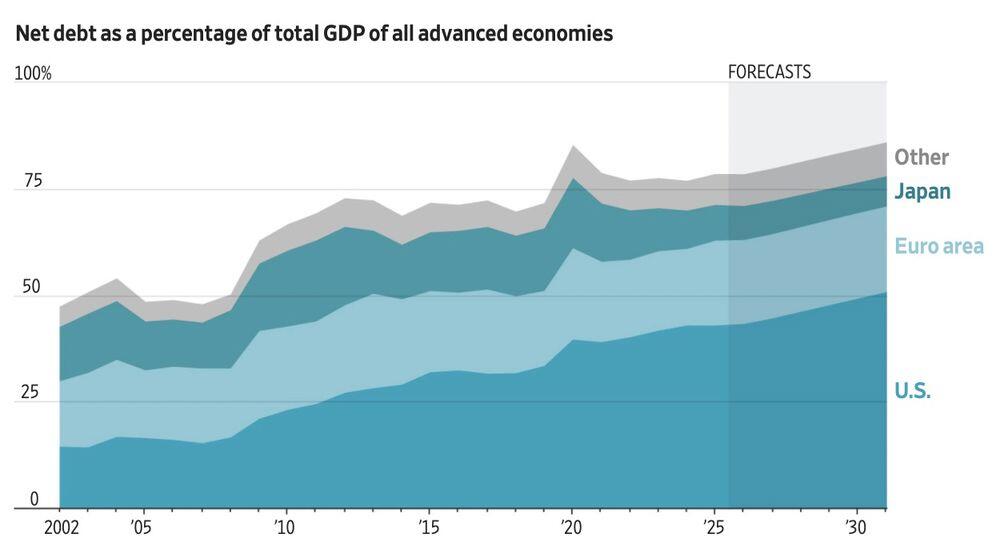
Source: Wall Street Journal.
The higher Treasury bond yields rise, the more the government has to pay to service its debt. That's why Donald Trump insisted on lowering interest rates—he wanted to save money. In fact, the conflict in the Middle East has led to the exact opposite result. The Committee for a Responsible Federal Budget stated that if Treasury yields remained at current levels, the national debt would increase by $200 billion by fiscal year 2036.
While the US economy may be able to withstand higher rates, Asia and Europe will begin to show cracks, especially since Japan intends to pass a supplementary budget, and the change of prime minister in the UK is likely to unleash fiscal stimulus. It will conflict with central banks' monetary tightening. Governments will fuel inflation, and regulators will have to fight it fiercely. Eventually, the result will be a recession.
Under these conditions, the US dollar is emerging as the market's primary safe-haven asset. The return of the American exceptionalism narrative to markets, combined with the risk of a correction in stock indices and weakening global risk appetite amid rising Treasury yields, is supporting EUR/USD bears.
S&P 500 Index and US 10-Year Breakeven
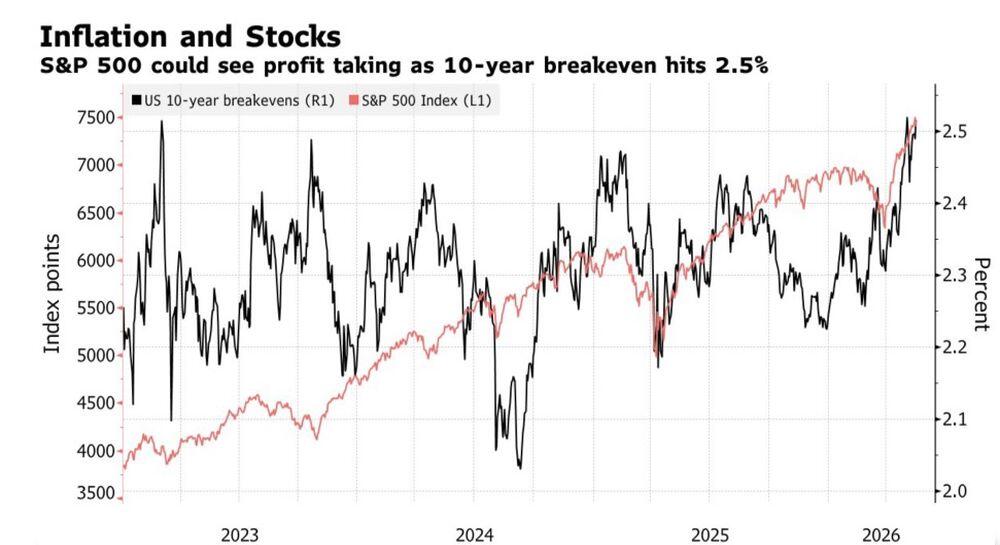
Source: Bloomberg.
The rebound in the major currency pair is linked to Donald Trump's statement that he had allegedly canceled the order to resume bombing Iran, as mediators—namely Saudi Arabia, the UAE, and Qatar—had asked him to postpone the attack, as important talks with Iran are underway. Tehran has reiterated that all negotiations between it and Washington take place in the US president's imagination. However, the markets continue to believe Donald Trump.
The US president has repeatedly relied on his familiar tactic of making aggressive threats before ultimately backing down. Nevertheless, the broader picture remains unchanged. Investors are growing tired of the TACO trade and are now looking for the NACHO instead. As long as the Strait of Hormuz remains closed, oil prices and global bond yields are likely to continue rising. At the same time, themes such as American exceptionalism and strong demand for safe-haven assets should continue to provide support for the US dollar.
Weekly Trading Plan for EUR/USD
Against this backdrop, short positions can be considered if the EUR/USD pair fails to rise above 1.1645 or rebounds from 1.168.
This forecast is based on the analysis of fundamental factors, including official statements from financial institutions and regulators, various geopolitical and economic developments, and statistical data. Historical market data are also considered.
Price chart of EURUSD in real time mode

The content of this article reflects the author’s opinion and does not necessarily reflect the official position of LiteFinance broker. The material published on this page is provided for informational purposes only and should not be considered as the provision of investment advice for the purposes of Directive 2014/65/EU.
According to copyright law, this article is considered intellectual property, which includes a prohibition on copying and distributing it without consent.